
When you purchase storage containers online, the container itself is only half the job. The other half is getting it delivered, offloaded safely, and placed exactly where you need it, without re-delivery fees, property damage, or a container that ends up facing the wrong direction.
Global Containers Line helps U.S. buyers do all three with fast nationwide delivery across the United States, clear quoting, and inspected new and used inventory that is cargo-worthy, wind and watertight, and ready to work on day one.
Quick answers: delivery, offload, and placement (save this)
- Delivery is planned around access, not just miles. Tight gates, soft ground, steep driveways, and overhead lines are the most common reasons for delays.
- Most single-container deliveries use a tilt-bed (roll-off) truck unless your site requires a crane, forklift, or special rigging.
- Placement needs a level base and drainage. A container set directly on mud or low spots can shift, bind the doors, and trap moisture.
- You should confirm door orientation before the truck arrives (doors facing driveway, job site, or away from prevailing weather).
If you already know the size you want, start here:
- Browse 20ft shipping containers
- Browse 40ft shipping containers
What “purchase storage containers” usually means in the U.S.
In most U.S. searches, “storage container” refers to an ISO steel shipping container (often called a conex box) used for:
- Construction site storage for tools and materials
- Business inventory overflow
- Farm and ranch equipment storage
- Residential storage during remodels or moves
- Secure on-site storage for property managers and developers
The best part is durability and security. The part that trips buyers up is logistics: delivery access, offload method, and placement.
Delivery methods: which truck will bring your container?
Your delivered price and your site prep both depend on the delivery method. Here are the most common ways storage containers are delivered across the U.S., including cities like Houston, Dallas, Atlanta, Phoenix, and Miami, plus rural routes.
Tilt-bed (roll-off) delivery
A tilt-bed is often the simplest option for placing a container at a home, farm, or job site.
How it works: the bed tilts and the container slides off onto the ground (or onto your prepared base).
Best for:
- Most residential driveways with adequate space
- Flat, stable job sites
- Buyers who want simple placement without bringing a crane
Key considerations:
- You need enough straight approach space for the truck to line up.
- The ground where the container lands must be firm and reasonably level.
Flatbed or step-deck delivery (with crane or forklift offload)
If your placement is tight, you need to lift over a fence, or you require precise positioning, you may need a flatbed delivery with equipment on-site.
Best for:
- Backyards with no straight shot
- Downtown or tight commercial lots
- Sites where you need to place the container beside buildings without sliding
Good to know: crane availability and scheduling can affect timing and total cost.
Chassis delivery (common for port and yard moves)
A container can arrive on a chassis (similar to how it moves in intermodal transport). This can be helpful in certain logistics scenarios, but it still requires a plan to get the container off the chassis.
If you are unsure which method fits your property, Global Containers Line can quote the right approach for your ZIP code and access conditions.
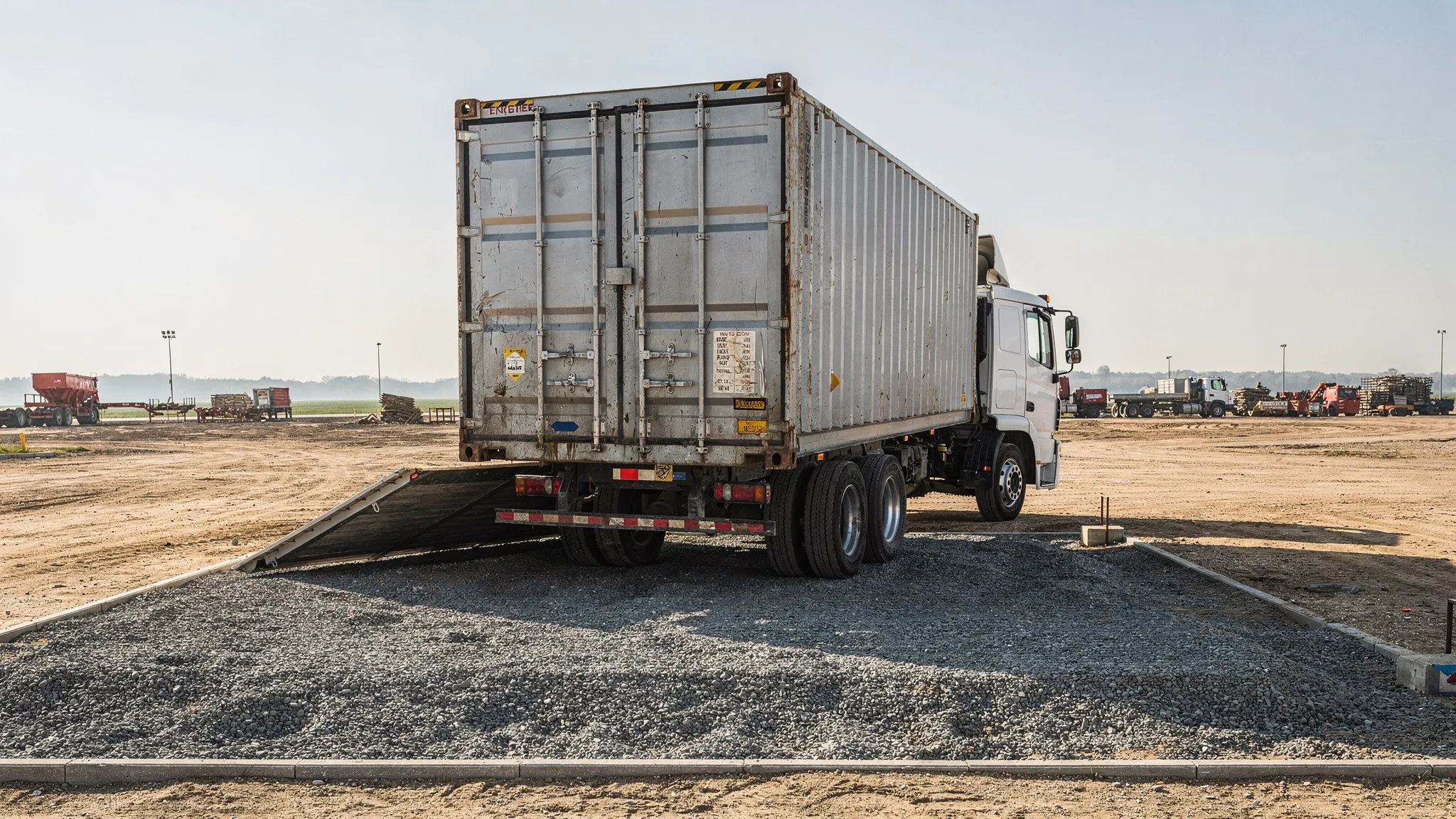
Offload planning: what can go wrong (and how to prevent it)
Offload is where most “surprise fees” happen in the storage container market. The most common issues are avoidable if you plan for them upfront.
The 5 access checks to do before delivery day
- Approach path: Is there a straight line to the drop spot, or will the truck need to turn sharply?
- Width: Can a large truck fit through gates, between buildings, or past parked vehicles?
- Overhead clearance: Watch for tree limbs, eaves, and utility lines.
- Grade: Steep slopes increase risk during roll-off.
- Ground conditions: Soft soil after rain is a leading cause of getting stuck.
Safety reminder: before digging for pads, anchors, or utilities, call 811 to have underground lines marked.
Placement basics: level base, drainage, and door operation
A shipping container is strong, but it is not forgiving if placed on an uneven base. Even a slight twist in the frame can make doors hard to open or impossible to seal.
Recommended placement goals
- Keep it level so the doors swing smoothly and lock properly.
- Elevate slightly to promote airflow and reduce ground moisture under the unit.
- Control drainage so water does not pool along the sides.
Common base options (from simplest to most robust)
- Compacted gravel pad: Popular for job sites and farms, good drainage, scalable.
- Concrete blocks or piers: Quick leveling, keeps corners supported.
- Railroad ties: Helpful for elevation and airflow (use with care and proper leveling).
- Concrete slab: Best for permanent installs and high-traffic access.
If you plan to store heavy equipment, place shelving, or regularly move pallets in and out, ask for guidance on base design and door-side clearance.
A simple “fit check” for 20ft vs 40ft placement
Use this table to sanity-check footprint and typical placement considerations.
| Container size | Exterior footprint (approx.) | Most common uses | Placement notes |
|---|---|---|---|
| 20ft | 20' x 8' | Tools, inventory, job site storage, tight lots | Easier driveway access and turning radius |
| 40ft | 40' x 8' | Large storage, equipment, multi-room organization | Needs more approach room, confirm drop spot early |
If you are deciding between sizes, Global Containers Line regularly delivers both across Texas, Florida, Georgia, Arizona, California, and nationwide.
Pricing: what your delivered quote should include
Buyers often compare only the container price and miss the delivered total. When you purchase storage containers responsibly, you want a quote that clearly separates what you are paying for.
A solid delivered quote typically includes:
- Container price (by size and condition)
- Delivery/trucking (distance, route complexity, and region)
- Offload method (tilt-bed vs equipment-required delivery)
- Any accessorial risks (for example, re-delivery if the truck cannot safely place)
- Taxes and processing where applicable
Pricing varies by market conditions, location, and inventory. For example, delivered pricing in port-adjacent regions can differ from inland areas, and tight urban delivery in places like Los Angeles or Miami can cost more than an open rural drop.
If you want a deeper breakdown of quote components (and how to avoid surprises), you may also find this guide useful: Shipping Containers for Sale: How to Avoid Hidden Fees.
Container condition: what you should expect when it arrives
Condition matters because it affects storage performance, lifespan, and how much work you will do after delivery.
New (one-trip) vs used containers
- New / one-trip: Best if appearance matters (retail, events, high-visibility sites) or you want minimal wear.
- Used: Best value for secure storage and many construction or farm applications, as long as the unit is structurally sound.
What “cargo-worthy” and “wind and watertight” mean for buyers
- Cargo-worthy generally indicates the container is structurally sound for transport use cases.
- Wind and watertight means the container seals properly against weather, making it suitable for storage.
At Global Containers Line, containers are thoroughly inspected before dispatch and described clearly so you can match the grade to your project and budget.
If you are still choosing, start with the company’s broader buyer resource: Ultimate Shipping Container Buying Guide.
Delivery day checklist (10 minutes that can prevent a headache)
Before the truck arrives
- Mark the exact drop location (cones, paint, stakes).
- Confirm door orientation (which way the doors should face).
- Clear the approach route of parked cars, trailers, and low branches.
- Confirm the base is ready (gravel, blocks, slab, or piers).
When the container is placed
Do a quick walk-around and check:
- Doors open and close smoothly
- Roof looks sound (no obvious holes)
- Floor is solid (no soft spots)
- Container sits stable (no rocking)
If you are buying for long-term storage, consider adding security upgrades after placement. This guide can help: Secure Storage Containers for Sale: Locks, Doors, Upgrades.
Common placement problems (and the fix)
Problem: doors won’t open easily after delivery
Most often, the container is out of level or twisted at the corners.
Fix: re-level the supports, focusing on the corner posts. Even small adjustments can restore door alignment.
Problem: water pooling around the container
Pooling water increases corrosion risk and moisture issues.
Fix: improve drainage with a slight grade away from the container, add compacted gravel, and elevate corners.
Problem: delivery truck cannot access the drop point
This can trigger re-delivery scheduling and cost.
Fix: provide access photos upfront and be realistic about turning radius, overhead clearance, and surface conditions. If needed, choose a delivery method that matches the site.
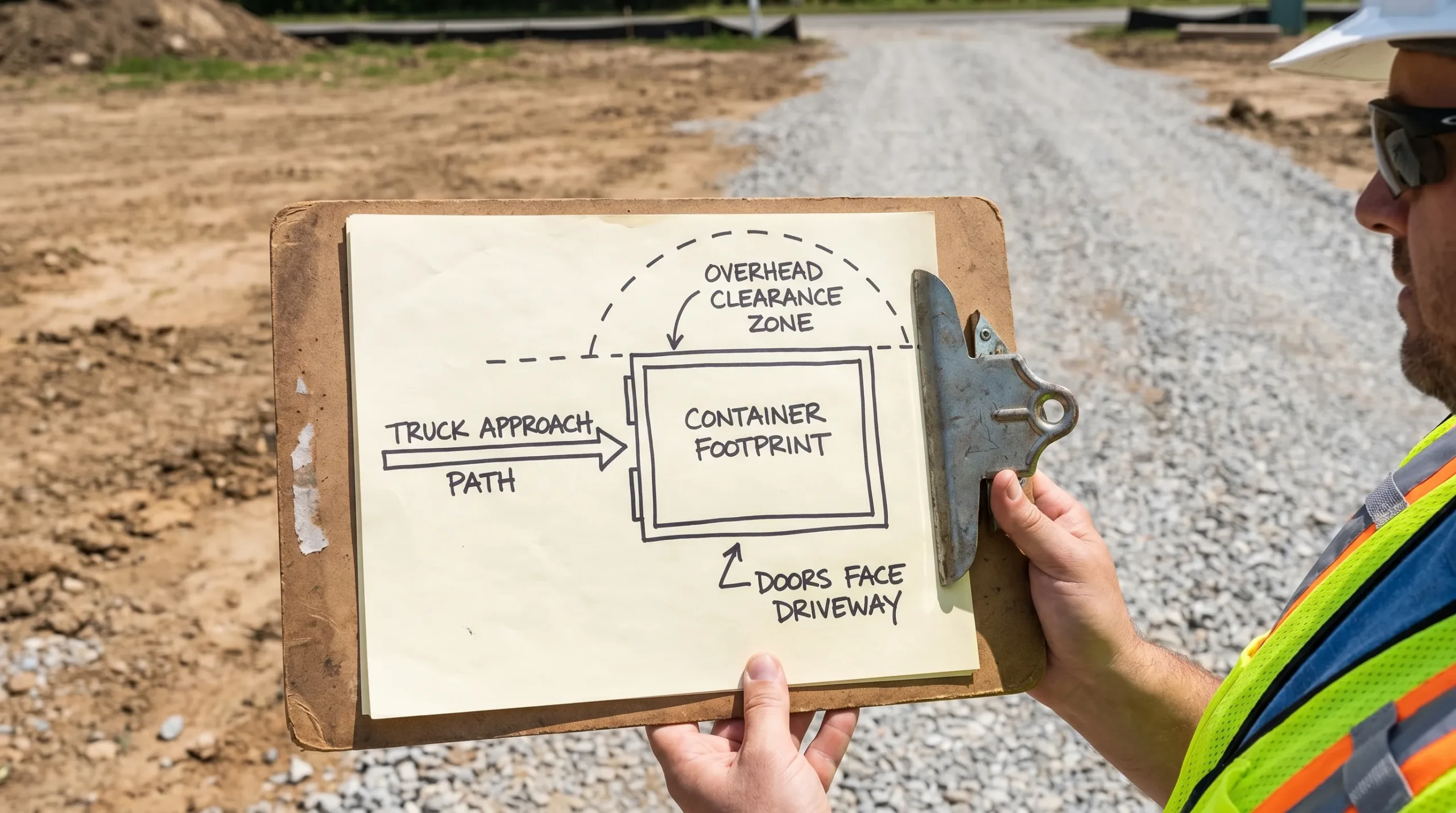
Why buyers choose Global Containers Line for delivery and placement coordination
When you purchase storage containers from Global Containers Line, you get:
- New and used shipping containers in multiple sizes and configurations
- Units that are cargo-worthy, wind and watertight, and inspected before dispatch
- Fast nationwide delivery across the United States
- Transparent pricing with no hidden fees
- Secure online ordering and reliable coordination to your location
Whether you are placing a unit at a job site outside Dallas, a warehouse in Atlanta, a property in Phoenix, or a residence near Miami, the goal is the same: a clean drop, correct placement, and a container that performs.
Frequently Asked Questions
How much does it cost to purchase storage containers delivered? Delivered cost depends on container size, condition (new vs used), your ZIP code, delivery distance, and offload method. The best way to avoid surprises is to request an itemized delivered quote.
Do I need a forklift or crane to offload a shipping container? Not always. Many deliveries use a tilt-bed (roll-off) truck that can place the container without extra equipment. If access is tight or you need to lift over obstacles, you may need a crane or forklift.
How do I prepare the ground for container placement? Aim for a level, stable base with good drainage. Compacted gravel pads, concrete blocks/piers, or slabs are common options. Avoid placing directly on soft soil or low spots where water collects.
Can you deliver to residential addresses and rural properties? Yes. Delivery to homes, farms, and rural sites is common, but access matters. Share photos of the driveway, gates, and drop area so the correct truck and offload plan can be scheduled.
What condition will my container be in when it arrives? Global Containers Line sells new and used containers that are inspected before dispatch. Units are cargo-worthy and wind and watertight, suitable for secure storage.
How fast is delivery after I order? Delivery timing depends on inventory and dispatch scheduling in your region. Global Containers Line offers fast nationwide delivery across the U.S., and your quote or checkout details should confirm the expected window.
Ready to purchase storage containers with delivery done right?
Browse available inventory and get a delivered price for your ZIP code. Start with the most popular options:
- Shop 20ft shipping containers
- Shop 40ft shipping containers
If you have a tight site, need help choosing the offload method, or want an itemized delivered quote, contact Global Containers Line to request a quote and we will help you plan delivery, offload, and placement end to end.