
When you’re storing tools, inventory, equipment, or household items, security is usually the deciding factor, not just size. The good news is that shipping containers are already built for tough conditions, and with the right lock setup and a few smart upgrades, they can become a highly secure storage solution for jobsites, farms, warehouses, and properties across the U.S.
Before choosing a unit, it helps to understand what cargo worthy really means so you know the difference between basic transport suitability and true storage-ready condition.
This guide breaks down what actually makes a container “secure”, the best lock and door options, and what to ask about pricing, delivery, and container condition before you buy.
What “secure storage containers” really means (and what to verify)
For many buyers, the most important starting point is choosing wind and watertight containers for secure storage so moisture, leaks, and weak door seals do not create problems later.
Many buyers search for secure storage containers for sale and assume any steel container is automatically theft-resistant. In reality, security comes down to a few specific points that you can inspect and upgrade.
A secure container typically has:
Solid door function (doors open/close smoothly and align correctly)
Healthy rubber gaskets (helps keep the interior dry and makes prying harder)
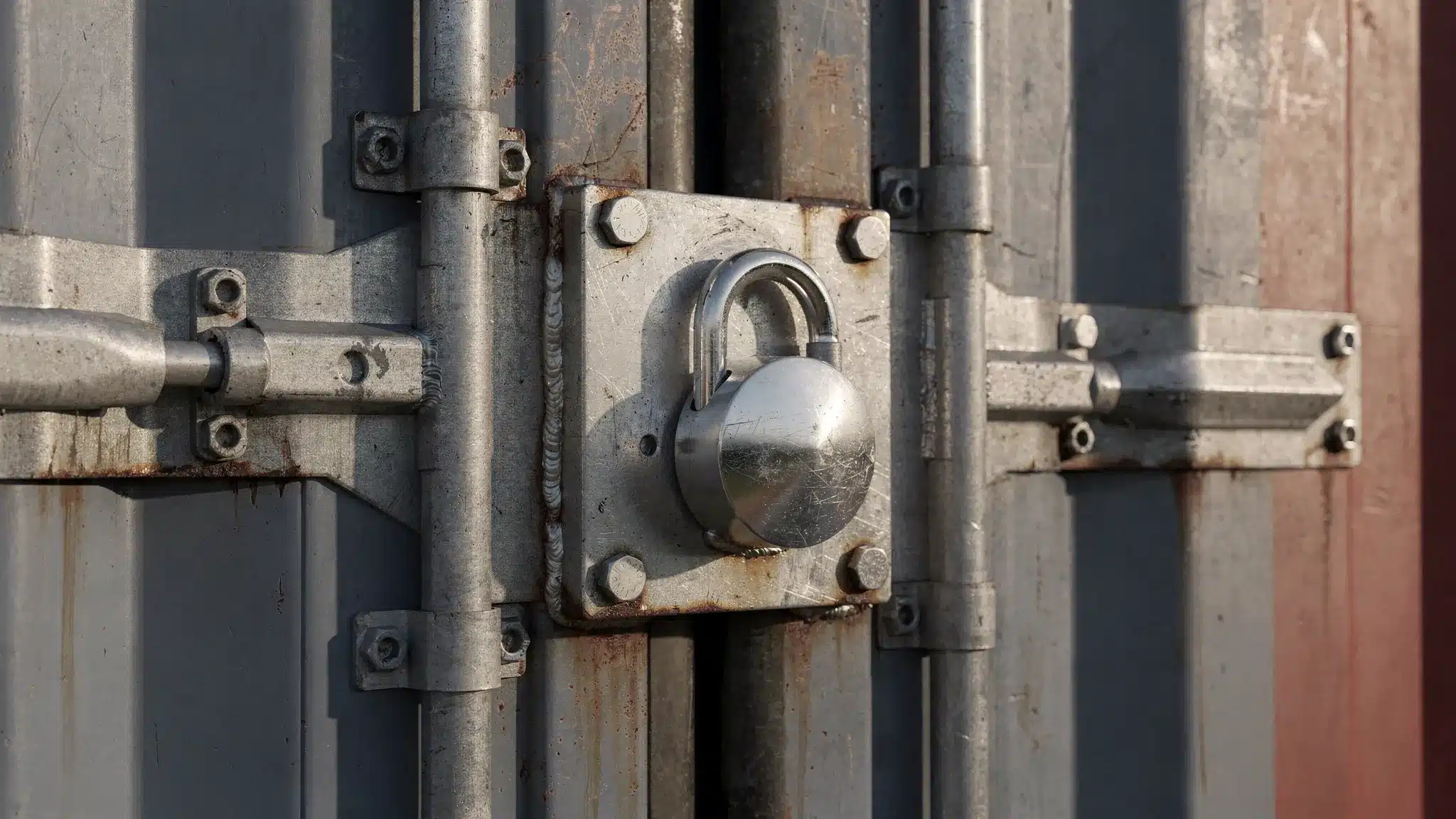
Lock protection (a lockbox or protected shackle design)
No major rust-through or structural damage around door frames and corner posts
At Global Containers Line, containers are thoroughly inspected before dispatch and offered as cargo-worthy and wind and watertight, which is the baseline you want for dependable storage.
Locks for shipping containers: what works best in the real world
If you only do one thing for security, upgrade the locking setup. Most break-ins happen at the door area, not through the side walls.
Lockbox + “puck lock” (one of the most common high-security setups)
A lockbox (also called a lock guard) is a welded steel housing that shields the padlock shackle from bolt cutters. Many buyers pair it with a puck-style lock because it has minimal exposed surface.
This setup is popular for:
Construction site storage (tools, generators, copper wire)
Small business backstock storage
Farm and ranch equipment storage
If you’re comparing secure shipping containers for sale, ask the seller whether the unit includes a lockbox already, and if not, what your options are.
If your container will hold tools, inventory, or equipment, review our guide to shipping containers for construction and job-site storage to see why lock protection matters so much in real-world use.
High-security padlocks (what to look for)
Not all padlocks are equal. For container use, look for:
A hardened shackle (or hidden shackle)
Drill/pick resistance ratings from a recognized standard (when available)
Weather resistance for outdoor placement
Avoid lightweight “shed locks” for container doors. Containers invite leverage and cutting attempts, so the lock quality matters.
Crossbar locks and door bar systems
Crossbar-style systems add a steel bar across the door faces, making it much harder to force doors open even if someone attacks the lock area.
They are often used when:
The container is in a remote location
You store high-value items (ATVs, appliances, retail inventory)
The container is left unattended for long periods
Because these systems can vary by container and use case, it’s smart to request a quote and discuss the security level you need.
Door security: the details that prevent break-ins
Even the best lock can fail if the doors and hardware are worn or compromised. Door condition is also a major difference between low-cost “as-is” units and storage-ready units.
Check the door seal, alignment, and cam hardware
Shipping container doors use locking bars (cam rods) that latch into keepers at the top and bottom. For secure storage, you want:
Tight door seal contact along both door edges
No severe warping at the door frame
Handles that rotate fully and latch firmly
If a door is hard to shut, buyers sometimes assume “that’s normal.” It’s not ideal for security or weather protection because misalignment can create pry points and water intrusion.
Before buying, use our shipping container inspection checklist to confirm the doors, seals, hardware, and frame condition all support long-term secure storage.
Hinges and weld points
Look closely at:
Hinges (no cracks, heavy deformation, or signs of tampering)
Weld seams around the lock area and door frame
For used units, surface rust is common, but you should be cautious about deep corrosion near doors because that’s where forced entry is most likely.
Consider a lock location that minimizes leverage
A common mistake is placing a padlock where there’s plenty of room for cutters or pry tools. A protected lock location (lockbox) reduces access and leverage.
Security upgrades buyers ask about (and how to choose)
Not every buyer needs every upgrade. A homeowner storing seasonal items has different needs than a contractor storing jobsite tools in Dallas or Houston.
Here’s a practical way to think about upgrades.
| Upgrade | What it helps with | Best for |
|---|---|---|
| Lockbox / lock guard | Protects lock from cutting attacks | Jobsites, retail storage, remote lots |
| Puck-style lock or hidden-shackle lock | Reduces exposed shackle and prying | General secure storage |
| Crossbar / door bar system | Reinforces doors against forced entry | High-value storage, unattended sites |
| Motion lighting (site-level) | Deters night theft | Driveways, farms, commercial yards |
| Alarm/contact sensor (site-level) | Alerts you if doors are opened | Businesses with after-hours risk |
Important note: upgrades can be installed in different ways depending on the container and your local requirements. If you’re unsure what’s realistic for your site, the fastest route is to request a delivered quote and share your intended use.
Choosing the right size for secure storage: 20ft vs 40ft
Security isn’t only about locks. It’s also about choosing a container size that you can place properly and monitor.
If you are still deciding between common sizes, start with what size shipping container fits your job so you can balance security, access, storage volume, and placement constraints.
20ft containers: easier to place, easier to secure
A 20ft container is often the go-to for secure storage because it’s easier to fit on residential lots, tighter job sites, and smaller commercial yards.
You can browse availability here: 20ft shipping containers.
40ft containers: more space, but plan the site carefully
A 40ft container is ideal when you need significant storage capacity for inventory, equipment, or materials. The key is ensuring you have enough clear access for delivery and that the doors remain easy to reach and monitor.
Browse options here: 40ft shipping containers.
Pricing: what affects the cost of secure storage containers for sale
If you want a better idea of total delivered cost, read our shipping container pricing guide to understand how size, condition, upgrades, and delivery access affect the final number.
Container prices vary by market and location, and security needs can change the final quote. Instead of focusing on a single national “average,” ask for an itemized delivered quote based on your city and site.
Key pricing factors include:
Size (10ft, 20ft, 40ft, high cube)
Condition (new vs used, cargo-worthy, wind and watertight)
Availability near your delivery ZIP code
Delivery distance and fuel
Offload method (tilt-bed delivery vs crane or forklift support)
Any requested modifications or upgrades (such as door changes or added security features)
If you’re comparing quotes in markets like Atlanta, Phoenix, Miami, Houston, Dallas, or Los Angeles, always confirm whether the price includes delivery, offload, and any local constraints that could affect placement.
Delivery: how secure containers arrive and what to prepare
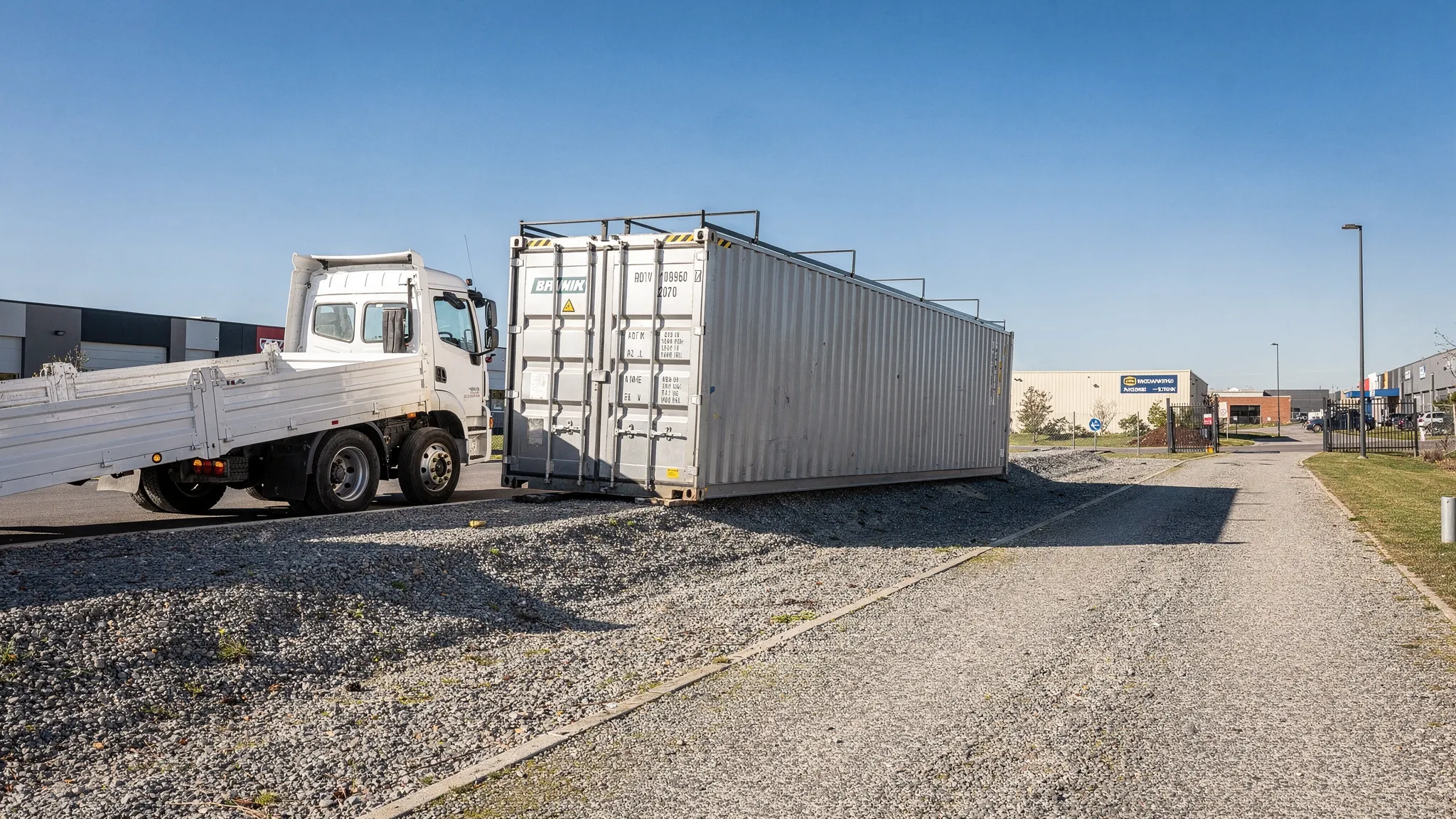
Security starts on day one, meaning the container must be delivered and placed correctly.
Global Containers Line offers fast nationwide delivery across the United States, including major metro areas and many surrounding regions.
Before delivery day, review our shipping container delivery and site preparation guide so the container arrives safely, is placed correctly, and remains easy to secure after drop-off.
To avoid common delivery problems, confirm:
Your site is accessible for a delivery truck (turning room matters)
The ground is level and stable (gravel, concrete, or compacted base is common)
Overhead clearance is sufficient (trees, wires, eaves)
The doors are oriented the way you want before the driver sets it down
If you expect high winds, heavy rain, or soft ground conditions, mention it during quoting so the delivery plan matches your site.
Container condition questions to ask (especially for security)
If you want truly secure, storage-ready equipment, these questions matter as much as the price.
| Question to ask | Why it matters |
|---|---|
| Is the container wind and watertight? | Keeps inventory dry and prevents corrosion, also indicates solid door seals |
| Is it cargo-worthy and inspected before dispatch? | Signals baseline structural integrity and fewer surprises on arrival |
| Do the doors open and close smoothly? | Poor alignment creates pry points and can defeat even a good lock |
| Are there any holes, patches, or rust-through near the doors? | Door-area weaknesses are common forced-entry targets |
| Can you provide current photos of the actual unit (or a comparable unit)? | Helps you confirm condition details before delivery |
This is especially important when buying used containers, because “used” can range from lightly worn to heavily repaired.
Location tips: security needs by region and use case
Your security setup should match local risk and weather.
In high-humidity coastal areas (parts of Florida, Texas Gulf Coast, and the Southeast), prioritize good door gaskets and wind and watertight condition to protect contents from moisture.
In high-theft or high-traffic areas (dense parts of California, Texas, Georgia, and major metro corridors), consider stronger lock protection (like a lockbox) plus site deterrents (lighting and visibility).
In remote rural areas (large parcels, farms, and ranches), think about layered security since response time can be slower.
Frequently Asked Questions
What are secure storage containers for sale, and are they different from shipping containers? Secure storage containers for sale are typically shipping containers used for on-site storage, often with lock and door security features (like lockboxes) to better resist break-ins.
What is the best lock for a shipping container? Many buyers choose a high-security puck-style lock used with a lockbox (lock guard) because it reduces exposed shackle area and helps resist cutting.
Should I buy new or used for secure storage? New containers usually have the best door seals and appearance, while used cargo-worthy containers can be a cost-effective option for secure storage when inspected and confirmed wind and watertight.
How much does delivery cost in the U.S.? Delivery depends on your location, distance, and offload requirements. The most accurate approach is requesting a delivered quote for your ZIP code and confirming site access.
Do you deliver nationwide? Yes. Global Containers Line provides fast nationwide delivery across the United States, including major cities like Houston, Dallas, Atlanta, Phoenix, and Miami.
What should I inspect when the container arrives? Check door operation, gasket condition, and that the unit matches the agreed condition (cargo-worthy, wind and watertight). Also confirm it’s placed correctly for secure locking and access.
Get a delivered quote, or browse secure containers in stock
If you’re shopping for secure storage containers for sale and want a unit that’s ready for real-world use, Global Containers Line can help you choose the right size, condition, and delivery plan.
If you want the fastest path to the right storage-ready unit, request a delivered quote and include your ZIP code, intended use, and the level of security you need.
Browse inventory:
Or, if you want the fastest and most accurate pricing, request a delivered quote with your city/state (or ZIP code) and tell us what you’re storing and how secure it needs to be.