
Buying in today’s container sales market can feel straightforward until you hit the fine print: grade labels (One-Trip, Cargo-Worthy, WWT, As-Is) and warranty terms that vary by seller.
If you’re buying a container for a job site in Texas, farm storage in Georgia, a retail buildout in Florida, or a custom project in Arizona or California, those details determine what you receive, what it will cost delivered, and what happens if there’s an issue.
This guide breaks down how to read container grades and warranty language so you can compare quotes confidently and avoid common surprises. Global Containers Line supplies new and used containers with fast nationwide delivery across the United States, including major markets like Houston, Dallas, Atlanta, Phoenix, Miami, Los Angeles, and Orlando.
Why grades matter in container sales (and why “used” is not enough)
Shipping containers are standardized in size, but not standardized in condition. Grades are the shorthand sellers use to communicate what to expect.
Where buyers get burned is assuming a grade is a universal guarantee. In reality:
- Some grade terms are industry-linked (like Cargo-Worthy and the CSC plate used for international shipping).
- Some are seller-defined (like Refurbished, Reconditioned, or “A Grade”).
The right grade depends on your goal:
- Storage: You usually want a container that is wind and watertight, has working doors, and a solid floor.
- Shipping cargo: You typically need Cargo-Worthy condition and a valid CSC plate.
- Conversions (office, home, kiosk): Appearance and straight walls can matter more than “shipping-ready.”
Common shipping container grades (what they usually mean)
Below are the most common grades you’ll see in container sales listings. Always confirm what the seller’s grade includes in writing.
One-Trip (New)
A One-Trip container has typically made a single loaded trip (often from the factory overseas) and is then sold.
What to expect:
- Clean interior, minimal dents
- Better door operation and seals
- Best option when looks matter or you want the most predictable condition
Best for: Retail builds, container offices, high-visibility sites, long-term projects.
Wind and Watertight (WWT)
WWT generally means the container is intended to keep out wind and rain under normal conditions, with working doors and seals.
Important note: WWT is widely used, but it is not a single global certification. It’s a condition promise that should be backed by an inspection process and clear remedy terms.
Best for: Storage, equipment lock-up, job site material protection.
Cargo-Worthy (CW)
Cargo-Worthy typically indicates a container is fit for transport use and can meet minimum requirements for shipping cargo.
In many transactions, “Cargo-Worthy” is tied to having a CSC safety approval plate and meeting structural expectations (like sound corner castings, functional doors, and floor integrity).
Best for: Export, intermodal movement, buyers who need a container that can be used in freight contexts.
As-Is (or “Not WWT”)
As-Is containers are often the lowest-priced category and may have issues like door problems, floor wear, patches, or leaks.
Best for: Buyers who can repair steel, use for parts, or need a low-cost unit for non-sensitive storage.
Refurbished / Reconditioned (varies by seller)
This label can mean anything from “painted and patched” to a more thorough rebuild.
Best practice: Treat this as a marketing term until you confirm exactly what was done (rust treatment, roof patches, door gasket replacement, floor repair, repainting).
Quick comparison table (featured-snippet friendly)
| Grade label | What it usually means | Best for | What to confirm before you buy |
|---|---|---|---|
| One-Trip (New) | Minimal wear, best cosmetics | Conversions, visible sites | Door operation, dents, flooring type, any transit scuffs |
| WWT | Intended to keep out wind and water | Storage | Leak guarantee details, door seals, floor condition |
| Cargo-Worthy | Suitable for cargo use, often tied to CSC | Shipping/export | CSC plate status, structural condition, floor/doors |
| As-Is | May have known defects | Repairs, parts, budget builds | Specific defects, whether it leaks, door function |
| Refurbished | Seller-defined improvements | Storage or conversion | What repairs were performed, what warranty applies |
How to read a container listing like a buyer (not a browser)
A good listing should help you answer three questions quickly:
1) What condition standard is being promised?
Look for explicit language like:
- “Wind and watertight (no holes, no leaks)”
- “Cargo-worthy / CSC”
- “As-is”
Be cautious with vague phrases like “good condition,” “A-grade,” or “ready to use” if they do not define measurable outcomes.
2) What defects are acceptable for that grade?
Used containers almost always show cosmetic wear. That’s normal. What matters is whether the wear affects your use.
Common acceptable items (for many used grades):
- Surface rust (not deep corrosion)
- Dents on side panels
- Scratches and old decals
Items you should clarify before purchase:
- Roof condition (standing water can reveal low spots; patches should be sealed properly)
- Door function (lock rods should engage smoothly)
- Gaskets (torn seals are a common cause of moisture intrusion)
- Floor integrity (soft spots, delamination, heavy staining)
3) Is the price a delivered price, or yard price?
In container sales, the cheapest sticker price often excludes the most expensive variable: delivery and offload.
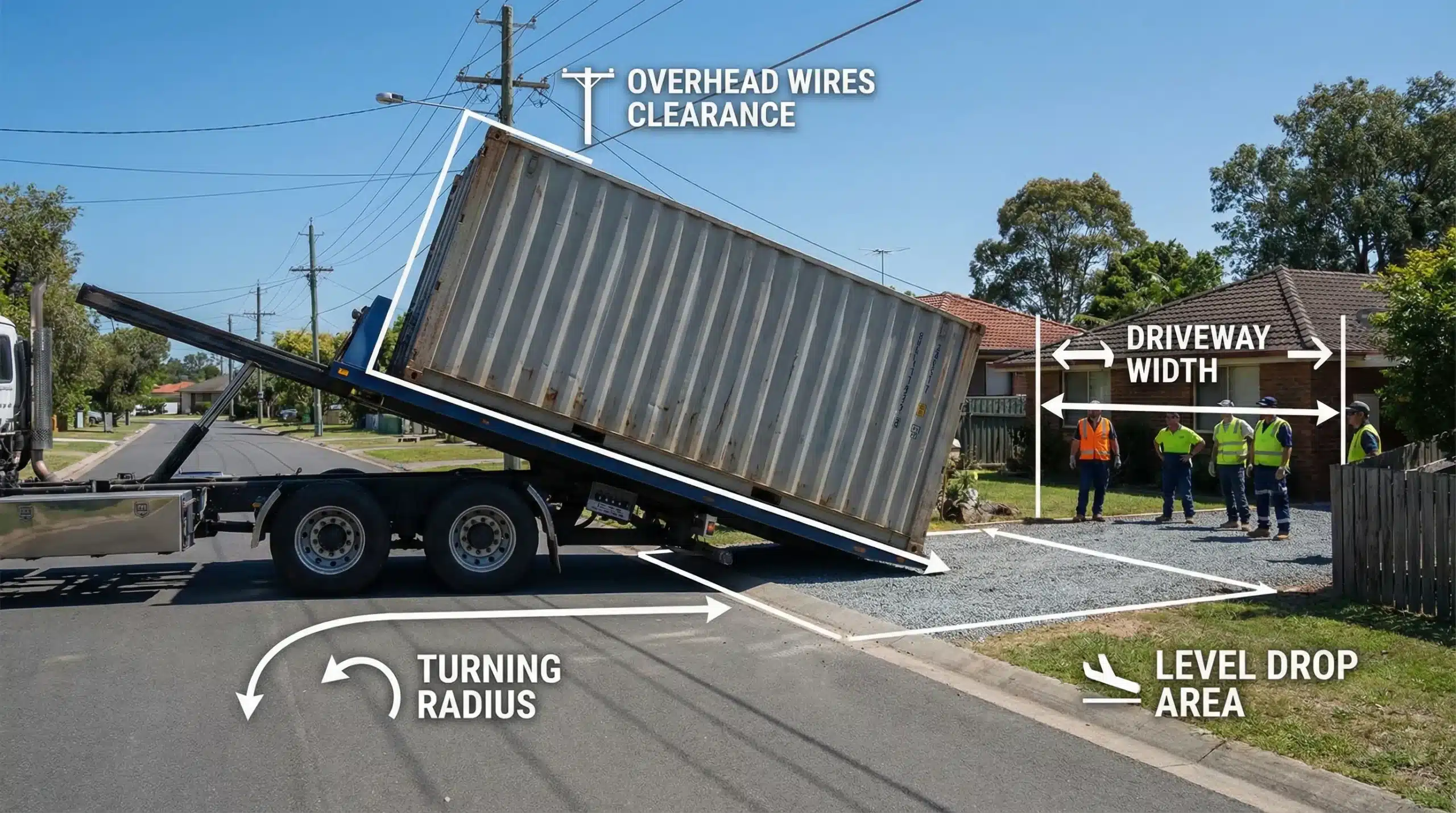
A delivered quote should clearly state:
- Delivery location (city and ZIP)
- Offload method (tilt-bed, flatbed with customer-provided unload, crane, etc.)
- Site access requirements (turning radius, overhead clearance)
- Any potential surcharges (tight access, timed delivery, reroute)
If you’re comparing quotes in markets like Dallas, Houston, Atlanta, Phoenix, Miami, Orlando, or Los Angeles, make sure you’re comparing the same delivery assumptions.
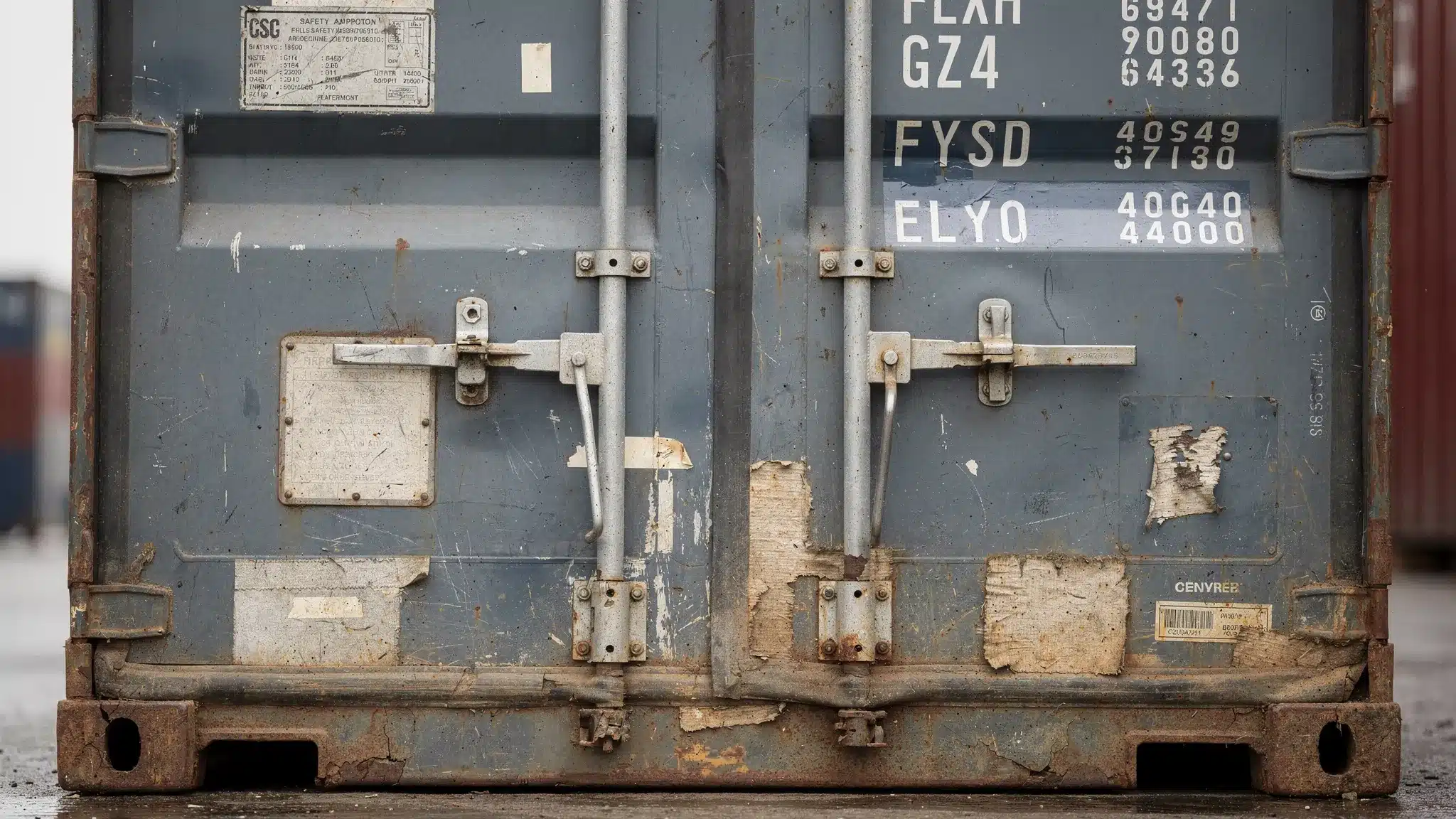
CSC plates, markings, and documentation (what to check)
If you plan to ship internationally or need confidence in transport suitability, learn the basics of container identification.
CSC plate (the big one for shipping)
The International Convention for Safe Containers (CSC) establishes safety requirements for containers used in international transport. You can read an overview from the International Maritime Organization (IMO).
What buyers should look for on the CSC plate:
- The container’s identification
- Safety approval information
- Dates related to re-examination (depending on how it’s maintained and documented)
Practical takeaway: If a seller advertises Cargo-Worthy for shipping use, ask whether the unit has a readable CSC plate and whether it’s valid for your intended shipping timeline.
Container number and owner code
A container’s ID markings help track the unit and match paperwork to the physical container. If you’re buying for logistics use, ask for the container number in advance so you can keep records clean.
Warranty terms: what’s normal, what’s confusing, and what to ask
“Warranty” in container sales rarely looks like a consumer appliance warranty. It’s typically limited, and the value is in the details: what triggers it, what proof is required, and what remedy is offered.
What a container warranty commonly covers
Coverage depends on grade and seller policy, but many reputable sellers focus warranty coverage on functional outcomes, such as:
- Wind and watertight performance (no active leaks through roof/walls/doors under normal conditions)
- Door operation (locks/handles functioning as delivered)
What container warranties commonly do not cover
It’s common for warranties to exclude:
- Cosmetic issues (scratches, dents, faded paint)
- Normal surface rust on used containers
- Condensation (moisture inside from temperature swings, especially in humid states like Florida or along the Gulf Coast)
- Damage caused after delivery (customer modifications, moving the unit, impacts)
The most important warranty questions to ask (and why)
| Warranty term to read | What it means in plain English | What to ask the seller |
|---|---|---|
| “Wind & watertight guarantee” | Promise the container won’t leak | What counts as a leak, and what’s the remedy (repair, exchange, credit)? |
| “Inspection window after delivery” | You may need to report issues fast | How many days do I have, and what photos are required? |
| “Excludes wear and tear” | Used containers have cosmetic wear | Is surface rust acceptable, and what level of corrosion is not acceptable? |
| “Delivery damage process” | Claims may require documentation | Who signs the delivery receipt, and what should I photograph at drop? |
| “As-is sale” | No promises beyond what’s stated | Can you list known defects and confirm door function and floor condition? |
Delivery damage vs. pre-existing condition
A fair process protects both the buyer and the seller.
Best practice for buyers: document the condition immediately.
- Take clear photos of all four sides, the roofline if visible, door gaskets, and the floor.
- Test doors before the driver leaves, when possible.
- Note any concerns on the delivery receipt if the carrier provides one.
This matters whether you’re receiving a container at a construction site outside Atlanta, a residential driveway near Orlando, or a commercial yard in Phoenix.
How grades and warranty terms affect pricing
Buyers often ask for a “typical price,” but in container sales, pricing depends on a short list of drivers:
- Size (10ft vs 20ft vs 40ft)
- Condition grade (One-Trip generally costs more than WWT, which generally costs more than As-Is)
- Local availability near your delivery market
- Delivery distance and offload complexity
- Add-ons (lock boxes, vents, shelving, custom paint, modifications)
A simple rule: if two quotes are far apart, one of these is usually different:
- The actual grade/condition promised
- What “delivered” includes
- The warranty and inspection process
If you’re comparing sizes for storage or projects, start with the most common options:
- A 20ft shipping container is a popular fit for job sites, small businesses, and homeowners with limited space.
- A 40ft shipping container is often the best value per square foot for commercial storage, farms, and larger builds.
Delivery expectations in the USA (timelines, access, and what can change the quote)
Fast nationwide delivery is a major reason buyers choose online container sales, but delivery is also where most surprises happen.
What to confirm before dispatch
Ask your supplier to confirm:
- Delivery method (tilt-bed vs flatbed)
- Required clearance (width, height, turning radius)
- Surface requirements (firm, level area for placement)
- Door orientation at drop (doors facing the direction you need)
If you’re in dense areas like Los Angeles or Miami, access can be tighter and may affect equipment choice. In rural routes outside Dallas or Atlanta, soft ground or steep grades can be the challenge.
On-delivery inspection checklist (quick and practical)
Walk the unit and check:
- Doors open/close smoothly and lock rods engage
- Door gaskets are intact
- Floor feels solid underfoot
- No visible holes in roof or walls
- No daylight visible through door seals when closed
If your purchase includes a wind and watertight promise, this inspection supports any claim if you discover a leak.
Buying from a trusted supplier: what to expect from Global Containers Line
If you want container sales to be predictable, look for a supplier that combines clear grading, inspection discipline, and delivery coordination.
Global Containers Line is a USA-based supplier of new and used shipping containers for storage, construction, commercial, and residential use. Based on our standard process:
- All containers are thoroughly inspected before dispatch
- Units are sold as cargo-worthy and wind and watertight
- Pricing is transparent (no hidden fees) with secure online ordering
- We provide fast nationwide delivery across the United States, including major cities like Houston, Dallas, Atlanta, Phoenix, Miami, Los Angeles, and Orlando
Ready to compare grades and get a delivered quote?
Browse available inventory and choose the size that fits your project:
If you want help matching grade and warranty terms to your use case (storage, shipping, or conversion), request a quote with your ZIP code and site details so we can confirm the right container and delivery plan.