
Rent-to-own sea containers can sound like the perfect middle ground: you get a container on site quickly, but you spread the cost over time instead of paying everything upfront.
That can be a smart move for some U.S. buyers. For others, the fine print (fees, early payoff rules, delivery limits, and who pays for damage) can turn a “budget-friendly” plan into an expensive commitment.
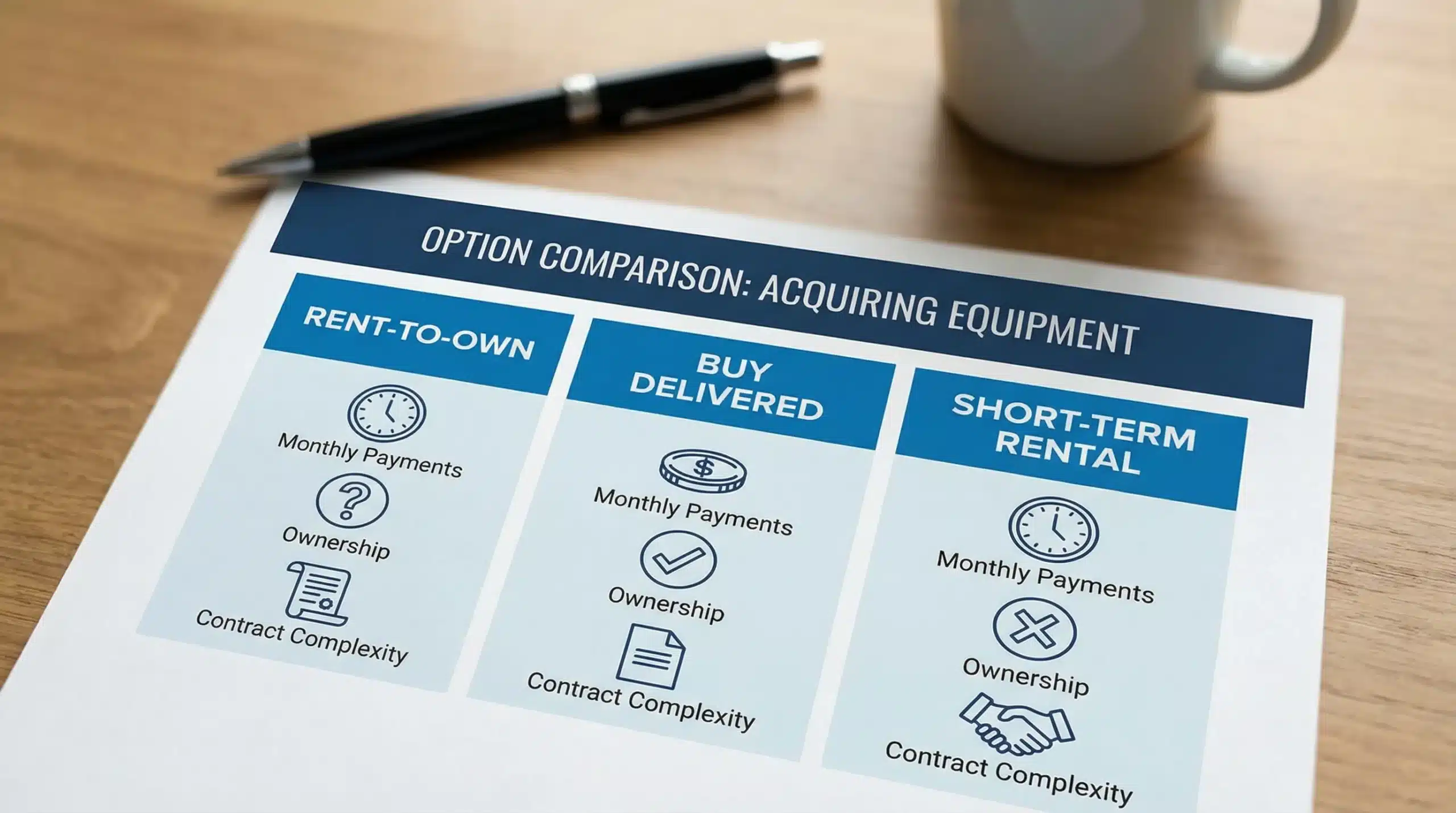
Below is a clear, buyer-focused guide to who rent-to-own sea containers fit best, what to watch in the contract, and how to compare rent-to-own against buying a shipping container delivered to your property.
What “rent to own” sea containers usually means
In most rent-to-own programs, you take delivery of a container (commonly 20ft or 40ft) and make monthly payments for a set term. If you complete the term and meet the agreement conditions, you become the owner.
Because “rent to own” is not a single standardized product, two offers with the same monthly payment can have very different total costs once you add delivery, fees, and buyout terms.
Common rent-to-own structures you will see
True rent-to-own: Monthly payments include an ownership component, and ownership transfers after the final payment.
Lease with a purchase option: You lease for a period, then you can buy later for a stated purchase price.
Rent-to-own with a balloon: Lower monthly payments, but a larger final payment to take ownership.
Key takeaway: Always ask for the full written agreement and calculate the total cost, not just the monthly payment.
Who rent-to-own sea containers fit best (and who they do not)
Rent-to-own is usually a better fit when cash flow and speed matter more than the lowest total price.
Best-fit buyers
Rent-to-own often makes sense for:
- Construction companies and contractors who need secure onsite storage now, but want payments to line up with project billing.
- Small businesses that need quick overflow space (seasonal inventory, tools, parts storage) and prefer a predictable monthly expense.
- Farm and ranch owners who need lockable storage for feed, tack, equipment, or spare parts without a large upfront purchase.
- Homeowners who need temporary-to-longer-term storage during a remodel or move, and are not yet sure they will keep the container for years.
This is especially common in fast-growing markets where storage needs can change quickly, like Houston and Dallas (TX), Atlanta (GA), Phoenix (AZ), Miami and Orlando (FL), and Los Angeles (CA).
When rent-to-own is usually a poor fit
Buying is often more economical (and simpler) when:
- You already know you will keep the container long-term.
- You plan to modify the unit (roll-up doors, man doors, windows, insulation, electrical), and you want clear ownership and resale rights from day one.
- You can pay upfront or have access to lower-cost financing.
- You want maximum choice in condition grades, paint quality, and delivery scheduling.
If you are leaning toward ownership from day one, it is worth pricing a delivered purchase for common sizes first, especially a 20ft shipping container or 40ft shipping container.
The biggest watch-outs in rent-to-own container contracts
Most “rent-to-own regret” comes from details that were not obvious in the initial quote. Before signing, review the agreement for the items below.
Total cost of ownership (not just the monthly payment)
Ask for an “all-in” number.
A simple comparison formula:
Total rent-to-own cost = (monthly payment × number of months) + buyout + delivery + all fees + taxes
Then compare that number to a delivered purchase quote for the same size and condition.
Early payoff terms (and whether they actually save you money)
Many buyers assume they can pay it off early and save. That is not always true.
Confirm in writing:
- Whether early payoff is allowed
- Whether there is a payoff discount or if you still owe most remaining payments
- Whether the buyout amount changes if you pay early
If the seller will not clearly provide payoff terms, slow down and treat that as a risk.
Delivery, relocation, pickup, and access rules
Delivery is a major part of the real cost, and rent-to-own programs handle it differently.
Clarify:
- Whether delivery is included for your specific ZIP code
- What happens if you need the container moved to a new site (common for contractors)
- Who pays for pickup if you cancel, default, or end early
- Whether there are charges for failed delivery attempts due to tight access or soft ground
Responsibility for damage and maintenance
Many rent-to-own agreements shift responsibility to the customer immediately after delivery, even before you legally own the container.
Ask:
- Who is responsible for door repairs, roof leaks, and lockbox damage
- What happens after storm damage, forklift impacts, or vandalism
- Whether you are required to keep it “wind and watertight” during the term
If you are storing high-value tools, inventory, or farm equipment, maintenance responsibilities matter as much as the monthly payment.
Default, late fees, and repossession language
Look closely at:
- Grace periods and late fees
- Repossession rights
- Whether you lose prior payments if the unit is reclaimed
If the language is confusing or the seller will not explain it plainly, that is a sign to step back.
A quick contract review table you can use
| Contract item to verify | What to ask for | Why it matters |
|---|---|---|
| Total cost | All payments, buyout, fees, taxes, delivery | Prevents “cheap monthly, expensive total” deals |
| Buyout terms | Buyout amount and timing | Determines what ownership really costs |
| Early payoff | Payoff amount schedule in writing | Avoids paying full term anyway |
| Delivery coverage | Delivery included to your ZIP, placement method | Avoids surprise transport charges |
| Relocation/pickup | Move and pickup fees | Important for jobsites and changing locations |
| Damage/maintenance | Who repairs doors, roof, seals, floor | Sets your real risk and upkeep costs |
| Default terms | Late fees, repossession rules, payment forfeiture | Protects you from worst-case outcomes |
Container condition: what to verify before you accept delivery
Whether you rent-to-own or buy outright, container condition determines whether it will actually work for storage, construction, or a future conversion.
Sellers often use broad labels like “used” that do not tell you much. For most buyers, the practical questions are about function and weather protection.
At Global Containers Line, containers are described as cargo-worthy, wind and watertight, and thoroughly inspected before dispatch. When comparing offers, try to compare on the same functional criteria so you are not comparing apples to oranges.
On-delivery inspection checklist (do this before the driver leaves when possible)
- Doors: open and close smoothly, locking bars align, hinges are intact
- Seals and gaskets: visible, not torn, doors close tightly
- Roof: no active leaks, no punctures or soft spots
- Floor: solid with no soft areas, no strong chemical odors
- Sidewalls and corners: no major structural damage that affects squareness or corner castings
If something is off, document it immediately with photos and notify the seller right away.
Delivery questions: what to expect in the U.S. and how to prep your site
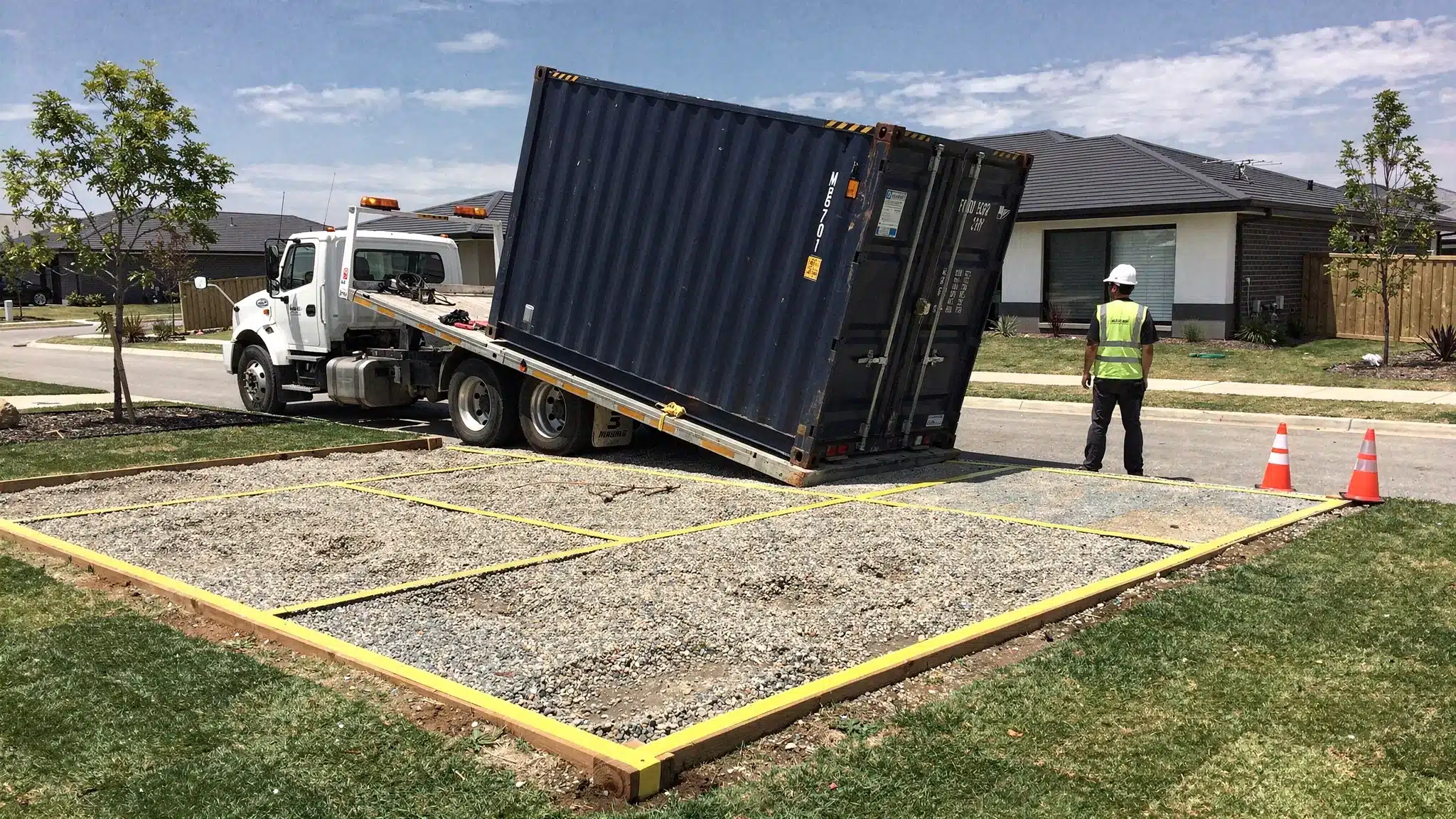
Delivery is where many first-time container purchases and rent-to-own deliveries go sideways. Access limitations, overhead obstructions, and soft ground are common causes of rescheduling fees.
Global Containers Line offers fast nationwide delivery across the United States, including major metros and surrounding areas such as Houston, Dallas, Atlanta, Phoenix, Miami, Orlando, and Los Angeles.
Site prep essentials (featured-snippet friendly)
- A firm, level surface (concrete, asphalt, compacted gravel, or a well-prepared pad)
- Clear access for the delivery truck, including turning room
- Overhead clearance free of power lines and tree limbs
- Space for the container doors to fully open
Delivery planning table
| Delivery detail | Why it matters | What to confirm or prepare |
|---|---|---|
| Access width and turns | Prevents failed deliveries and added fees | Measure gates, driveways, tight corners |
| Ground condition | Soft ground can sink under container weight | Use compacted gravel or a pad |
| Level placement | Twisting can cause doors to bind | Level the site, use blocks if needed |
| Door orientation | Affects daily usability | Tell the dispatcher which end you want facing out |
| Local rules | Some areas restrict placement | Check city, county, and HOA guidance |
If your project is in a dense neighborhood or a tight commercial yard, it can be worth sharing photos of the approach, gate openings, and placement area when getting quotes.
Pricing: how to compare rent-to-own vs buying without getting misled
Rent-to-own pricing varies by provider, term length, container size, local supply, and delivery distance. Instead of relying on “typical monthly payments,” compare quotes using the same inputs.
Use this side-by-side comparison framework
| Item to compare | Rent-to-own quote | Delivered purchase quote |
|---|---|---|
| Container size (10ft, 20ft, 40ft, high cube) | ||
| Condition standard (cargo-worthy, wind/watertight, one-trip) | ||
| Total due at signing | ||
| Monthly payment and term length | ||
| Buyout amount (if any) | ||
| Delivery included to your ZIP | ||
| Total delivered cost (all-in) | ||
| Early payoff allowed | ||
| Maintenance and damage responsibility |
Pricing factors that move both quotes up or down
Whether you rent-to-own or buy, the same core variables drive price:
- Size and height: 40ft and high cube units usually cost more than standard 20ft.
- Condition and age: newer units, cleaner floors, and better door operation usually mean higher pricing.
- Local availability: pricing can shift near ports and in high-demand markets.
- Delivery distance and placement difficulty: longer routes, limited access, or special placement needs can add cost.
If you want an ownership baseline, start with the size that matches your use case: a 20ft shipping container for compact storage, or a 40ft shipping container when you need maximum space per delivered unit.
When buying a container is the cleaner, lower-risk option
In many real-world scenarios, buying wins because it removes contract uncertainty.
Buying is often the better path when:
- You want clear ownership from day one (especially for modifications and resale)
- You want to minimize long-term total cost
- You need predictable condition standards (cargo-worthy, wind and watertight)
- You want to avoid surprises like balloon payments, pickup charges, or payoff penalties
If you are early in the process, Global Containers Line’s Ultimate Shipping Container Buying Guide is a helpful overview of sizing, condition, delivery access, and what to ask before ordering.
How Global Containers Line helps U.S. buyers who decide to purchase
If you compare rent-to-own against ownership and decide buying is the better fit, Global Containers Line is a trusted U.S. supplier of new and used shipping containers for storage, construction, commercial, and residential use.
What buyers typically value most:
- Cargo-worthy, wind and watertight containers that are thoroughly inspected before dispatch
- Transparent pricing with no hidden fees
- Secure online ordering
- Fast nationwide delivery across the USA
To start comparing real options now, browse current inventory:
- Shop 20ft shipping containers
- Shop 40ft shipping containers
Next step: get a delivered quote you can compare fairly
If you are weighing rent-to-own sea containers against buying, the fastest way to make a confident decision is to compare two quotes for the same size and condition standard, delivered to your ZIP code.
Browse available containers online or request a quote and we will help confirm the right size, condition, and delivery plan for your location, whether you are in Texas, Florida, Georgia, Arizona, California, or anywhere else in the United States.
WOW just what I was looking for. Came here by searching for Cockfighting
Everything is very open with a really clear description of the issues.
It was truly informative. Your website is extremely helpful.
Thank you for sharing!
I simply couldn’t go away your website before suggesting that I really loved the usual information a person provide on your guests?
Is going to be again regularly in order to check out new posts