
When you’re shopping for a container, “size” can mean three different things: exterior dimensions (what you need for site fit), interior space (what you can store or build), and door opening (what can actually get inside). This guide breaks down the standard shipping container sizes from 10ft to 45ft, with practical tips for U.S. buyers in construction, logistics, agriculture, and residential storage.
If you're comparing container sizes before purchasing, you can explore available 20ft shipping containers and 40ft shipping containers with nationwide delivery.
Standard shipping container sizes at a glance (10ft to 45ft)
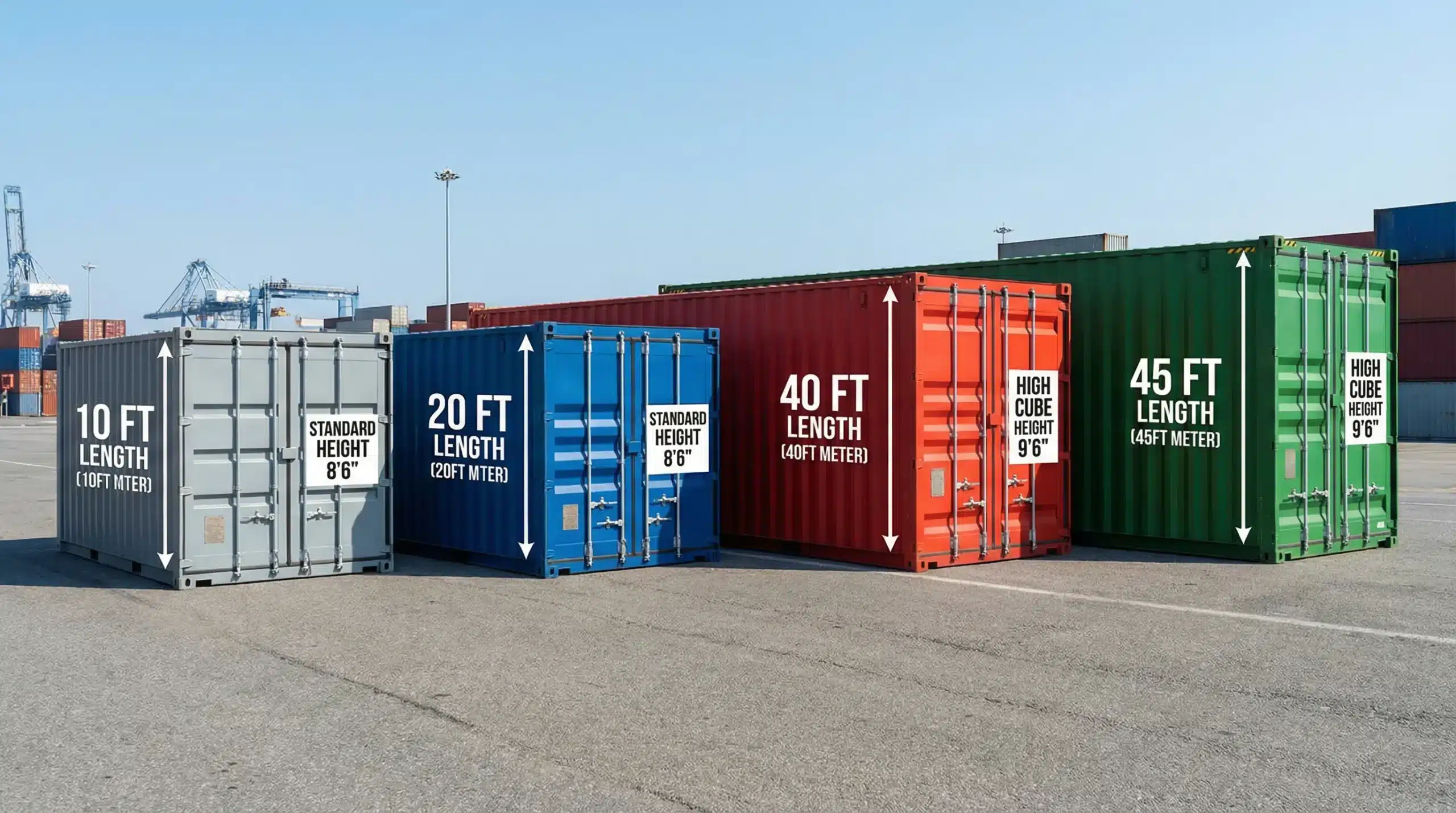
Most ISO containers share the same width, and the biggest differences are length and height.
| Container size | Typical exterior (L x W x H) | Common height options | Best for |
|---|---|---|---|
| 10ft | 10' x 8' x 8'6" | Standard | Tight spaces, tools, small storage |
| 20ft | 20' x 8' x 8'6" | Standard, High Cube (9'6") | General storage, job sites, small builds |
| 40ft | 40' x 8' x 8'6" | Standard, High Cube (9'6") | Large storage, inventory, multi-room builds |
| 45ft | 45' x 8' x 9'6" | High Cube (typical) | High-volume storage, warehouse overflow |
Important: Exact measurements vary by manufacturer and condition (used containers can have repaired floors, modified vents, or different door hardware). If you’re planning a tight delivery spot or a container build, confirm the spec sheet before purchase.
What “standard” means in shipping container dimensions
Standard width
Most containers you’ll see for sale in the U.S. are 8 feet wide externally. That consistent width is why containers stack, ship, and place easily across ports, rail, and truck delivery.
Standard vs High Cube height
Height is where many buyers get surprised.
Standard height: 8'6" exterior
High Cube height: 9'6" exterior (1 foot taller)
High Cube containers are popular for construction storage, retail inventory, and container conversions because the extra headroom helps with shelving, HVAC, insulation, and more comfortable interior clearance.
Exterior vs interior vs door opening
A quick rule for planning:
Exterior dimensions matter for fit, delivery, and setbacks.
Interior dimensions matter for pallets, equipment, and usable square footage.
Door opening matters for forklifts, wide items, and roll-in storage.
If you’re buying for a job site in Dallas, a farm outside Phoenix, a warehouse in Atlanta, or a residential driveway in Miami, door clearance and truck access can matter as much as the container length.
10ft shipping container size (when space is limited)
A 10ft shipping container is ideal for tight spaces, small storage needs, and job sites where a full-size container may not fit.
Typical 10ft dimensions
Many 10ft containers are cut-down or purpose-built, so specs can vary more than ISO sizes.
Exterior: about 10' x 8' x 8'6"
Use cases: tools, job boxes, small inventory, equipment on tight sites
Who should choose a 10ft container?
If you need a secure, lockable unit but you’re working with limited access, think:
Urban construction sites
Small business back-of-building storage
Homeowners with short driveways or HOA restrictions (always confirm local rules)
20ft container dimensions (the most versatile size)
The 20ft shipping container is the most widely used container size for storage, equipment, and business inventory.
Typical 20ft shipping container exterior and interior
Common reference specs (approximate):
Exterior (standard): 20' x 8' x 8'6"
Interior length: around 19'4"
Interior width: around 7'8"
Interior height (standard): around 7'10"
Door opening (typical): around 7'8" wide x 7'5" high
High Cube 20ft units add height, which can help if you’re storing tall racks, commercial equipment, or planning a build.
Best uses for a 20ft container
Construction site storage (materials, tools, secured equipment)
Small business inventory overflow
Farm and ranch storage (feed, fencing supplies, parts)
Conversion projects (small office, workshop, pop-up retail)
If you’re actively comparing options, browse current inventory for 20ft shipping containers.
40ft container dimensions (maximum space, great value per foot)
A 40ft shipping container provides significantly more storage capacity and is commonly used for large equipment, construction storage, and bulk inventory.
Typical 40ft shipping container exterior and interior
Common reference specs (approximate):
Exterior (standard): 40' x 8' x 8'6"
Interior length: around 39'5"
Interior width: around 7'8"
Interior height (standard): around 7'10"
Door opening (typical): around 7'8" wide x 7'5" high
40ft Standard vs 40ft High Cube
A 40ft High Cube shipping container offers an additional foot of height, making it ideal for shelving systems, conversions, and taller cargo.
If you’re deciding between the two, here’s the simplest comparison.
| 40ft type | Exterior height | Why buyers choose it |
|---|---|---|
| 40ft Standard | 8'6" | Lower overall height, slightly easier clearance planning |
| 40ft High Cube | 9'6" | More vertical storage, better for conversions and tall shelving |
For large storage needs or container-based builds, start here: 40ft shipping containers.
45ft shipping container dimensions (high-capacity storage)
The 45ft container is commonly a High Cube design, built for moving and storing more volume while staying in a familiar 8ft width.
While less common for storage buyers, 45ft shipping containers are used in some transport and logistics operations requiring extra capacity.
Typical 45ft dimensions
Approximate reference specs:
Exterior: 45' x 8' x 9'6" (High Cube)
Best uses: high-volume inventory, warehouse overflow, larger commercial storage
When 45ft makes sense
Consider a 45ft if you:
Want more capacity than a 40ft without buying a second container
Have enough delivery space for a longer truck approach
Are staging large commercial projects where volume matters more than maneuverability
How to choose the right container size (practical checklist)
Instead of guessing, use this approach that works for most U.S. buyers.
1) Measure your placement area and access route
Before ordering, measure:
The pad area (length, width, overhead clearance)
Gate openings and driveway turns
Overhead obstacles like power lines and tree limbs
A 40ft or 45ft delivery typically needs more room to maneuver than a 20ft, especially on residential streets or tight job sites.
2) Decide what “capacity” really means for you
Ask what you’re storing or building.
Storing pallets or boxed inventory? Interior width and door opening matter.
Storing long items like lumber, pipe, or rolls? Length matters.
Converting to workspace? High Cube height often pays off.
3) Pick your condition: new vs used (what to expect)
At Global Containers Line, containers are thoroughly inspected before dispatch and offered in conditions that match common buyer needs:
New (often called “one-trip”) typically has the cleanest interior and best cosmetic condition.
Used (cargo-worthy) is a cost-effective option for storage and many projects.
In general, look for these condition basics in any container purchase:
Cargo-worthy rating for structural integrity
Wind and watertight protection for storage
Solid floors and functional doors
If you're still deciding which container size fits your project, our shipping container buying guide explains the most common options used by homeowners, businesses, and construction sites.
Pricing questions: what affects the cost of a 10ft, 20ft, 40ft, or 45ft container?
Shipping container pricing moves based on market supply and logistics, so the best way to get an accurate number is a current quote. That said, here are the biggest factors buyers should understand.
Main pricing drivers
Size: Larger containers generally cost more.
Condition: New containers usually cost more than used cargo-worthy units.
Type: High Cube, specialty doors, or modifications can change price.
Delivery distance and access: Delivering to dense city areas (like Houston or Miami) or remote locations can impact logistics.
Availability near your ZIP code: Inventory and local depot positioning matter.
Global Containers Line focuses on competitive pricing with no hidden fees, so you can budget with more confidence once your delivery location and container type are confirmed.
Delivery questions: how nationwide container delivery works in the USA
Buying online is convenient, but delivery is where a smart plan prevents delays.
Before ordering, it's helpful to understand how delivery works. Our guide on shipping container delivery preparation explains how to prepare your site.
Do you deliver nationwide?
Yes, Global Containers Line offers fast nationwide delivery across the United States, including major metros and surrounding areas such as Dallas, Houston, Atlanta, Phoenix, Miami, and more.
Typical delivery considerations
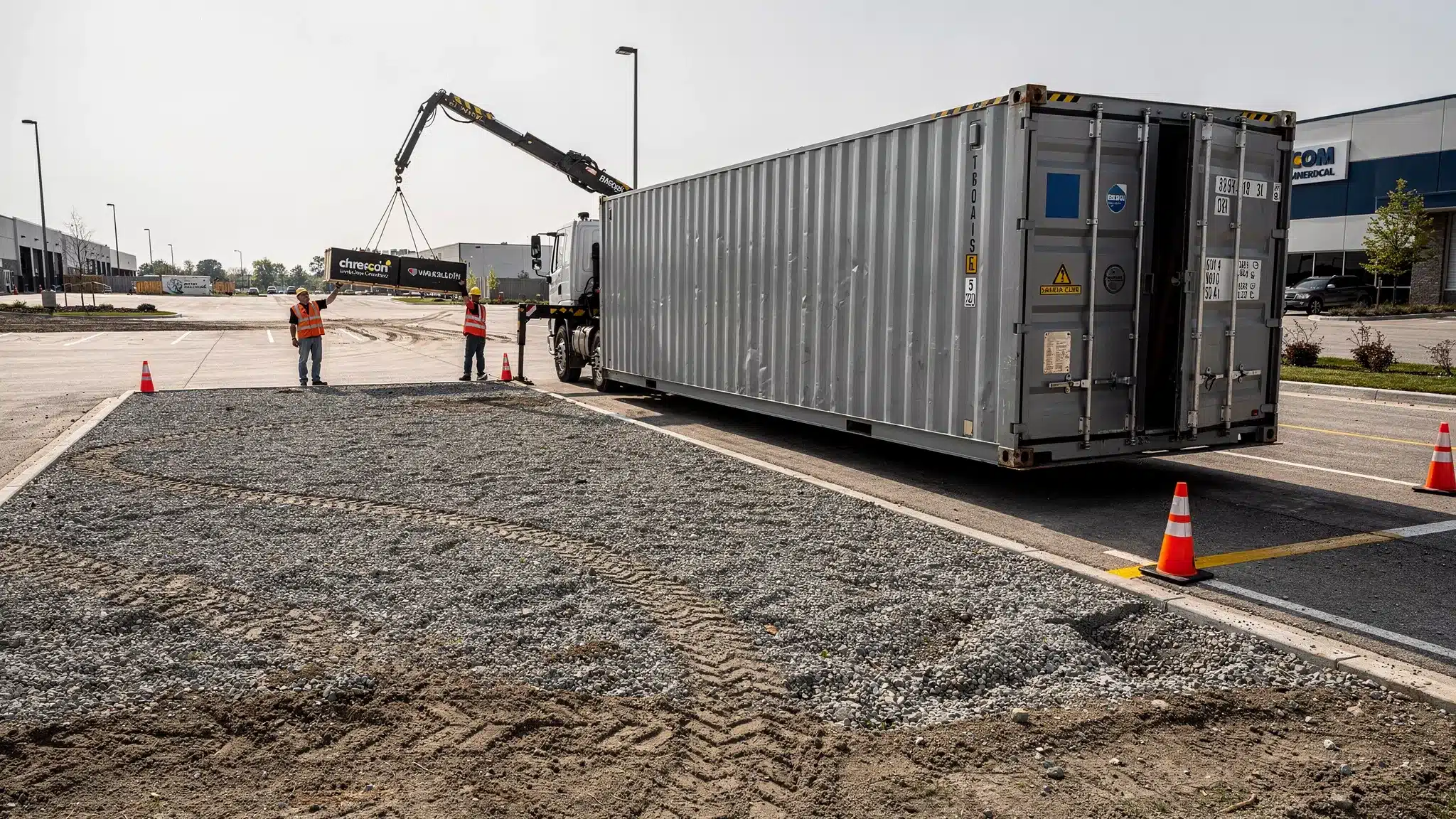
Delivery method: Many container drops use a tilt-bed or roll-off setup.
Ground conditions: A level, stable surface helps with door alignment and long-term use.
Clearance: High Cube units are taller, and any container needs overhead clearance during unloading.
How to prepare your site
A simple prep checklist:
Confirm there’s room for the truck to approach and exit.
Clear overhead obstacles.
Mark the exact placement spot.
If needed, lay down gravel, pavers, or railroad ties for support.
For a deeper overview of what happens after you order, you can also reference the company’s buyer resource: Ultimate Shipping Container Buying Guide.
Common use cases by size (real-world examples)
Construction and job sites
10ft for tools and lockable storage near crews
20ft for materials, small equipment, and secure job boxes
40ft for multi-trade staging, larger equipment, and bulk materials
Business and logistics
20ft for overflow inventory behind a storefront
40ft and 45ft for warehouse overflow, seasonal stock, and distribution staging
Residential and farm storage
10ft or 20ft for household storage, furniture, and secure equipment
40ft for larger properties, ranch operations, and long-term storage plans
If you’re still deciding, the quick rule is: choose the smallest container that fits your storage plan today, unless you know you’ll outgrow it within a year.
Frequently Asked Questions
What are standard shipping container sizes? Standard shipping container sizes commonly refer to 10ft, 20ft, 40ft, and 45ft containers, usually 8 feet wide, with standard height (8'6") or High Cube height (9'6").
What is the difference between a standard container and a High Cube container? A High Cube container is typically 1 foot taller than a standard container (9'6" vs 8'6" exterior height). That extra height adds usable vertical storage and is popular for conversions.
How much does a shipping container cost in the USA? Pricing depends on size, condition (new vs used), availability near your location, and delivery logistics. For accurate pricing, request a quote based on your ZIP code and the container type you want.
Do you offer delivery across the United States? Yes. Global Containers Line provides fast nationwide delivery across the United States, including major cities like Houston, Dallas, Atlanta, Phoenix, and Miami, plus surrounding areas.
Are used shipping containers still waterproof and secure? Quality used containers sold as cargo-worthy and wind and watertight are designed to protect contents from the elements. Always confirm inspection standards and the container’s condition before dispatch.
Most buyers choose between 20ft shipping containers and 40ft shipping containers depending on available space and storage requirements.
Browse Available Shipping Containers
• Shop 10ft shipping containers
• Shop 20ft shipping containers
• Shop 40ft shipping containers
• Shop 40ft High Cube containers
• Request a delivery quote