
A refrigerated shipping container (often called a “reefer container”) can be an excellent way to add reliable cold storage for food, pharmaceuticals, flowers, hunting, restaurants, farms, and job sites. But unlike a standard storage container, a refrigerated unit only does its job when the power supply and electrical setup are planned correctly.
A reefer is a specialized investment; understanding the general process of how to buy shipping containers online is a prerequisite before diving into the electrical and mechanical specifics of cold storage units.
This guide breaks down refrigerated shipping container power needs and setup in plain English, including typical voltage requirements, site prep, generator options, and what to ask a seller before delivery anywhere in the United States.
What powers a refrigerated shipping container?
A refrigerated shipping container has an integrated refrigeration system mounted at one end. It typically includes:
A compressor (the biggest electrical load)
Condenser and evaporator fans
A controller (to set temperature, defrost cycles, alarms, and monitoring)
Electric heaters used for defrost (common on many units)
Because all of those components can run for long periods (especially in hot climates like Texas, Arizona, or Florida), the electrical plan matters as much as the container itself.
Typical reefer electrical requirements in the USA
Most reefers in the U.S. market are designed for high-voltage, three-phase power (often the same kind of power found in industrial facilities). Some units are configured differently, so you should always confirm the dataplate on the specific container you’re buying.
Here is a practical “what you’ll usually see” reference for buyers:
| Spec item | Most common for reefers | Also seen (varies by unit) | What it means for you |
|---|---|---|---|
| Voltage | 460V to 480V | 208V to 230V | 460V to 480V units often need facility power, a generator, or conversion equipment |
| Phase | 3-phase | 1-phase on some modified or specialty setups | Many residential sites do not have 3-phase available |
| Frequency | 60 Hz | 50/60 Hz on some units | Standard U.S. utility power is 60 Hz |
Important: Do not assume a reefer is “plug-and-play” at a home or farm. A standard household outlet will not run most refrigerated shipping containers.
Because reefer units have specific voltage requirements, we recommend you Contact Us to discuss the electrical specs of our current inventory before coordinating with your local electrician.
How much power does a refrigerated shipping container use?
Power draw depends heavily on conditions and how you use it. Two identical units can have very different energy consumption if one is in shade in Atlanta and the other is in direct sun in Phoenix.
The biggest factors are:
Ambient temperature and sun exposure (hotter climate = more run time)
Setpoint temperature (a freezer setpoint typically uses more than a cooler setpoint)
How often doors open and how long they stay open
Product load (warm product takes energy to pull down)
Maintenance condition (dirty condenser coils can increase energy use)
A realistic way to estimate monthly electricity cost
Sellers and manufacturers list electrical specs, but your bill is driven by kWh over time, not just rated amps.
A practical estimating method:
Estimate average energy use in kWh/day (your electrician or facilities team can refine this after install).
Multiply by your local $/kWh rate.
Example:
If a unit averages 35 kWh/day
And your electricity rate is $0.15/kWh
Monthly cost is about: 35 × 0.15 × 30 = $157.50/month
That number can be lower in mild weather or higher in extreme heat, frequent access, or deep-freeze operation.
If you’re operating multiple containers, energy procurement and rate strategy can materially affect operating cost. Some businesses also look to independent advisory resources when managing commercial energy contracts, for example commercial energy procurement guidance aimed at business electricity and gas users.
Whether you need a pristine unit for pharmaceuticals or a cost-effective used unit for agricultural storage, our New vs Used Shipping Container Guide provides the structural benchmarks you need to make an informed decision.
Refrigerated shipping container setup: site prep checklist
Before your container arrives, plan the site like you would plan for a piece of equipment, not just a metal box.
Ground, clearance, and airflow
A reefer needs airflow at the machinery end to reject heat. Your delivery spot should be:
Level and stable (gravel, concrete, or compacted base)
Accessible for a tilt-bed or crane depending on the delivery method
Positioned with clearance around the refrigeration unit end and doors so you can service it and load product
Avoid placing the machinery end tight against a wall or fence. Poor airflow can lead to higher energy use and performance issues.
Weather, water, and noise considerations
Drainage: Ensure water does not pool around the container.
Snow/ice regions: Plan for safe access to doors and the machinery end.
Noise: Reefers have fans and a compressor, they are not silent. Consider distance to neighbors or office windows.
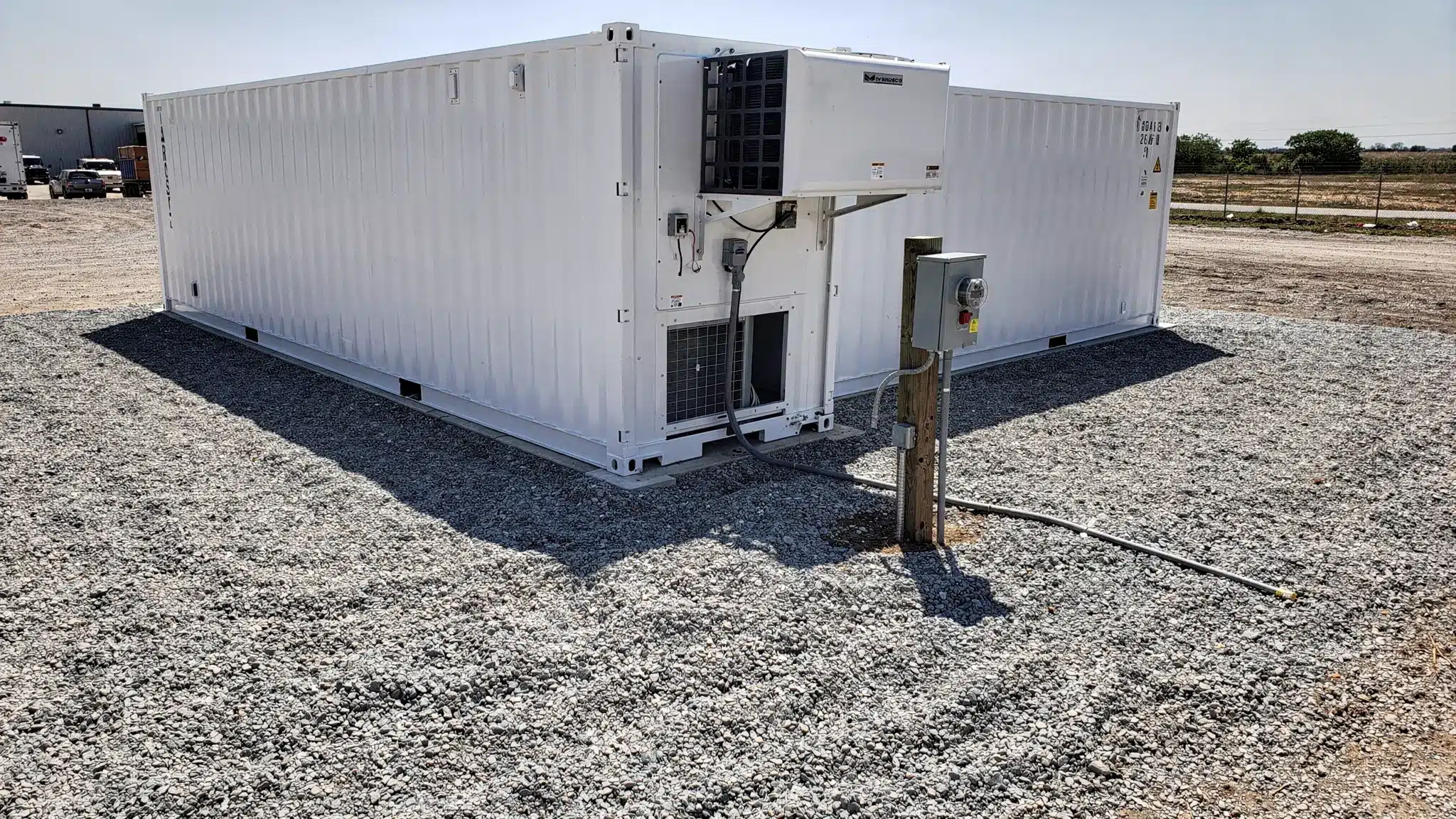
Electrical hookup options (utility power, generator, and conversion)
Your best option depends on your site and how portable you need the reefer to be.
Option 1: Facility 480V 3-phase service (common for warehouses and plants)
If you have industrial power available, this is often the simplest long-term solution.
What to plan for:
A dedicated circuit sized for the container’s nameplate requirements
An outdoor-rated disconnect within sight (your electrician will follow local code)
Proper plug/receptacle compatibility with the reefer connection
This is common at distribution facilities in places like Houston, Dallas, Atlanta, and major industrial corridors across the Midwest and Southeast.
Option 2: A generator sized for reefer startup and continuous load
Generators are common for:
Temporary projects and construction sites
Rural property and farms
Backup power planning (protecting inventory during outages)
Key point: Starting current can be higher than running current. A generator must handle both.
Option 3: Transformer or power conversion equipment
If you have power available but not at the right voltage, you may need:
A step-up transformer (for example, to supply the reefer’s required voltage)
A site-specific electrical design for safe conversion
Option 4: Phase conversion (when only single-phase is available)
Some locations have only single-phase utility power. In those cases, buyers sometimes explore phase conversion solutions, but feasibility depends on the reefer’s electrical design and the site’s available amperage.
Because this can get technical quickly, it’s best handled by a licensed electrician or an electrical engineer familiar with motor loads.
Our Refrigerated Containers are structurally inspected before they leave our depot network. For information on flat-rate delivery and transit times for these specialized units, please review our Shipping Policy.
Quick comparison table: which power approach fits your use case?
| Setup approach | Best for | Pros | Tradeoffs |
|---|---|---|---|
| 480V 3-phase utility | Warehouses, businesses, permanent installs | Stable, efficient, typically lowest long-term hassle | Not available at many residential sites |
| Generator | Construction, events, backup power | Portable, works anywhere with fuel | Noise, fuel cost, maintenance, must be correctly sized |
| Transformer/conversion | Sites with power but wrong voltage | Can enable a permanent install without a generator | Requires design, equipment cost, professional install |
| Phase conversion | Some single-phase sites | Potentially avoids utility upgrade | Not universal, must be engineered for motor loads |
Breakers, plugs, and safety: what to confirm before you buy
Electrical details vary by reefer model and year, so the safest approach is to plan around the dataplate specifications and have a professional design the final hookup.
Here are the key questions that prevent expensive surprises:
1) What is the exact voltage, phase, and frequency on the dataplate?
Ask for a clear photo of the reefer unit dataplate. This drives everything: utility connection, generator sizing, and conversion equipment.
2) What connector does the reefer use?
Many reefers use industrial “pin and sleeve” style connectors. You want to confirm the plug type and match it to your receptacle and disconnect setup.
3) What are the rated running amps and recommended overcurrent protection?
Even if you are not doing the install yourself, knowing the general load helps you budget correctly.
Running amps affect cable and breaker sizing.
Startup surge affects generator sizing.
Your electrician will handle the code-compliant design (NEC and local requirements), but you should still confirm these numbers before delivery.
Commissioning your reefer container after delivery
Once the container is placed and powered, take a few steps to verify performance before you store high-value inventory.
Visual inspection and basic functional checks
Inspect door gaskets and door alignment for a tight seal
Check interior floor condition and cleanliness
Confirm the unit powers on, the controller works, and alarms clear
Temperature pull-down test
If you can, run a controlled pull-down test:
Start at ambient temperature
Set your target temperature
Monitor how long it takes to reach setpoint
Actual pull-down time depends on the unit, ambient conditions, and whether the container is empty or loaded.
Ongoing monitoring
For business use, consider adding simple monitoring such as a standalone temperature logger and a procedure for daily checks. This is especially important in hot-weather states and high-turnover environments like catering, restaurants, and distribution.
Choosing the right container size for refrigerated storage
Most buyers choose between 20ft and 40ft lengths based on footprint, capacity, and site access.
20ft refrigerated shipping container: Great when space is limited, easier placement in tight lots, common for restaurants, farms, and smaller operations.
40ft refrigerated shipping container: Better for higher volume storage, distribution, and operations that need more pallet positions.
If you also need general storage (tools, equipment, materials) next to your cold storage, many buyers pair a reefer with a standard dry container. You can browse our main inventory pages for 20ft shipping containers and 40ft shipping containers to compare footprints and delivery options.
Pricing, delivery, and condition: what U.S. buyers should expect
Even when the main goal is “power and setup,” most buyers still need clarity on three practical questions.
How much does a refrigerated shipping container cost?
Reefer pricing depends on:
Size (20ft vs 40ft)
Condition tier (new vs used, and how the refrigeration system is evaluated)
Refrigeration unit age and service history
Your delivery ZIP code and local logistics
If you’re comparing options, it helps to separate the container’s purchase price from ongoing operating costs (electricity, maintenance, and any generator fuel).
What condition should I buy (new vs used)?
Used reefers can be a smart fit for budget-conscious buyers, but you want a clear understanding of condition. At Global Containers Line, all containers are thoroughly inspected before dispatch and offered as cargo-worthy, wind and watertight.
For refrigerated units specifically, buyers often ask for the most relevant proof available for the individual unit, such as operational checks, controller status, and basic cooling performance confirmation.
How does delivery work across the United States?
Delivery is a major advantage when buying from a nationwide supplier. Global Containers Line offers fast nationwide delivery across the United States, including major markets like Houston, Dallas, Atlanta, Phoenix, and Miami, plus many other cities and towns.
To avoid day-of-delivery issues, have these ready:
Clear access for the truck
A level placement area
Confirmation of where the machinery end and doors should face
Your electrical plan (or at least a temporary power solution) if you need immediate cooling
Get a delivered quote and match the right power setup
If you’re planning to use a refrigerated shipping container for cold storage, the best results come from aligning three things early: container condition, site layout, and power availability.
Browse available inventory and compare sizes, then get a delivered quote for your location.
Explore 20ft shipping containers if you need a smaller footprint
Explore 40ft shipping containers if you need maximum capacity
To move faster, request a quote with your ZIP code and intended temperature range, and we will help you plan delivery and a practical setup for your site anywhere in the USA.
Ready to add mobile cold storage to your operation? Browse our current inventory of certified reefer units today.