
If you are searching for containers for sale near me, the closest listing is not always the safest or most cost-effective option. A reliable purchase comes down to four things: verified container condition, clear pricing, delivery planning, and a supplier that stands behind what it sells.
For homeowners, contractors, farms, and businesses, the goal is simple: get the right shipping container delivered to your site without surprise fees, access problems, or condition issues. This guide explains how to compare local and nationwide sellers, what questions to ask, and how to choose a container that fits your project.
The Short Answer: How to Find Reliable Containers for Sale Near You
To find reliable shipping containers near your location, start by comparing suppliers that provide inspected inventory, itemized delivered pricing, recent photos, clear condition grades, and a practical delivery plan for your ZIP code.
A dependable buying process usually looks like this:
- Confirm the seller is a real container supplier, not an anonymous marketplace listing.
- Choose the right size, usually 20ft for compact storage or 40ft for maximum capacity.
- Ask whether the unit is new, used, cargo-worthy, or wind and watertight.
- Request an itemized quote that includes the container, delivery, taxes, and offload details.
- Verify site access before scheduling delivery.
- Use secure checkout or a trusted payment method.
At Global Containers Line, buyers can shop new and used shipping containers with transparent pricing, secure online ordering, and fast nationwide delivery across the United States.
What Makes a Container Seller Reliable?
A reliable container seller should make the buying process clear before you pay. That means you should know what condition you are getting, how much the delivered container will cost, and what is required at your site for the truck to place it safely.
Many buyers start with a search for shipping containers for sale near me and see a mix of depots, brokers, online ads, private sellers, and nationwide suppliers. Some options are legitimate, but others may use vague photos, unclear grades, or low prices that do not include delivery.
Use this table to quickly separate reliable sellers from risky ones:
| What to Check | Reliable Seller | Red Flag |
|---|---|---|
| Condition details | Explains new, used, cargo-worthy, or wind and watertight condition | Uses vague terms like good condition without details |
| Photos | Provides recent photos or clear representative images | Uses stock photos only or avoids condition questions |
| Pricing | Offers itemized pricing with delivery details | Advertises a very low price but adds fees later |
| Delivery | Confirms ZIP code, access, equipment, and placement needs | Says delivery is easy without asking about your site |
| Payment | Offers secure checkout or documented payment process | Pushes wire-only payment with no paperwork |
| Business presence | Has a real website, inventory, and service area | Uses temporary listings or inconsistent contact details |
Reliability is especially important if you are buying for a jobsite, farm, warehouse, retail storage area, or custom container project where delays can slow down operations.
Choose the Right Container Before Comparing Prices
Before you compare local sellers, decide what size and configuration you need. A low price on the wrong container is not a good deal.
A 20ft shipping container is a popular choice for homeowners, small businesses, construction crews, and farms that need secure storage but have limited space. It is easier to place on tight properties and works well for tools, equipment, seasonal inventory, feed, supplies, and household storage.
A 40ft shipping container offers significantly more storage capacity and is often the better value per square foot. It is commonly used by logistics companies, contractors, manufacturers, retailers, agricultural operations, and anyone storing bulky materials or large volumes of inventory.
| Container Size | Best For | Site Considerations |
|---|---|---|
| 10ft container | Small storage areas, residential use, limited spaces | Limited availability in some markets |
| 20ft container | Tools, equipment, business inventory, farm supplies | Easier delivery and placement than larger units |
| 40ft container | Bulk storage, construction materials, commercial use | Requires more delivery space and level ground |
| 40ft high cube | Tall equipment, pallets, conversions, extra vertical storage | Similar footprint to 40ft, with added height |
If you are unsure, choose based on access, not only storage volume. A 40ft unit may be more economical, but a 20ft unit may be the better fit if your driveway, jobsite, or farm lane has tight turns.
For a deeper size comparison, Global Containers Line also offers a detailed shipping container buying guide.
Compare Container Condition, Not Just Photos
Container condition is one of the biggest factors in price and long-term value. A used container can be a smart purchase, but only when the seller clearly explains what condition grade you are buying.
Here are the most common condition terms U.S. buyers will see:
| Condition Grade | What It Usually Means | Best Use |
|---|---|---|
| New or one-trip | Used for one cargo trip or very limited use, cleaner appearance | Long-term storage, retail use, offices, modifications |
| Cargo-worthy | Structurally sound and suitable for cargo use when properly certified | Shipping, heavy-duty storage, commercial use |
| Wind and watertight | Keeps out wind and rain, may show cosmetic wear | On-site storage, farms, construction sites |
| As-is | Sold in current condition with no strong performance guarantee | Short-term or low-risk uses only |
Global Containers Line supplies new and used containers that are cargo-worthy, wind and watertight, and thoroughly inspected before dispatch. That gives buyers more confidence than purchasing from a private seller who may not understand container grades or may not verify the roof, seals, doors, and flooring.
When reviewing a container, pay close attention to the roof, corner posts, door gaskets, locking rods, floor condition, underside, and any signs of holes or major corrosion. Surface rust and cosmetic dents are common on used containers, but holes, severe floor damage, and doors that do not close properly can create expensive problems.
Pricing: What Should a Reliable Quote Include?
When buyers search for used containers for sale near me, pricing can vary widely by city, size, condition, delivery distance, and local inventory. A quote that looks cheap at first may not include delivery, offload, taxes, or site-related charges.
As a general planning range in many U.S. markets, used 20ft wind and watertight or cargo-worthy containers often fall in the high $1,000s to mid $3,000s before specialty upgrades. Used 40ft containers often range from the low $2,000s to $5,000 or more depending on condition, market, and delivery distance. New or one-trip units cost more but may be worth it for appearance, long service life, or customer-facing projects.
| Container Type | General U.S. Planning Range | Notes |
|---|---|---|
| Used 20ft container | $1,800 to $3,500+ | Price depends on condition and location |
| New or one-trip 20ft container | $3,200 to $5,500+ | Cleaner condition and longer expected service life |
| Used 40ft container | $2,400 to $5,000+ | Often strong value for large storage needs |
| 40ft high cube or one-trip unit | $3,000 to $7,000+ | Extra height or newer condition increases price |
These are broad estimates, not a fixed quote. A reliable supplier should provide current pricing for your ZIP code and explain what is included.
A complete delivered quote should include:
- Container size and condition
- Unit price
- Delivery cost
- Offload method
- Taxes or required fees
- Optional add-ons such as lockboxes or modifications
- Expected delivery timing
For more detail on avoiding surprise costs, read Global Containers Line’s guide to shipping containers for sale and hidden fees.
Delivery: Confirm the Container Can Reach Your Site
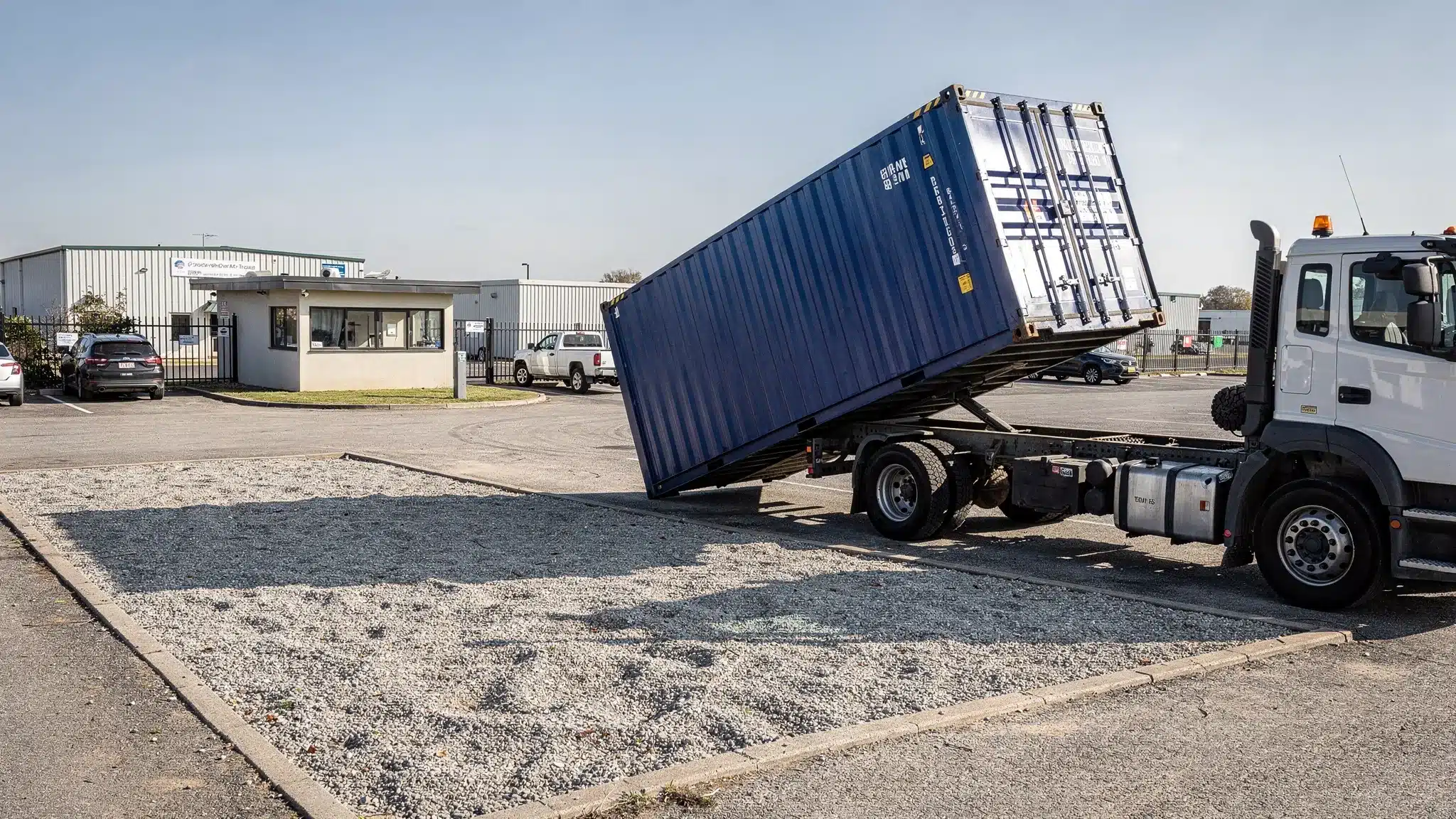
A container is only useful if it can be delivered and placed correctly. Delivery planning is one of the most overlooked parts of buying containers for sale near me.
Most residential, farm, and jobsite deliveries require enough space for the truck to enter, line up, tilt, and pull forward after the container is placed. Low tree branches, soft ground, narrow gates, steep driveways, overhead wires, parked vehicles, and tight turns can all create problems.
Before scheduling delivery, confirm these details with the seller:
- Your full delivery address and ZIP code
- Whether the road and driveway can handle a delivery truck
- Ground condition at the drop location
- Door orientation, meaning which way the container doors should face
- Any overhead obstructions
- Whether permits, HOA approval, or property owner approval are required
Global Containers Line offers fast nationwide delivery across the United States, including major markets such as Houston, Dallas, Atlanta, Phoenix, Miami, Los Angeles, Orlando, Tampa, Jacksonville, and San Antonio. If you are outside a major city, a nationwide supplier can often coordinate delivery more efficiently than a small local seller with limited inventory.
Local Seller vs. Nationwide Supplier: Which Is Better?
Buying local can be convenient, but the nearest seller is not always the best choice. Local listings may have limited sizes, inconsistent condition standards, or higher prices due to low inventory. Nationwide suppliers can often provide more options and coordinate delivery from the best available location.
| Buying Option | Advantages | What to Watch |
|---|---|---|
| Local depot | Potentially close to your site, may allow inspection | Inventory may be limited by size and grade |
| Private seller | Sometimes lower upfront price | Higher risk, unclear condition, no delivery support |
| Online marketplace | Many listings to compare | Scams, stock photos, and hidden delivery costs are common |
| Nationwide supplier | Broader inventory, delivery coordination, secure checkout | Always confirm delivered pricing for your ZIP code |
For many U.S. buyers, the best approach is to compare the total delivered value, not just the distance from your property. A container 20 miles away can still cost more if it needs special handling, while a professionally sourced container from a larger supplier may arrive faster and in better documented condition.
How to Verify a Container Before You Pay
If you are buying online or arranging delivery without visiting a yard, ask for enough information to feel confident in the purchase. A good seller should be able to explain condition, delivery, and payment without pressure.
Ask these questions before you place an order:
- Is the container new, used, cargo-worthy, or wind and watertight?
- Has the container been inspected before dispatch?
- Are the doors, seals, roof, and floor in working condition?
- Is the quote delivered to my ZIP code or only the container price?
- What type of truck will deliver the unit?
- How much space is needed for placement?
- What happens if my site is not accessible on delivery day?
- Do you offer secure online ordering?
If the seller cannot answer basic condition and delivery questions, keep looking. Shipping containers are large steel assets, and a poor purchase can cost more to fix, move, or replace than the money saved upfront.
Location Matters: Buying Containers Across U.S. Cities and States
Search results for containers for sale near me can look very different depending on where you live. Port cities like Houston, Los Angeles, Miami, Jacksonville, and Tampa may have strong container availability, but demand can also be high. Inland markets like Dallas, Atlanta, Phoenix, Orlando, and San Antonio may have different pricing because trucking distance and local inventory affect delivered cost.
Climate also matters. In humid areas such as Florida and the Gulf Coast, buyers should pay extra attention to door seals, roof condition, ventilation, and condensation prevention. In hot, dry markets like Phoenix, the main concerns may be site grading, sun exposure, and interior heat buildup. In colder states, drainage and snow load around the container placement area may be more important.
No matter where you are located, ask for a delivered quote based on your ZIP code. This gives you a more accurate comparison than browsing container prices from other states or depot-only listings.
Why U.S. Buyers Choose Global Containers Line
Global Containers Line is a USA-based supplier of new and used shipping containers for sale. We serve homeowners, contractors, farms, logistics companies, developers, and small businesses that need dependable storage, transport, or project-ready container solutions.
Buyers choose Global Containers Line because we offer:
- New and used shipping containers in multiple sizes
- 10ft, 20ft, 40ft, and high cube options
- Cargo-worthy, wind and watertight containers inspected before dispatch
- Competitive pricing with no hidden fees
- Secure online ordering
- Fast nationwide delivery across the United States
Whether you need a compact 20ft unit for residential storage or a 40ft container for commercial inventory, Global Containers Line helps you compare options and plan delivery before you buy.
Frequently Asked Questions
What is the best way to find reliable containers for sale near me? Start with suppliers that provide inspected inventory, clear condition grades, itemized delivered pricing, and secure ordering. Do not choose based only on the closest listing or lowest advertised price.
How much do shipping containers cost near me? Prices vary by size, condition, location, and delivery. In many U.S. markets, used 20ft containers often start around the high $1,000s, while used 40ft containers often start in the low to mid $2,000s. New, one-trip, high cube, and modified containers cost more.
Should I buy a 20ft or 40ft container? Choose a 20ft container if you need easier placement, compact storage, or residential use. Choose a 40ft container if you need maximum storage capacity and have enough delivery space. Businesses and contractors often prefer 40ft units for lower cost per square foot.
What does wind and watertight mean? Wind and watertight means the container is designed to keep out normal wind and rain. It may still show cosmetic wear, dents, paint fading, or surface rust, especially if it is used.
Can shipping containers be delivered to rural areas? Yes, many containers can be delivered to farms, rural properties, and remote worksites if access is suitable for the delivery truck. Provide your ZIP code, road conditions, and site details when requesting a quote.
Do I need a permit for a storage container? Permit rules vary by city, county, HOA, and intended use. Temporary jobsite storage may have different rules than residential placement or container modifications. Always check local requirements before delivery.
Ready to Find a Reliable Container Near You?
If you are looking for containers for sale near me, choose a supplier that can verify condition, explain pricing, and deliver to your location with confidence.
Global Containers Line offers inspected new and used shipping containers with transparent pricing, secure online ordering, and fast nationwide delivery across the United States. Browse available 20ft shipping containers, compare 40ft shipping containers, or request a quote from Global Containers Line for current availability and delivered pricing to your ZIP code.