
If you are budgeting for a storage container, a job site conex box, or a container build, the biggest question is usually the same: how much does a shipping container cost in the USA? The honest answer is that there is no single “national price” because your total cost depends on size, condition grade, and (most of all) delivery to your location.
This guide breaks down realistic price ranges, what a delivered quote should include, and how to compare offers in major markets like Houston, Dallas, Atlanta, Phoenix, Miami, and Los Angeles, plus smaller towns and rural sites.
Quick answer: typical shipping container prices in the USA
In most U.S. markets, buyers generally see these ballpark ranges for standard dry containers (before major custom modifications). Your exact price will vary by inventory, region, and delivery details.
| Container size | Used (storage grade / WWT) | Used (cargo-worthy) | New (one-trip) |
|---|---|---|---|
| 20ft standard | $1,800 to $3,500 | $2,000 to $3,900 | $3,200 to $5,500 |
| 40ft standard | $2,400 to $4,800 | $2,800 to $5,500 | $4,500 to $7,000 |
| 40ft high cube (taller) | Add $300 to $1,000 (typical premium) | Add $300 to $1,000 | Add $300 to $1,000 |
Delivery is usually a separate line item and can range from a few hundred dollars to over $1,500 depending on distance, offload method, and site access.
For the most accurate number, request a delivered quote using your ZIP code and site details (not just a pickup price).
What affects shipping container cost the most?
Shipping containers are commodity-like products, but the delivered price can change quickly. Here are the biggest drivers U.S. buyers should understand.
Size and type
- 20ft containers are easier to place on tighter sites and are a common choice for homeowners, farms, and smaller contractors.
- 40ft containers often offer a lower cost per square foot and are popular for commercial storage and construction.
- High cube containers (usually 40ft HC) cost more because they are taller and in high demand for storage and conversions.
- Specialty units (refrigerated reefers, open-top, double-door/tunnel) typically cost more due to lower supply and special components.
Condition grade (new vs used)
Container condition matters as much as size.
- New / one-trip: Typically the best appearance, fewer dents, and less rust. Often chosen for retail-facing installs and conversions where cosmetics matter.
- Used wind and watertight (WWT): Built for secure storage. Expect visible wear, but the container should keep out wind and water.
- Used cargo-worthy: Structurally sound and intended to be suitable for cargo use. Some buyers need this for shipping or export-related uses.
- As-is: Cheapest tier, but riskier. May need repairs and is often not ideal if you need predictable performance.
If you want a deeper breakdown of what grades mean in plain English, see the IMO overview on container safety and the CSC framework.
Location and local availability
Even with the same container grade, pricing can vary city to city based on supply and depot positioning.
Examples of markets where pricing can shift due to demand and logistics:
- Port-adjacent areas (like Miami and Los Angeles) may have strong supply, but demand can also be high.
- Inland metros (like Phoenix or Dallas) can see higher delivered costs when inventory must move farther.
- Rural deliveries can cost more if trucking routes are long or access is difficult.
Delivery, offload method, and site constraints
For most buyers, delivery is the swing factor that changes the “good deal” into an expensive surprise.
Delivery cost is influenced by:
- Distance from the container yard to your site
- Whether a tilt-bed can offload at your location, or if you need a crane/forklift arranged
- Tight turns, soft ground, slopes, overhead wires, tree limbs, or limited staging room
If you are planning a tricky drop site, it helps to understand the basics of transport methods and permit triggers. Our guide on transporting a shipping container explains the common options.
Market timing (seasonality and input costs)
Prices often rise during peak building and moving seasons. Steel and freight costs also influence replacement inventory costs, which can filter into retail container pricing.
Shipping container cost by size: what most buyers pay
Below is a practical breakdown by the most common sizes U.S. buyers search for.
20ft shipping container cost
A 20ft is the “sweet spot” for many buyers because it fits on more properties and still holds a lot of inventory.
Typical use cases:
- Job site tool and material storage
- Farm and ranch storage
- Small business back-of-house storage
- Home renovation storage and seasonal equipment
If you are shopping now, browse current availability on our 20ft shipping containers page and compare new vs used options based on your project.
40ft shipping container cost
A 40ft is often the best value per foot. It is also the most common length used for large-scale storage and commercial projects.
Typical use cases:
- Construction companies storing equipment and consumables
- Logistics overflow storage
- Real estate developers staging materials
- Business inventory storage
To see current options, visit our 40ft shipping containers page.
40ft high cube shipping container cost
A high cube container is about one foot taller than standard height. That extra height can matter for:
- Taller pallets and racking
- Workshop builds
- Container-based retail or office conversions
Budget for a typical premium versus a standard 40ft, plus potential delivery permit considerations depending on routing and offload method.
10ft containers and small sizes
Smaller containers can be convenient, but don’t assume they are cheaper “per foot.” In many markets, 10ft units can have higher per-foot costs due to limited supply and fabrication.
If you are considering a 10ft, compare it against a 20ft for value and future flexibility.
What does a shipping container quote include?
To compare sellers fairly, make sure you are looking at an apples-to-apples delivered quote.
A complete quote typically includes:
- Container size and type (20ft, 40ft, high cube, specialty)
- Condition grade (new/one-trip, cargo-worthy, WWT, as-is)
- Unit price
- Delivery and offload method
- Any accessorial charges (if applicable)
- Taxes (where applicable)
If you want to avoid surprise add-ons, this guide on shipping containers for sale and hidden fees explains what buyers commonly miss.
Delivery cost: what to expect in real U.S. scenarios
Delivery pricing is very site-specific, but here is how it usually plays out across the U.S.
Typical delivery cost range
Many standard deliveries fall in the $300 to $1,500+ range, depending on distance and complexity.
Why your ZIP code matters
Two buyers can purchase the same 40ft container, but pay very different totals.
Examples:
- A business in Houston with easy truck access and a nearby yard may see lower delivery cost.
- A property outside Phoenix with a long drive and soft ground may require extra coordination and cost.
- Urban sites in Atlanta or Dallas can have tight turns and clearance issues that change the offload plan.
How to reduce delivery surprises
The easiest way to control delivery cost is to share accurate site info upfront.
Before you request a quote, confirm:
- Clear access width and turning space
- Overhead clearance (wires, trees)
- Ground firmness (especially after rain)
- Preferred door direction once placed
New vs used containers: which cost is actually better?
The best buy is the one that matches your job.
When it is worth paying more for new (one-trip)
New containers can be a better fit when:
- You care about appearance for customer-facing locations
- You want to minimize door and seal issues
- You are building a container office, retail unit, or long-term project
When used is the smarter cost choice
Used WWT or cargo-worthy containers are often ideal when:
- The priority is secure storage, not cosmetics
- You can accept dents and surface rust
- You want the lowest upfront cost while still getting a functional unit
If you are shopping for a deal, do not skip seller vetting. This article on cheap 20ft shipping container red flags applies to 40ft units too.
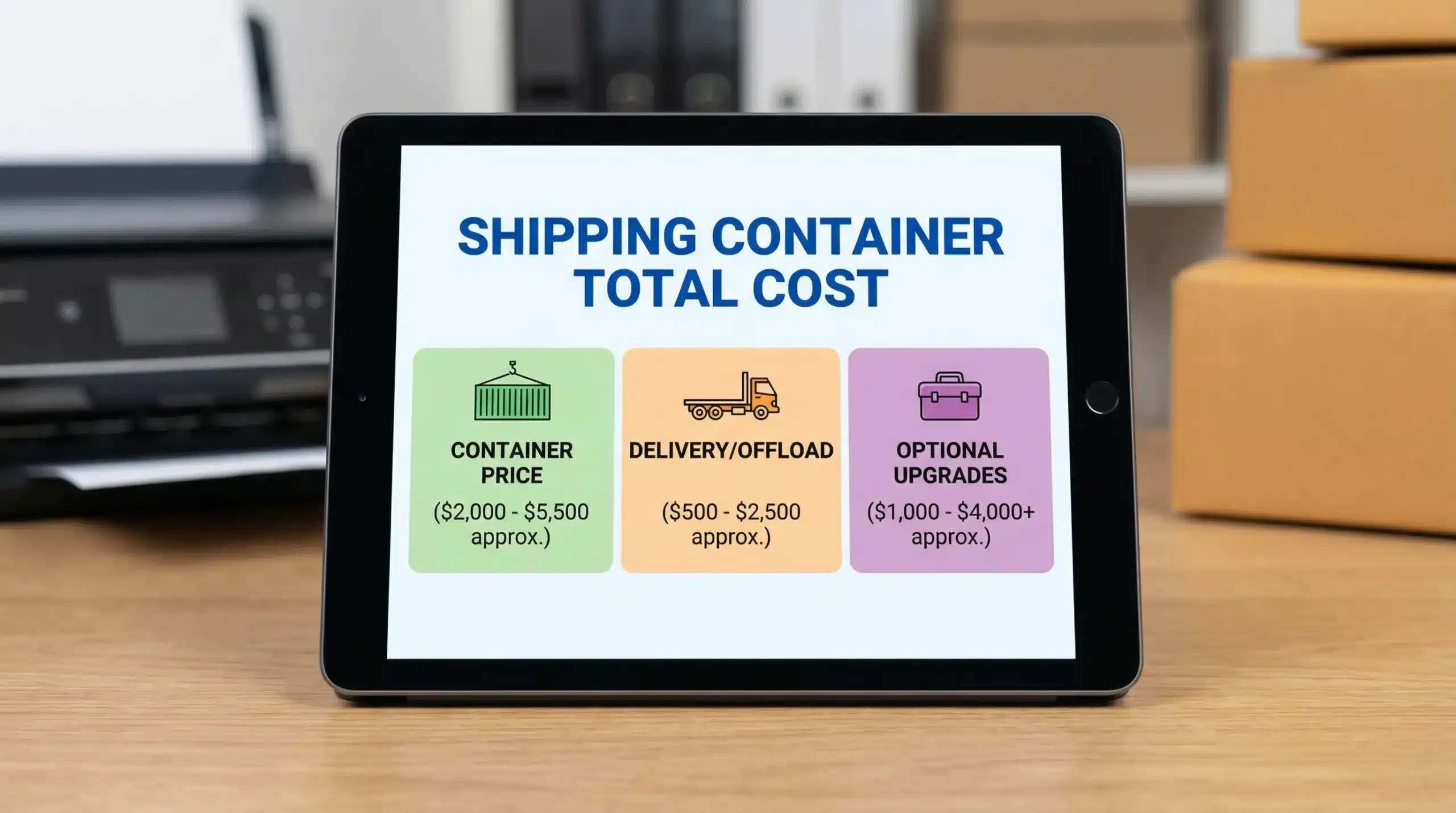
A simple way to estimate your total budget
Many buyers make the mistake of budgeting only for the container and forgetting the rest.
Here is a practical budgeting framework:
| Cost category | What it covers | What to watch |
|---|---|---|
| Container price | Size and condition | Grade differences and cosmetic expectations |
| Delivery and offload | Trucking, placement method | Access limits, redelivery fees if site is not ready |
| Optional upgrades | Lock protection, vents, modifications | Small add-ons add up fast |
| Site prep | Base, leveling, drainage | Soft ground and slope issues can delay delivery |
Why buy from a nationwide supplier (instead of a random local listing)?
Online listings can look cheaper, but a container is only a good deal if it arrives as described, with clear terms.
With Global Containers Line, U.S. buyers get:
- New and used shipping containers in popular sizes (10ft, 20ft, 40ft, and high cube)
- Containers that are cargo-worthy, wind and watertight, and thoroughly inspected before dispatch
- Transparent pricing and secure online ordering
- Fast nationwide delivery across the United States, including major markets like Houston, Dallas, Atlanta, Phoenix, Miami, and more
Frequently Asked Questions
How much does a shipping container cost delivered? Delivered cost usually equals the container price plus delivery and offload. Many buyers see delivery ranging from about $300 to $1,500+ depending on distance and site access.
Is a “wind and watertight” container good enough for storage? Yes, for most storage uses a WWT container is a practical choice. Expect cosmetic wear, but it should keep out wind and water when properly maintained.
Why are prices different in Miami, Los Angeles, or inland cities like Phoenix? Local availability, demand, and delivery distance from the yard or depot all affect pricing. Even within the same state, the delivered quote can vary by ZIP code.
Do I need a permit to place a shipping container on my property? Sometimes. Rules vary by city and county, and can also depend on how long the container will stay on site and whether it is modified. Always check local zoning and HOA requirements.
What is the cheapest size shipping container? It depends on your market. A 20ft is often the lowest total purchase price, but a 40ft can be cheaper per square foot. Small sizes like 10ft can cost more per foot because supply is limited.
What is a one-trip container? A one-trip container is typically a newer unit that has made one cargo journey. It usually has less wear than used grades.
How fast can you deliver a shipping container? Delivery timing depends on your location, inventory, and scheduling, but Global Containers Line offers fast nationwide delivery across the USA.
What information do I need for an accurate quote? Share your ZIP code, container size (20ft or 40ft), preferred condition (new or used), and delivery access details (clearance, surface, and whether a tilt-bed can offload).
Get a delivered quote or browse available containers
If you want a real number you can budget around, the next step is simple: get pricing tied to your ZIP code, container size, condition, and delivery access.
Browse inventory now:
- Shop 20ft shipping containers
- Shop 40ft shipping containers
Or contact Global Containers Line to request a delivered quote and get matched with the right container for storage, construction, commercial, or residential use at Global Containers Line.
Admiring the commitment you put into your site and detailed information you offer.
It’s awesome to come across a blog every once in a while that isn’t the same out of date rehashed information. Excellent read!
I’ve bookmarked your site and I’m including your RSS feeds to my Google account. https://rt.chat-rulet-18.com/spy-mode