
Buying a shipping container in California is usually straightforward, but the best deal is not always the lowest sticker price. If you are comparing containers for sale in California, look at the full delivered cost, container condition, site access, and permit requirements before you place an order.
California buyers use shipping containers for construction storage, farm equipment, retail overflow, industrial inventory, residential storage, and custom container projects. With major logistics hubs around Los Angeles, Long Beach, Oakland, San Diego, and the Inland Empire, inventory can move quickly, so it helps to know what size and condition you need before requesting quotes.
Global Containers Line supplies new and used shipping containers across the United States, including California, with transparent pricing, secure online ordering, inspected units, and fast nationwide delivery.
Quick Answer: Containers for Sale in California
For most California buyers, the best container choice depends on three things: intended use, available space, and delivered budget. A 20ft container is a practical fit for homeowners, small businesses, job sites, and tight lots. A 40ft container offers better value per square foot for contractors, farms, warehouses, and larger storage needs. High cube containers add extra interior height, which is useful for bulky materials, equipment, or conversion projects.
As a general 2026 market guide, used 20ft containers in California often start in the low-to-mid thousands before delivery, while 40ft containers usually cost more but provide nearly twice the storage space. Final pricing depends on condition, size, delivery distance, offload method, and local availability.
If you want a balanced option for storage or jobsite use, start by comparing 20ft shipping containers. If you need maximum storage capacity or plan to store large equipment, review available 40ft shipping containers.
Why California Is a Strong Market for Shipping Containers
California has one of the most active container markets in the country because of its ports, construction activity, agriculture, retail distribution, and logistics networks. The Port of Los Angeles and the Port of Long Beach are major gateways for containerized cargo, and Oakland is a key Northern California hub.
That activity can help buyers find standard sizes such as 20ft and 40ft containers, but it does not always guarantee the lowest delivered price. California trucking costs, fuel prices, congestion, site accessibility, and distance from a depot can all affect the final quote.
Buyers in Los Angeles, Long Beach, San Diego, Riverside, San Bernardino, Bakersfield, Fresno, Sacramento, San Jose, Oakland, and the Bay Area should always request a delivered quote, not just a container-only price.
Common Container Sizes for California Buyers
The right size depends on what you need to store, how often you need access, and how much room you have for delivery. A larger container may offer better value, but only if your site can handle the truck and placement requirements.
| Container size | Approx. exterior dimensions | Best for | Buyer notes |
|---|---|---|---|
| 10ft container | 10ft x 8ft x 8ft 6in | Small yards, tools, compact storage | Often less available and can cost more per square foot |
| 20ft container | 20ft x 8ft x 8ft 6in | Home storage, jobsite tools, small business inventory | Easier to place on tighter California lots |
| 40ft container | 40ft x 8ft x 8ft 6in | Construction, farms, warehouses, large storage | Best value when you need more floor space |
| 40ft high cube | 40ft x 8ft x 9ft 6in | Equipment, palletized goods, conversions | Extra height helps with bulky items and build-outs |
A 20ft unit is often the safest choice when delivery space is limited in dense areas like Los Angeles, San Francisco, Oakland, or San Diego. A 40ft unit is often better for Central Valley farms, construction yards, commercial facilities, and properties with more room.
New vs Used Containers in California
Container condition is one of the biggest pricing factors. Do not rely only on labels like used or refurbished. Ask what the condition grade actually means, whether the unit is wind and watertight, and whether it has been inspected before dispatch.
| Condition grade | What it usually means | Best use |
|---|---|---|
| New or one-trip | Minimal use, usually one ocean trip, cleaner appearance | Retail sites, conversions, long-term storage, projects where appearance matters |
| Cargo-worthy | Structurally sound and suitable for cargo use, though cosmetic wear is possible | Storage, transport, commercial use, construction |
| Wind and watertight | Protects contents from normal wind and rain, may show dents, rust, or patches | Stationary storage, farms, jobsites, residential use |
| As-is | No reliable condition guarantee unless inspected carefully | Buyers who can repair containers or accept higher risk |
Global Containers Line provides new and used units that are thoroughly inspected before dispatch. Containers are cargo-worthy, wind and watertight, giving buyers a dependable option for storage, construction, commercial, and residential projects.
How Much Do Containers for Sale in California Cost?
Pricing changes with steel markets, inventory, trucking costs, and condition. The ranges below are general 2026 buyer estimates for California and should be used as a starting point only. Delivery, taxes, site requirements, and optional modifications can change the final amount.
| Container type | Typical California price range before delivery | Common buyer use |
|---|---|---|
| Used 20ft wind and watertight or cargo-worthy | $1,800 to $3,500 | Jobsite storage, home storage, small business inventory |
| New or one-trip 20ft | $3,200 to $5,000 | Cleaner appearance, long-term storage, retail or residential projects |
| Used 40ft wind and watertight or cargo-worthy | $2,800 to $5,000 | Construction, agriculture, commercial storage |
| New or one-trip 40ft | $4,500 to $7,500 | Long-term storage, container projects, higher appearance requirements |
| 40ft high cube | Often $300 to $1,000 more than a standard 40ft | Bulky cargo, equipment, modifications, workspace builds |
The most accurate way to compare pricing is to request an itemized delivered quote. A complete quote should show the container price, condition grade, delivery cost, offload method, taxes or fees, and any add-ons such as lockboxes or vents.
What Affects California Container Pricing?
Several California-specific factors can influence the final price. Coastal markets may have strong inventory access, but urban delivery can be more expensive. Inland or rural deliveries may require longer trucking routes.
Common price drivers include container size, condition, depot location, delivery distance, fuel costs, offload equipment, site access, seasonal demand, and modifications. A low container-only price may not be the best deal if delivery is unclear or the unit condition is poorly defined.
Delivery: What California Buyers Should Plan For
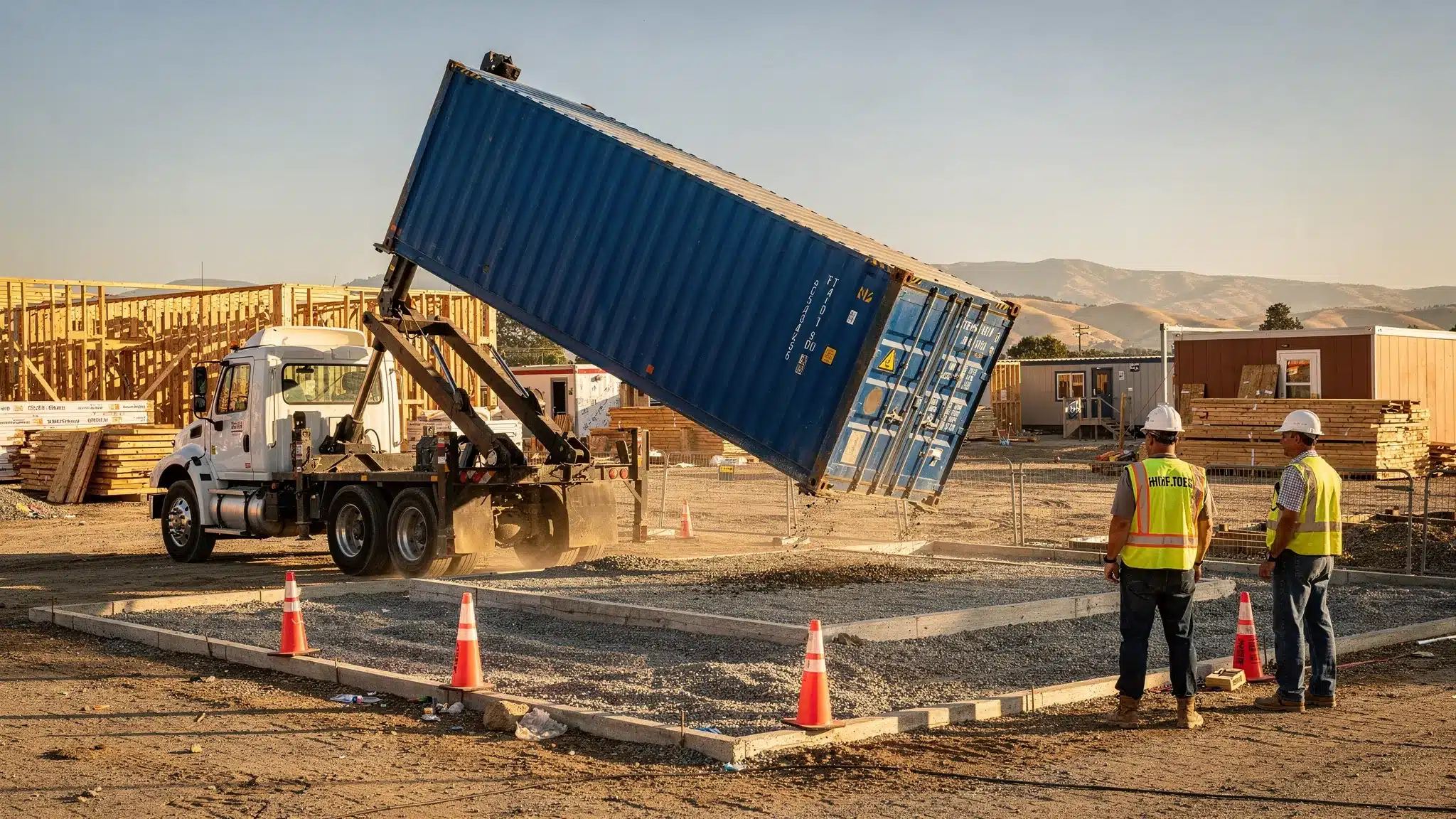
Delivery is where many container purchases become more expensive than expected. A container is heavy, and the truck needs safe access to place it correctly. Before buying, confirm whether delivery will use a tilt-bed truck, flatbed truck, chassis, crane, or another offload method.
For many residential and jobsite deliveries, tilt-bed delivery is the most common. The driver backs into position, tilts the bed, and slides the container into place. This requires a straight, firm, and level approach.
Before delivery, confirm these details:
- Your full delivery address and ZIP code
- Preferred container door orientation
- Available straight-line clearance for the truck
- Overhead clearance from trees, wires, and structures
- Ground condition, including gravel, asphalt, concrete, or compact soil
- Whether a crane or forklift is needed for tight placement
- Local restrictions, gate codes, or appointment windows
Global Containers Line offers fast nationwide delivery across the United States and can coordinate reliable delivery to California buyers in major cities and surrounding areas. For rural sites, farms, vineyards, industrial yards, and mountain properties, provide photos or notes about access so the delivery plan can be priced correctly.
Permits and Placement Rules in California
Permit rules vary widely across California. A storage container on a temporary construction site may be treated differently than a permanent container used for residential storage, a backyard office, or a commercial build-out.
Check with your city or county before delivery, especially if the container will be visible from the street, placed in a residential zone, connected to utilities, used as occupied space, or modified into a structure. Homeowners should also check HOA rules when applicable.
For transport, professional carriers handle standard routing and logistics, but certain oversized or specialized moves may involve additional requirements. The Caltrans transportation permits page is a helpful reference for understanding state-level transportation permit topics.
This is especially important in areas with tighter local rules, such as coastal communities, dense urban neighborhoods, and cities with strict zoning enforcement.
Best Uses for Shipping Containers in California
Shipping containers work well across many California industries because they are durable, secure, and fast to deploy. The best condition and size depend on how the unit will be used.
Construction companies often choose 20ft or 40ft wind and watertight containers for tools, materials, safety equipment, and temporary jobsite storage. A 20ft unit is easier to place on compact urban jobsites, while a 40ft unit is more efficient for larger developments.
Agricultural buyers in the Central Valley, wine country, and rural areas use containers for feed, tools, irrigation parts, machinery, and seasonal supplies. For farms and ranches, a 40ft container can provide strong storage value if the site has enough access space.
Small businesses use containers for inventory overflow, records, fixtures, event materials, and equipment. Retailers and service companies often choose a 20ft unit because it fits into parking lots, back-of-house areas, and compact commercial properties.
Homeowners use containers for renovation storage, moving support, garage overflow, and backyard storage. In residential areas, appearance and local rules matter, so many buyers prefer a cleaner used unit or a new one-trip container.
How to Compare Container Sellers in California
When shopping for containers for sale in California, compare sellers on more than price. A trustworthy supplier should be clear about condition, delivery, payment, and what happens if a unit does not match the description.
Ask these questions before buying:
- Is the container new, one-trip, cargo-worthy, or wind and watertight?
- Are recent photos available before purchase?
- Is delivery included in the quote or listed separately?
- What offload method is included?
- Are there extra fees for difficult access, waiting time, or redelivery?
- What payment methods are accepted?
- Is checkout secure?
- Has the container been inspected before dispatch?
Global Containers Line is a USA-based supplier offering new and used shipping containers with transparent pricing, no hidden fees, secure online ordering, and inspected inventory. Buyers can choose from common sizes and configurations, including 10ft, 20ft, 40ft, and high cube containers.
Should You Buy a 20ft or 40ft Container?
Choose a 20ft container if you need a flexible storage unit that is easier to deliver and place. This size is popular for homeowners, contractors, small businesses, and urban projects where space is limited.
Choose a 40ft container if you need more storage capacity and have enough room for delivery. A 40ft unit typically offers better cost per square foot, making it a strong choice for construction companies, farms, logistics operations, warehouses, and real estate developers.
If vertical space matters, consider a high cube container. The extra foot of height can make a big difference when storing equipment, stacking materials, or planning a container conversion.
How to Get an Accurate Quote for a California Delivery
The best quote is the one that reflects your real site conditions. When requesting pricing, include your ZIP code, preferred size, desired condition, intended use, site surface, access notes, and delivery timing.
If you are not sure which size to choose, explain what you plan to store and how often you need access. A supplier can help you decide whether a 20ft, 40ft, or high cube unit is the better fit.
For the fastest pricing, provide clear details up front. This helps avoid surprises, redelivery charges, or delays caused by poor access planning.
Frequently Asked Questions
Are containers for sale in California more expensive than in other states? They can be, depending on delivery distance, trucking costs, local demand, and site access. California has strong port access, but urban congestion and longer inland deliveries can raise the final delivered price.
What is the best container condition for storage? For most storage needs, a wind and watertight or cargo-worthy container is a practical choice. It should protect contents from normal weather while costing less than a new one-trip unit.
Can I get a shipping container delivered anywhere in California? Delivery is available to many California cities and rural areas, including Los Angeles, San Diego, Sacramento, Fresno, Oakland, San Jose, Riverside, Bakersfield, and surrounding regions. Exact delivery options depend on access and equipment needs.
Do I need a permit for a shipping container in California? It depends on your city, county, zoning, use, and placement duration. Temporary construction storage may be treated differently than permanent residential or commercial placement. Always check local rules before delivery.
Is a 20ft or 40ft container better for California buyers? A 20ft container is easier to place and works well for smaller sites. A 40ft container offers more storage capacity and better value per square foot if your property has enough room for delivery.
How fast can Global Containers Line deliver in California? Delivery timing depends on inventory, location, trucking availability, and site readiness. Global Containers Line offers fast nationwide delivery across the United States and can provide a delivery estimate when you request a quote.
Are used containers still secure and weather resistant? Used containers can be secure and weather resistant when they are properly inspected and meet wind and watertight or cargo-worthy standards. Always confirm condition before purchase.
Ready to Buy a Container in California?
If you are looking for containers for sale in California, Global Containers Line can help you choose the right size, condition, and delivery option for your site. We supply new and used shipping containers for storage, construction, commercial, agricultural, and residential projects, with inspected units and transparent pricing.
Start by browsing 20ft shipping containers for flexible storage or 40ft shipping containers for maximum capacity. To get current availability and delivered pricing, browse available containers or request a quote with your California ZIP code and site details today.