
Buying a 40ft container for sale is the easy part. The surprises usually happen on delivery day, when the truck cannot reach your drop spot, the ground is too soft, or overhead lines force a re-route.
This guide shows you exactly how to prepare your site for a 40 foot shipping container delivery, what access requirements matter most, and how to get an accurate delivered quote anywhere in the United States.
Quick site prep checklist for a 40ft container delivery
If you want the fastest, cleanest delivery, aim to have these items ready before scheduling:
- A firm, level base (compacted gravel is common)
- A clear route from the street to the drop location
- Enough turning room for a large delivery truck
- Overhead clearance free of low branches, roof eaves, and power lines
- A planned door direction (which way the container doors should face)
- A backup plan if weather turns your site soft (mud is a top cause of delays)
Global Containers Line coordinates fast nationwide delivery across the United States, and we will ask a few access questions up front so your delivery goes smoothly.
How 40ft shipping container delivery works (and why access matters)
A standard 40ft container is roughly 40 feet long, 8 feet wide, and 8 feet 6 inches tall. A 40ft high cube is about one foot taller.
For delivery, most suppliers use one of these methods:
Tilt-bed delivery (common for storage drop-offs)
A tilt-bed truck slides the container off the back. It is often the simplest option when access is good, but it still requires room to maneuver and a reasonably firm surface.
Flatbed or step-deck with assisted offload
When a tilt-bed is not suitable (tight site, special placement needs), the container may arrive on a flatbed and require equipment on site (such as a forklift or crane) to offload.
Why this matters for price: delivery and offload are a major part of the total cost. Tight access can trigger extra equipment, extra labor, or redelivery charges.
If you are comparing sizes, a 20ft unit is easier to place in tight areas. You can also browse our inventory here:
- 20ft shipping containers
- 40ft shipping containers
Site prep for a 40ft container: build a base that stays level
A container can sit on the ground, but most buyers get better long-term performance by placing it on a prepared base. A level base helps with:
- Door operation (misalignment can make doors hard to open)
- Drainage and moisture control
- Reducing twist in the container frame
Recommended base options (most common choices)
| Base option | Best for | Pros | Watch-outs |
|---|---|---|---|
| Compacted crushed stone (gravel pad) | Most storage sites, farms, job sites | Affordable, drains well, quick to build | Must be compacted and leveled properly |
| Concrete pad or strip footing | Long-term installations, high-traffic sites | Very stable and clean | Higher cost, may trigger permitting in some areas |
| Railroad ties or timber sleepers | Temporary storage, budget installs | Keeps container off wet ground | Needs leveling and can shift over time |
| Concrete blocks/piers at corners | Light-duty storage | Minimal site work | Not ideal for soft soils or heavy floor loads |
Tip: if your ground holds water after rain, plan drainage first. Standing water around a container can accelerate corrosion and increase humidity inside.
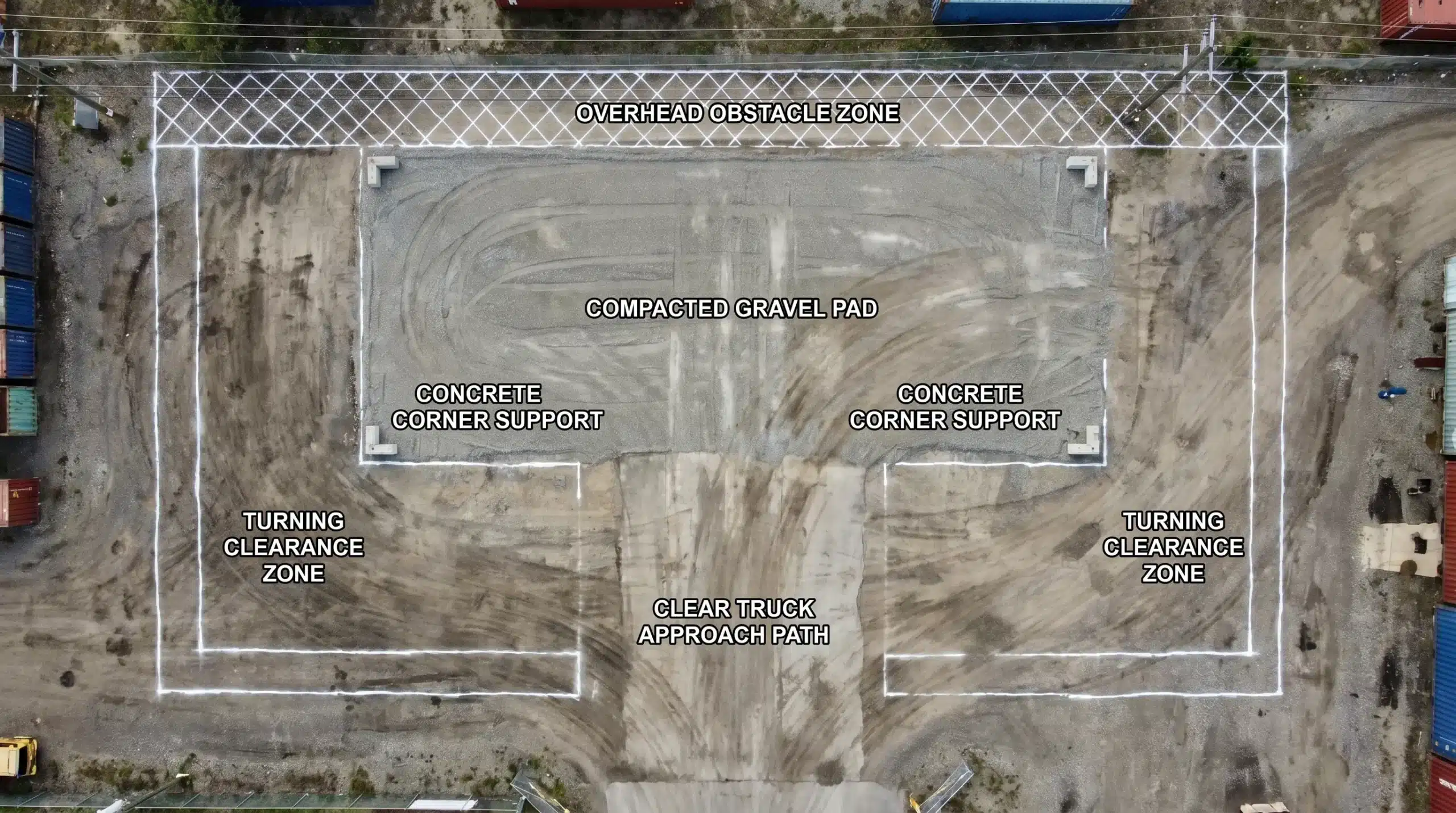
Delivery access requirements: clearances that prevent delays
Every site is different, but the same access problems come up in residential driveways, construction sites, and rural properties.
The 5 access checks that matter most
1) Entrance width and gate clearance
If the driver cannot enter your property cleanly, delivery stops at the street (or gets rescheduled). Measure your gate opening and any pinch points.
2) Turning space
A 40ft container delivery usually involves a large truck and trailer footprint. Tight turns are common issues in:
- Subdivisions and HOA neighborhoods
- Urban alleys (Los Angeles, Chicago, New York City boroughs)
- Properties with fences, landscaping walls, or parked vehicles
3) Overhead clearance
Low tree limbs and overhead lines are a major safety issue. If you have utility lines near the driveway, treat this as a serious planning item.
For general guidance on safe clearance around overhead power lines, review OSHA’s overhead power line safety information.
4) Grade and surface firmness
Steep slopes, soft sand, and wet clay can stop a truck. This is especially common:
- After heavy rain in the Southeast (Florida, Georgia, Texas Gulf Coast)
- On rural dirt roads in parts of Arizona and New Mexico
- On new construction sites before final grading
5) Final placement space
The container needs enough room not only to sit, but also to be positioned. Plan for door swing space and future access.
Delivery access checklist (use this for a quote request)
| What to check | What to measure/confirm | Why it matters | Easy fix |
|---|---|---|---|
| Route from street to drop spot | Any narrow points, tight turns | Prevents failed delivery | Trim branches, move vehicles, widen gate temporarily |
| Overhead obstacles | Lines, branches, eaves | Safety and legal limits | Trim trees, choose a different approach path |
| Ground condition | Mud, sand, soft soil | Truck may sink or rut | Add gravel, wait for dry weather |
| Drop location size | Space for container plus positioning | Avoids last-minute relocation | Mark corners, relocate drop spot |
| Door direction | Doors facing access area | Avoids unusable placement | Decide orientation before dispatch |
What to do 48 hours before delivery
Most delivery problems can be prevented with a short pre-delivery walkthrough.
Mark the exact drop spot
Use stakes, paint, or cones to mark where you want the container corners. If you have multiple possible locations, pick one primary and one backup.
Clear the route like a truck driver would
Stand at the street and visualize a wide turn. Remove obstacles such as:
- Low branches
- Vehicles and trailers
- Temporary fencing
- Construction debris
Confirm local rules if you are in a regulated area
Some locations may require zoning approval or permits, especially for long-term placement or modified containers. This is common in parts of California, Florida coastal areas, and HOA communities.
If you want a deeper permitting overview, see our guide on permits and placement.
Delivery day: simple process, smart inspection
On delivery day, plan to be on site (or have an authorized contact present). You want to confirm placement and inspect the unit before the driver leaves.
On-delivery inspection (5 minutes)
Global Containers Line supplies new and used shipping containers that are cargo-worthy, wind and watertight, and thoroughly inspected before dispatch. Even so, it is smart to verify a few things on arrival:
- Doors open and close smoothly
- Locking bars and seals look intact
- Roof has no obvious holes or active leaks
- Floors feel solid underfoot
If you are buying used and want a more detailed checklist, our inspection guide is a helpful reference.
Pricing questions: how site access changes the delivered cost
If you are shopping for a 40ft container for sale, you will see a wide range of prices online. The best way to compare offers is to focus on the delivered total, not just the container price.
Here is what commonly affects your delivered price:
Container condition and grade
In plain terms:
- New (one-trip) usually costs more but has the best appearance and fewer repairs
- Used costs less and is common for storage
- Cargo-worthy is typically chosen when structural integrity for transport matters
(If you want a deeper comparison, see our new vs used container guide.)
Delivery distance and market location
Delivery costs depend on how far the container must travel from the yard to your site. Buyers in major markets like Houston, Dallas, Atlanta, Phoenix, and Miami often have more local options, while rural addresses may require longer trucking.
Offload method and access risk
If your site requires special handling (tight turns, steep slope, soft ground), it can increase cost due to:
- Extra time on site
- Specialized equipment
- Higher chance of rescheduling (redelivery)
What we need for an accurate quote
To get a clean, itemized delivered quote, be ready with:
- Delivery ZIP code and city/state
- Container size (40ft standard or 40ft high cube)
- Preferred condition (new or used)
- Notes on access (gate width, steep driveway, dirt road)
- A photo of the driveway and drop area (if possible)
For more detail on what a complete quote includes, see what “near me” prices really include.
Common access scenarios (and practical solutions)
Tight residential driveway
This is common in metro areas like Los Angeles, San Diego, Seattle, and Northeast suburbs.
Practical fixes include choosing a different drop location (side yard), removing a fence panel temporarily, or considering a 20ft container if the layout is too tight.
Soft ground on farms and rural property
This is common in parts of Texas, Florida, Georgia, and the Midwest after rain.
Graveling the route and building a compacted pad is usually the fastest fix.
Commercial job sites
Construction sites often have equipment, materials, and temporary fencing blocking turning space.
A quick pre-delivery site walk with your superintendent usually prevents delays.
Frequently Asked Questions
How much space do I need for a 40ft shipping container delivery? You need enough room for the truck to approach, turn (or back in), and set the container. Space needs vary by site layout, so sharing driveway and drop-zone photos helps confirm feasibility.
Can you deliver a 40ft container to a residential address? Yes, as long as the street access and driveway (or placement area) can accommodate the delivery truck and there are no overhead hazards.
Do I need a permit to place a 40ft container on my property? Sometimes. Rules vary by city and county, and HOAs can add restrictions. Permits are more likely if the container is used as a structure, stays long-term, or involves utility connections.
What if the truck cannot access my site on delivery day? In many cases the delivery must be rescheduled, which can lead to redelivery fees. The best prevention is confirming access ahead of time and preparing an alternate drop location.
Are your containers new or used, and what condition should I expect? We offer both new and used units. All containers we sell are cargo-worthy, wind and watertight, and inspected before dispatch. Used containers can show cosmetic wear, but should remain secure and functional.
How fast can you deliver a 40ft container in the USA? Delivery timing depends on your location, inventory, and scheduling, but we offer fast nationwide delivery across the United States. Requesting a quote with your ZIP code is the quickest way to confirm current lead times.
Get a delivered quote on a 40ft container (with nationwide delivery)
If you are ready to buy, we can help you choose the right condition and confirm delivery access before dispatch.
Browse available inventory and request pricing here:
- Shop 40ft shipping containers for sale
- Compare sizes with our 20ft shipping containers
Prefer a quick, accurate delivered quote? Contact Global Containers Line with your ZIP code and a photo of your drop area, and we will confirm the best delivery approach.