
Buying container storage units for sale is straightforward, but placing one legally and safely can get complicated fast. Local rules vary by city and county, and the same container can be treated as a “temporary storage unit” in one area and a “structure” that needs permits in another.
This guide walks through the permit triggers, placement best practices, and delivery planning you should nail down before you order, especially if you need fast delivery to a job site, farm, or residence anywhere in the United States.
Permits 101: when a container needs approval (and when it might not)
In many U.S. jurisdictions, a shipping container used for storage can fall under zoning rules (where it’s allowed), building rules (how it must be installed), and sometimes fire code rules (clearances and access).
The biggest mistake buyers make is assuming “it’s just storage, so no permit.” Instead, think in terms of use + duration + site work.
Common permit triggers for container storage units
These are the most common reasons a permit or written approval is required:
- Long-term placement (often defined as over 30, 60, or 90 days, depending on the city)
- Permanent site work like foundations, piers, poured pads, utilities, or grading
- Commercial use (construction sites, retail storage, equipment yards)
- Modifications such as doors, windows, roll-up doors, electrical, HVAC, or plumbing
- Stacking containers or using them as part of an occupied space (office, workshop, dwelling)
- Setback or easement conflicts (property lines, utility easements, drainage corridors)
- HOA restrictions in many residential neighborhoods
If you’re planning a conversion project, many building departments treat the container similar to any other structure. In that case, the International Code Council (ICC) model codes are often the baseline your local authority adopts or adapts.
Quick rule of thumb
If your container is temporary, unmodified, and not connected to utilities, you may be able to place it with minimal paperwork. If it’s permanent, modified, or tied into the property, expect permits.
Zoning and setbacks: the “where can it go?” checklist
Even when building permits are not required, zoning may limit where you can place a container on your lot.
What most planning departments look at
Most cities and counties check:
- Setbacks (distance from front, side, and rear property lines)
- Corner lots (often stricter visibility and front setback requirements)
- Accessory structure rules (height, area, and location limitations)
- Visibility and screening (fencing, landscaping, or placement behind the primary structure)
- Flood zones and drainage (avoiding obstruction of runoff paths)
- Easements (utility, drainage, access)
This comes up frequently in fast-growing metros where lot coverage and visibility rules are enforced more actively, such as Phoenix, AZ; Dallas and Houston, TX; Atlanta, GA; Miami and Orlando, FL; and Los Angeles, CA.
HOA note for homeowners
Even if your city allows a container, an HOA can still restrict it. If you’re in an HOA, confirm in writing:
- Whether containers are allowed at all
- Whether they must be behind a fence
- Any time limits (for example, “temporary storage during a remodel”)
Building permits vs. “temporary storage” permits
Many jurisdictions have separate pathways:
Temporary placement (often easier)
This is common for:
- Construction site storage
- Seasonal business inventory
- Short-term residential renovations
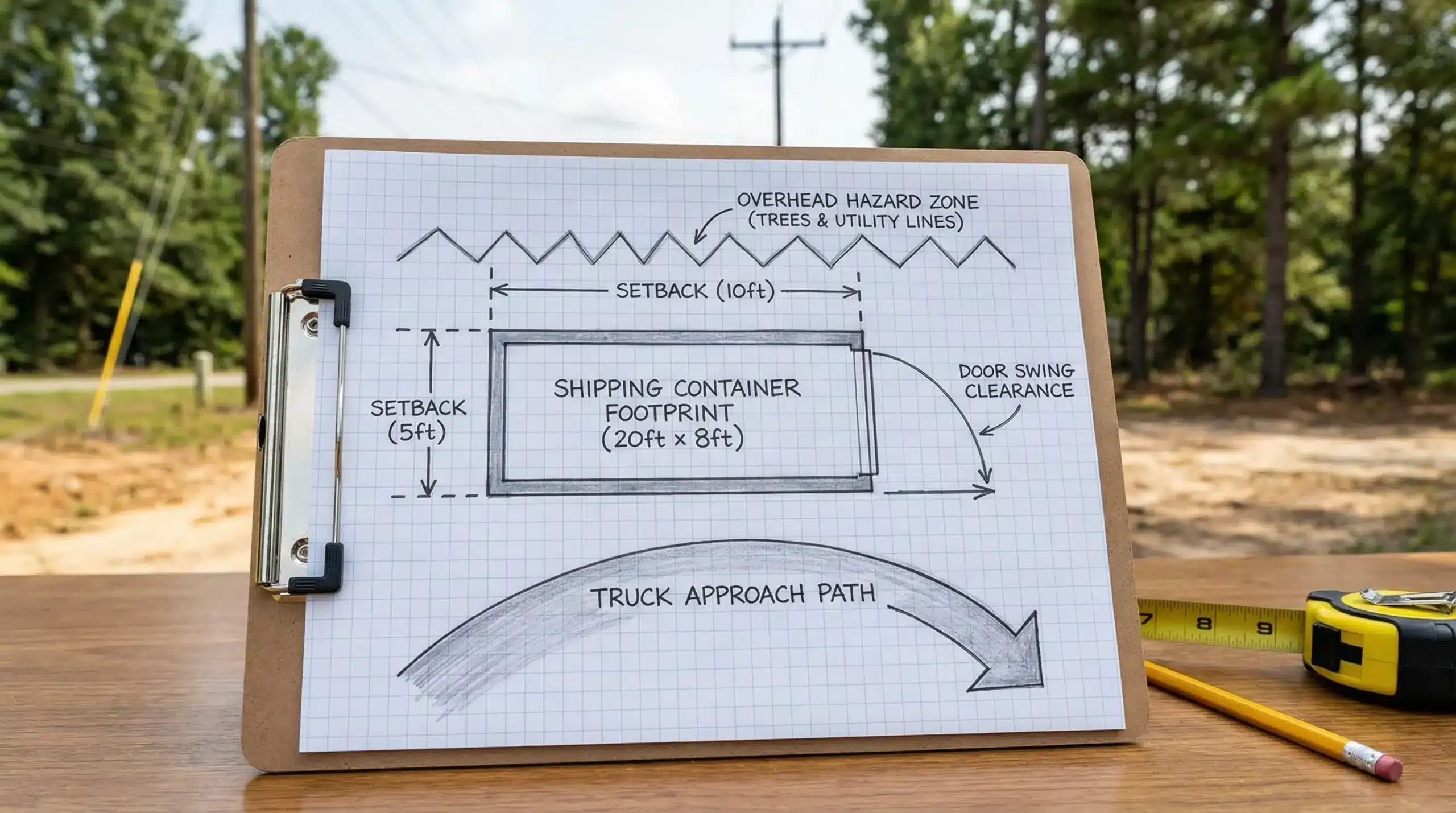
You may be asked for a simple site sketch showing where the container will sit and how it will be accessed.
Permanent placement (more documentation)
This is more likely if you:
- Install a slab, footings, or piers
- Add electrical (lights, outlets), HVAC, or plumbing
- Use the container as a workshop or occupied space
In permanent scenarios, officials may require structural and anchoring details, especially in wind-prone areas.
Wind, anchoring, and foundations: what “safe placement” looks like
A shipping container is heavy, but it can still shift if it’s set on soft ground, placed on a slope, or exposed to high winds. Placement is also about protecting the container itself so doors operate correctly and water sheds properly.
Best base options (from simplest to most permanent)
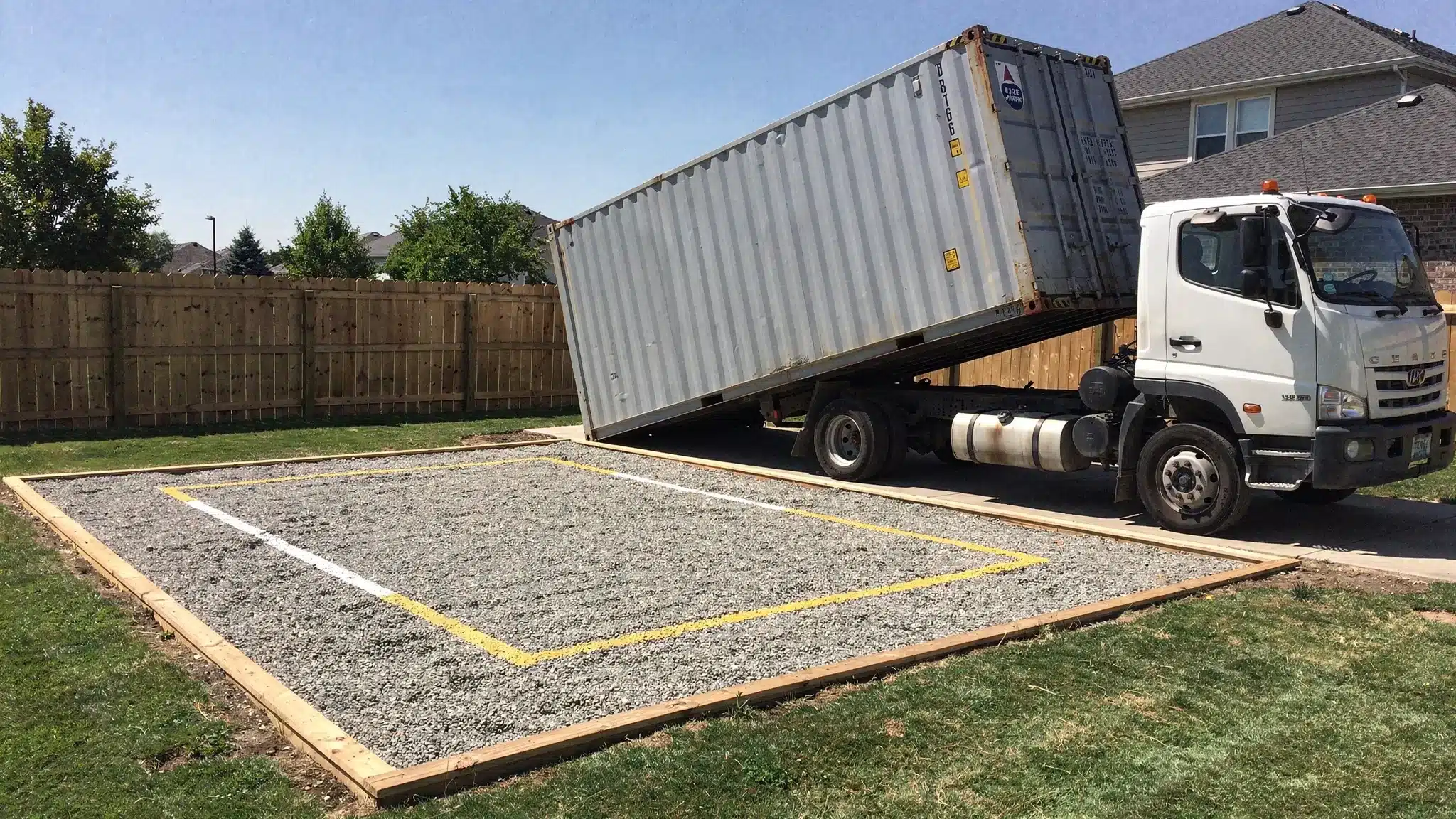
- Compacted gravel pad: Good for many storage-only uses. Helps drainage and leveling.
- Concrete piers or blocks: Keeps the container off wet ground, reduces corrosion risk.
- Concrete slab: Clean and durable for long-term placement or frequent foot traffic.
Why level matters (more than most buyers think)
If a container is out of level:
- Doors can rack and become hard to open or latch
- Water can pool on the roof
- Floor wear increases in one direction
A small amount of prep up front can prevent years of frustration.
High-wind regions and anchoring
If you’re placing a unit in hurricane- or storm-prone regions (for example, coastal Florida or the Gulf Coast near Houston), ask your local office what anchoring details they want. In some cases, tie-downs or engineered anchoring can be required, particularly for permanent installs.
Placement planning for delivery day (to avoid re-delivery fees)
Permits are one side of the puzzle. The other is making sure a truck can physically deliver and set the unit.
Global Containers Line coordinates fast nationwide delivery across the United States, but your site still needs to be ready for the equipment used in your area.
Access requirements to confirm before ordering
Make sure you can provide:
- Clear driveway width and a path with room to maneuver
- Overhead clearance (trees, wires, building overhangs)
- Firm ground for the truck and landing area
- Turning radius for larger trucks
- Gate access if entering a fenced property
If you are unsure, take a few photos of your entrance and placement spot and request a delivered quote based on real access conditions.
Container condition questions that affect placement and permitting
When shoppers compare container storage units for sale, condition is not just cosmetic. It can affect usability, security, and whether the container is appropriate for storage-only vs. shipping or regulated commercial use.
Common grades buyers ask about
- Cargo-worthy: Generally suitable for transport and secure storage when properly maintained.
- Wind and watertight: Focused on keeping out weather (often ideal for storage).
- New (one-trip): Best if appearance and long service life are top priorities.
Global Containers Line supplies new and used containers that are cargo-worthy, wind and watertight, and inspected before dispatch, which is exactly what most buyers want for reliable storage and placement confidence.
Pricing basics: what drives the delivered cost
Pricing for container storage units is usually driven by a few variables:
- Size (10ft vs 20ft vs 40ft, standard vs high cube)
- Condition (new vs used, cosmetic level, and certification/grade)
- Delivery distance and access (urban constraints in places like Los Angeles, or remote/rural drops)
- Offload requirements (equipment type needed to place the unit)
Because delivery and access are such big cost factors, the most accurate approach is to request a delivered quote for your specific address (whether you are in Atlanta, Phoenix, Miami, Dallas, or a rural county).
Permits and placement by use case (storage, construction, business, residential)
Construction sites
Many cities allow job-site storage containers with fewer hurdles, but they often require:
- A defined project timeline
- Placement that doesn’t block fire lanes or access routes
- Removal after the job ends
If you operate across state lines, remember that admin tasks do not stop at the build site. Some logistics and project teams also streamline travel documentation for cross-border work using services like SimpleVisa for border-crossing administration when international travel is part of their operations.
Farms and rural property
Counties can be more flexible than city jurisdictions, but watch for:
- Floodplain placement restrictions
- Setbacks from roads and neighboring parcels
- Soft ground and drainage issues that call for a gravel pad
Small businesses
For businesses, permitting questions often come down to whether the unit is considered:
- Temporary storage
- A permanent accessory structure
- Part of a regulated use (food, chemicals, flammables)
If you store regulated materials, check fire code requirements early.
Homeowners
For residential placement, the two big friction points are:
- HOA restrictions
- Visibility rules (front yard placement is frequently restricted)
Permit and placement planning table (quick reference)
| Scenario | Likely approval needed? | What to prepare before delivery |
|---|---|---|
| Short-term storage during a remodel | Sometimes | HOA confirmation, basic site sketch, level gravel area |
| Long-term backyard storage | Often | Zoning setback check, base plan (gravel/piers), neighbor/visibility considerations |
| Construction site job box storage | Often (temporary permit) | Site plan, truck access route, clear placement zone |
| Modified container (doors/windows/electrical) | Very likely | Building permit path, code compliance approach, contractor plan |
| Container office or occupied space | Very likely | Engineering input, permits, utilities plan, inspections |
How to prepare your site in 24 to 48 hours (simple checklist)
If you already have approval or you’re placing the container temporarily, these steps help you stay on schedule:
- Mark the corners of the placement area with paint or stakes.
- Confirm the door orientation you want (many buyers prefer doors facing the driveway for easy access).
- Clear obstacles above and around the set point.
- Compact and level the base.
- Plan drainage so water flows away from the container.
Browse the right size: 20ft vs 40ft for storage placement
A size decision affects both permitting (setbacks and lot coverage) and delivery access.
- A 20ft container is often easier to place on tighter residential lots and smaller job sites.
- A 40ft container maximizes storage per delivery, but needs more room for placement and truck maneuvering.
You can browse current options here:
- 20ft shipping containers
- 40ft shipping containers
Frequently Asked Questions
Do I need a permit to place a shipping container on my property? It depends on your city or county, how long the container will stay, and whether you add a foundation or utilities. Many areas require approval if it’s permanent or modified.
How do I find out setback requirements for a container storage unit? Start with your local planning or zoning department. Ask specifically about “accessory structure setbacks” and whether shipping containers are allowed in your zoning district.
What’s the best foundation for container storage units for sale? For storage-only use, a compacted gravel pad is common. For long-term placement or frequent access, concrete piers or a slab can be a better fit. Your soil and drainage matter.
How much does delivery cost and how long does it take? Delivery cost and timelines depend on distance, local access, and offload method. Global Containers Line offers fast nationwide delivery across the United States, and the most accurate option is a delivered quote for your address.
Are used containers good enough for storage? Yes, if they are wind and watertight and inspected. For appearance-sensitive projects or long-term ownership, many buyers choose new (one-trip) units.
Get a delivered quote and lock in the right placement plan
If you’re shopping for container storage units for sale and want to avoid permit delays or delivery surprises, Global Containers Line can help you choose the right size and condition, then coordinate fast nationwide delivery anywhere in the USA.
Browse available inventory or request a delivered quote today at Global Containers Line, and be ready with your zip code, placement details, and a few site photos for the fastest turnaround.