
If you’re shopping for a conex box for sale, two things determine whether you’ll be happy with the purchase a month from now: (1) picking the right size for your site and workflow, and (2) understanding what “condition” actually means in real-world terms.
Global Containers Line helps U.S. buyers choose the right container for storage, construction, commercial, and residential projects, with fast nationwide delivery across the United States and transparent, online ordering.
Conex box size guide (quick answers)
Which size is best for most buyers?
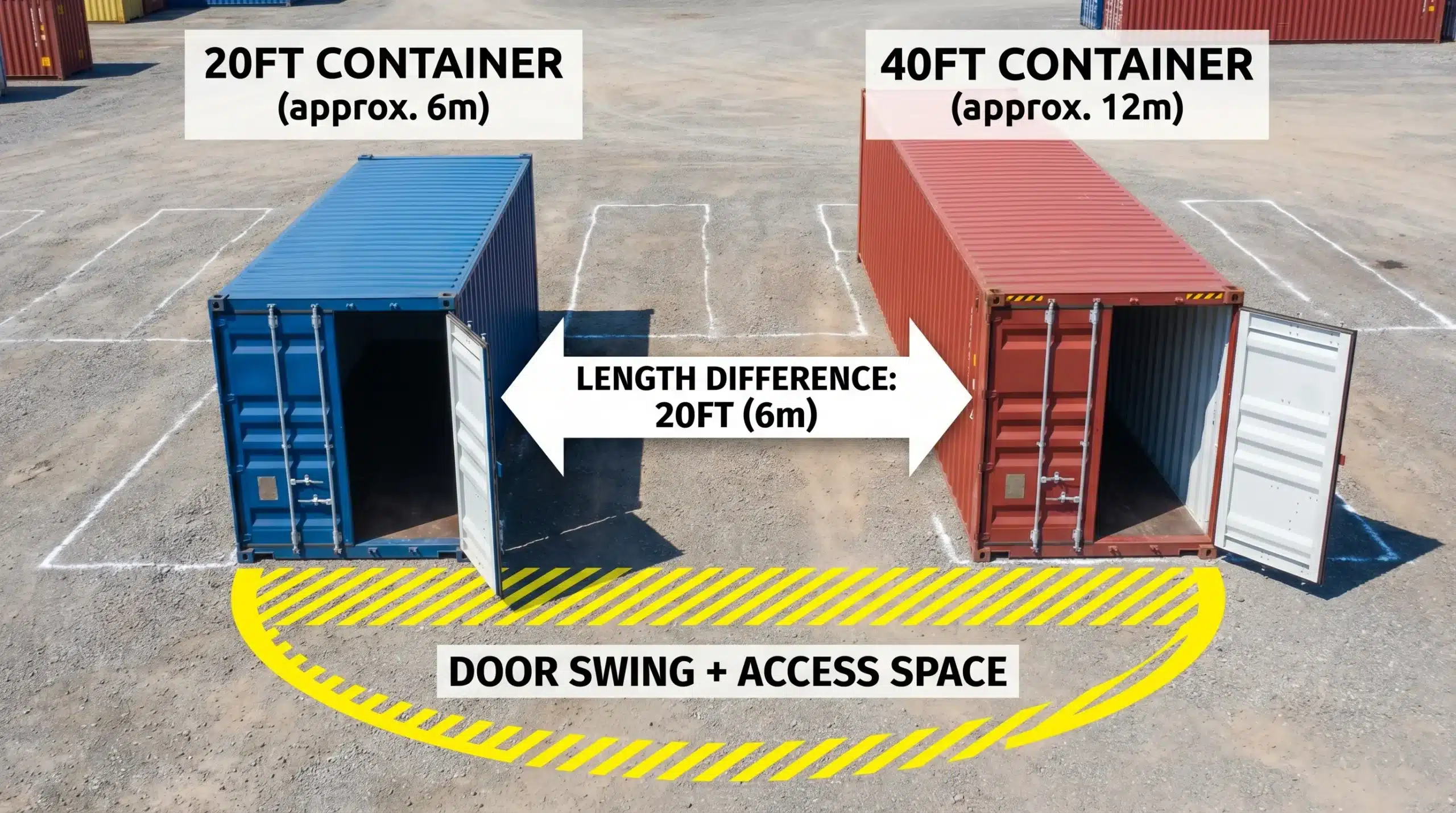
- 20ft conex box: best all-around choice for job sites, small businesses, and homeowners who need secure storage without needing a large footprint.
- 40ft conex box: best value per square foot when you have space and want to store equipment, inventory, or materials long-term.
You can browse common inventory options here:
- Shop 20ft shipping containers
- Shop 40ft shipping containers
Standard conex box sizes and dimensions (10ft, 20ft, 40ft)
Most “conex boxes” are ISO shipping containers. Exact measurements can vary slightly by manufacturer, but these are the typical sizes U.S. buyers compare.
| Container size | Typical exterior size (L x W x H) | Typical interior height | Best for |
|---|---|---|---|
| 10ft | 10ft x 8ft x 8ft 6in | About 7ft 10in | Tight sites, tools, small storage |
| 20ft (standard) | 20ft x 8ft x 8ft 6in | About 7ft 10in | General storage, job sites, farms |
| 40ft (standard) | 40ft x 8ft x 8ft 6in | About 7ft 10in | Inventory, equipment, bulk materials |
| 40ft High Cube | 40ft x 8ft x 9ft 6in | About 8ft 10in | Extra-tall items, conversions, better headroom |
20ft vs 40ft conex box: how to decide
Choose a 20ft if you:
- Have limited space or tighter delivery access
- Want easier positioning on residential driveways or smaller lots
- Need secure storage but not long “walk-in” capacity
Choose a 40ft if you:
- Want the best storage value per square foot
- Need to store long items (lumber, pipe, staging, shelving runs)
- Plan to create separate zones inside (equipment on one end, materials on the other)
Tip: If you’re on the fence, decide based on delivery access as much as storage needs. A 40ft container requires more turning room and a longer drop zone.
Conex box condition standards (what “good” should actually mean)
“Used” is not a condition standard. What matters is the grade and what the seller guarantees.
At Global Containers Line, containers are thoroughly inspected before dispatch and sold for real-world reliability (secure doors, solid structure, and weather protection), which is what most storage and job site buyers care about.
Common condition grades you’ll see in the U.S.
| Condition term | What it generally means | Best for | What to verify |
|---|---|---|---|
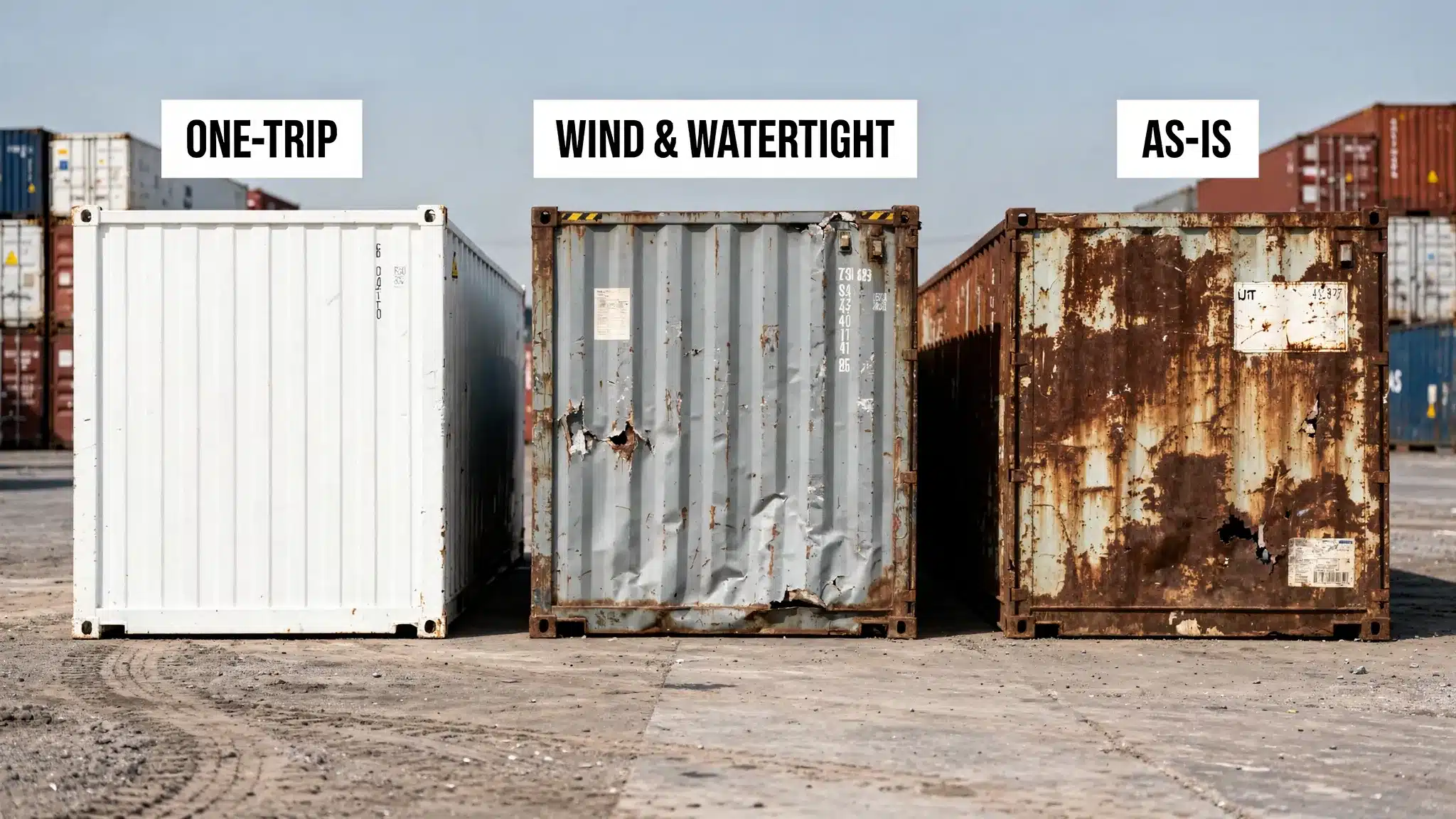
| One-trip (new) | Used once for cargo, minimal wear | Retail storage, clean projects, visible placement | Door function, dents, paint condition |
| Wind & watertight (WWT) | Weather-tight, used with cosmetic wear | Storage, farms, job sites, most buyers | Roof integrity, door seals, floor condition |
| Cargo-worthy (CW) | Structurally fit for transport (varies by seller) | Shipping use cases, some export needs | Structural integrity, doors, floor, corner castings, possible CSC documentation |
| Refurbished | Repaired and often repainted (definitions vary) | Buyers who want improved appearance | What was repaired, interior condition, warranty terms |
| As-is | Lowest grade, may have leaks/damage | Parts, short-term use, low-stakes storage | Everything (expect repairs) |
A note on “cargo-worthy” and CSC plates
If you’re buying for shipping or export, ask about documentation and whether the unit has a CSC plate and whether it meets your requirements. The CSC system comes from the International Convention for Safe Containers, maintained by the International Maritime Organization (IMO). See the IMO background on the CSC here: International Convention for Safe Containers (CSC).
For many U.S. storage buyers, cargo-worthy can be a plus, but the practical must-haves are still: solid roof, working doors, and weather protection.
What “wind and watertight” should include (simple checklist)
A conex box that’s truly wind and watertight should protect contents during heavy rain and high winds, even if the container has dents and surface rust.
Here’s what you should expect:
- No active leaks through the roof, corner castings, or door area
- Door gaskets/seals that compress properly when closed
- Doors that open and close without extreme force (some stiffness is normal on used units)
- Flooring that’s solid with no soft spots
If you want a deeper step-by-step inspection process, you can also reference our internal checklist: Conex containers for sale near me: inspection checklist.
Conex box pricing: what to budget (and why quotes vary)
Pricing depends heavily on size, condition grade, and delivery distance from the nearest yard. Instead of trusting a single national “average,” compare delivered pricing for your ZIP code.
Typical price drivers (the real ones)
- Size: 40ft units cost more than 20ft, but often offer better value per square foot
- Condition: one-trip typically costs more than used wind and watertight
- Location: distance to a depot and regional demand (for example, metro areas like Houston, Dallas, Atlanta, Phoenix, Miami, and Los Angeles)
- Delivery complexity: tight access, long driveways, soft ground, or special offload needs
To avoid surprises, focus on an itemized quote. This guide explains what complete quotes should include: Container for sale near me prices: what quotes include.
Should you buy the cheapest conex box you can find?
Usually not, especially for long-term storage or any project where downtime is expensive. Extremely low pricing often comes with trade-offs (unknown grade, unclear delivery fees, or major repairs). If you’re price-shopping aggressively, read this first: Cheap 20ft shipping container for sale: red flags to know.
Delivery across the USA: what to expect
Global Containers Line offers fast nationwide delivery across the United States, including major markets like Houston, Dallas, San Antonio, Phoenix, Atlanta, Orlando, Jacksonville, Miami, Tampa, and many more.
How conex boxes are typically delivered
Most residential and light-commercial deliveries use a tilt-bed truck. Some sites require a flatbed or specialty offload (for example, a forklift or crane), depending on access and placement needs.
Delivery site requirements (featured-snippet friendly)
Before delivery day, confirm:
- Clearance: overhead wires/branches and room for the truck to maneuver
- Drop zone: level, compacted ground or a prepared base
- Door orientation: make sure doors face the direction you need for access
- Access width and turning: especially important for 40ft containers
For a deeper breakdown of permits, delivery types, and timelines, see: Transporting a shipping container: permits, costs, timelines.
Condition standards you should expect from a trusted supplier
When you buy a conex box online, you should not have to “hope for the best.” A reputable supplier should be able to explain:
- The condition grade in plain language
- What the container is guaranteed to do (for example, weather protection)
- Whether the container is suited for storage, shipping, or conversion
- What delivery includes, and whether pricing is transparent with no hidden fees
Global Containers Line positions container buying the way it should be: straightforward selection, clear condition expectations, secure checkout, and coordinated delivery.
Frequently Asked Questions
What is a conex box? A conex box is a common U.S. term for a shipping container used for storage, transport, or container projects. Most are steel ISO containers.
What size conex box should I buy for storage? A 20ft conex box is the most common for general storage and job sites. Choose a 40ft if you have the space and want the best value per square foot.
What does wind and watertight mean on a conex box for sale? It generally means the container is weather-tight (no active leaks) and can protect contents from rain and wind, even if it has dents or surface rust.
Are used conex boxes still secure? Yes, if doors operate correctly and the locking hardware is in good condition. Many buyers add a lockbox and high-security puck lock for extra protection.
How much does delivery cost for a conex box? Delivery depends on distance, site access, and offload method. The best approach is to request a delivered quote using your ZIP code and site details.
How fast can you deliver a conex box in the USA? Delivery timing varies by location and inventory, but Global Containers Line offers fast nationwide delivery across the United States. Request a quote to confirm availability for your city or ZIP code.
Browse available conex boxes or request a delivered quote
Ready to buy a conex box for sale without guesswork on size, condition, and delivery?
- Browse popular options: 20ft shipping containers and 40ft shipping containers
- Or visit Global Containers Line to request a delivered quote with your ZIP code and delivery access details