
Buying a shipping container should be simple: pick a size, choose a condition, schedule delivery. But in 2026, the U.S. market is still full of listings that look “local” and cheap, until you discover the seller is not real, the container grade is misrepresented, or the delivery bill jumps hundreds of dollars after you pay.
This guide shows you how to buy shipping container units safely, avoid common scams, and insist on quotes that do not hide delivery and access fees.
Why shipping container scams and surprise fees are so common
Shipping containers are high-demand, high-ticket items that often sell online, sight unseen. That combination attracts bad actors.
Two other factors make it easier for scams and hidden fees to slip in:
- Pricing varies by location (for example, Houston vs. Phoenix vs. Miami vs. Los Angeles), so “market price” is harder to recognize.
- Delivery is not one-size-fits-all. A 20ft container delivered to a wide-open jobsite in Dallas is very different from a 40ft delivered to a tight residential driveway in Atlanta or a rural property outside Orlando.
The result is predictable: buyers focus on the container price, but the real risk is the transaction and the delivered total.
The most common scams when you buy shipping container units online
Fake “local” sellers and copied listings
Scammers often copy real photos, post them on marketplaces, and claim the container is “near you” in major metros like Phoenix, Miami, Tampa, or Jacksonville.
What to do:
- Ask for fresh photos with a handwritten date and your name on paper in the frame.
- Ask where the unit is staged and request the yard address.
Bait-and-switch on condition or grade
A listing says “one-trip” or “like new,” but what arrives is clearly used, patched, or has door issues.
What to do:
- Get the condition grade in writing and clarify what it means for doors, floor, and roof.
- Confirm whether the unit is cargo-worthy (for shipping use) or wind and watertight (common for storage).
Wire-only payments, crypto, or pressure to pay “today”
Legitimate suppliers can take secure payment and provide documentation. Scammers push irreversible payments and urgency.
What to do:
- Avoid sellers who refuse normal, traceable payment options.
- Do not pay in full if the seller cannot provide a real invoice and verifiable business identity.
“Delivered price” that excludes offload or access
Some sellers quote a tempting delivered price, then add fees for tilt-bed delivery, crane service, waiting time, or redelivery.
What to do:
- Ask for an itemized delivered quote that names the offload method and your site assumptions.
Non-existent inventory or fake dispatch
You pay, then the seller “can’t find a driver,” blames scheduling, or disappears.
What to do:
- Require a formal invoice with company details.
- Confirm delivery window expectations before you pay.
Stolen or improperly represented units
This is less common than payment scams, but it happens. A legitimate supplier should have clear sourcing and paperwork practices.
What to do:
- Buy from established suppliers with transparent sales documentation.
“Too good to be true” pricing
If a 40ft container is priced far below typical market ranges for your area, treat it as a risk signal.
As a general reality check, many U.S. buyers see delivered pricing often land in these broad ranges depending on city, condition, and access:
| Container size | Common condition | Typical delivered range (many U.S. markets) | Why it varies so much |
|---|---|---|---|
| 20ft | Used storage grade (WWT) or cargo-worthy | ~$1,800 to $3,800+ | Condition, depot proximity, trucking, access |
| 40ft | Used storage grade (WWT) or cargo-worthy | ~$2,400 to $5,500+ | Same factors, plus higher trucking costs |
(For city-specific pricing, always request a quote by ZIP code. Metro areas like Los Angeles and Miami can price differently than inland markets.)
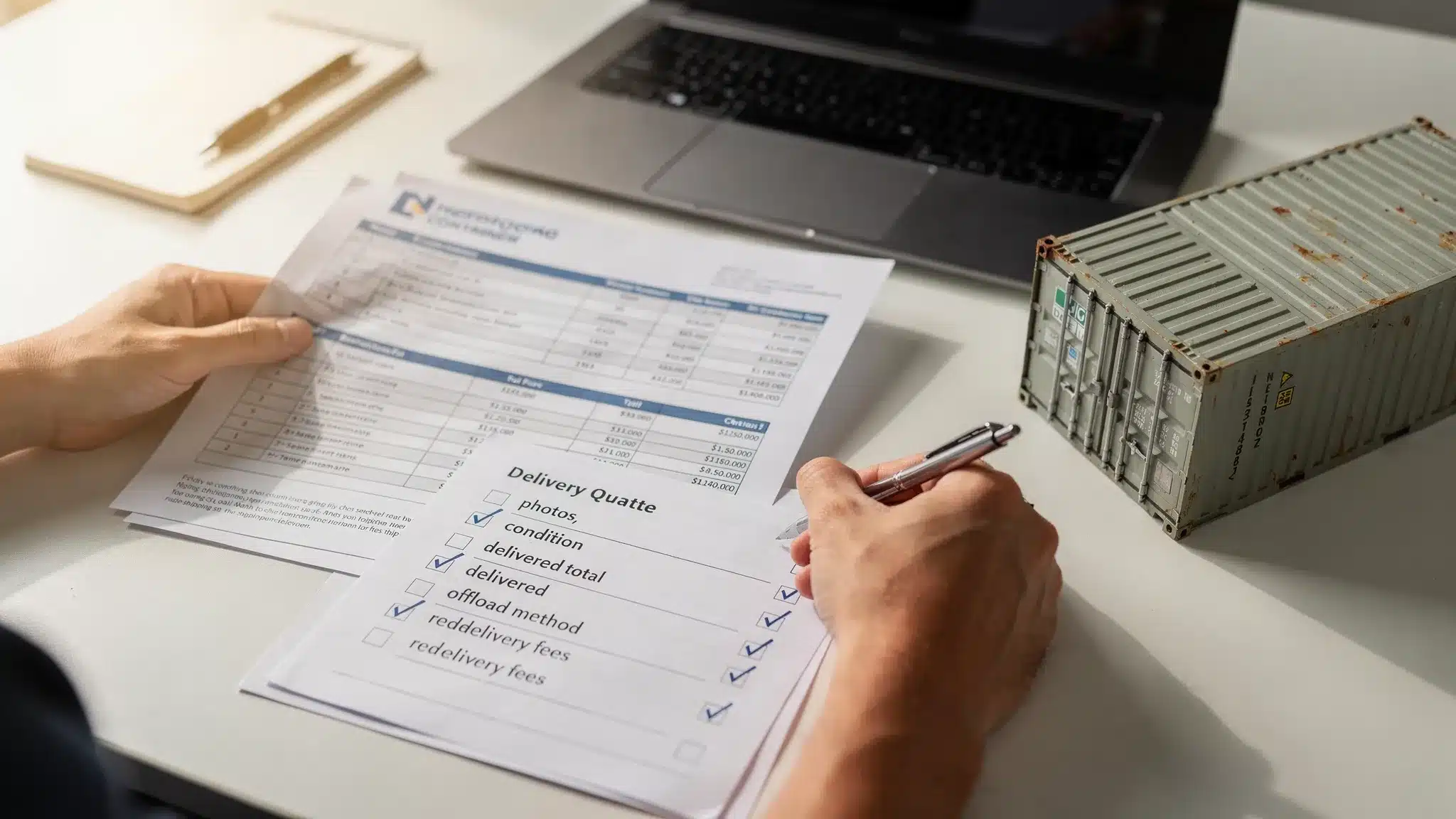
Hidden delivery fees: what a real delivered quote should include
If you want to avoid surprises, do not accept “$X delivered” without details. Ask what “delivered” includes.
What a complete shipping container quote usually includes
| Quote line item | What it means | Surprise risk if missing |
|---|---|---|
| Container unit price | The container itself (size, type, grade) | Bait-and-switch on grade or condition |
| Delivery/trucking | Transport to your address | “Delivery not included” after payment |
| Offload method | Tilt-bed, flatbed with customer unload, crane, etc. | Extra equipment charges |
| Site/access assumptions | Space for truck, ground conditions, obstacles | Redelivery or waiting-time fees |
| Taxes and processing | Local taxes and transaction fees (if applicable) | “Admin fees” added later |
| Add-ons (optional) | Lockbox, vents, paint, modifications | Upsells that inflate total |
The delivery fees that most often show up later
These are not always “scams.” They are often the result of unclear assumptions.
Common triggers include:
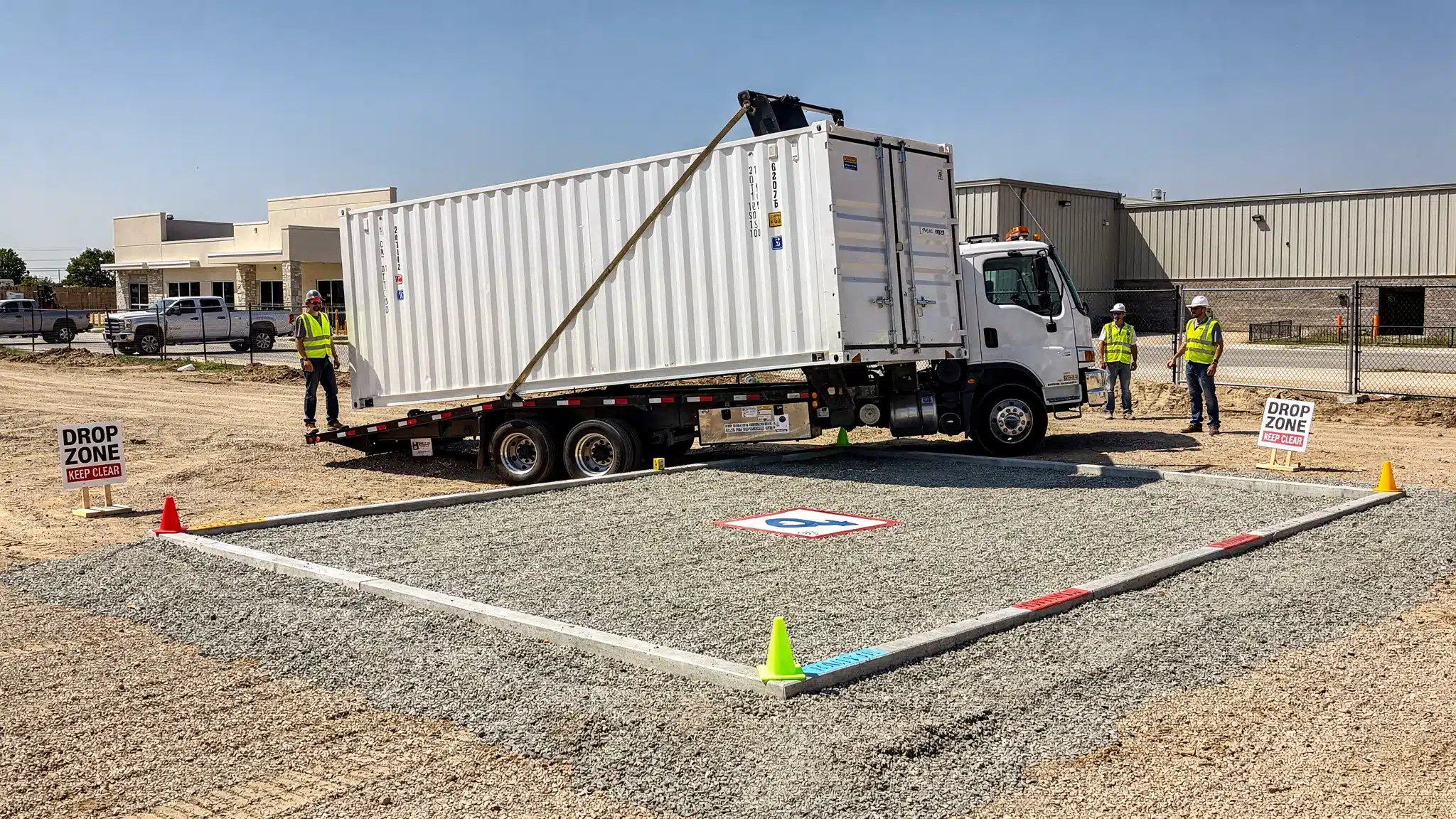
- Redelivery fees if the driver cannot safely access your drop zone.
- Waiting time if the site is not ready (gate locked, equipment not available, area not cleared).
- Special offload requirements if you need a crane or forklift and it was not planned.
- Route restrictions or permits in some situations (varies by state, route, and equipment).
If you are in dense areas (for example, Miami neighborhoods, Atlanta suburbs, parts of Los Angeles, or older areas of Jacksonville), access constraints are one of the biggest reasons delivery costs change.
How to request an “apples-to-apples” delivered quote
A good supplier can quote accurately if you provide the right details up front.
Provide these details before you buy
- Delivery ZIP code (and whether it is commercial or residential)
- Photos of the entry path and drop location (driveway, gate, alley, jobsite lane)
- Any obstacles (trees, wires, slopes, soft ground)
- Preferred placement orientation (which way you want the doors facing)
- Whether you can accept a standard tilt-bed offload, or if you believe a crane is required
Ask these questions on every quote
- “Is this the total delivered price to my address, including offload method?”
- “What site conditions would trigger extra charges (waiting time, redelivery, special equipment)?”
- “What container grade am I buying, and what does that include for doors, roof, and floor?”
- “Can you share recent photos of the actual unit or representative units from this batch?”
Container condition: questions that prevent expensive surprises
A “cheap” container can become expensive if you end up repairing doors, sealing leaks, or replacing flooring.
Know the basic condition categories
Condition terminology varies, but buyers commonly see:
- One-trip (new): typically used once for cargo, generally the cleanest option.
- Used, wind and watertight: designed for secure storage, cosmetic wear is normal.
- Cargo-worthy: structurally suitable for cargo transport standards, cosmetic wear is common.
Quick inspection points to confirm (even when buying online)
- Doors open and close smoothly, with gasket seals intact
- Roof is free of active leaks and major dents that hold water
- Floors are solid (no soft spots), with no major odors if used for storage
- Corner castings and frame are straight enough for safe handling and placement
If you are buying for a conversion project, be extra strict on door operation, floor condition, and corrosion.
Why buying from a trusted U.S. supplier reduces risk
A reputable supplier does three things that marketplace sellers often do not:
- Matches the container to the use case (storage vs. export vs. conversion)
- Quotes delivery based on your actual site, not a generic estimate
- Stands behind the transaction with clear paperwork and support
This matters whether you are buying in Houston, Dallas, San Antonio, Phoenix, Atlanta, Orlando, Tampa, Miami, Los Angeles, or a smaller market in between.
Buying from Global Containers Line (transparent quotes, inspected inventory, nationwide delivery)
Global Containers Line is a USA-based supplier of new and used shipping containers for sale, with fast nationwide delivery across the United States. All containers are cargo-worthy, wind and watertight, and thoroughly inspected before dispatch, so you can buy with confidence.
If you are choosing between the most popular sizes, start here:
- Browse 20ft shipping containers for jobsite storage, small business inventory, and compact property storage.
- Browse 40ft shipping containers for larger storage needs, construction staging, and projects that need maximum square footage.
For a deeper walkthrough on sizing, access, and buying steps, see the Ultimate Shipping Container Buying Guide.
Quick checklist: avoid scams and hidden delivery fees
Before you pay, make sure you have:
- A written invoice with company details
- The container size, type, and condition grade stated clearly
- An itemized delivered quote (delivery and offload method included)
- Clear site assumptions and what triggers redelivery or waiting-time charges
- Recent photos (not stock images) and clear expectations for used-container cosmetics
- A secure checkout or traceable payment method
Frequently Asked Questions
What is the safest way to buy shipping container units online? Buy from an established supplier that provides a written invoice, secure payment, clear condition grades, recent photos, and an itemized delivered quote.
How can I tell if delivery fees are hidden? Ask for an itemized delivered quote that states the offload method and site assumptions. If the seller cannot explain redelivery, waiting time, or access limitations, expect surprises.
How much does it cost to deliver a shipping container in the USA? Delivery depends on distance from the depot, your ZIP code, and site access. The right way to price it is to request a delivered quote based on your address and offload needs.
What does “wind and watertight” mean for a used container? It typically means the container is suitable for secure storage and is sealed against wind and water intrusion, while cosmetic dents, surface rust, and patches may still be present.
What does “cargo-worthy” mean? Cargo-worthy generally indicates the container is structurally sound for transport use, even if it is not cosmetically perfect.
How fast can I get a container delivered? Timing varies by inventory and your location. Working with a supplier that offers fast nationwide delivery usually reduces delays versus trying to coordinate shipping yourself.
Do I need to prepare my site before delivery? Yes. Clear access, confirm overhead obstructions, and ensure the drop area is firm and level. Poor site prep is one of the top causes of redelivery fees.
Get a delivered quote you can trust
If you are ready to buy a shipping container without scams, confusing grades, or surprise delivery charges, Global Containers Line can help.
Browse available inventory and pricing for 20ft containers or 40ft containers, or visit Global Containers Line to request a quote with fast nationwide delivery anywhere in the United States.