
If you need an insulated space fast, it’s easy to get pulled toward flat pack insulated containers. They promise simpler shipping, quicker setup, and better comfort than a bare steel box. In real U.S. jobsites, they can be a smart fit, especially when access is tight in places like Miami, Phoenix, Atlanta, Dallas, or Houston, or when you want a clean interior without a full build-out.
That said, flat pack units have real trade-offs. In many cases, a traditional 20ft or 40ft steel shipping container (insulated after delivery) is the better long-term investment for security, durability, and relocation.
This guide breaks down the pros, limits, best uses, and the practical questions buyers ask most, including pricing drivers, delivery planning, and what “good condition” should look like.
What are flat pack insulated containers?
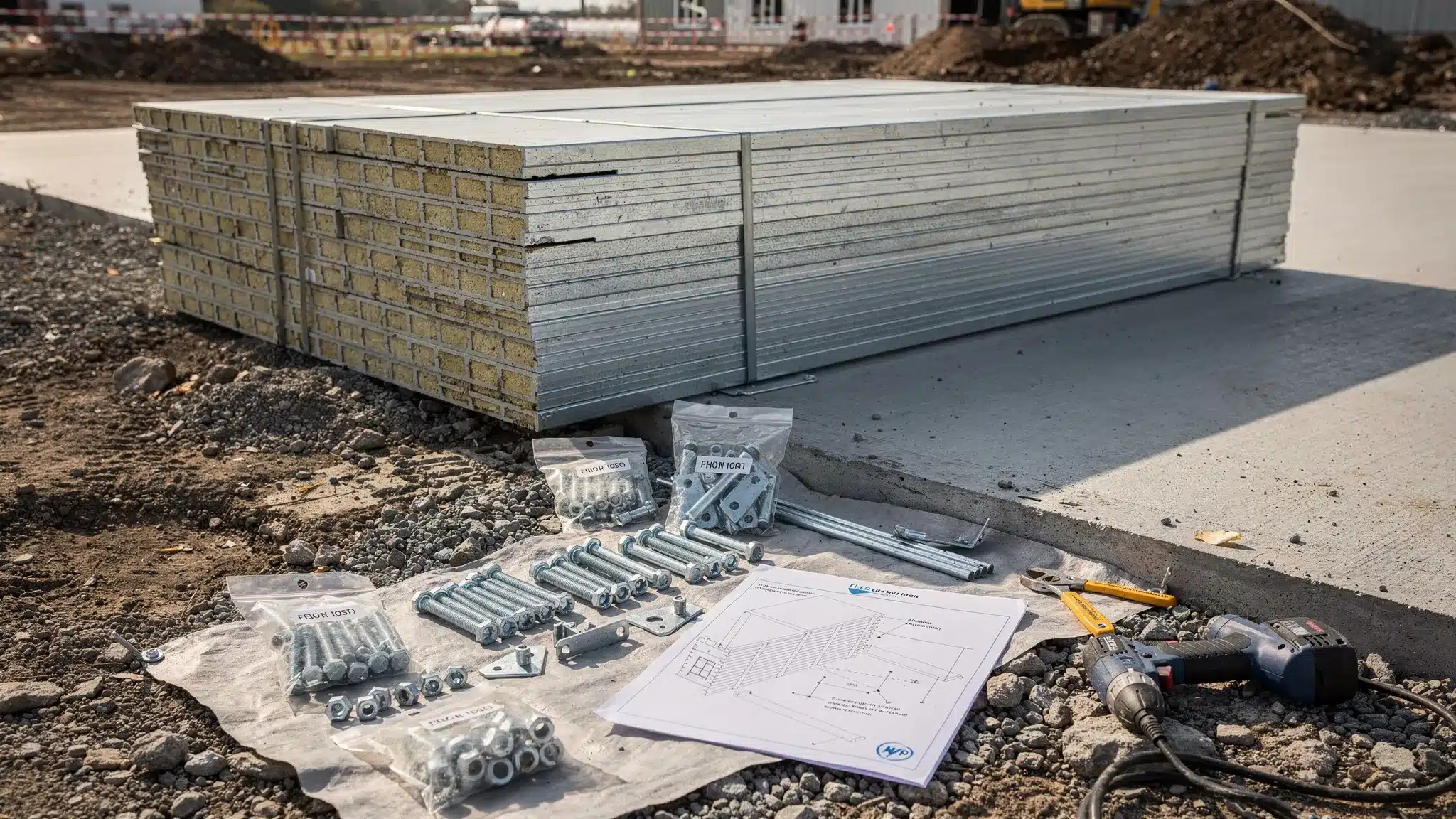
Flat pack insulated containers (often called panelized insulated containers) are modular structures shipped as a kit instead of arriving as a fully welded ISO shipping container.
In simple terms, the walls and roof arrive as insulated panels (and often a door system). The unit is assembled on site on a slab, piers, or a prepared base. Since insulation is built into the panels, you typically get a more “finished” shell than a bare steel container.
Common uses include:
- Construction site offices and break rooms
- Equipment rooms and utility enclosures
- Temperature-buffered storage (not the same as refrigeration)
- Quick-deploy retail or operations space
Key limitation to understand: Most flat pack insulated containers are not ISO-rated shipping containers. They are usually not designed for ocean freight as cargo, and they may not handle heavy stacking, twisting loads, or repeated lifting the way an ISO container does.
Pros of flat pack insulated containers
Easier delivery to tight-access locations
Because flat pack insulated containers ship in panels, you can often deliver them to sites where a one-piece 20ft or 40ft unit would be difficult to place.
This is especially helpful for:
- Urban job sites with limited staging space
- Back-lot installs for small businesses
- Residential projects with limited turning radius for a tilt-bed truck
If your property access is a concern, it’s still worth learning how standard container deliveries work so you can compare options realistically. See: Transporting a Shipping Container: Permits, Costs, Timelines.
Better baseline comfort for people and sensitive materials
Insulated panels reduce heat transfer compared with bare steel, which can help:
- Reduce condensation issues
- Keep interior temperatures more stable
- Lower HVAC demand if you add heating or cooling
For a crew office, first-aid room, or small retail workspace, the “ready-to-finish” interior can be a major time saver.
Flexible layouts and add-ons
Many flat pack systems are designed to accept options like extra doors, windows, or partitions with less cutting and welding than a steel container conversion.
This is useful when you need:
- A personnel entry plus a wider equipment door
- A cleaner interior finish (common for inspection rooms and some light commercial use)
- Interior dimensions that better match shelving or workbench layouts
Less dependence on heavy equipment (in some cases)
A full ISO container delivery typically requires clear access for a truck to place the unit. Flat pack insulated containers can sometimes be staged and assembled with lighter equipment, depending on the kit and your site plan.
You still need a safe handling plan, but the logistics are different.
Limits and trade-offs to know before you buy
Not ideal for frequent relocation
If you need a unit you can pick up, move, and set down repeatedly across projects, flat pack insulated containers are often less convenient than a one-piece steel shipping container.
A traditional container can be relocated as a single rigid unit. A panelized structure may require partial disassembly or special lifting provisions.
Structural durability varies by manufacturer
With ISO shipping containers, you start with a globally standardized steel structure. With flat pack systems, performance depends heavily on:
- Panel thickness and materials
- Frame design
- Connection details and hardware
- Assembly quality
If your site is exposed (coastal wind in Florida, open plains in Texas, or rooftop placements), treat structural specs as a primary buying criterion.
Security can be more complicated
Steel shipping containers are popular partly because the shell is extremely hard to breach. Flat pack insulated containers may have more seams and connection points, and door assemblies vary widely by build.
If you’re storing tools, generators, copper wire, or high-value inventory, ask detailed questions about door construction and lock compatibility.
Code, permitting, and fire requirements still apply
Even though people call them “containers,” local rules may treat flat pack units as temporary structures or modular buildings.
Before you buy, confirm:
- Whether your city or county requires a permit
- Wind-load expectations (especially in coastal regions)
- Fire-rating requirements for interior finishes and insulation
When in doubt, your local building department can tell you what they expect for submittals.
Insulated does not mean refrigerated
Flat pack insulated containers can reduce heat gain and temperature swings, but they do not actively cool.
If you need true cold storage (food, pharmaceuticals, strict temperature ranges), you’re usually looking for a refrigerated (reefer) container. For background, see: Freezer Shipping Container Price: New vs Used Cost Guide.
Best uses in the U.S. (when they make the most sense)
Flat pack insulated containers shine when you need a finished shell quickly and your site access is challenging.
Construction site offices and welfare units
These are common on fast-moving projects where you want comfort without a full conversion.
Typical use cases include:
- Jobsite office with a small HVAC unit
- Break room or changing room
- Moisture-buffered storage for supplies
Equipment rooms and utility enclosures
Insulated panels can help protect electronics, pumps, and controls from rapid temperature swings.
This can be valuable across varied climates, from Arizona heat to Midwest winters.
Short-to-mid term temperature-buffered storage
Insulation can help reduce condensation and stabilize temperatures for certain goods, such as paints and adhesives (within manufacturer storage limits) or sensitive equipment.
The key is to match expectations to reality: buffered storage is not cold storage.
Pop-ups and temporary workspace
For small business owners, flat pack insulated containers can provide a cleaner interior faster than starting from a bare steel unit.
If your goal is a rugged, lockable unit with long service life and strong resale value, a steel shipping container often wins.
Flat pack insulated container vs. steel shipping container (20ft or 40ft)
Many buyers compare flat pack insulated containers against a traditional steel container that gets insulated after delivery.
Here’s a practical comparison.
| Decision factor | Flat pack insulated containers | Steel shipping container (insulate after delivery) |
|---|---|---|
| Delivery access | Easier in tight areas (panels/kit) | Needs space for truck placement and set-down |
| Insulation | Built into panels from the start | Added later (spray foam, paneling, framing) |
| Security | Varies by design and door hardware | Typically very strong steel shell |
| Relocation | Often less convenient if moved repeatedly | Simple to move as one rigid unit |
| Best for | Offices, welfare units, quick finished interiors | Storage, jobsite durability, long-term value, conversions |
If you need a rugged, widely supported platform, a steel container is usually the safer default. Global Containers Line supplies new and used shipping containers for sale that are cargo-worthy, wind and watertight, and inspected before dispatch, with fast nationwide delivery across the United States.
- Browse 20ft shipping containers
- Browse 40ft shipping containers
Pricing: what flat pack insulated containers typically depends on
Buyers ask, “What do flat pack insulated containers cost?” Pricing varies widely by spec, options, and installation scope.
Instead of relying on a single number, request a quote that breaks out the major cost drivers:
Size and configuration
Larger footprints and taller interior clearances generally increase kit cost. If you’re comparing to steel containers, it helps to understand standard footprints and capacities first. See: Standard Shipping Container Sizes: 10ft to 45ft Explained.
Insulation type and thickness
Not all insulation performs the same. Ask for documentation on:
- Insulation material used
- Any fire-performance documentation required by local code
Interior finish and floor system
A utility shell prices differently than a unit delivered with finished interior lining, trim, and flooring.
Electrical, lighting, HVAC, and penetrations
Power distribution, LED lighting, HVAC units, and pre-cut penetrations for conduit and piping can change the total quickly.
Assembly and site prep
For many projects, the base and installation can be a major portion of the delivered total. Depending on the project, your total cost may include:
- Base prep (level pad, slab, or piers)
- Assembly labor
- Equipment rentals
- Permits or inspections
Tip for apples-to-apples comparisons: Ask sellers to quote the same scope, delivered to your ZIP code, and clarify whether offload or placement is included.
Delivery and installation: what to plan for
Even though flat pack units ship differently than steel containers, the delivery conversation should still cover the same fundamentals.
Questions to answer before scheduling delivery
- Delivery address and nearest major city (examples: Houston, Dallas, Atlanta, Phoenix, Miami)
- Access constraints (gates, tight turns, overhead wires, soft ground)
- Your preferred set-down location and required clearances
- Your timeline and site restrictions (delivery hours, escorts, permits)
If you’re new to container logistics, the Global Containers Line team also shares delivery planning guidance in the Ultimate Shipping Container Buying Guide.
Planning for assembly (flat pack)
For flat pack insulated containers, plan ahead for:
- Staging space for panels
- A level base (installer will specify tolerances)
- Weather windows (wind and rain can slow assembly)
Planning for placement (steel shipping containers)
For traditional 20ft and 40ft containers, plan a firm, level area for placement and door swing clearance.
If you’re ordering online and want to reduce surprises, start here: How to Buy Shipping Containers Online.
Condition: what “good” looks like (and what to confirm)
Condition questions are different for flat pack kits vs. used steel containers.
For flat pack insulated containers
Since these are manufactured systems, condition is mostly about completeness and panel integrity:
- No crushing, delamination, or water intrusion in panels
- Complete hardware sets (fasteners, trims, seals)
- Proper door alignment and weather sealing
Ask what happens if panels arrive damaged and how replacements are handled.
For steel shipping containers
Most buyers focus on:
- Cargo-worthy condition if structural integrity matters
- Wind and watertight performance for dry storage
- Door operation, gasket condition, and floor integrity
Global Containers Line provides new and used shipping containers that are inspected before dispatch, so you can buy with more confidence, even when ordering online, and get fast nationwide delivery across the U.S.
Are flat pack containers better than shipping containers?
Not universally.
Flat pack insulated containers are often easier to ship to tight sites and can give you a finished interior faster. But 20ft and 40ft steel shipping containers usually offer greater durability, security, and long-term storage value.
A simple decision rule works well for most buyers:
- Choose flat pack insulated when fast interior comfort and access constraints matter most.
- Choose steel containers when security, durability, relocation, and resale value matter most.
When a 20ft or 40ft steel container is the better choice
Even if you started your search with flat pack insulated containers, a traditional steel unit often makes more sense when your priority is rugged storage or repeatable logistics.
Choose a steel container when you need:
- High security for tools, inventory, or equipment
- A unit you can relocate repeatedly
- A strong base for customization and build-outs
- Straightforward resale value
To explore common U.S. buying patterns and what “best” looks like by use case, see: Best Shipping Containers in the USA: What Wins.
Frequently Asked Questions
Do flat pack insulated containers qualify as ISO shipping containers? Most do not. They are typically not designed or rated for ocean freight as cargo, heavy stacking, or repeated lifting like ISO containers.
Are flat pack insulated containers good for cold storage? They can reduce heat gain and temperature swings, but insulation alone is not refrigeration. If you need controlled cold temperatures, you likely need a refrigerated (reefer) container.
What affects flat pack insulated container pricing the most? The biggest drivers are size, insulation specs, interior finish level, electrical/HVAC options, and the cost of site prep and assembly.
How do I plan delivery if my site has tight access? Share your address, nearest major city, gate widths, turning constraints, overhead wire concerns, and your preferred drop location. For steel containers, confirm the delivery method (tilt-bed vs flatbed) and clearance requirements.
What container condition should I buy for secure storage? For most secure storage needs, look for a cargo-worthy or wind and watertight steel container with solid doors, intact seals, and a sound floor. Ask for inspection details before dispatch.
Get delivered options from a trusted U.S. container supplier
If you’re deciding between a flat pack insulated container and a traditional steel unit, comparing delivered options is the fastest way to get clarity.
Global Containers Line is a trusted U.S.-based supplier of new and used shipping containers for sale, with fast nationwide delivery across the United States, transparent pricing, and secure online ordering.
Browse available inventory:
- Shop 20ft shipping containers
- Shop 40ft shipping containers
If you don’t see the exact configuration you need, use our site to request a delivered quote and confirm availability for your city or jobsite requirements: Buy shipping containers online with confidence.