
Shipping container storage is one of the fastest ways to add secure, weather-resistant space on a job site, a farm, a retail lot, or a residential property. The results depend less on the container itself and more on how you set it up, especially the base, drainage, delivery access, and moisture control.
This guide breaks down practical setup tips that work across the U.S., from humid areas like Miami and Houston to dry heat in Phoenix and high-traffic metros like Dallas and Atlanta. It also covers the common questions buyers ask before ordering: condition, delivery, and what impacts total price.
Start with the right container size and storage goal
Before you prep the ground, lock in the basics: what you are storing, how often you need access, and how long the container will stay put.
Pick a size that matches access, not just volume
For most U.S. buyers, the choice comes down to 20ft vs 40ft.
- A 20ft container is easier to place in tighter properties, smaller job sites, and residential driveways. If you want a versatile, standard footprint, browse 20ft shipping containers.
- A 40ft container provides maximum storage per dollar in many markets, but it requires more turning radius and a longer, cleaner drop area. For larger projects, browse 40ft shipping containers.
If you expect to store tall items (racking, pallets stacked higher, equipment) a High Cube can be worth it, but make sure your delivery path and overhead clearance can handle the added height.
Match condition to how “finished” your storage needs to be
Condition is not just cosmetic, it affects doors, seals, floors, and long-term maintenance.
Global Containers Line supplies containers that are cargo-worthy, wind and watertight, and thoroughly inspected before dispatch, which is the baseline you want for dependable shipping container storage.
Use this quick guide to align expectations:
| Container condition (common terms) | What it typically indicates | Best fit for shipping container storage | What to confirm before buying |
|---|---|---|---|
| One-trip (new) | Minimal wear, cleaner interior, fewer dents | Retail inventory, tools, documents, “client-facing” sites | Door operation, venting plan, lock hardware |
| Used, wind & watertight | Weather-tight, cosmetic wear expected | Most job sites, farms, general secure storage | Floor integrity, door gasket condition, roof dents |
| Cargo-worthy | Suitable for transport standards, structurally sound | Heavy-duty storage and projects that may move later | CSC details if you plan to ship, not just store |
If your container will be static storage only, you usually care more about watertightness, floor condition, and doors than shipping paperwork. If you might export or transport later, it is smart to understand the container safety standards under the IMO’s container safety guidance.
Site prep: build a stable base and keep water away
The biggest storage problems come from two issues: the container is not level, or water sits around it.
Get the base right (level, drained, and load-bearing)
A container needs support at the corners and should stay square so doors open smoothly.
Common base options for U.S. sites include:
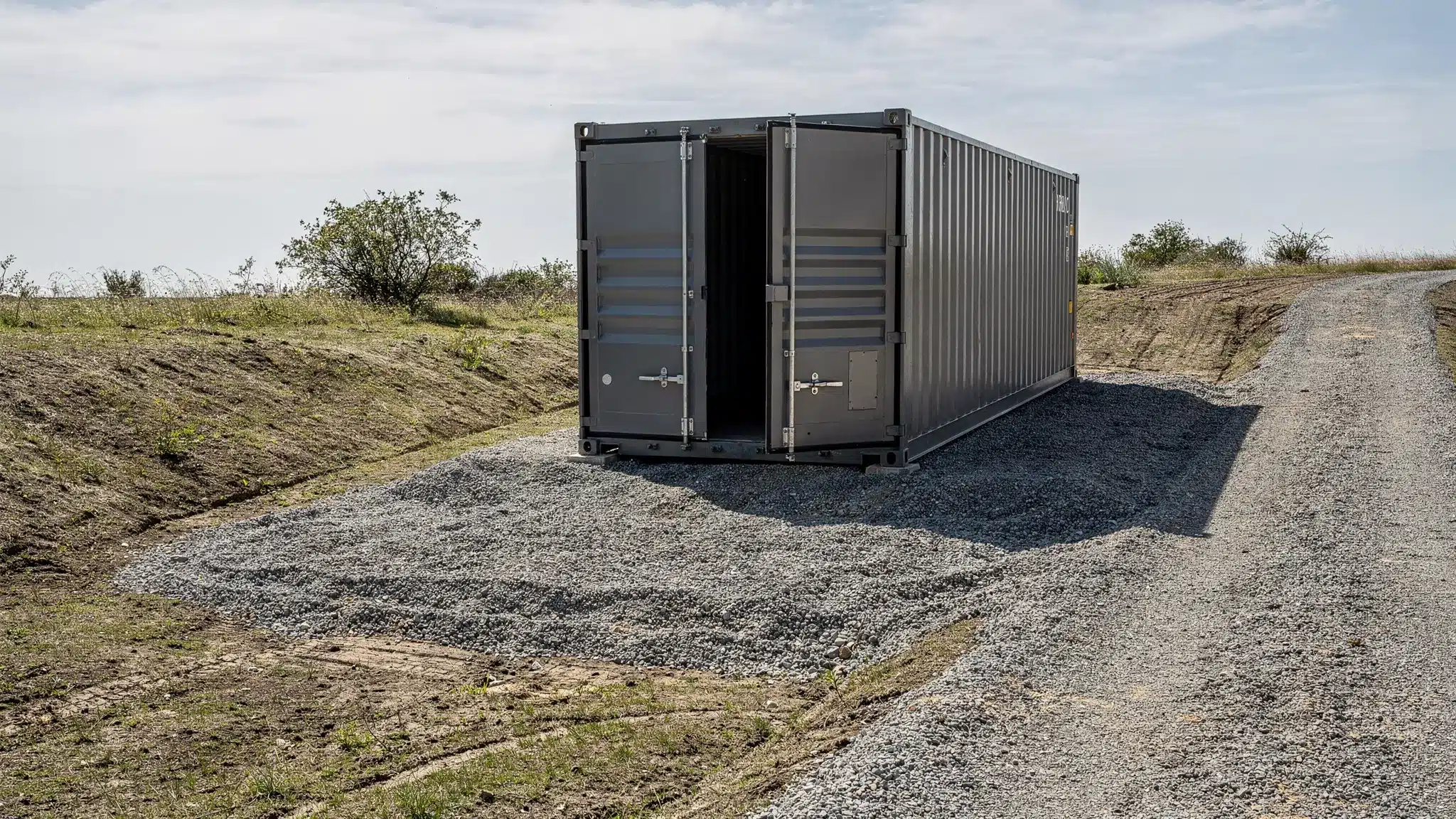
- Compacted gravel pad: Popular for job sites and rural properties, cost-effective, and drains well when properly graded.
- Concrete pad: Best for permanent storage, frequent forklift traffic around the container, and high-security sites.
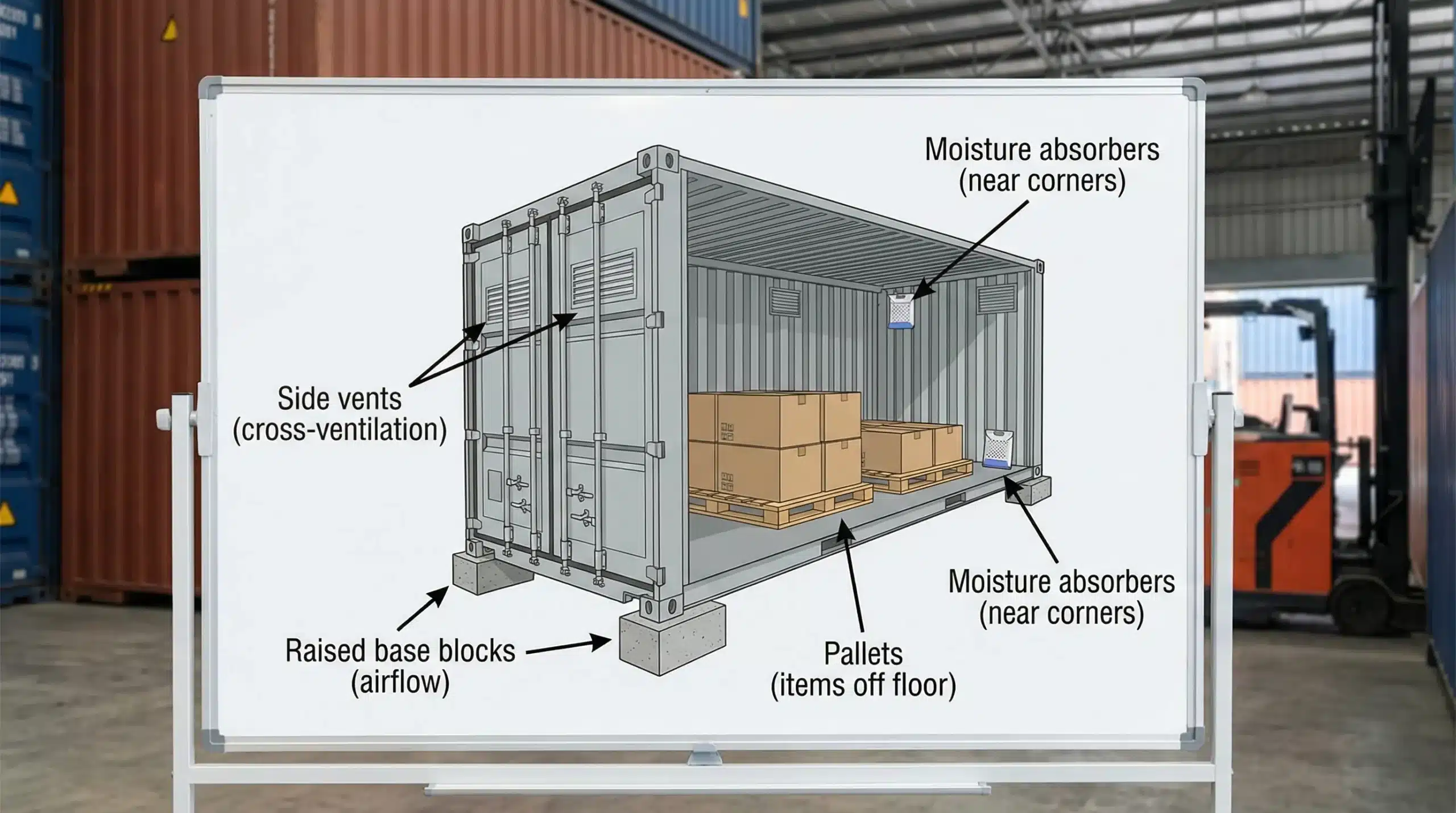
- Concrete blocks or piers at corners: Works when you need the container elevated for drainage, but it must be level and stable.
No matter which base you choose, aim for these outcomes:
- Water flows away from the container, not toward it.
- The container sits level enough that doors do not bind.
- The ground stays firm in wet seasons (important in places like Florida, Georgia, and the Gulf Coast).
Elevate slightly to reduce rust and moisture risk
Even a small gap between the steel and the soil helps. Elevation improves airflow under the container, reduces standing-water contact, and makes it easier to spot pests or pooling water. This matters in humid areas like Miami and Houston, and in snowy regions where meltwater can refreeze around the base.
Plan door orientation for daily use
On delivery day, the driver can usually position doors where you want, but you must decide in advance.
Practical rule: point doors toward the easiest year-round access path, not just the closest driveway.
- In rainy climates, avoid pointing doors toward the lowest spot on the site.
- In urban lots (Atlanta, Dallas), keep doors away from tight fence lines where you cannot fully open them.
- If you will use carts or pallet jacks inside, plan for a straight approach to the doors.
Delivery planning: the fastest way to avoid surprise fees
A “good deal” can get expensive if the truck cannot access the drop location. For most buyers, delivery is the part that creates last-minute costs.
Global Containers Line offers fast nationwide delivery across the United States, but accurate pricing and smooth scheduling depend on having the right site details upfront.
What to share to get an accurate delivered quote
Provide these details when requesting pricing:
- Delivery ZIP code and site type (residential, commercial, job site, farm)
- Preferred container size (20ft, 40ft, High Cube)
- Whether you have space for a truck to approach in a straight line
- Any access constraints (tight gate, soft shoulder, steep grade, gravel road)
- Overhead obstacles near the drop area (power lines, tree branches, carports)
If you can, share a couple of photos of the approach and drop zone. It is one of the simplest ways to prevent delivery-day changes.
Common delivery obstacles by U.S. region
A few real-world patterns show up repeatedly:
- South and Gulf Coast (Houston, Miami): Soft ground after storms, standing water, and poor drainage. A gravel pad and a slightly elevated set often prevents problems.
- Desert Southwest (Phoenix): Hard ground is rarely the issue, but uneven caliche, tight rural gates, and dust infiltration are common. Plan door-side sweeping space and add dust control measures.
- Dense metros (Los Angeles, Atlanta, Dallas): Narrow alleys, strict HOA rules, and limited staging space. Confirm drop time windows and keep cars off the street during delivery.
- Cold/snow regions: Frozen ruts, spring thaw mud, and plow berms. Plan delivery before deep winter if access roads are seasonal.
If your site is tight, you may still be able to place a container successfully, you just need the correct delivery plan and a clear staging area.
Moisture control: the key to clean, usable storage
Most storage complaints are not about rain leaking in, they are about condensation. Containers are steel boxes, and steel sweats when warm air hits cold metal.
Use a simple “dry storage” setup
For tools, boxed inventory, furniture, or seasonal items, the goal is to keep air moving and keep items off the floor.
- Use the built-in vents (do not block them)
- Store items on pallets or shelving, not directly on the plywood floor
- Add moisture absorbers or desiccants as needed
Adjust for your climate
Humid climates (Florida, Gulf Coast, parts of the Southeast): Prioritize ventilation and moisture control. If you open doors frequently, humid air rushes in and condenses at night.
Hot and dry climates (Arizona, inland California, parts of Texas): Heat can degrade some stored materials. Consider shade placement, reflective paint, or a simple awning near doors. Dust control matters more than humidity.
Cold climates and high temperature swings: Condensation often forms overnight. Insulation and controlled ventilation help, especially if you store items sensitive to moisture (paper goods, electronics, fabrics).
Security upgrades that pay off immediately
A container is secure by design, but most theft attempts focus on padlocks and door hardware.
Practical security improvements
For many U.S. buyers, these are the highest ROI upgrades:
- Lock box (lock shroud) to protect the padlock from bolt cutters
- High-security padlock designed for containers
- Motion lighting near the doors
- Clear line of sight from the house, office, or job trailer to the container doors
If the container is on a public-facing lot (retail, equipment yard), consider adding a barrier that prevents vehicles from backing directly up to the doors.
Organize the interior for safety and faster retrieval
A container can hold a lot, but it becomes frustrating if you have to unload half of it to find what you need.
Set up for access and weight distribution
Keep these storage rules in mind:
- Put frequently used items near the doors.
- Keep an aisle so you can reach the back without unloading.
- Distribute heavy loads along the length, avoid stacking all weight at one end.
- Avoid storing liquids directly on the floor. Use secondary containment when appropriate.
For job sites, simple bolt-together shelving often turns shipping container storage into a true mini-warehouse.
Pricing: what impacts total cost for shipping container storage
Buyers often focus on the container price, but the true “storage-ready” cost includes delivery and site prep.
Typical cost components to budget for
Exact pricing varies by market, distance, and condition, but these are the categories that drive total cost:
| Cost component | What affects it most | How to avoid surprises |
|---|---|---|
| Container price (new vs used) | Condition, size, local availability | Choose the grade that fits your use, cosmetic dents often save money |
| Delivery cost | Distance, access difficulty, offload method | Share ZIP code and site constraints early, prep a clear drop zone |
| Site prep | Base type, drainage, grading, access road | Build the pad before scheduling delivery |
| Add-ons | Lock box, extra vents, shelving, paint | Prioritize security and moisture control first |
If you want a ballpark starting point, many U.S. markets in recent years have seen used 20ft containers commonly priced in the low thousands and 40ft containers higher, with delivery and access being major variables. The fastest way to get an accurate number is to request a delivered quote with your ZIP code and site details.
Condition questions to answer before and during delivery
Because shipping containers are heavy and delivered as-is, you want clarity on condition before dispatch and a quick inspection right after placement.
Before you order: confirm what “storage-ready” means
Ask the supplier to confirm:
- The container is wind and watertight and doors seal properly
- Floors are solid with no soft spots
- Doors open and close smoothly (easy to overlook, very painful later)
- The unit is inspected prior to dispatch
Global Containers Line positions containers for storage and project use with inspection and transparent pricing, which is exactly what buyers should look for when ordering online.
On delivery day: do a 5-minute walkthrough
Once the container is on the ground:
- Open both door leaves fully and close them again to check alignment
- Look along the ceiling and corners for visible daylight (a quick leak indicator)
- Check the floor near the door threshold and the rear corners
- Confirm the container sits stable, with no rocking
If something seems off, take photos immediately and contact your supplier the same day.
Get shipping container storage delivered fast anywhere in the USA
If you are setting up shipping container storage for a job site, business, or property, the best results come from a simple approach: choose the right size, prep a drained base, plan delivery access, and control moisture from day one.
Global Containers Line is a trusted USA-based supplier of new and used containers with fast nationwide delivery across the United States, transparent pricing, and secure online ordering.
- Browse available inventory for 20ft shipping containers or 40ft shipping containers
- For a smoother purchase, review the ultimate shipping container buying guide
- Ready to price out delivery to your location? Visit Global Containers Line to browse available containers or request a quote.