
Buying a used shipping container can save money, but only if you compare the grade and the delivered price correctly. Two containers may both be listed as used containers for sale, yet one may be ready for jobsite storage while the other may need door repairs, floor work, or extra sealing before it is usable.
For U.S. buyers, the best approach is simple: compare the container’s grade, size, inspection details, delivery cost, and intended use before choosing the lowest price. A cheaper unit is not always a better deal if it arrives with leaks, difficult doors, or unexpected trucking fees.
Quick Answer: How to Compare Used Containers for Sale
To compare used containers for sale, start with the condition grade. Wind and watertight containers are usually a practical choice for storage. Cargo-worthy containers are better when structural integrity and transport suitability matter. Refurbished containers cost more but may look cleaner. As-is containers are the cheapest, but they carry the most risk.
Then compare the total delivered price, not just the container price. A complete quote should include the container size, grade, delivery ZIP code, offload method, taxes, and any extra fees. This is especially important for buyers in cities such as Houston, Dallas, Atlanta, Phoenix, Miami, Los Angeles, Tampa, Jacksonville, Orlando, and San Antonio, where local availability and delivery routes can affect the final cost.
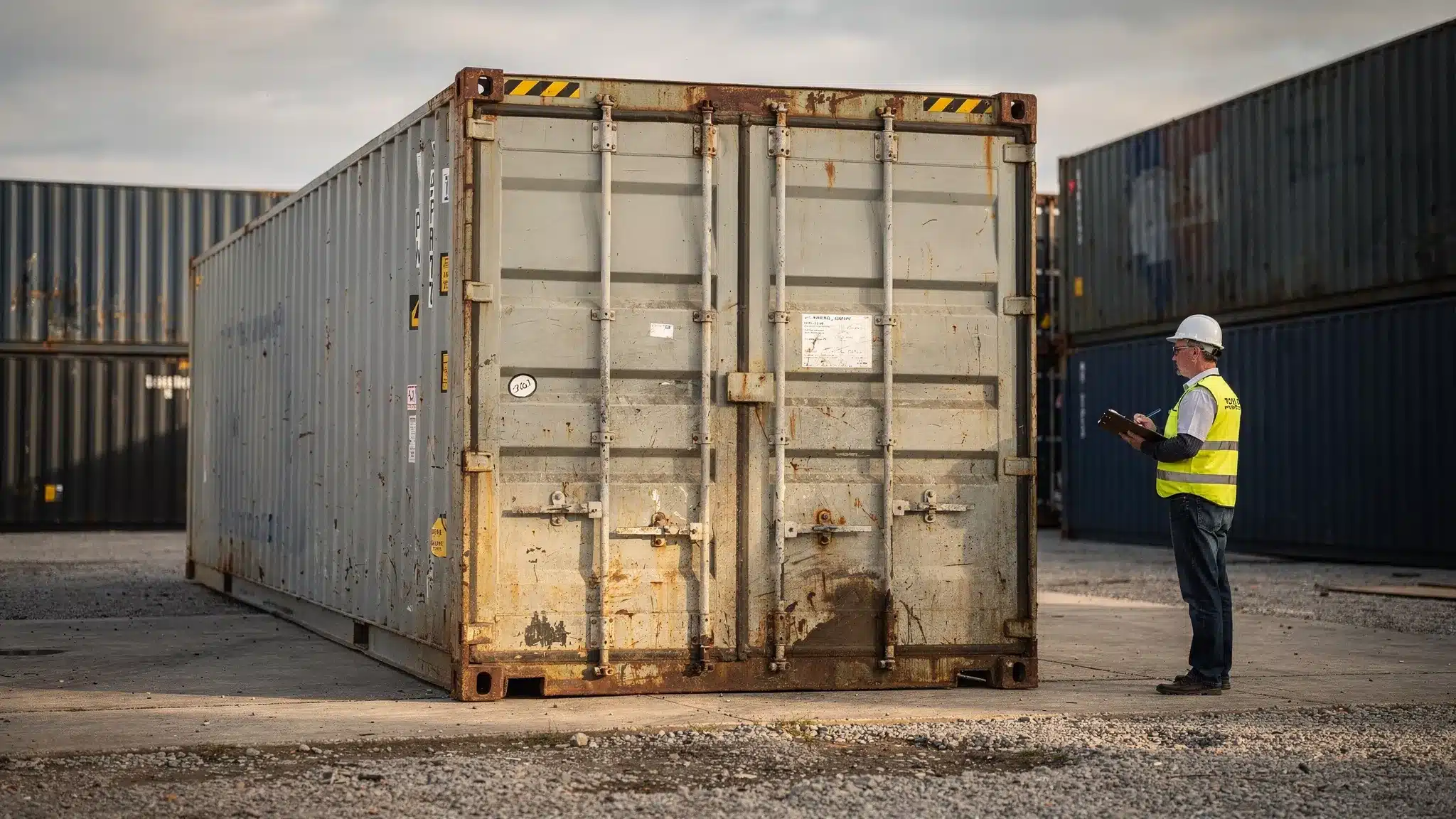
Understanding Used Shipping Container Grades
Used container grades are not just marketing labels. They tell you what the container is suitable for and how much risk you are taking as a buyer. The challenge is that not every seller uses the same definitions, so you should always ask what the grade includes in writing.
Wind and watertight containers
A wind and watertight container, often called WWT, should keep out normal rain, wind, and outside elements when the doors are closed. This grade is commonly used for construction storage, farm storage, business inventory, tools, seasonal equipment, and residential storage.
WWT containers are used units, so cosmetic wear is normal. Expect dents, surface rust, older paint, patches, or markings from previous service. What matters most is that the roof does not leak, the doors close properly, the seals are functional, and the floor is solid enough for your intended load.
For many buyers looking for affordable used shipping containers for sale, WWT is the best balance of price and performance.
Cargo-worthy containers
A cargo-worthy container is generally a stronger grade than basic WWT. It should be structurally sound and suitable for cargo use, although it may still show normal dents, rust, and cosmetic wear.
If you plan to use a container for shipping, export, heavy jobsite use, frequent relocation, or stacking, cargo-worthy condition is usually the safer choice. For international shipping, ask whether the container has current inspection documentation and a valid CSC plate. The International Maritime Organization explains the safety framework for freight containers through the International Convention for Safe Containers.
A cargo-worthy unit is often wind and watertight as well, but the opposite is not always true. A WWT container may be fine for storage without being certified or suitable for cargo transport.
Refurbished containers
A refurbished container is a used container that has been repaired, cleaned, repainted, or upgraded in some way. The exact work varies by seller, so ask what was refurbished. Common improvements may include new paint, repaired door seals, patch work, lockbox installation, or flooring attention.
Refurbished containers usually cost more than standard used units, but they may be worth it when appearance matters. They can be a better fit for retail sites, customer-facing storage, property developments, schools, event sites, or container modification projects.
As-is containers
As-is containers are typically the lowest-priced used containers, but they come with the highest uncertainty. They may have leaks, hard-to-open doors, floor damage, heavy rust, or structural issues.
An as-is container can make sense for scrap use, temporary non-sensitive storage, or a project where you plan to repair or modify the unit yourself. For most homeowners, contractors, and small businesses, as-is containers are risky unless you can inspect the exact unit before purchase.
One-trip containers as a comparison point
One-trip containers are not usually considered used in the same way as older shipping containers. They have typically made one cargo trip and are much newer, cleaner, and more uniform in appearance.
When comparing used containers for sale, one-trip units provide a useful price benchmark. If a used unit is priced close to a one-trip unit, the used container should offer a clear value advantage, such as a lower delivered price, needed size availability, or specific configuration.
Used Container Grade Comparison Table
| Grade | What it usually means | Best for | Price level | Main thing to verify |
|---|---|---|---|---|
| Wind and watertight | Keeps out normal weather, used cosmetic condition | Storage, jobsites, farms, homeowners | Budget to mid-range | Roof, seals, doors, and floor condition |
| Cargo-worthy | Structurally sound and suitable for cargo use when properly documented | Shipping, heavy storage, frequent moves | Mid-range | CSC plate, frame, corner posts, and inspection details |
| Refurbished | Used unit with repairs, paint, or upgrades | Customer-facing sites, conversions, cleaner storage | Mid to higher | What work was actually completed |
| As-is | Sold with no strong condition guarantee | Repair projects, scrap use, temporary non-critical storage | Lowest | Leaks, door function, floor damage, and structural issues |
| One-trip | Newer container with minimal service history | Long-term use, modifications, appearance-sensitive projects | Highest | That it is truly one-trip and not only repainted |
Used Container Prices: What U.S. Buyers Should Expect
Used container prices vary by size, grade, location, availability, delivery distance, and market conditions. A container near a major port or depot may have a lower base price, but delivery can still change the total. A container in an inland market may have a higher base cost, but a reliable delivered quote may be more predictable.
As a broad U.S. market guide, many used 20ft and 40ft containers fall into these approximate ranges before taxes, modifications, and delivery. These are not fixed prices, and current inventory can change quickly.
| Container size and type | Typical used price range | Common buyer use | Notes |
|---|---|---|---|
| Used 20ft WWT or cargo-worthy | $1,800 to $3,500 | Tools, equipment, residential storage, small business storage | Easier to place on tighter sites |
| Used 40ft WWT or cargo-worthy | $2,400 to $5,000 | Construction, warehousing, farm storage, commercial overflow | Better cost per square foot |
| Used 40ft high cube | $2,800 to $5,800 | Taller equipment, palletized storage, conversions | Extra height often adds cost |
| Refurbished 20ft or 40ft | $2,800 to $6,500 or more | Cleaner appearance, customer-facing sites, modification projects | Price depends on repair and paint scope |
| As-is used containers | Often below standard used pricing | Non-critical storage or repair projects | Inspect carefully before buying |
For compact storage or a tighter delivery area, a 20ft unit is often the easiest starting point. You can compare available options on our 20ft shipping container page. For larger jobsites, farms, warehouses, or commercial inventory, a 40ft unit usually provides better storage value per foot. View larger options on our 40ft shipping container page.
Grade vs Price: Which Used Container Is the Best Value?
The best value is the lowest-priced container that safely fits your use case. A contractor storing tools on a jobsite does not need a perfect-looking container, but they do need working doors, a dry interior, and a strong floor. A homeowner using a container near a driveway may care more about appearance. A logistics business may need cargo-worthy condition and documentation.
| Use case | Recommended grade | Why it makes sense |
|---|---|---|
| Construction site storage | WWT or cargo-worthy | Weather protection, durability, and secure storage matter most |
| Farm or ranch storage | WWT | Good balance for feed, tools, fencing, and equipment storage |
| Business inventory overflow | WWT, cargo-worthy, or refurbished | Choose based on moisture sensitivity and appearance needs |
| International shipping | Cargo-worthy with proper documentation | Structural condition and CSC requirements are important |
| Container home or office project | One-trip, refurbished, or clean cargo-worthy | Cleaner structure can reduce prep time and repair costs |
| Low-budget temporary use | As-is only if inspected | Cheapest option, but repairs may erase the savings |
If you are buying for storage only, do not overpay for a grade you do not need. If you are buying for shipping, stacking, or modification, do not underbuy to save a few hundred dollars upfront.
How Delivery Affects the Final Price
Delivery is one of the biggest reasons used container prices vary across the United States. A low container price can become expensive if delivery is not included, the site is hard to access, or special offloading equipment is needed.
Global Containers Line offers fast nationwide delivery across the United States, including major markets such as Houston, Dallas, Atlanta, Phoenix, Miami, Los Angeles, Jacksonville, Tampa, Orlando, and San Antonio. When requesting a quote, provide your delivery ZIP code and site details so the delivered price is accurate.
A reliable delivery quote should account for the container size, truck type, distance from inventory, offload method, access conditions, and door orientation. For example, a 20ft container may be easier to place in a residential driveway, while a 40ft container may require more straight-line clearance for a tilt-bed truck.
Before delivery, confirm the ground is level, firm, and accessible. Remove vehicles, low branches, debris, and overhead obstructions. If the driver cannot safely place the container, redelivery or additional equipment can increase your total cost.
How to Inspect a Used Container Before Buying
When possible, inspect the exact container or request recent photos and videos. Used containers naturally show wear, but certain issues can affect usability.
Check these areas before committing to a purchase:
- Roof: Look for holes, heavy dents, standing water areas, or patch work that may leak.
- Doors: Make sure both doors open, close, latch, and seal properly.
- Door gaskets: Check for cracked, missing, or loose rubber seals.
- Floor: Look for soft spots, chemical odors, rot, holes, or major delamination.
- Frame and corner posts: Watch for twisting, major impact damage, or structural deformation.
- Interior walls: Look for daylight, active leaks, heavy corrosion, or large repairs.
- Undercarriage: Ask about underside condition if the container will carry heavy loads.
- Photos: Request current photos of the actual container, not only sample images.
A few dents and surface rust are normal on used containers. Active leaks, badly damaged doors, heavy floor damage, and unclear condition claims are not normal if the unit is being sold as wind and watertight or cargo-worthy.
Compare Quotes the Right Way
The cheapest quote is not always the lowest total cost. To compare used containers for sale accurately, make sure every seller is quoting the same size, grade, delivery location, and service level.
| Quote item | Why it matters |
|---|---|
| Container size | A 20ft, 40ft, and 40ft high cube have different pricing and delivery requirements |
| Grade | WWT, cargo-worthy, refurbished, and as-is are not interchangeable |
| Actual photos | Helps verify condition before payment and delivery |
| Delivery ZIP code | Distance and route affect final delivered cost |
| Offload method | Tilt-bed, flatbed, crane, or customer offload can change the price |
| Taxes and fees | These should be clear before checkout |
| Delivery timing | Faster delivery may depend on inventory and trucking availability |
| Payment terms | Secure checkout and clear paperwork reduce buyer risk |
If one quote is much lower than the others, ask what is missing. It may exclude delivery, taxes, offload, or condition guarantees. It may also be a lower grade container than you need.
Red Flags When Shopping Used Containers for Sale
A good deal should still feel clear, professional, and verifiable. Be cautious if a seller cannot explain the container grade or refuses to provide basic details.
Common red flags include vague condition terms, no recent photos, unusually low pricing, delivery not included in writing, wire-only payment pressure, no business address, no clear inspection process, and no written confirmation of size or grade.
Also be careful with phrases such as storage grade, premium used, or good condition if the seller does not define what those terms mean. Ask whether the container is wind and watertight, cargo-worthy, refurbished, or as-is. If the seller avoids the question, compare other options.
Why Buy Used Containers from Global Containers Line?
Global Containers Line is a USA-based supplier of new and used shipping containers for sale with fast nationwide delivery. We supply 10ft, 20ft, 40ft, and high cube containers for storage, construction, commercial, residential, and custom projects.
Our containers are inspected before dispatch, and buyers benefit from transparent pricing, secure online ordering, and reliable delivery to their location. Whether you need a single 20ft container for home storage or multiple 40ft units for a jobsite or business operation, our team helps you compare the right grade, size, and delivery plan before you buy.
Used containers are a practical investment when they are matched correctly to the job. The goal is not just to find the lowest price. The goal is to buy a container that arrives as expected, protects what you store inside, and fits your site without costly surprises.
Frequently Asked Questions
What is the best grade when buying used containers for sale? For most storage uses, wind and watertight is the best value. For shipping, stacking, or heavy-duty commercial use, cargo-worthy is usually better. For appearance-sensitive projects, refurbished or one-trip containers may be worth the higher cost.
How much do used containers cost in the USA? Many used 20ft containers range from about $1,800 to $3,500 before delivery, while many used 40ft containers range from about $2,400 to $5,000 before delivery. Final pricing depends on grade, location, availability, delivery distance, and any modifications.
Is cargo-worthy better than wind and watertight? Cargo-worthy generally means the container is structurally suitable for cargo use, while wind and watertight means it should keep out normal weather. A cargo-worthy container is often also wind and watertight, but a WWT container is not always cargo-worthy.
Does delivery change the price of a used shipping container? Yes. Delivery can significantly affect the total price. Your ZIP code, truck access, offload method, container size, and site conditions all matter. Always compare delivered quotes instead of container-only prices.
Can I buy a used container online and have it delivered? Yes. Global Containers Line offers secure online ordering and fast nationwide delivery across the United States. Before ordering, confirm the container size, grade, delivery address, site access, and door placement direction.
Should I buy a 20ft or 40ft used container? Choose a 20ft container if you have limited space or need easier placement. Choose a 40ft container if you need more storage and have enough delivery clearance. A 40ft unit often provides better value per square foot.
Browse Used Containers or Request a Quote
Ready to compare used containers for sale with clear grading and reliable delivery? Global Containers Line can help you choose the right 20ft, 40ft, or high cube container for your site, budget, and timeline.
Browse our 20ft shipping containers or 40ft shipping containers, or visit Global Containers Line to request a quote for fast nationwide delivery across the United States.