
If you are comparing storage pods for sale vs shipping containers, the most important question is not just price. It is how long you need storage, how secure it must be, and whether you want to own a durable unit that can stay on-site for years.
For a short move or temporary household storage, a portable storage pod can be convenient. For long term storage, job site equipment, farm supplies, commercial inventory, or custom container projects, a steel shipping container is often the better buy. Shipping containers are standardized, highly durable, and widely available in new and used conditions across the United States.
Global Containers Line supplies new and used shipping containers for sale nationwide, including 10ft, 20ft, 40ft, and high cube options. Our containers are cargo-worthy, wind and watertight, and inspected before dispatch, with transparent pricing, secure online ordering, and fast nationwide delivery across the United States.
Quick Answer: Storage Pods vs Shipping Containers
If you need flexible temporary storage for a move, a storage pod may work well. If you want to buy storage that is stronger, more secure, easier to compare by size and condition, and better suited for long term use, a shipping container is usually the smarter investment.
| Feature | Storage Pods for Sale | Shipping Containers for Sale |
|---|---|---|
| Best for | Short term moving, light residential storage, temporary overflow | Long term storage, construction sites, farms, businesses, logistics, conversions |
| Construction | Varies by provider, often lighter materials | Corrugated steel structure built for heavy cargo use |
| Ownership | Often rental-focused, purchase options vary | Widely available to buy new or used |
| Standard sizes | Varies by company | Commonly 10ft, 20ft, 40ft, and high cube |
| Security | Depends on pod type and lock setup | Strong steel doors, lock options, secure structure |
| Weather resistance | Varies by product and condition | Wind and watertight units are designed to protect stored goods |
| Delivery | Provider-specific | Truck delivery available across the USA |
| Resale value | Depends on demand and condition | Strong resale market for standard sizes |
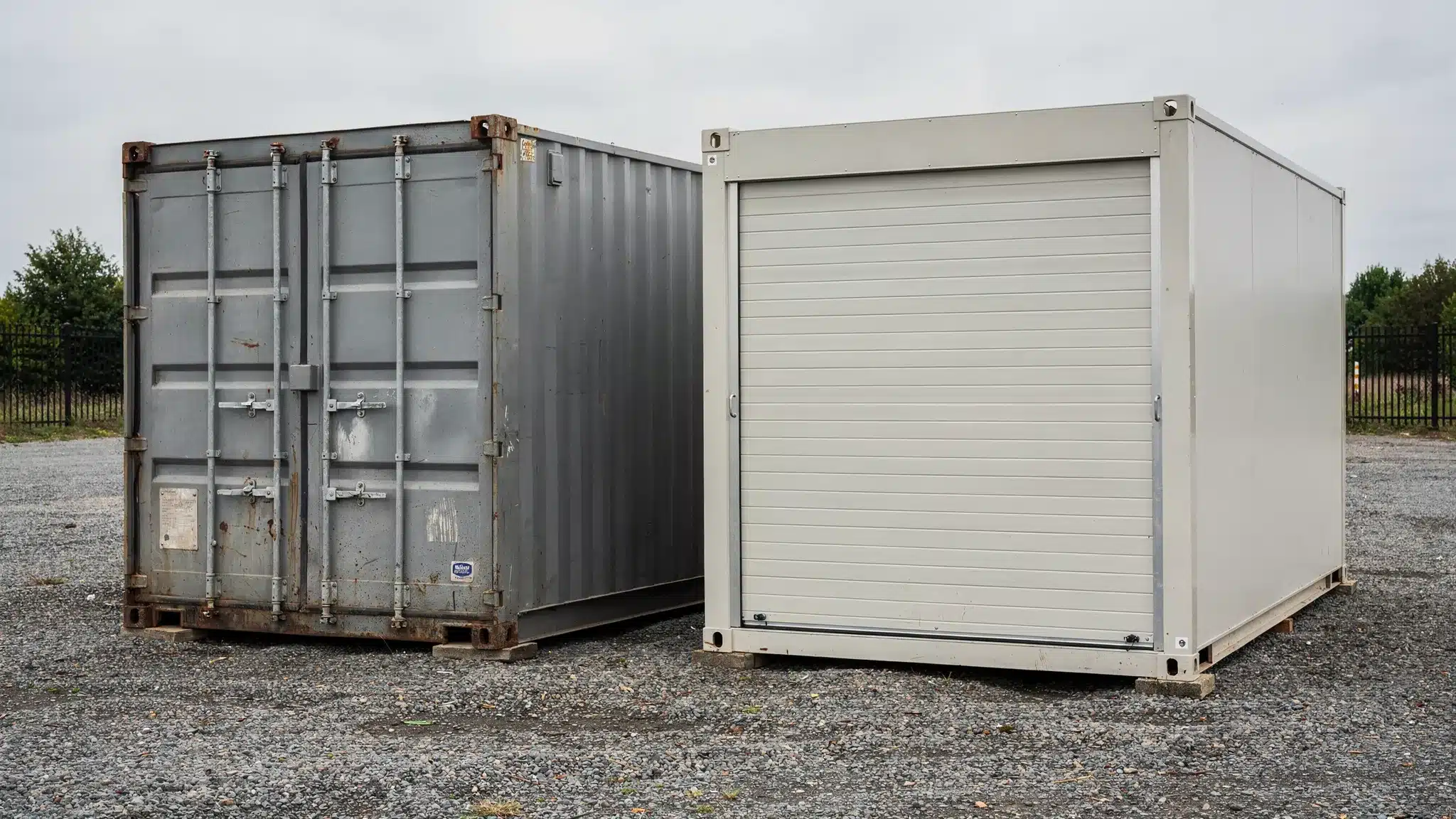
What Are Storage Pods for Sale?
Storage pods are portable storage units commonly used for moving, remodeling, decluttering, and temporary household storage. Many buyers use the phrase “storage pods” as a general term for portable storage containers, although some companies use specific branded systems.
A storage pod is typically delivered to your property, filled at ground level, then either picked up for transport or left on-site for a limited period. Some providers sell units, but many focus on rentals. That means buyers searching for portable storage pods for sale may find fewer ownership options than they expect.
Storage pods can be useful when convenience matters more than long term durability. They are often a good fit for residential moves, temporary staging, short renovation projects, or situations where you do not want to handle long term placement.
The main drawback is that storage pod construction, size, condition, and ownership terms are not as standardized as shipping containers. One pod may be built very differently from another, making it harder to compare quotes and long term value.
What Are Shipping Containers?
Shipping containers are steel cargo containers originally designed for intermodal freight. They are built to handle harsh transport conditions, heavy loads, stacking, and repeated handling. For storage buyers, that durability translates into strong protection for equipment, materials, tools, inventory, furniture, and seasonal goods.
The most common sizes for storage are 20ft and 40ft containers. A 20ft shipping container is a practical choice for homeowners, small businesses, contractors, and sites with limited space. A 40ft shipping container offers about double the length and is popular for construction companies, farms, warehouses, real estate developers, and commercial storage.
Shipping containers are also available in high cube versions, which add extra interior height. This is useful for taller equipment, racking, bulky inventory, or conversion projects.
Pricing: Which Option Costs Less?
Storage pod pricing can be difficult to compare because it often includes rental terms, delivery, pickup, monthly storage, mileage, insurance, and provider-specific fees. If you are buying a pod outright, pricing depends heavily on construction quality, size, age, and whether the seller mainly operates as a rental company.
Shipping container pricing is more standardized because units are commonly sold by size and condition. As a broad 2026 budgeting guide in many U.S. markets, used 20ft storage-grade shipping containers often fall in the low-to-mid thousands, while used 40ft containers generally cost more but usually offer better value per square foot. New or one-trip containers, high cube units, specialty containers, and modified units cost more.
The most accurate way to compare costs is to request an all-in delivered quote for your ZIP code. Your total price should include the unit, delivery, offload details, taxes or applicable fees, and any upgrades such as lockboxes, vents, shelving, or custom modifications.
| Cost Factor | Storage Pod | Shipping Container |
|---|---|---|
| Purchase price | Less standardized, often quote-based | Easier to compare by size, grade, and location |
| Delivery | May include drop-off and pickup fees | Depends on distance, unit size, and site access |
| Long term cost | Rental fees can add up if you do not buy | One-time purchase for long term ownership |
| Maintenance | Depends on material and construction | Steel structure, basic maintenance recommended |
| Resale | Varies by local market | Stronger demand for standard 20ft and 40ft units |
For buyers who need storage for only a few weeks, renting a pod can be economical. For buyers who need storage for months or years, buying a shipping container often provides better long term value.
Global Containers Line offers competitive prices with no hidden fees, helping buyers compare total delivered cost before placing an order.
Delivery and Placement Across the USA
Delivery is one of the biggest differences between buying storage pods and buying shipping containers. Storage pod companies usually operate within defined service areas and may restrict how long a pod can remain at your location. Shipping containers can be delivered to residential, commercial, agricultural, and industrial sites across a much wider range of locations.
Global Containers Line offers fast nationwide delivery across the United States, including major markets such as Houston, Dallas, Atlanta, Phoenix, Miami, Los Angeles, Tampa, Orlando, Jacksonville, and San Antonio. We also serve buyers in rural areas, construction zones, commercial yards, farms, and private properties where site access allows safe delivery.
Before delivery, confirm these details:
- The exact container size you are ordering
- The delivery address and ZIP code
- Whether the site has firm, level ground
- The preferred door orientation
- Overhead clearance for wires, branches, and structures
- Truck access for turning, backing, and unloading
- Local permit, HOA, or zoning requirements if applicable
For both pods and containers, a level placement area is important. Gravel, concrete pads, asphalt, railroad ties, and compacted ground are common options depending on the site. Good drainage also helps prevent standing water around the unit.
Condition: What Should Buyers Expect?
Condition matters more with shipping containers because buyers can choose from clearly defined categories. Common terms include new or one-trip, used, cargo-worthy, wind and watertight, refurbished, and as-is. These labels help buyers match budget and use case.
At Global Containers Line, containers are inspected before dispatch and are cargo-worthy, wind and watertight. That means buyers can expect a unit that is structurally reliable and suitable for secure storage, while still understanding that used containers may show cosmetic wear such as dents, patches, scuffs, or surface rust.
Storage pod condition can be harder to evaluate because standards vary by seller. If you are buying a used storage pod, ask for recent photos, door details, floor condition, roof condition, lock setup, and proof that the unit does not leak.
For any storage unit, inspect or request photos of these areas before buying:
- Roof, especially dents, holes, and standing water areas
- Door seals, hinges, locking rods, and handles
- Flooring, including soft spots, stains, and repairs
- Wall panels, corner posts, and frame integrity
- Interior signs of leaks, moisture, odor, or corrosion
Durability and Security: Shipping Containers Usually Win
Shipping containers are designed for demanding freight environments. Their steel construction, heavy-duty doors, corner posts, and reinforced frame make them a strong choice for buyers who need secure storage.
This is especially important for contractors storing tools, farmers storing feed or equipment, retailers storing inventory, and homeowners storing valuables during a remodel. A steel container with a quality lock and lockbox can provide a high level of protection compared with many lightweight portable storage units.
Storage pods can still be secure enough for lower-risk situations, especially short term household storage. However, construction quality varies, and some pods are not designed for rugged job sites, heavy equipment, or long term outdoor exposure.
If your storage will sit in a busy construction area, rural property, commercial yard, or industrial site, a shipping container is usually the better option.
Best Uses for Storage Pods vs Shipping Containers
The right choice depends on your project. A homeowner moving across town has different needs than a contractor storing tools on a job site or a business buying overflow warehouse storage.
| Use Case | Better Fit | Why |
|---|---|---|
| Short residential move | Storage pod | Convenient loading, pickup, and temporary use |
| Home renovation storage | Either | Pod works short term, container works better for longer projects |
| Construction site tools | Shipping container | Stronger steel structure and better security |
| Farm equipment or supplies | Shipping container | Durable for outdoor placement and long term storage |
| Retail or warehouse overflow | Shipping container | More space, stronger resale value, standard sizes |
| Real estate development | Shipping container | Useful for materials, tools, and phased projects |
| Custom workshop or conversion | Shipping container | Better structural base and more modification options |
| Light temporary storage | Storage pod | Simple option when ownership is not required |
For most buyers who are searching “storage pods for sale near me” because they want to own storage, it is worth comparing shipping containers before making a final decision. A container may deliver more strength, usable space, and long term value for a similar overall investment.
Choosing the Right Shipping Container Size
If you decide a shipping container is the better fit, the next step is choosing the right size.
10ft Containers
A 10ft container is useful when space is limited, such as tight residential lots, small business locations, schools, or municipal sites. It provides secure storage without taking up as much ground space as larger units.
20ft Containers
A 20ft container is one of the most versatile choices. It is large enough for tools, furniture, seasonal inventory, equipment, and supplies, but still easier to place than a 40ft unit. Many homeowners, contractors, and small businesses choose 20ft containers because they balance capacity and site flexibility.
If you need a compact but durable storage solution, browse available 20ft shipping containers.
40ft Containers
A 40ft container offers much more storage space and often a better cost per square foot. It is a strong choice for commercial inventory, job site materials, agricultural storage, warehousing overflow, and larger residential projects.
If you have enough space for delivery and placement, compare available 40ft shipping containers.
High Cube Containers
High cube containers are typically about one foot taller than standard containers. That extra height can make a major difference for pallet racking, taller machinery, stacked materials, and container modification projects.
Permits, Zoning, and Site Rules
Permit requirements vary by city, county, state, property type, and intended use. A temporary storage pod for a short move may face fewer restrictions than a permanent container placed on a residential lot. Commercial, industrial, agricultural, and construction sites may have different rules.
Before buying any storage unit, check local requirements in your area. This is especially important in cities with HOA rules, strict zoning, hurricane or wind exposure requirements, setback rules, or visible placement restrictions.
For long term storage, you may need to confirm:
- Whether a permit is required
- How long the unit can stay on-site
- Required setbacks from property lines
- Whether the container must be screened from view
- Whether anchoring is recommended or required
- Whether modifications change the permitting process
If you plan to modify a shipping container into an office, workshop, retail unit, or living space, speak with local building officials before purchasing.
How to Compare Quotes the Right Way
A low advertised price can become expensive if delivery, access charges, poor condition, or unclear fees are not included. Whether you are comparing storage pods or shipping containers, always ask for an itemized quote.
A complete storage quote should include the unit price, size, condition, delivery cost, offload method, estimated delivery timeline, taxes or fees, and any optional upgrades. For containers, ask whether the unit is new or used, wind and watertight, cargo-worthy, or another condition grade.
Global Containers Line makes buying easier with transparent pricing, secure checkout, inspected containers, and reliable nationwide delivery. That matters when you are buying online and need confidence that the container delivered to your location matches what you ordered.
When a Storage Pod Makes Sense
A storage pod can be the right choice if you need temporary household storage, do not want to own the unit, or want a provider to move the unit between locations as part of a short-term service. Pods are often convenient during apartment moves, home staging, remodeling, and short local relocations.
They are less ideal when you need heavy-duty security, long term outdoor performance, large commercial capacity, or predictable resale value.
When a Shipping Container Makes Sense
A shipping container is usually the better choice if you want to buy once and use the unit for years. It is also the stronger option when you need secure storage for tools, machinery, construction materials, farm supplies, business inventory, or large household items.
Shipping containers also make sense for custom projects. Buyers use them for workshops, mobile offices, pop-up retail spaces, equipment rooms, and residential or commercial conversions. If you plan to modify the unit, starting with a strong steel container can provide a better foundation than many lightweight portable storage pods.
Frequently Asked Questions
Are storage pods cheaper than shipping containers? Sometimes, especially for very short term rental use. But if you need storage for months or years, buying a shipping container often provides better long term value because you own the unit and avoid ongoing rental fees.
Can I buy storage pods instead of renting them? Some companies sell portable storage pods, but many pod providers focus on rentals. If ownership is your goal, compare purchase price, delivery, construction quality, and resale value against a standard shipping container.
Are shipping containers wind and watertight? Many storage-grade shipping containers are sold as wind and watertight, but you should always confirm the condition before buying. Global Containers Line provides cargo-worthy, wind and watertight containers that are inspected before dispatch.
How fast can a shipping container be delivered? Delivery timing depends on inventory, location, container size, and site access. Global Containers Line offers fast nationwide delivery across the United States and can provide a delivery estimate with your quote.
Do I need a permit for a shipping container or storage pod? Permit rules vary by city, county, property type, and length of placement. Check local zoning, HOA rules, and building requirements before delivery, especially for long term placement or modified containers.
Should I choose a 20ft or 40ft shipping container? Choose a 20ft container if you need secure storage with easier placement and less space required. Choose a 40ft container if you need more capacity and have enough room for delivery and placement.
Ready to Buy Secure Storage That Lasts?
If you are comparing storage pods for sale with shipping containers, think beyond the first quote. Consider durability, condition, security, delivery, long term cost, and resale value.
For many U.S. buyers, a shipping container is the stronger and more flexible investment. Global Containers Line supplies new and used 10ft, 20ft, 40ft, and high cube containers for homeowners, contractors, farms, logistics companies, developers, and small businesses.
Browse available 20ft shipping containers, compare 40ft shipping containers, or request a quote from Global Containers Line for transparent pricing and fast nationwide delivery across the United States.