
When you’re shopping for storage containers for purchase, the fastest way to avoid surprises is to get a quote that matches your exact site, delivery access, and container condition. A “good” quote is not just a container price, it’s a clear delivered total that accounts for trucking, offload method, and any access limits at your location.
Global Containers Line helps U.S. buyers (from homeowners to contractors and logistics teams) get accurate, itemized quotes with fast nationwide delivery across the United States, including major markets like Houston, Dallas, Atlanta, Phoenix, Miami, Los Angeles, Orlando, Jacksonville, San Antonio, and Tampa.
Quick answer: what to send to get an accurate quote
If you want a quote you can trust, send these details up front:
- Delivery ZIP code (or exact address)
- Container size (10ft, 20ft, 40ft, High Cube)
- Condition/grade needed (new/one-trip, used, wind & watertight, cargo-worthy)
- How you’ll use it (storage, job site, export/shipping, conversion)
- Delivery access details (gate width, driveway type, overhead clearance)
- Preferred delivery date window
- Quantity (one unit vs multiple)
Those seven items typically eliminate most quote changes and “day-of-delivery” issues.
What an “accurate quote” should include (and why it matters)
Accurate quoting in the container industry means you can compare offers apples to apples. The most useful quote is:
- Itemized (container price plus delivery and any required offload)
- Delivered to your location (not “pickup pricing” unless that’s what you asked for)
- Specific about condition (what the seller means by wind & watertight or cargo-worthy)
- Clear about exclusions (taxes, site prep, permits, add-ons like lockboxes)
If a seller only gives a one-line price with no details, you do not know what you’re actually buying.
Pricing: what drives the number the most
For most U.S. buyers, total cost is mainly driven by:
- Size and type (20ft vs 40ft, standard vs High Cube)
- Condition (new/one-trip typically costs more than used)
- Distance and trucking complexity (where the container is staged vs where you need it delivered)
- Offload method and access (tilt-bed is common, cranes or special equipment can change pricing)
If you already know you want a common size, start by browsing:
- 20ft shipping containers
- 40ft shipping containers
The quote checklist: details suppliers actually need
Many “quote delays” happen because the seller has to ask follow-up questions. Here is what impacts accuracy the most.
1) Delivery location (ZIP code) and whether it’s a business or residence
A quote to downtown Dallas, TX can price out differently than a rural delivery outside Dallas County, even if the container itself is identical. Same idea in Florida markets like Miami, Jacksonville, Orlando, and Tampa where traffic patterns and local access can affect scheduling.
At minimum, provide:
- ZIP code (best)
- City and state
- Any delivery constraints (HOA hours, jobsite check-in rules)
2) Container size and height (standard vs High Cube)
Your quote should specify the exact unit requested:
- 10ft (space-saving, limited availability in some regions)
- 20ft (most popular for job sites and general storage)
- 40ft (best cost per square foot for long-term storage)
- 40ft High Cube (extra height for bulky inventory, light framing, or conversions)
3) Required condition: storage-grade vs shipping-grade
Condition labels are not all the same across sellers. When requesting a quote, state what you need the container to do.
- Storage use: many buyers prioritize wind and watertight integrity and functional doors.
- Export or cargo transport: buyers often request cargo-worthy units (structural soundness for transport). Export requirements can be more specific than “cargo-worthy,” so share your shipping requirements if applicable.
- Conversion projects: appearance and straight panels may matter more, so buyers often choose newer units to reduce prep work.
Global Containers Line supplies new and used containers that are cargo-worthy, wind and watertight, and thoroughly inspected before dispatch.
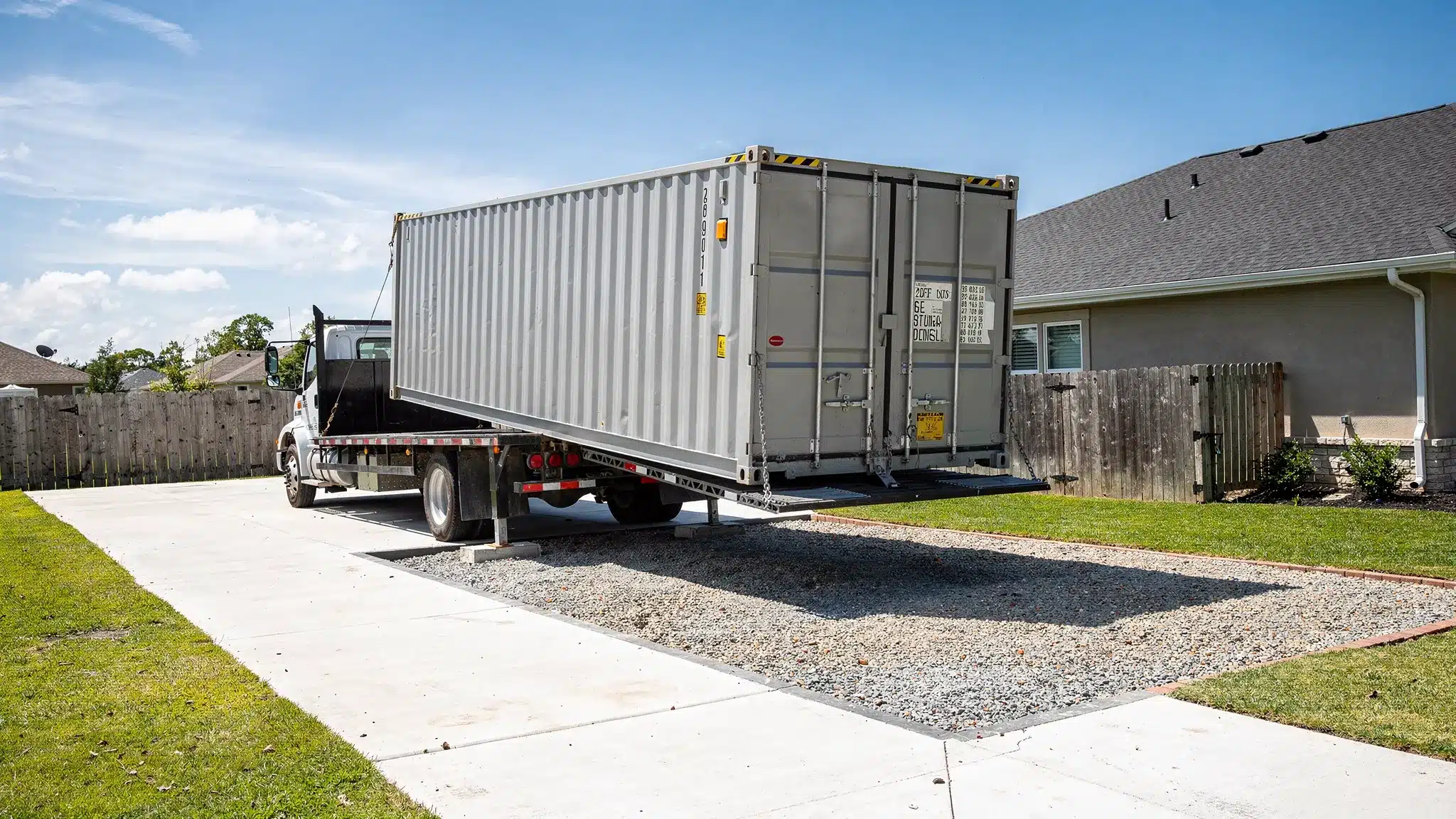
4) Site access and offload plan (this affects delivery cost the most)
A low container price can turn into an expensive delivery if access is tight.
Common details to provide:
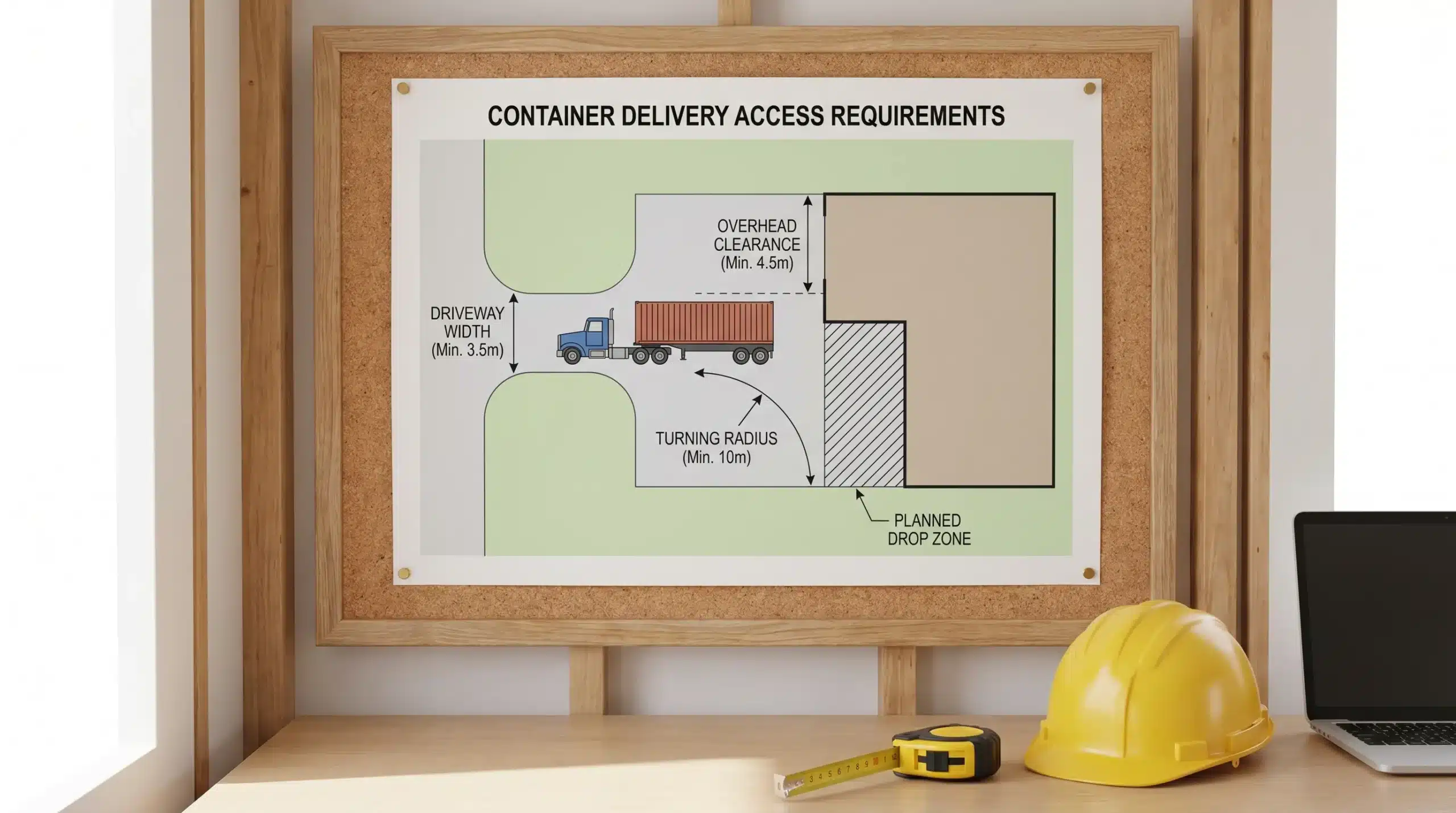
- Gate width and driveway width
- Overhead clearance (branches, power lines, eaves)
- Turning space (especially important for 40ft deliveries)
- Ground type (gravel, dirt, concrete)
If you’re unsure, a couple of clear photos of the entrance and drop area can help a supplier avoid quoting the wrong truck.
5) Door direction and placement preferences
This seems minor, but it can prevent expensive re-positioning later.
Tell the supplier:
- Which way you want the container doors facing
- Whether you need the container placed tight to a fence or building (or with space to open doors fully)
6) Timeline and flexibility
Container inventory and delivery scheduling can change by region and season. If you have flexibility (for example, “any weekday next week”), you can often simplify scheduling.
If you have a hard deadline (jobsite mobilization, inspection date, event setup), say so up front.
7) Quantity (and whether you want multiple units delivered together)
Construction companies and farms often buy multiple units. Volume changes both sourcing and delivery planning.
If you need 2+ containers, ask for:
- A per-unit delivered price
- Whether deliveries can be combined or scheduled back-to-back
Table: the fastest way to request the right quote
Use this as a copy-and-paste checklist when emailing or submitting a quote request.
| Quote detail to provide | Example | Why it changes your quote |
|---|---|---|
| Delivery ZIP code | 77001 (Houston, TX) | Determines trucking distance and local logistics |
| Size | 20ft standard | Base unit cost and delivery equipment requirements |
| Height | Standard or High Cube | High Cube can affect availability and transport |
| Condition/grade | Used wind & watertight | Condition is a major cost driver |
| Use case | On-site storage for tools | Helps confirm the right grade and options |
| Site access notes | 10 ft gate, no overhead wires | Confirms truck type and offload method |
| Placement preferences | Doors facing driveway | Prevents repositioning surprises |
| Quantity | 1 unit | Multi-unit orders may require different scheduling |
| Date window | Within 7 to 10 days | Impacts dispatch planning |
What should be included in a delivered container quote?
A professional quote for storage containers for purchase should clearly show these line items (even if some are $0).
| Line item | What it means | Common buyer mistake |
|---|---|---|
| Container unit price | Cost of the container itself | Comparing a “pickup” price to a delivered quote |
| Delivery/trucking | Transport to your site | Forgetting to confirm if offload is included |
| Offload method | Tilt-bed, chassis, crane, etc. | Assuming every delivery includes placement |
| Taxes (if applicable) | Varies by location and rules | Not budgeting for local tax requirements |
| Add-ons | Lockbox, vents, shelving, etc. | Adding options after quoting and being surprised by the new total |
| Redelivery or accessorial terms | Fees if delivery fails due to access | Not checking gate width, slope, or overhead clearance |
If a seller won’t spell these out, you are not getting a transparent quote.
Delivery basics: how containers are typically delivered in the USA
Most single-container deliveries are done using one of these approaches:
Tilt-bed delivery (common for storage)
A tilt-bed truck slides the container off the back. It’s a popular option for residential and many jobsite deliveries because it can place the container without a separate crane.
Tilt-bed still requires space. If you have a short driveway, steep slope, or soft ground, mention it during quoting.
Flatbed or step-deck delivery
Flatbeds are common for longer routes and certain site types. Offload typically requires equipment onsite (forklift or crane) unless the carrier has a specialized setup.
Chassis delivery (more common in port workflows)
The container arrives on a chassis. Depending on the delivery plan, you may need an offload method arranged.
If you’re not sure which method is best for your location, ask your supplier to recommend the right approach based on your access.
For deeper delivery planning, our guide on transportation and delivery logistics can help: Transporting a Shipping Container: Permits, Costs, Timelines.
Container condition: simple definitions buyers should confirm
Because condition drives price and expectations, confirm the condition in plain language.
New or one-trip
Typically used for buyers who want cleaner cosmetics and fewer repairs, often for retail storage, high-visibility placement, or conversions.
Wind and watertight (WWT)
Often chosen for storage. The goal is a container that keeps weather out with working doors and seals, even if the exterior shows normal wear.
Cargo-worthy (CW)
Often selected when structural integrity matters for transport use cases. Many buyers also choose cargo-worthy for long-term storage because it tends to be a higher structural standard than basic used units.
If you want a deeper explanation of what “cargo-worthy” includes and what it does not guarantee, see: What Cargo Worthy Really Means.
How to compare container quotes (without getting tricked)
When you have two quotes in hand, use this quick comparison method.
Match these items first
- Same size (20ft vs 40ft)
- Same height (standard vs High Cube)
- Same condition/grade (WWT vs cargo-worthy vs one-trip)
- Same delivery terms (delivered and placed vs delivered only)
If any of those are different, it’s not a fair comparison.
Ask for proof points on used units
For used containers, it’s reasonable to ask:
- Are doors fully operational (easy open and close)?
- Any roof patches or major dents?
- Any floor issues (soft spots, delamination, strong odors)?
- Confirmation the unit is wind and watertight, if quoted as WWT
You are not being difficult, you are preventing avoidable problems.
A simple quote request template you can copy
Use this template to speed up accurate pricing.
Subject: Quote request, storage container delivered to [ZIP]
Hello,
I’m looking for a storage container for purchase with delivery to [ZIP, City, State].
- Size: [10ft / 20ft / 40ft / 40ft High Cube]
- Condition needed: [WWT / Cargo-Worthy / One-Trip]
- Use case: [storage / jobsite / export / conversion]
- Quantity: [1 / 2 / 3+]
- Delivery access notes: [gate width, overhead clearance, driveway type, turning space]
- Placement preference: [doors facing X, drop zone description]
- Target delivery window: [dates or flexible range]
Please provide an itemized delivered quote showing container price, delivery/trucking, offload/placement method, and any taxes/fees.
Thank you,
[Name]
[Phone]
Why buyers use Global Containers Line for storage containers for purchase
Whether you’re ordering for a construction site in Texas, a small business in Georgia, a farm in Arizona, or a home project in Florida, the basics stay the same: you need the right container grade, priced transparently, and delivered reliably.
Global Containers Line is a trusted U.S. supplier offering:
- New and used shipping containers in common sizes (10ft, 20ft, 40ft, and High Cube)
- Units that are cargo-worthy, wind and watertight, and inspected before dispatch
- Fast nationwide delivery across the United States
- Transparent pricing with no hidden fees and secure online ordering
If you’re ready to choose a size now, start here:
- Browse 20ft shipping containers
- Browse 40ft shipping containers
Frequently Asked Questions
How much do storage containers for purchase cost delivered? Delivered pricing depends on container size, condition (new vs used), your ZIP code, and delivery access. The best way to avoid surprises is to request an itemized delivered quote that includes the container, trucking, and offload method.
What information do you need for an accurate container quote? At minimum: delivery ZIP code, container size (20ft or 40ft), preferred condition/grade, quantity, and site access details (gate width, overhead clearance, turning space). Photos of the entrance and drop area can make quotes more accurate.
How fast can you deliver a shipping container in the USA? Delivery timing varies by location, inventory, and scheduling availability, but Global Containers Line offers fast nationwide delivery across the United States. When you request a quote, include your date window so we can confirm the best delivery option.
Are used containers still watertight? Many used containers are sold as wind and watertight for storage use, meaning they are intended to keep rain and wind out with functional doors and seals, even if they show cosmetic wear. Always confirm the grade and inspection standards with the supplier.
Should I buy a 20ft or 40ft container for storage? A 20ft container is easier to place on tighter sites and works well for tools, equipment, and household storage. A 40ft container offers better value per square foot for long-term storage and larger inventory. Delivery access often determines which size is practical.
Get your accurate quote (and avoid hidden fees)
If you’re looking for storage containers for purchase anywhere in the USA, Global Containers Line can help you select the right 10ft, 20ft, or 40ft unit and provide a clear, delivered quote based on your ZIP code and site access.
Browse available inventory now, or request a quote with your delivery details to lock in the right container and schedule fast nationwide delivery across the United States.