
If you’re shopping for shipping units (also called shipping containers, conex boxes, or ISO containers), you’ll quickly notice that most problems are not caused by the container itself. They come from buying the wrong type, the wrong size, or skipping delivery planning.
This guide breaks down the most common shipping unit types and sizes, then walks through the buyer mistakes we see most often across the U.S., from Texas to Florida to California.
What “shipping units” means (and what buyers usually need)
In the U.S. market, “shipping units” typically refers to steel intermodal shipping containers sold for:
- On-site storage for construction and job sites
- Business inventory overflow
- Farm and ranch equipment storage
- Portable workshops
- Custom projects (offices, retail kiosks, container builds)
Most buyers are not actually planning to ship cargo overseas, they want a durable, lockable steel box delivered to their property.
Global Containers Line supplies new and used shipping units that are cargo-worthy, wind and watertight, and inspected before dispatch, with fast nationwide delivery across the United States, including major markets like Houston, Dallas, Atlanta, Phoenix, Miami, Los Angeles, Jacksonville, and San Antonio.
Types of shipping units (and what each type is best for)
Not all shipping units are the same, even when they’re the same length. Here are the common types U.S. buyers compare.
Standard dry shipping units (most common)
A standard dry container is the go-to option for storage, construction sites, and general-purpose use.
Best for:
- Tools and equipment storage
- Retail and business storage
- Jobsite storage
- Most basic container conversions
High cube shipping units (extra height)
High cube units are typically about one foot taller than standard height (commonly 9’6” vs. 8’6”). That extra vertical space matters more than most first-time buyers expect.
Best for:
- Shelving-heavy storage (more vertical stacking)
- Taller items (racking, equipment, gym rigs)
- Container conversions where insulation and ceiling height matter
Double door (tunnel) shipping units
These have doors at both ends, which improves workflow and access.
Best for:
- Faster loading and unloading
- Drive-through storage layouts
- Warehousing and inventory picking
Open top shipping units
Open top containers allow crane or vertical loading for oversized items.
Best for:
- Heavy machinery
- Scrap and bulky materials
- Cargo that cannot fit through standard doors
Refrigerated shipping units (reefers)
Reefers are insulated containers with a refrigeration unit. They are specialized and require planning for electrical power.
Best for:
- Cold storage (food, floral, pharmaceuticals)
- Temperature-controlled storage projects
If you are evaluating reefers, power requirements and site setup are critical. For general storage, most buyers are better served with a dry container.
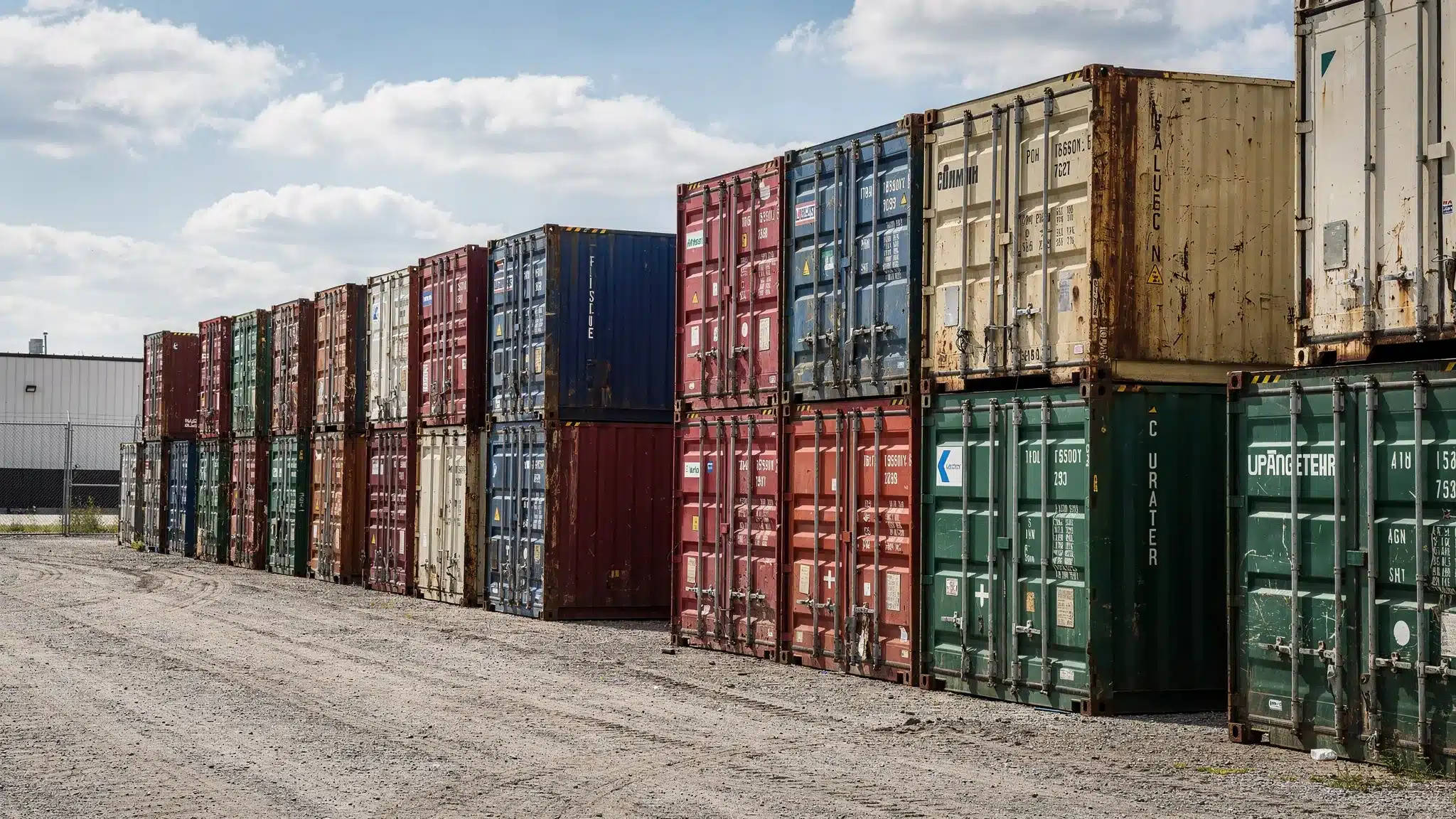
Shipping unit sizes: 10ft vs 20ft vs 40ft (and what fits best)
Most U.S. buyers choose between 10ft, 20ft, and 40ft shipping units, with high cube as a height upgrade.
Here’s a practical way to think about the common sizes.
| Shipping unit size | Common best use | Why buyers pick it | Watch-outs |
|---|---|---|---|
| 10ft | Tight sites, small storage | Fits where a longer container will not | Can cost more per foot than 20ft, limited availability in some areas |
| 20ft | Most popular “do-it-all” size | Great balance of capacity and delivery access | Still needs a clear delivery path and level base |
| 40ft | High-volume storage and commercial use | Best cost per square foot | Delivery access is the #1 issue, tight turns and soft ground cause problems |
| 40ft High Cube | Storage plus extra height, conversions | Better for racking and interior build-outs | May require more planning for transport height and clearances |
When in doubt, many buyers start by comparing a 20ft vs 40ft based on site access first, then storage volume second.
To browse inventory:
Shipping unit condition: new vs used (and what “cargo-worthy” should mean)
Condition is where many “shipping unit” purchases go sideways, mainly because sellers use vague labels.
Here are the condition terms U.S. buyers most commonly see:
New or one-trip
Typically the cleanest option. These are popular for customer-facing businesses and conversions where appearance matters.
Used wind and watertight
Used containers that are structurally solid and keep out wind and water. Expect cosmetic wear (dents, surface rust, patches).
Cargo-worthy
Cargo-worthy generally means the container is structurally suitable for transport use. It does not mean it will look new, and it does not automatically guarantee it is certified for every shipping scenario.
As-is
Often the cheapest, and also the highest risk. As-is units can be fine for some projects, but buyers should expect repairs.
Global Containers Line containers are inspected and sold as cargo-worthy and wind/watertight, which is exactly what most storage and project buyers need.
Pricing basics: what affects shipping unit cost (and what to ask for)
Shipping unit pricing changes by region and timing. A buyer in Los Angeles may see different delivered pricing than a buyer in Phoenix, Dallas, or rural Georgia.
Instead of focusing only on the sticker price, ask for a delivered quote that makes cost components clear.
| Pricing factor | What it impacts | What to confirm before you buy |
|---|---|---|
| Size (10ft vs 20ft vs 40ft) | Base unit cost and delivery complexity | Whether site access supports the length |
| Condition (new vs used) | Price, appearance, lifespan expectations | Clear definition of grade, recent photos if available |
| Delivery distance to your site | Delivered total cost | Whether quote includes trucking, fuel, and scheduling |
| Offload method | Total delivered cost and site requirements | Tilt-bed vs flatbed, and who provides equipment |
| Local demand | Availability and lead time | How quickly the supplier can dispatch in your area |
If you want deeper detail on how quotes are built, our guide on container pricing and what quotes include is a helpful next step.
Delivery across the U.S.: what “fast nationwide delivery” really requires
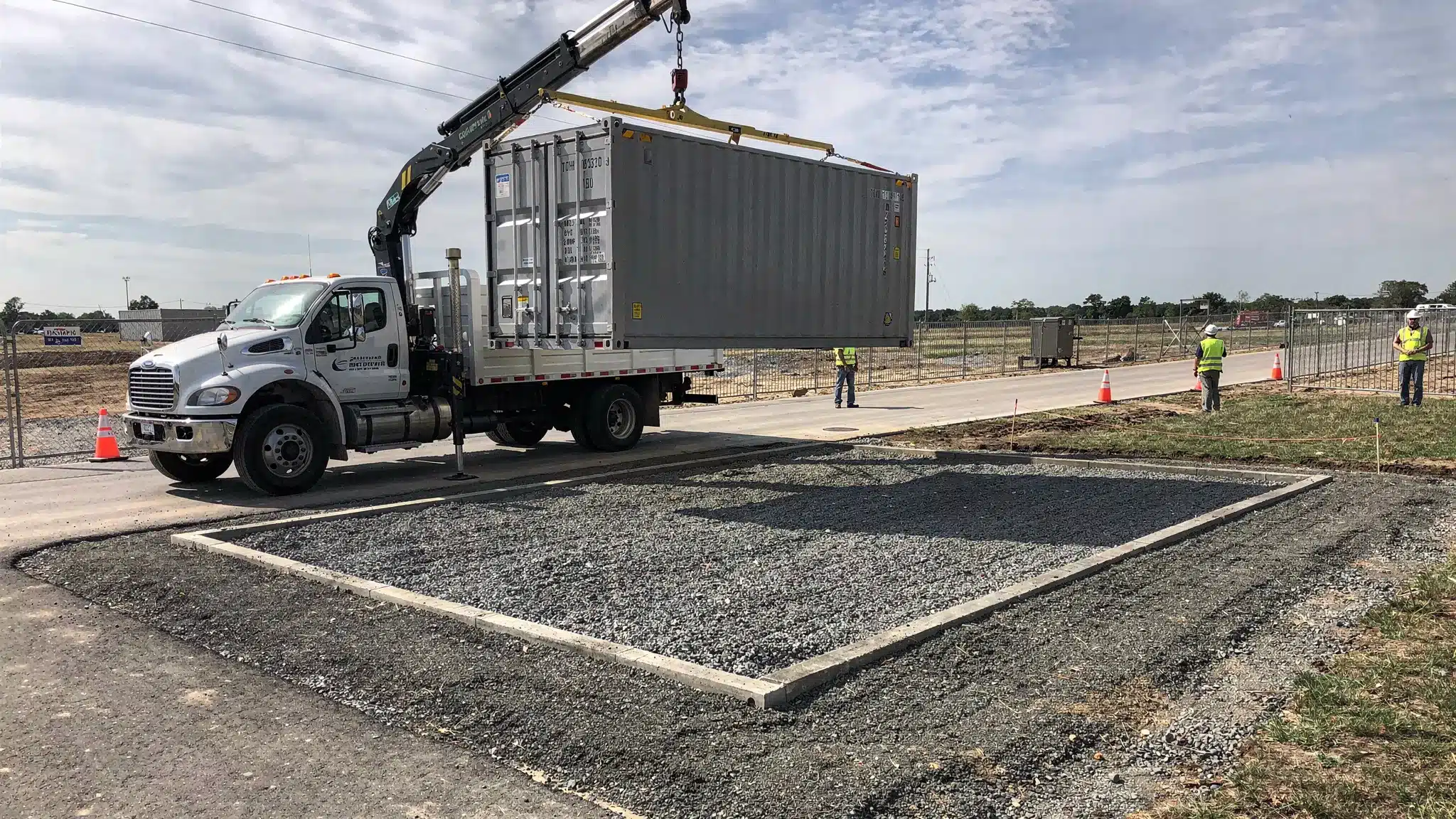
Most shipping units are delivered by tilt-bed or flatbed, depending on your location, container size, and site access.
Even if you’re buying online, delivery is still a jobsite logistics event. Buyers in cities like Houston, Dallas, Atlanta, Phoenix, Miami, and Los Angeles often run into the same issues: tight turns, parked cars, overhead lines, and soft ground.
Minimum delivery planning checklist (featured snippet friendly)
- Confirm your delivery address and best access route for a large truck
- Measure gate width and turning radius (especially for 40ft shipping units)
- Verify overhead clearance for power lines and tree branches
- Prepare a level base (compacted gravel is common)
- Decide door orientation before dispatch (doors facing out matters)
- Ensure someone is on-site to guide placement
Global Containers Line coordinates fast nationwide delivery across the United States and helps buyers confirm access details before dispatch, so you are not paying for redelivery or delays.
For more delivery detail, see: Transporting a shipping container: permits, costs, timelines
Common buyer mistakes when purchasing shipping units
These are the mistakes that cost buyers the most time and money. Avoiding them is often the difference between a smooth delivery and a frustrating one.
Mistake 1: Buying the wrong size for your access
A 40ft container can be the best value, but it’s also the easiest to deliver incorrectly. If you have a narrow driveway, sharp turns, or soft ground, a 20ft may be the smarter option.
Fix: Confirm access first, then size.
Mistake 2: Assuming all “used” shipping units are equal
Used can mean lightly worn, or it can mean heavily repaired. Two used containers can differ dramatically.
Fix: Choose a defined condition (wind and watertight, cargo-worthy) and buy from a supplier that inspects units.
Mistake 3: Comparing quotes that are not apples-to-apples
One seller may quote only the container price, while another includes delivery, offload, and scheduling.
Fix: Ask for an itemized delivered quote (unit price + delivery + offload method + any add-ons).
Mistake 4: Chasing the cheapest price without verifying the seller
Extremely low pricing is one of the most common signs of scams or undisclosed condition problems.
Fix: Use secure checkout, verify the business, and avoid sellers who cannot clearly explain condition and delivery.
Mistake 5: Not planning where the doors need to face
It sounds minor until the container is placed and you realize the doors open into a fence, a wall, or a slope.
Fix: Mark the placement area and door direction before delivery day.
Mistake 6: Ignoring moisture control (especially in humid states)
In Florida, along the Gulf Coast, or in other humid climates, condensation can become a real issue inside a closed steel box.
Fix: Consider airflow, basic ventilation, and good storage practices (don’t put damp items inside).
Mistake 7: Choosing a container condition that does not match the job
For a customer-facing business, paying more for a newer looking unit can be worth it. For a construction site, cosmetic dents usually do not matter.
Fix: Match condition to use case, not to emotion.
Mistake 8: Forgetting permits, HOA rules, or jobsite requirements
Some cities and counties regulate how long a container can sit on a property or whether it requires permits, especially if you modify it.
Fix: Check local rules before delivery, particularly in dense neighborhoods and HOA communities.
Mistake 9: Underestimating delivery day needs
If a truck arrives and the site isn’t ready, you can get hit with waiting time or redelivery costs.
Fix: Prepare the site, be present, and keep the route clear.
Mistake 10: Buying a shipping unit meant for storage when you actually need cargo certification
If your goal is international shipping, export use may require specific documentation and condition standards.
Fix: Tell your supplier the true intended use (storage vs transport) before you buy.
Quick decision guide: choosing the right shipping unit
Use this short checklist to narrow down the best option.
- Choose 10ft if space is tight and you only need small storage
- Choose 20ft if you want the best balance of access and capacity
- Choose 40ft if you have room for delivery and want maximum value per square foot
- Choose High Cube if height matters for shelving, equipment, or build-outs
- Choose wind and watertight or cargo-worthy for most storage projects
- Choose one-trip/new if appearance and predictability matter most
If you want a deeper walkthrough, start with our Ultimate Shipping Container Buying Guide.
Why U.S. buyers choose Global Containers Line
When you buy shipping units online, you’re not just buying steel, you’re buying logistics and reliability.
Global Containers Line is a trusted U.S. supplier with:
- New and used shipping units in common sizes and configurations
- Containers that are cargo-worthy, wind and watertight, and inspected before dispatch
- Transparent pricing with no hidden fees
- Secure online ordering
- Fast nationwide delivery across the United States, including major cities and surrounding areas
Frequently Asked Questions
What are shipping units used for in the U.S.? Shipping units are commonly used for on-site storage, construction jobsite storage, business inventory, farm storage, and container-based projects like workshops or offices.
How much do shipping units cost? Pricing depends on size, condition (new vs used), local availability, and delivery distance. Always ask for a delivered quote that includes the unit and delivery to your site.
How fast can you deliver a shipping unit? Delivery timing depends on your location, current inventory, and scheduling, but Global Containers Line offers fast nationwide delivery across the United States.
What condition should I buy: new or used? New (one-trip) is best when appearance and predictability matter. Used wind and watertight or cargo-worthy units are popular for storage and jobsite use when budget matters more than cosmetics.
Do I need a permit to place a shipping unit on my property? It depends on your city or county rules, how long it will be on-site, and whether you modify it. Check local zoning and HOA rules before delivery.
Browse shipping units for sale or request a delivered quote
Ready to buy with confidence? Browse available inventory or get an all-in delivered quote for your zip code from Global Containers Line.
- Shop 20ft shipping containers
- Shop 40ft shipping containers
- Prefer help choosing? Start here: Shipping containers for sale in the USA or request a quote through our website at Global Containers Line