
Buying a container is one of those decisions that looks simple until you start comparing quotes. A “new” (one-trip) unit might cost more upfront, but a “used” container can come with repair risk, cosmetic wear, and uncertainty that affects your total cost.
This guide breaks down new vs used shipping container price in a way that helps U.S. buyers make a practical decision for storage, job sites, and container projects, including what delivery does to your real out-the-door number.
If you already know the size you need, you can browse inventory while you read:
“New” vs “Used” is not the whole story (condition is what you’re really pricing)
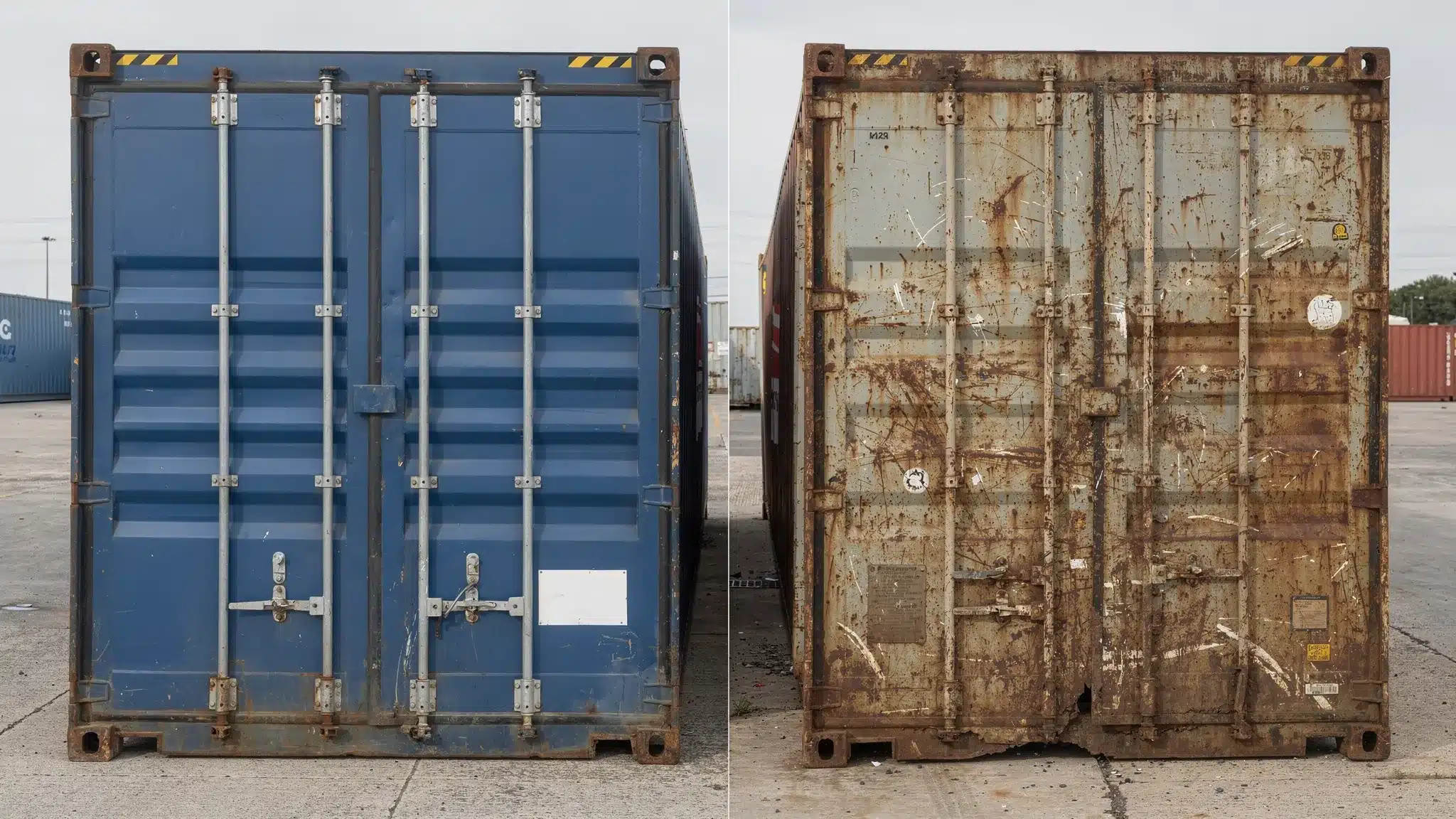
In the U.S. market, price is tied less to the label and more to condition standard. Two containers can both be “used,” but one might be wind and watertight with solid floors, while another might be sold “as-is” with significant issues.
Here’s a practical way to think about condition tiers and how they impact cost and risk.
| Condition term (common) | What it usually means for buyers | Typical price impact | Best fit for |
|---|---|---|---|
| New / One-trip | Minimal wear, best appearance, fewer unknowns | Highest upfront | Retail, long-term storage, projects where appearance matters |
| Cargo-worthy (CW) | Suitable for transport use (often aligned with CSC expectations) | Mid to high | Logistics, shipping, export, higher assurance needs |
| Wind & watertight (WWT) | Weather-resistant for storage, cosmetic wear is normal | Mid | Construction storage, farms, homeowners |
| As-is | Low price, limited guarantees, repairs may be needed | Lowest | Buyers with repair capability and flexible expectations |
For shipping and compliance questions, CSC is the baseline safety convention many buyers reference. The International Maritime Organization’s CSC overview is a helpful reference for what “safe container” standards generally mean.
New vs used shipping container price: what actually drives the difference
When buyers ask “How much more is new than used?” the honest answer is: it depends on condition, location, and availability. But the reasons behind the gap are consistent.
1) Depreciation and cosmetic wear
A used container is cheaper primarily because it has:
- Dents, scratches, and surface rust from handling
- Door wear from frequent use
- Floor wear (and sometimes stains)
For many storage buyers, cosmetic wear is acceptable, so the savings can be real. For customer-facing businesses or polished builds, appearance often pushes buyers toward new.
2) Repair uncertainty (used can get expensive fast)
A low-priced used unit can become “not cheap” if you have to fix:
- Door gaskets and locking gear
- Floor sections
- Heavy corrosion at corner castings or the lower rails
- Roof damage that leads to leaks
If you’re buying used, the key pricing question is not just “What’s the price?” It’s “What’s the condition standard and what was inspected?”
Global Containers Line supplies new and used containers that are cargo-worthy, wind and watertight, and thoroughly inspected before dispatch, which is exactly how you reduce unpleasant surprises.
3) Local supply and regional demand
Your location matters because supply chains for containers are not evenly distributed.
In many markets, buyers near major logistics hubs (or high-demand metros) can see different pricing than buyers farther inland. Quotes often vary around major cities and corridors such as:
- Texas: Houston, Dallas
- Georgia: Atlanta
- Arizona: Phoenix
- Florida: Miami
- California: Los Angeles
Even when the container price is similar, delivery distance and dispatch availability can shift the final number.
4) Size and configuration
Price differences widen when you compare:
- 20ft vs 40ft
- Standard vs high cube
- Specialty types (double doors, open top, refrigerated)
This article focuses on standard dry containers, but the same “new vs used” logic applies across configurations: specialty units have more moving parts and higher replacement costs, so condition matters even more.
Delivered price in the USA: why delivery can change the math
Many buyers compare “container price” and forget the biggest swing factor: delivered cost.
A realistic way to estimate total cost is:
Delivered price = container cost + transportation + offload method (if required) + site preparation
What affects delivery cost
- Distance to your drop site (rural deliveries can be very different than metro deliveries)
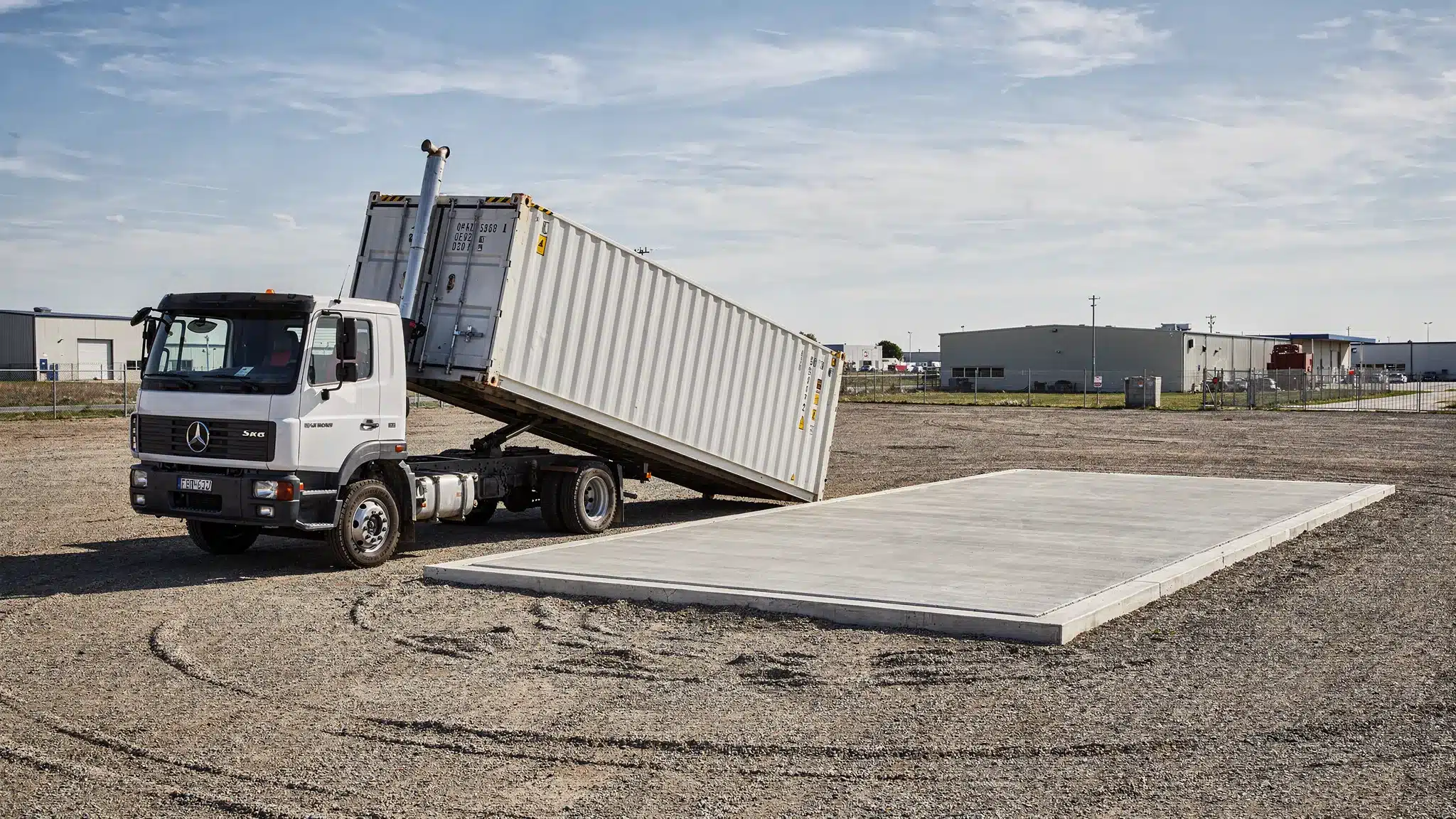
- Truck type (tilt-bed vs flatbed)
- Offload plan (can a tilt-bed place it, or do you need a forklift or crane?)
- Access constraints (tight turns, soft ground, low wires, narrow gates)
Because delivery matters so much, buying from a supplier that coordinates logistics nationally can reduce friction. Global Containers Line offers fast nationwide delivery across the United States, including major markets such as Houston, Dallas, Atlanta, Phoenix, and Miami.
Quote questions that prevent surprise charges
Ask these before you purchase:
- Is the quote delivered to my address, or depot pickup?
- What truck will deliver it (tilt-bed or flatbed)?
- Does the quote include offloading/placement, and what are the site requirements?
- Can I choose the door orientation on drop (where the doors face)?
- What happens if the driver cannot access the site?
If you want a fast delivered number for your zip code, the simplest approach is to request a delivered quote based on container size, condition, and site access.
Real tradeoffs: when paying more for new is worth it (and when it isn’t)
Instead of focusing only on initial price, match your purchase to how you’ll use the container.
Storage for homeowners, farms, and small businesses
For basic on-site storage, a used wind-and-watertight container is often the value winner.
Used tends to make sense when:
- Appearance is not a priority
- You mainly need secure, weather-resistant storage
- Minor dents and paint wear are acceptable
New tends to make sense when:
- The container will sit in a visible area (customer-facing or HOA-sensitive locations)
- You want the smoothest ownership experience with fewer repairs
- You need predictable door operation and seals from day one
Construction job sites and contractor storage
Construction companies often choose used because containers will get scratched, moved, and worked around.
However, paying more for new can be justified when:
- You’re placing the unit on a long-term site (years, not months)
- Downtime from door issues would cost more than the upfront difference
- You want a cleaner unit for tools, materials, or sensitive equipment
Shipping, export, and logistics use
If the container will be used for transport and compliance matters, buyers often prioritize cargo-worthy units.
In this category, the main “tradeoff” is not new vs used. It’s:
- Verified condition standard
- Documentation expectations
- Confidence that doors, roof, and structure perform as intended
Container builds and conversion projects
For conversions (offices, retail, workshops, and residential projects), the price tradeoff is about avoiding expensive rework.
New can reduce total project cost when:
- You’ll cut openings (doors/windows) and want straighter panels
- You want fewer unknowns under insulation and interior finishes
- You’re trying to keep paint prep and corrosion remediation minimal
Used can still work well, but it helps to buy from a supplier that can confirm the unit is solid and watertight, because repairs get harder after you build it out.
How to compare new vs used quotes “apples to apples”
This is where buyers lose money: comparing a cheap used quote against a higher new quote that includes more.
Before you decide, confirm these items on both quotes:
- Container size and height (standard vs high cube)
- Condition standard (new/one-trip, cargo-worthy, wind & watertight)
- Inspection and quality expectations (doors, seals, roof, floors)
- Delivered address, delivery method, and access assumptions
- Any limitations (cosmetic wear allowed, repairs excluded, as-is terms)
A simple rule: the best deal is the container that performs for your use case with the lowest total delivered risk, not the lowest sticker price.
20ft vs 40ft: how size affects price value
Size is one of the easiest ways to overpay, or to underbuy and regret it.
Why 40ft can be better value even if it costs more
A 40ft container typically offers a better cost-per-square-foot for storage, and delivery is not always double just because the container is longer. That means some buyers get more value from going bigger once delivery is already part of the bill.
Why 20ft is often the safer choice
A 20ft container is easier to place on tighter sites (driveways, small lots, compact job sites). If access is limited, paying less for a 20ft unit can also reduce delivery complications.
Browse current options here:
What to watch for on used containers (price red flags)
Used containers can be excellent purchases, but the lowest prices often come with hidden costs. Treat these as red flags that should lower your offer, or push you to a better unit:
- Doors that are hard to open or don’t seal (you will feel this every time you use it)
- Roof dents that collect water (leak risk over time)
- Soft or heavily stained floors (especially if you plan a conversion)
- Deep corrosion on structural areas (corner castings, lower rails)
If you’re buying for storage, the two most important performance questions are simple:
- Will it stay wind and watertight?
- Will the doors operate reliably?
Global Containers Line focuses on inspected inventory that meets cargo-worthy and wind-and-watertight expectations, so buyers are not gambling on condition.
Get a delivered price that matches your project (and your location)
The most accurate way to decide between new and used is to compare delivered pricing for your zip code and site conditions. Whether you’re buying in Texas, Florida, Georgia, Arizona, or anywhere else in the U.S., delivery planning and condition matching are what determine the real value.
Global Containers Line is a trusted supplier of new and used shipping containers in the USA with fast nationwide delivery, transparent pricing, and secure online ordering.
Ready to compare options?
- Browse available 20ft shipping containers and 40ft shipping containers
- Or request a quote so we can price the right container for your location, access, and intended use