
Buying containers for sale in USA is simple once you know what condition grade you actually need, what “delivered price” includes, and how delivery works at your site. The challenge is that “new,” “used,” and “one-trip” get used interchangeably online, and that can make it hard to compare quotes in Houston vs Dallas, Atlanta vs Miami, or Phoenix vs Los Angeles.
Choosing between a standard 20ft container for home storage or specialized 40ft High Cube units for larger projects depends on your specific site clearance.
This guide breaks down the most common container types, what impacts price, and how nationwide delivery typically works so you can purchase with confidence. Global Containers Line supplies new and used shipping containers with fast nationwide delivery across the United States, transparent pricing, and inspected units.
New vs used vs one-trip containers (what the labels really mean)
New containers (often called “new build”)
A “new” container is essentially unused for cargo service (or as close to unused as the market allows). Buyers typically choose new units when appearance matters (retail, residential builds, brand-forward businesses) or when they want the longest remaining service life.
What to expect:
Clean interior with minimal odors
Minimal dents and minimal surface wear
Best option when you plan to paint, brand, or convert the unit
One-trip containers (the popular middle ground)
A one-trip shipping container is commonly marketed as a container that completed a single loaded voyage before being sold. In practice, it’s a near-new option that usually shows light handling marks from shipping and lifting, without the heavy wear you’ll see on older units.
Best for:
Container offices and conversions
Jobsite storage where you still want a “clean look”
Long-term property storage (farms, ranches, homeowners)
If you are unsure whether a refurbished unit meets your structural requirements, our New vs Used Shipping Container Guide provides a full breakdown of what to expect from each grade.
Used containers (cost-effective and practical)
A used shipping container can be a strong value when the goal is secure storage, construction staging, equipment lockup, or overflow inventory. Used units will show more cosmetic wear (dents, scrapes, surface rust), but should still function properly when sold as wind and watertight.
Best for:
Construction companies and trades
Logistics overflow storage
Farms and small businesses that prioritize function over appearance
Quick comparison table (for faster decisions)
| Condition type | Best for | Typical appearance | Value level | What you should confirm before buying |
|---|---|---|---|---|
| New | Retail, residential, premium conversions | Very clean, minimal wear | Highest | Exact size, door function, lockbox options, delivery access |
| One-trip | Conversions, long-term storage | Light handling marks | Mid to high | Photos of the exact unit (when available), door seals, floor condition |
| Used | Jobsite and budget storage | Dents/scrapes/surface rust | Best value | Wind & watertight status, floor integrity, door operation, vents |
Common container sizes in the USA (and how to choose)
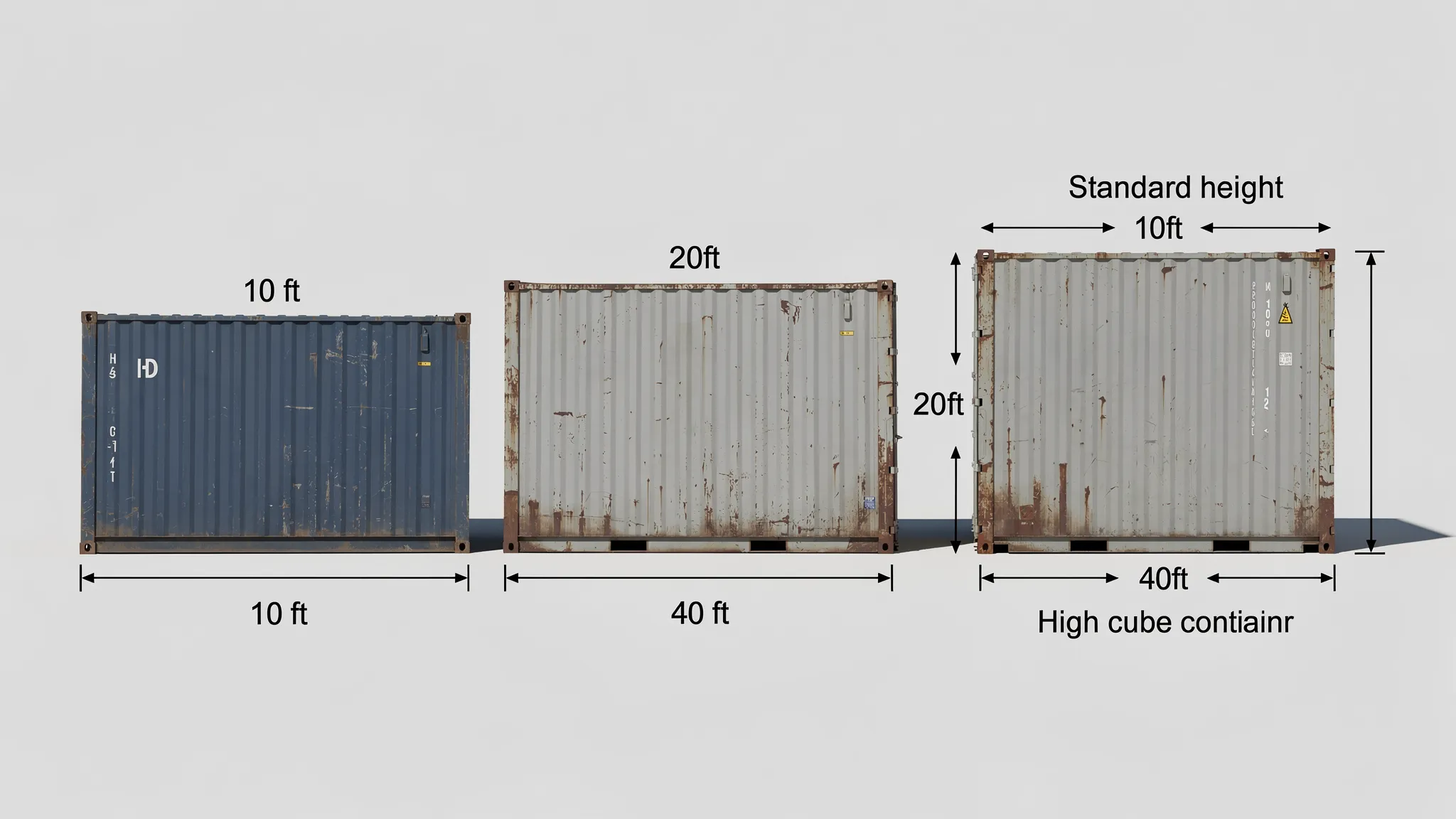
Most U.S. buyers decide between 20ft and 40ft first, then choose height (standard vs high cube) based on what they’re storing or building.
10ft containers
A 10ft container is ideal when space is tight (urban lots, small businesses, backyards) or when you want a compact, secure storage unit.
20ft containers (the most flexible “do-everything” size)
A 20ft is often the best balance of capacity, footprint, and ease of delivery. It’s common for construction sites, equipment storage, and homeowners who want serious storage without dedicating a large area.
Browse available options here: 20ft shipping containers.
40ft containers (best cost per square foot)
A 40ft container is a go-to for large storage needs, inventory overflow, or multi-room conversions. If you have the space and access for delivery, a 40ft often offers the strongest value per square foot.
Browse available options here: 40ft shipping containers.
High cube containers (extra height for bulky storage and conversions)
High cube containers are typically about 1 foot taller than standard height, which helps for:
Shelving and racking
Taller equipment
More headroom in container offices and living spaces
Size snapshot (approximate exterior dimensions)
| Size | Approx. exterior length | Approx. exterior width | Approx. exterior height |
|---|---|---|---|
| 10ft | 10 ft | 8 ft | 8 ft 6 in |
| 20ft (standard) | 20 ft | 8 ft | 8 ft 6 in |
| 40ft (standard) | 40 ft | 8 ft | 8 ft 6 in |
| 40ft high cube | 40 ft | 8 ft | 9 ft 6 in |
What impacts shipping container pricing in the USA?
If you’re comparing containers for sale in USA, make sure you’re comparing apples to apples. Two quotes can look similar until you realize one is a depot price and the other is a delivered price, or one includes offloading and the other does not.
Here are the main factors that affect the final cost:
1) Container condition and age
New and one-trip containers cost more because they typically have less wear and better appearance. Used containers usually cost less and are popular for functional storage.
2) Size and configuration
All else equal, 40ft units cost more than 20ft units, but can offer a better cost per square foot. High cube height and special configurations (doors, lockboxes, modifications) can change pricing.
3) Delivery distance and local logistics
Delivered pricing depends heavily on your location and access. The same unit delivered near major hubs can price differently than delivery to a remote property.
Examples of markets where delivery planning matters:
Texas: Houston, Dallas, Austin, San Antonio
Florida: Miami, Tampa, Orlando, Jacksonville
Georgia: Atlanta and surrounding areas
Arizona: Phoenix and nearby cities
California: Los Angeles, San Diego, the Inland Empire
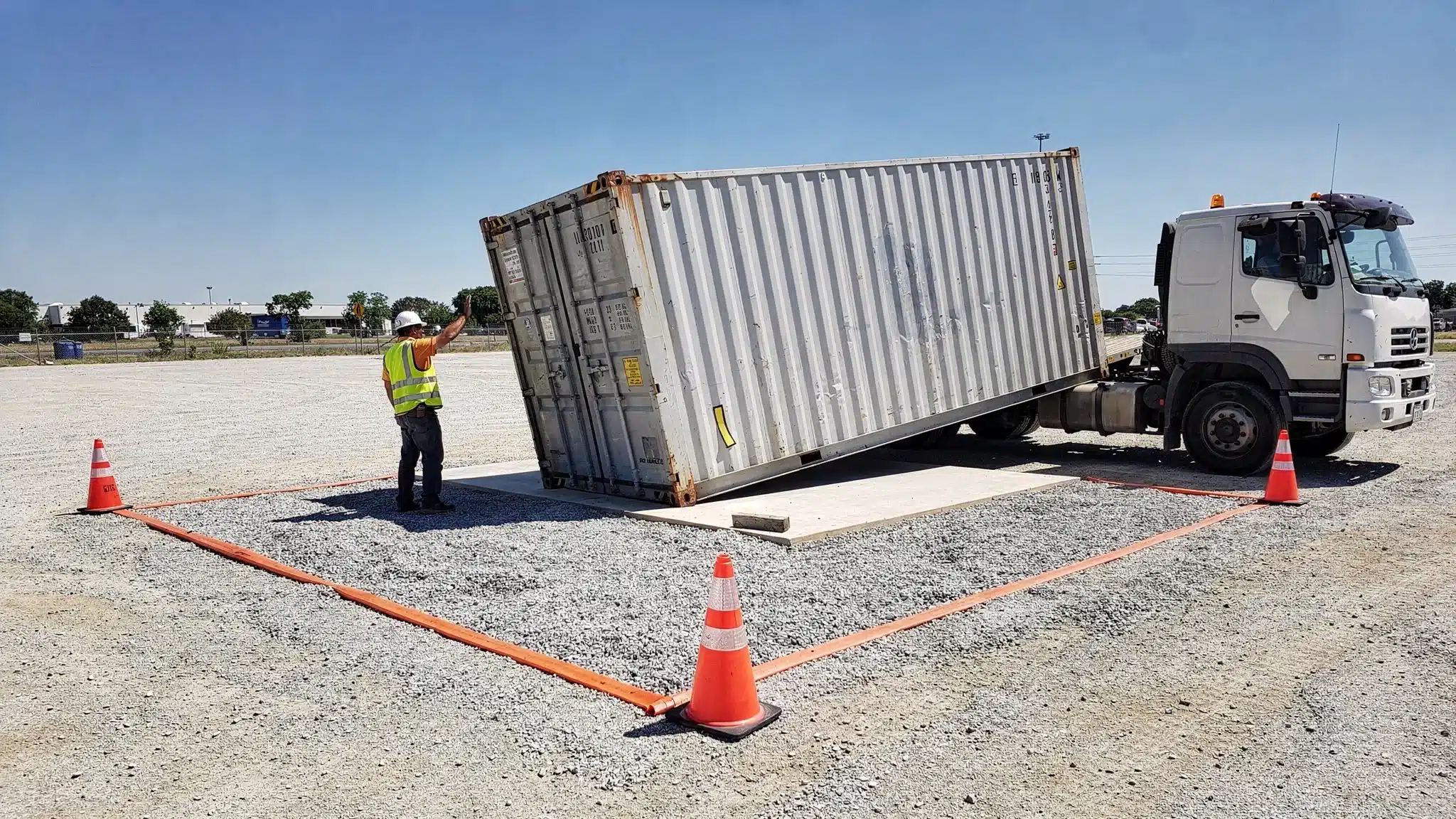
4) Offload method (tilt-bed vs crane)
If your site allows a tilt-bed rollback to slide the container off, delivery is usually simpler. If you need a crane or specialized equipment, costs can increase.
Questions that help you get an accurate delivered quote
What zip code is delivery to?
Do you have clear access for a delivery truck (turning radius, road width)?
Any overhead obstacles (power lines, trees, carports)?
Do you want doors facing a specific direction at drop-off?
Are you placing it on gravel, concrete, asphalt, or blocks?
If you want deeper detail on the buying process and what happens after checkout, reference the company’s step-by-step guide: Ultimate shipping container buying guide.
Delivery: what to expect with containers shipped across the United States
The best way to avoid delivery surprises is to plan your drop site before you purchase. Global Containers Line provides fast nationwide delivery across the USA, and your timeline will depend on inventory, scheduling, and your exact location.
To ensure total transparency, we offer a flat-rate shipping model across the contiguous USA; you can see the full breakdown on our official Shipping Policy page.
Typical delivery requirements (site prep basics)
A good site is:
Level or close to level
Firm enough to support the container’s weight
Clear of overhead obstructions
Accessible for the delivery truck to enter and exit safely
If you’re placing containers on soil, gravel, or grass, many buyers use blocks or a prepared pad to improve drainage and help doors swing freely over time.
City, suburban, and rural delivery considerations
Delivery can look different depending on where you’re located:
Dense areas (Los Angeles, Miami, New York metro): tighter streets, HOA rules, and limited staging space can affect truck access.
Suburbs (Dallas suburbs, Phoenix suburbs, Atlanta suburbs): usually more access, but watch for low branches and narrow turns.
Rural properties and farms: longer driveways and soft ground can be the main challenge.
For a practical, real-world checklist (especially helpful even outside California), see this planning post: Delivery checklist for storage containers.
Container condition questions (and what “wind and watertight” should mean to you)
When you buy a container for storage or a build, you want confidence in three basics: structure, sealing, and doors.
Key condition points to confirm
Door operation: doors should open and close smoothly, locking bars should function, and gaskets should seal.
Roof and wall integrity: no holes, major punctures, or compromised structural corners.
Floor condition: solid flooring without soft spots, major delamination, or widespread staining.
Water tightness: no active leaks, and seals should keep out rain and wind.
Global Containers Line states that containers are thoroughly inspected before dispatch and supplied as cargo-worthy and wind and watertight, which is exactly what most U.S. storage and project buyers are looking for.
For more general buyer questions (sizes, conditions, delivery, and ordering), you can also review: Shipping container FAQs (USA).
Where to buy containers for sale in USA (and how to avoid common mistakes)
Many people start with “shipping containers near me,” but the best value often comes from comparing delivered quotes from a trusted supplier with nationwide reach. The most common mistakes buyers make are:
Confusing depot price with delivered price
Always clarify whether the quote includes delivery to your address and whether offloading is included.
Buying the wrong condition for the project
If the container will be customer-facing or converted into a workspace, new or one-trip often makes sense. If it’s for jobsite storage, a used wind and watertight unit is often the smarter buy.
Skipping delivery planning
A great price does not help if the truck cannot access your site. Confirm access, turning space, and overhead clearance before booking delivery.
If you want a fast checklist to vet sellers and avoid scams, this resource is helpful: How to vet sellers fast.
Getting your site ready is the most common point of failure for new buyers. We recommend following our Los Angeles delivery checklist for a universal standard on space and surface preparation.
Buying from Global Containers Line (what U.S. buyers get)
Global Containers Line is a USA-based supplier of new and used shipping containers for sale, serving customers across major cities and states with fast nationwide delivery across the United States.
What buyers typically care about most is straightforward:
Clear container condition (new, used, one-trip)
Transparent pricing with no hidden fees
Secure online ordering
Reliable delivery scheduling to their location
That is the standard Global Containers Line is built around.
Frequently Asked Questions
How much do containers for sale in USA cost? Pricing varies based on size (10ft, 20ft, 40ft), condition (new, one-trip, used), and delivery distance. The most accurate approach is to request a delivered quote for your zip code with your preferred size and condition.
What is a one-trip shipping container? A one-trip container is generally a near-new container that has completed a single loaded voyage before resale. It typically has minor handling marks but far less wear than older used units.
Are used shipping containers still watertight? They can be. A properly graded used unit sold as wind and watertight should keep out rain and wind. Always confirm door seals, roof condition, and floor integrity.
Do you deliver nationwide in the United States? Yes. Global Containers Line offers fast nationwide delivery across the USA, including major markets like Houston, Dallas, Atlanta, Phoenix, Miami, and more.
What do I need to prepare for delivery? You typically need a level, firm drop area with clear truck access and no overhead obstructions. If your location has tight turns, soft ground, or HOA rules, plan those details in advance.
Browse containers for sale in USA or request a delivered quote
If you’re ready to compare new, used, and one-trip containers for sale in USA, browse current inventory or request pricing for delivery to your location.
Explore available sizes, including 20ft shipping containers and 40ft shipping containers
Visit Global Containers Line to check availability and get fast nationwide delivery across the United States
Once your site is ready, you can browse our inventory of certified units or Contact Us to finalize your delivery details with a logistics specialist.