
A standard 20ft container is great when you only need end-door access. But when you’re constantly grabbing tools, staging materials, or loading pallets throughout the day, the “everything goes in the front, everything comes out the front” layout can slow you down.
A 20ft open side container for sale solves that problem with wide side access along one long wall (configuration can vary by model), making it easier to load, organize, and retrieve items without unloading half the container first. Below is a buyer-focused guide to real-world uses, what drives pricing, how to evaluate condition (especially the side doors), and how delivery typically works across the United States.
What is a 20ft open side shipping container?
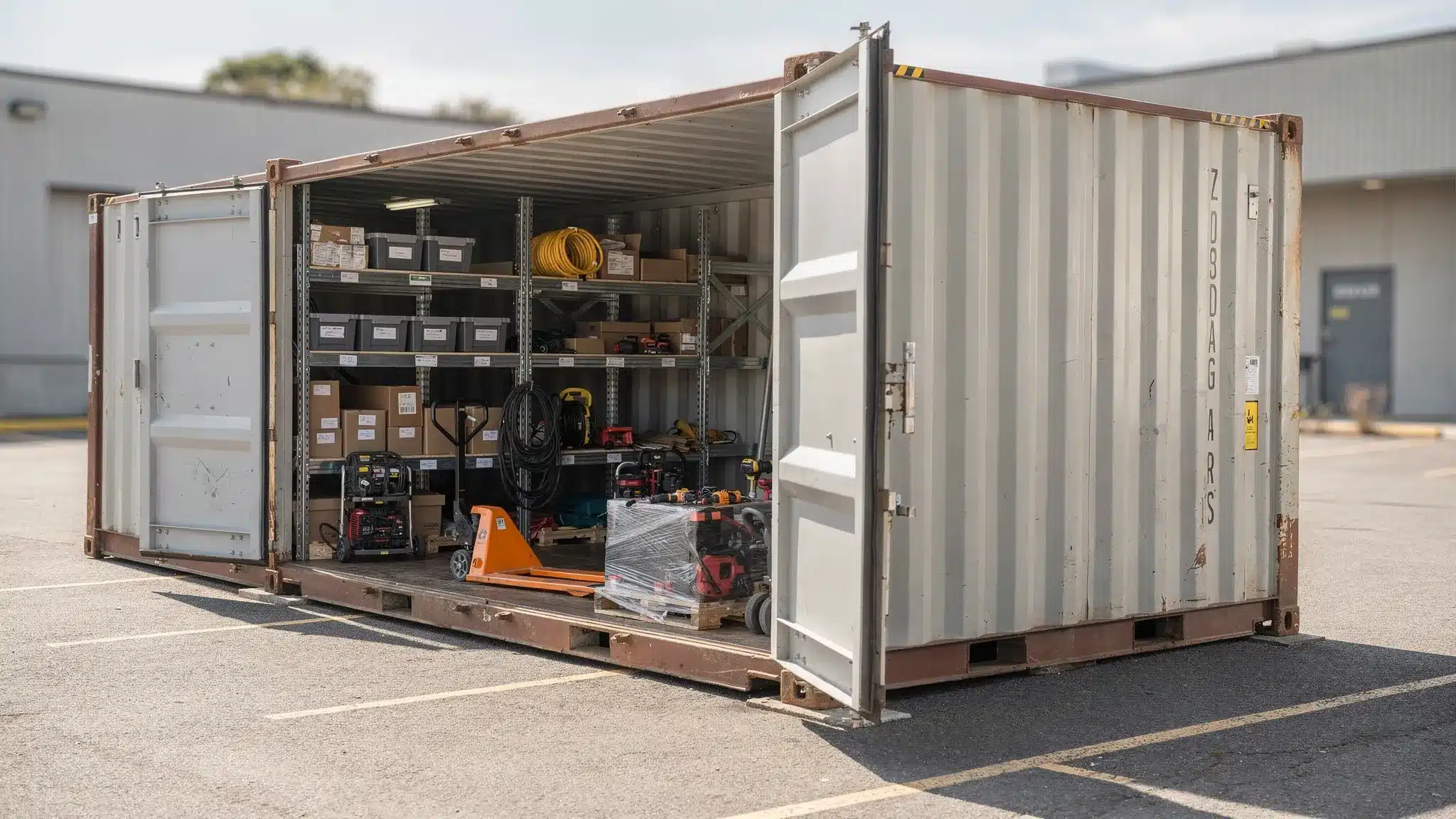
A 20ft open side shipping container (also called a full side access container) is built on the same ISO footprint as a standard 20ft container, but it adds large side-opening doors along one long side.
That side opening changes how you use the container:
- You can reach inventory or equipment stored along the length of the container.
- You can load long materials (like pipe or lumber) without fighting the end-door bottleneck.
- You can set up shelving or zones and access them directly from the side.
Because open side units include additional door hardware and structural reinforcement, they often cost more than comparable standard end-door 20ft containers.
Best uses for a 20ft open side container (real-world examples)
Open side containers are popular when frequent access matters more than the simplest “load once and close it” storage approach.
Construction sites and jobsite storage
On active sites in Texas (Houston, Dallas), Georgia (Atlanta), Arizona (Phoenix), Florida (Miami), and everywhere in between, speed matters. A 20ft open side container is a strong fit when crews need to access items repeatedly throughout the day.
Common jobsite wins include faster tool retrieval, safer organization, and less time wasted moving pallets or equipment just to reach something at the back.
Small business inventory and warehouse overflow
If you run a parts business, retail overflow, or seasonal inventory operation, side access can feel like a workflow upgrade. Instead of “stacking deep,” you can organize inventory along the length of the container and access it like a mini-warehouse.
This is especially helpful when you plan to add shelves, bins, or pallet positions and you want visibility and access without constantly unloading.
Long materials and awkward loads
Open side containers are commonly used for:
- Lumber and trim
- Pipe and conduit
- Steel stock
- Fencing materials
- Staged equipment that needs side access
If you routinely handle long or bulky items, the side opening is the main reason to choose this container type.
Events, pop-ups, and temporary operations
Side-opening containers are frequently used as secure staging units for events and seasonal operations because they make setup and breakdown faster. You can also build out simple interior zones (storage, supplies, merch) and access everything quickly.
Farms, ranches, and equipment storage
Across rural areas and agricultural regions, open side containers are used to store feed, supplies, long-handled tools, attachments, and small equipment with easier access than a standard end-door unit.
20ft open side vs. standard 20ft vs. 40ft: what should you buy?
Many buyers start with “20ft or 40ft?” and then realize access is just as important as size. This quick comparison helps you decide.
| Feature | Standard 20ft container | 20ft open side container | Standard 40ft container |
|---|---|---|---|
| Primary access | End double doors | Side doors (often plus end doors, depending on model) | End double doors |
| Best for | Simple storage and transport | Frequent access, long materials, faster loading | High-volume storage, bigger projects |
| Typical cost | Lower | Higher (more hardware and reinforcement) | Higher than 20ft due to size |
| Organization style | Load front to back | Organize along the length, access by “zones” | Load front to back with more capacity |
| Footprint | Compact | Compact (same general footprint as 20ft) | Larger, needs more placement space |
If you mainly need a common, general-purpose container, start by browsing our standard sizes:
Even if you ultimately choose an open side model, these pages help you compare size, footprint, and typical use cases.
20ft open side container pricing: what affects the total cost?
When shoppers search for a “20ft open side container for sale,” the real decision is rarely just the base unit price. The delivered total depends on a few key variables.
1) New vs. used condition
- New (often called one-trip) containers typically have cleaner interiors, better paint, and less wear.
- Used containers usually offer better value but may have cosmetic dents, surface rust, and signs of prior service.
Open side units are specialized, so availability by condition can vary more than standard 20ft containers.
2) Grade and intended use (cargo-worthy vs. storage)
If you plan to ship cargo or move the container between sites, you may need a cargo-worthy unit.
If the container is staying put for onsite storage, many buyers prioritize wind and watertight performance and good door seals.
3) Side door hardware and sealing (a big deal on open side units)
Open side containers have more moving parts than standard end-door containers. Pricing often reflects the condition of:
- Hinges and locking gear
- Door alignment (doors should latch without excessive force)
- Rubber gaskets and seals (critical for wind and watertight performance)
- Frame integrity around the side opening
If the side doors are stiff, misaligned, or poorly sealed, you can lose the biggest benefit of buying open side in the first place.
4) Delivery distance, city access, and offload method
Delivered pricing changes based on your ZIP code and delivery requirements. A metro delivery in places like Houston, Dallas, Atlanta, Phoenix, or Miami may differ from rural deliveries that require extra mileage or specialized placement.
Offload method matters too (more on this below). Tight driveways, soft ground, slopes, or overhead obstacles can affect the delivery plan.
The fastest way to get an accurate delivered price
Request a quote and include these details upfront:
- Delivery ZIP code
- Preferred size and configuration (20ft open side)
- Condition preference (new or used)
- Whether you need cargo-worthy or storage-focused use
- Site notes (tight access, slope, soft ground, overhead wires, gated entry)
At Global Containers Line, we focus on transparent pricing, secure online ordering, and fast nationwide delivery across the United States. We can quote delivery to major U.S. cities and surrounding areas, and help you choose an offload method that fits your site.
Condition checklist: what to inspect on a 20ft open side container
Any used container will show signs of service. The key is knowing what’s normal and what’s a deal-breaker, especially with side-opening doors.
Side doors: operation and alignment
On an open side unit, door performance is not a minor detail. You want side doors that open smoothly and close securely.
Look for:
- Doors that swing without binding or dragging
- Locking bars and cams that engage cleanly
- Even gaps at the seals (no obvious daylight)
Seals and gaskets (wind and watertight performance)
The seals should be intact, flexible, and continuous. Missing or torn gasket sections are a common reason containers leak.
If “wind and watertight” matters for your storage (tools, inventory, materials), sealing condition is one of the best predictors of satisfaction.
Roof, frame, and side opening reinforcement
The side opening changes load paths, so you want to avoid signs of distortion:
- Significant dents near the side opening that affect door fit
- A twisted frame that causes doors to misalign
- Roof damage that suggests impact or chronic pooling
Floor condition
Inspect the floor for soft spots and damage. For many buyers, flooring condition is more important than exterior cosmetics.
If you’re buying remotely, ask the seller for recent photos and confirm what has been inspected before dispatch.
Global Containers Line supplies new and used containers that are thoroughly inspected before dispatch, and we can help you select a container condition that matches your intended use.
Delivery across the USA: how a 20ft open side container typically arrives
A smooth delivery starts with planning. Most 20ft containers are delivered by truck, and the best method depends on your placement site.
Common delivery methods
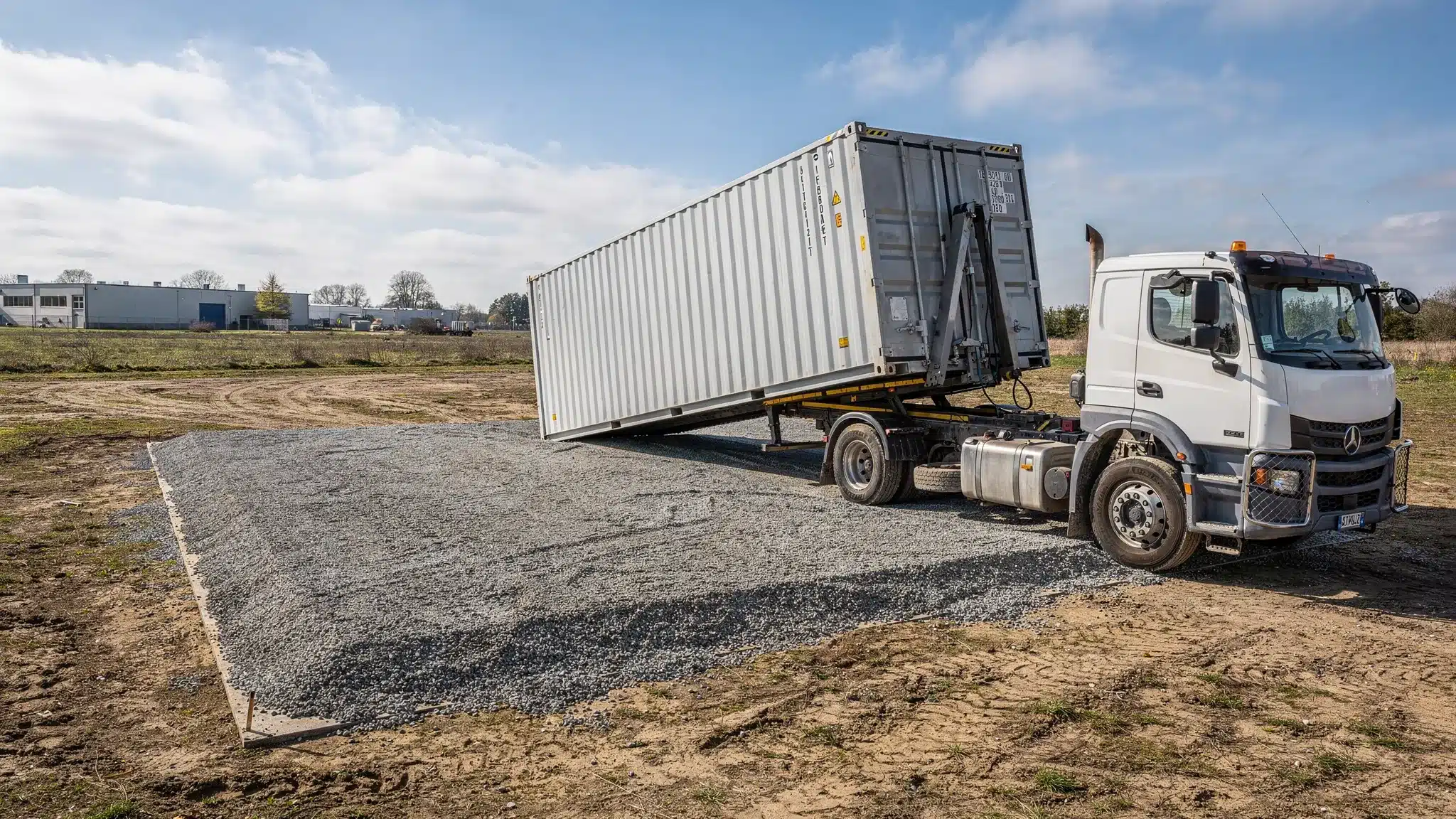
Tilt-bed delivery is often used for residential driveways and many small business sites. The driver tilts the bed and slides the container into place.
Flatbed delivery is common when you can offload with your own equipment (forklift, crane, or telehandler).
Crane delivery may be needed when placement requires lifting over fences, walls, or other obstacles, or when you need very precise positioning.
Site prep tips to avoid delays and re-delivery fees
Before delivery day, make sure you have:
- Enough turning radius and approach space for the truck
- Overhead clearance (branches and utility lines are common issues)
- A firm, level base (compacted gravel is a common choice)
- Space for the side doors to open fully (do not place against a wall or fence)
If you’re unsure, share photos of the site when requesting a quote. It is often the quickest way to confirm the right truck and placement plan.
Buying tips: choose the right open side configuration
Not every “open side” container is identical. Before you purchase, confirm what you’re actually getting.
Confirm the access points
Ask whether the container has:
- Side doors only, or
- Side doors plus standard end doors
If your workflow benefits from loading through the end but daily access through the side, having both can be a major advantage.
Match the container to what you are storing
If you plan to add shelving, think through aisle and door clearance. If you store long materials, measure your longest items and consider how you’ll stage them along the length.
Consider whether a 40ft container is the better long-term move
If you’re outgrowing storage quickly or planning a larger build-out, it may be smarter to go bigger now rather than buying twice.
You can compare options here:
Frequently Asked Questions
What is a 20ft open side container used for? It’s commonly used for jobsite storage, warehouse overflow, long materials (pipe, lumber, steel), equipment staging, and any setup where you need frequent access along the container’s length.
Are open side containers wind and watertight? They can be, but it depends heavily on the condition of the side door seals, alignment, and hardware. Always verify door operation and gasket condition, especially on used units.
Is a used 20ft open side shipping container a good idea? Yes, if you confirm grade and inspection details and you’re comfortable with cosmetic wear. On open side units, prioritize door alignment, seals, frame integrity, and floor condition.
Why are open side containers more expensive than standard 20ft containers? They include additional door systems and reinforcement, which adds manufacturing cost and increases maintenance points, especially on used containers.
How fast is delivery in the United States? Delivery timing depends on inventory and your ZIP code, but Global Containers Line offers fast nationwide delivery across the United States. Request a quote for the most accurate delivered timeframe.
Do I need a forklift or crane to offload a 20ft container? Not always. Many customers use tilt-bed delivery. If your site requires lifting over obstacles or you need precise placement, a crane or customer-provided offload may be required.
Get a delivered quote for a 20ft open side container
If you’re ready to improve access and speed up loading, an open side container can be one of the most practical upgrades you can buy.
Browse our container options online or request a delivered quote based on your ZIP code and site requirements. Global Containers Line is a trusted U.S. supplier of new and used shipping containers, with transparent pricing, secure checkout, and fast nationwide delivery across the USA.
Start by comparing sizes or shopping standard inventory: