
Buying from a container depot can be one of the fastest ways to get a shipping container delivered, but only if you handle the details in the right order. The nearest yard is not always the fastest option. Availability, container condition, trucking access, offload method, and site readiness all affect how quickly your unit can arrive.
For U.S. buyers, the goal is simple: find a trusted supplier with the right container in stock, confirm the delivered price, and make sure your site is ready before the truck is dispatched. Global Containers Line helps homeowners, contractors, farms, logistics companies, and commercial buyers source new and used containers with fast nationwide delivery across the United States.
What Is a Container Depot?
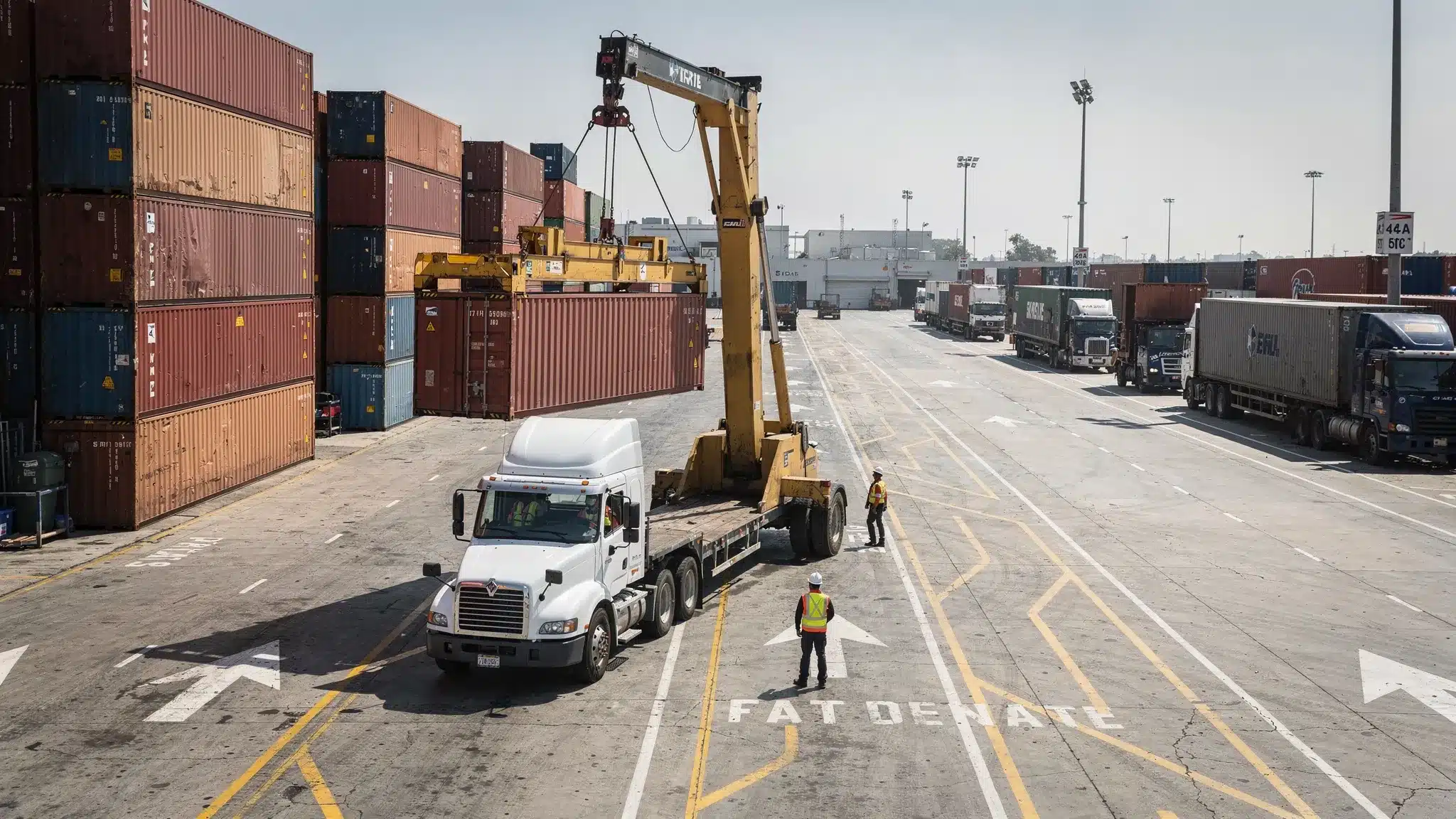
A container depot is a storage and handling yard where shipping containers are parked, inspected, staged, and loaded for delivery. Depots are often located near ports, rail terminals, industrial zones, and major highways. In the U.S., strong depot markets include Houston, Dallas, Atlanta, Phoenix, Miami, Los Angeles, Jacksonville, Tampa, Orlando, and San Antonio.
When buyers search for a container depot near me, they are usually trying to reduce delivery time and trucking cost. That makes sense, but proximity is only one part of the decision. A nearby depot may not have the size or condition you need. Another depot slightly farther away may have better inventory and a faster trucking route.
The best buying strategy is to work with a supplier that can check availability, coordinate dispatch, and provide a clear delivered quote before you pay.
Fast-Delivery Checklist Before You Buy
If you want a container delivered quickly, prepare the key details before contacting a depot or supplier. This helps the seller confirm availability, price, and delivery method without delays.
| Detail to Confirm | Why It Speeds Up Delivery | Buyer Tip |
|---|---|---|
| Delivery ZIP code | Determines depot distance and trucking cost | Provide the full address when possible |
| Container size | Affects availability and truck type | Decide between 20ft, 40ft, or high cube early |
| Condition grade | Impacts which units are ready to ship | Ask for inspected, wind and watertight units |
| Site access | Determines whether tilt-bed delivery works | Share gate width, driveway condition, and turning space |
| Door orientation | Prevents placement mistakes | Tell the supplier where the doors should face |
| Delivery window | Helps dispatch find the best route | Be flexible if you need the fastest schedule |
Choose the Right Size Before Calling the Depot
Size is one of the biggest delivery factors. A standard container depot may have multiple sizes in stock, but 20ft and 40ft units are usually the most common choices for storage, construction, farms, retail overflow, and container projects.
20ft Containers: Easier Placement for Tight Sites
A 20ft container is often the best choice when delivery space is limited. Homeowners, small businesses, farms, and construction crews use 20ft units because they fit more easily in driveways, job sites, and smaller commercial yards.
If you need secure storage but do not have room for a full-length container, start by reviewing available 20ft shipping containers. They are popular for tools, equipment, seasonal inventory, household storage, and mobile job site storage.
40ft Containers: More Space and Better Value Per Foot
A 40ft container gives you much more storage capacity and is often a better value per square foot. Contractors, logistics companies, real estate developers, farms, and warehouses often choose 40ft units because they can store bulk materials, machinery, pallets, and larger equipment.
Before choosing a 40ft unit, confirm that your site has enough straight-line space for delivery and placement. You can compare options by browsing 40ft shipping containers.
High Cube Containers: Extra Height for Tall Cargo
High cube containers are typically about one foot taller than standard containers. They are useful for bulky equipment, palletized goods, retail inventory, container workshops, and conversion projects. Availability can vary by location, so ask early if you need a 40ft high cube container delivered quickly.
For a full size comparison, see this guide to standard shipping container sizes.
Ask About Container Condition, Not Just Price
A low depot price is not helpful if the container has roof leaks, difficult doors, damaged flooring, or structural issues. Faster delivery should not mean accepting a container that does not match your project.
Global Containers Line supplies new and used containers that are cargo-worthy, wind and watertight, and thoroughly inspected before dispatch. That matters because many delivery delays happen when a buyer chooses a cheap unit, then discovers it needs repairs before it can be used.
| Condition Type | Best For | What to Expect |
|---|---|---|
| New or one-trip | Long-term storage, conversions, cleaner appearance | Minimal wear, higher price, strong availability in common sizes |
| Used cargo-worthy | Storage, transport, commercial use | Structurally sound, may have dents or cosmetic wear |
| Wind and watertight | On-site storage, farms, job sites | Keeps out weather, usually more affordable than new |
| As-is | Buyers willing to repair issues | Higher risk, not ideal for fast reliable delivery |
For most storage and job site needs, a wind and watertight or cargo-worthy container is the practical choice. If appearance matters, or if you plan to modify the unit into an office, workshop, or retail space, a new or one-trip container may save time later.
Get a Delivered Quote, Not Just a Depot Price
One of the most common mistakes buyers make is comparing depot prices without asking what delivery includes. A container listed at a low yard price may become expensive once trucking, offload, taxes, site delays, or redelivery fees are added.
A proper quote should clearly show the container price, size, condition, delivery location, offload method, and any required fees. Global Containers Line focuses on transparent pricing with no hidden fees, secure online ordering, and reliable delivery to your location.
Typical 2026 U.S. Price Ranges
Prices vary by city, depot availability, fuel costs, condition, and delivery distance. Use these ranges as general planning estimates, then request a current delivered quote for your ZIP code.
| Container Type | Common U.S. Price Range | Notes |
|---|---|---|
| 20ft used wind and watertight or cargo-worthy | $1,800-$3,500 | Good for storage, farms, and job sites |
| 20ft new or one-trip | $3,200-$5,500 | Better appearance and longer service life |
| 40ft used wind and watertight or cargo-worthy | $2,500-$5,000 | More storage capacity for commercial use |
| 40ft new or one-trip | $4,500-$7,500+ | Strong option for conversions or long-term use |
| 40ft high cube | Often $300-$1,000 more than standard 40ft | Extra height for bulky cargo or build-outs |
Delivery costs depend on how far your site is from the depot, whether the route is easy for a truck, and whether special equipment is needed. Rural deliveries, tight city access, crane placement, and difficult ground conditions can change the final price.
Understand Delivery Methods Before You Schedule
Container delivery is not the same as parcel shipping. These are large steel units, so the delivery method must match your site.
| Delivery Method | Common Use | Buyer Requirement |
|---|---|---|
| Tilt-bed truck | Most standard 20ft and 40ft deliveries | Enough straight space for the truck to unload |
| Flatbed or step-deck | Long-distance or commercial delivery | Forklift, crane, or equipment needed to offload |
| Chassis delivery | Transport-focused moves | Proper loading and unloading equipment |
| Crane-assisted placement | Tight sites or exact placement | Extra scheduling and site coordination |
Tilt-bed delivery is often the fastest and simplest option when the site has enough room. The truck backs into position, tilts the bed, and slides the container into place. For more complex projects, read this guide on transporting a shipping container.
Prepare the Site Before the Truck Arrives
A ready site can make the difference between same-route delivery and a costly delay. If the driver arrives and cannot safely place the container, you may need to reschedule.
Before delivery day, confirm these site details:
- Clear the route from the street to the placement area.
- Make sure the ground is firm, level, and able to support the container.
- Check for low tree branches, wires, awnings, and roof overhangs.
- Measure gate widths, driveway turns, and approach angles.
- Decide whether the container doors should face the street, building, or work area.
- Check local zoning, HOA rules, or permit requirements before placement.
For long-term storage, gravel pads, railroad ties, concrete blocks, or a concrete slab can help with drainage and airflow. Keeping the container slightly elevated also helps reduce moisture problems under the floor.
Use Location to Your Advantage
Container depot inventory changes by region. Port cities such as Houston, Miami, Los Angeles, Jacksonville, and Tampa may have strong container flow, but demand can also be high. Inland hubs such as Dallas, Atlanta, Phoenix, Orlando, and San Antonio can be excellent delivery markets because they sit near major freight routes.
The fastest source is not always the closest public depot. A reliable nationwide supplier can often match your order to the best available inventory and trucking option. This is especially useful for contractors working across multiple states, retailers opening new locations, farms in rural areas, and homeowners outside major metro areas.
Global Containers Line serves customers across major U.S. cities and offers fast nationwide delivery across the United States, helping buyers avoid the back-and-forth of calling multiple local yards.
Red Flags That Can Slow Down a Depot Purchase
A container depot purchase should feel clear and organized. If the seller cannot explain the condition, delivery process, or final cost, you may be taking on unnecessary risk.
| Red Flag | Why It Can Delay Delivery | Better Approach |
|---|---|---|
| Price does not include delivery | Final cost may change later | Request an itemized delivered quote |
| No condition details | Unit may need repairs before use | Ask for grade, photos, and inspection notes |
| Vague delivery timeline | Trucking may not be scheduled | Confirm dispatch expectations before payment |
| No site access questions | Driver may arrive unprepared | Share placement details upfront |
| Only accepts unsafe payment methods | Higher risk of scams | Use secure checkout or verified payment options |
| No proof of inventory | Unit may not be available | Work with a supplier that confirms stock |
How Global Containers Line Helps Buyers Move Faster
Global Containers Line is a USA-based supplier of new and used shipping containers for storage, construction, commercial, residential, agricultural, and logistics use. Buyers can choose from 10ft, 20ft, 40ft, and high cube containers depending on their space and access needs.
The company helps simplify the buying process with inspected containers, transparent pricing, secure online ordering, and fast nationwide delivery. Every container is cargo-worthy, wind and watertight, and inspected before dispatch, so buyers can order with more confidence.
This is especially valuable for time-sensitive projects such as construction site storage, warehouse overflow, farm equipment protection, retail inventory storage, and residential moves.
Frequently Asked Questions
Is buying from the nearest container depot always the fastest option? Not always. The nearest depot may not have the right size, condition, or trucking availability. A supplier with nationwide delivery can often find a better match and coordinate faster dispatch.
How much does a container depot container cost? In 2026, many used 20ft containers fall around $1,800-$3,500, while used 40ft containers often range from $2,500-$5,000. New or one-trip units cost more. Delivery, location, condition, and taxes can change the final price.
What condition should I choose for storage? For most storage uses, a wind and watertight or cargo-worthy container is a strong choice. It should keep out weather and provide secure space. If appearance or long-term modification matters, consider a new or one-trip container.
How can I speed up shipping container delivery? Choose a common size, provide your ZIP code and site details, confirm door orientation, prepare the placement area, and ask for an itemized delivered quote before paying.
Can a container be delivered to rural areas? Yes. Global Containers Line offers fast nationwide delivery across the United States, including many rural and commercial locations. Delivery cost and timing depend on distance, access, and offload method.
Do I need a permit to place a container? Permit rules vary by city, county, HOA, and intended use. Temporary storage may be treated differently than a permanent structure or modified container. Always check local requirements before delivery.
Ready to Buy From a Trusted Container Supplier?
If you want faster delivery, do not shop by depot price alone. Confirm the right size, condition, delivered cost, and site access before you order.
Global Containers Line makes it simple to buy new and used shipping containers online with transparent pricing, secure checkout, inspected inventory, and fast nationwide delivery across the United States.
Browse available 20ft shipping containers or 40ft shipping containers, or visit Global Containers Line to request a quote for delivery to your location.