
When you search for used freight containers for sale, the goal is simple: get a secure, durable container at a fair delivered price. The challenge is that used containers vary in age, wear, repairs, and previous handling. A container may look acceptable in photos but still have roof pinholes, worn door seals, soft flooring, or frame damage that affects long-term use.
A careful inspection helps you avoid leaks, delivery surprises, and repair costs. Whether you are a contractor in Houston, a farm owner in Georgia, a small business in Phoenix, or a homeowner in Miami, use the tips below to evaluate condition before you buy.
Global Containers Line supplies new and used shipping containers across the United States, including 10ft, 20ft, 40ft, and high cube units. Our containers are inspected before dispatch, cargo-worthy, wind and watertight, and available with fast nationwide delivery across the United States.
Quick Answer: What Should You Inspect on a Used Freight Container?
Before buying a used freight container, inspect the roof, side panels, doors, seals, floor, frame, corner castings, underside, and documentation. Look for leaks, rust holes, bent structural components, soft flooring, difficult door operation, and signs of poor repairs. For online purchases, request recent photos and confirm the condition grade, delivered price, and delivery method before checkout.
| Inspection area | What to check | Why it matters |
|---|---|---|
| Roof | Dents, rust, patches, pinholes, standing water marks | Roof leaks are one of the most common used container issues |
| Doors | Hinges, locking rods, handles, cam keepers, door alignment | Poor doors can make the unit hard to secure or seal |
| Door seals | Cracked, missing, flattened, or loose rubber gaskets | Bad seals allow rain, dust, and pests inside |
| Floor | Soft spots, holes, delamination, oil stains, strong odors | Floor damage affects storage safety and resale value |
| Walls and panels | Surface rust, dents, repairs, holes, deep corrosion | Cosmetic wear is normal, structural damage is not |
| Frame and corners | Corner posts, corner castings, bottom rails, crossmembers | These parts carry load and affect stacking or transport use |
| Interior | Daylight test, moisture, mold, chemical smells | Helps confirm wind and watertight condition |
| Documentation | Container number, invoice, condition grade, CSC plate if needed | Important for ownership records and cargo use |
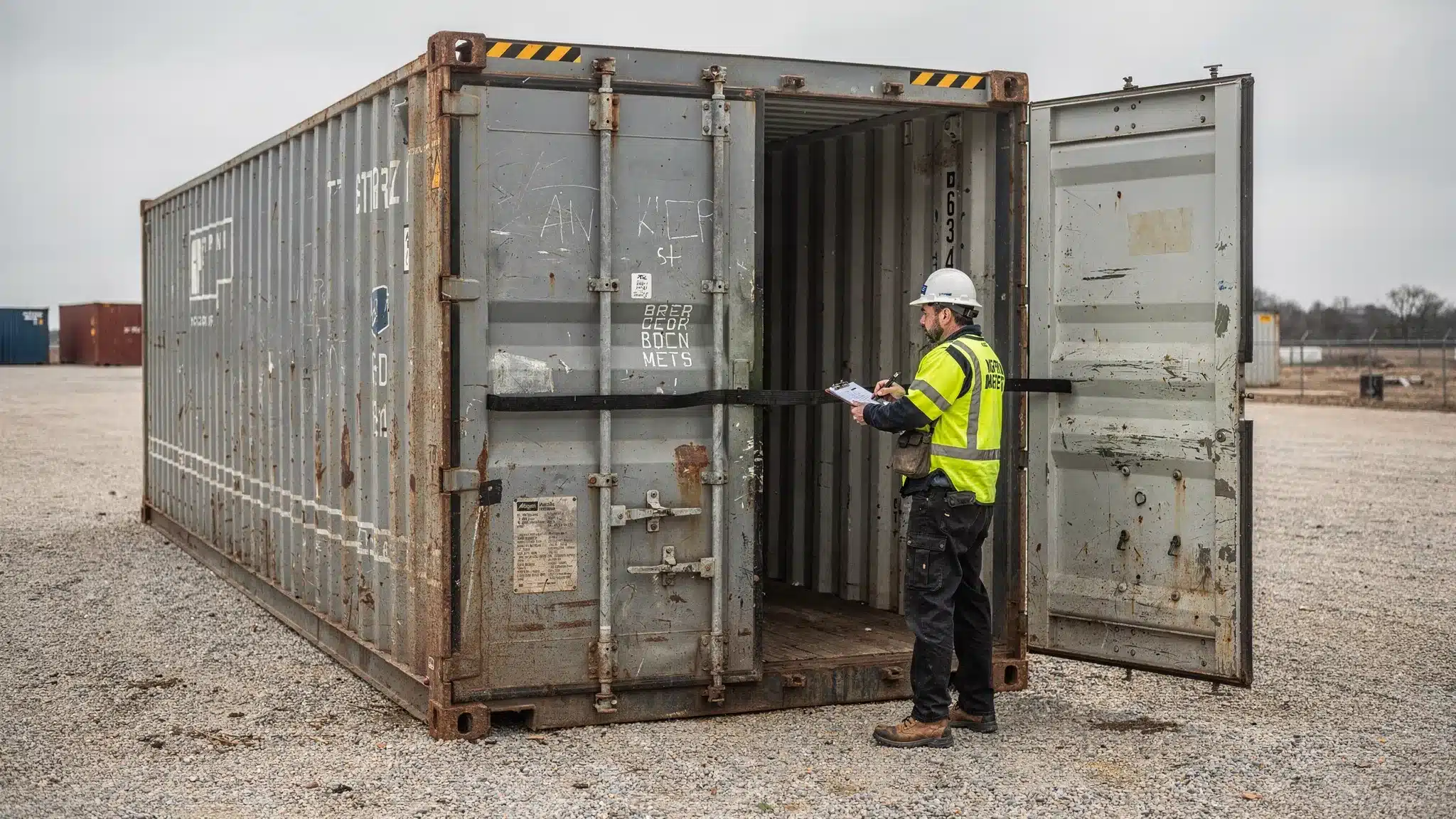
Understand Container Condition Grades Before Inspection
Used freight containers are sold under different condition labels. These labels are useful, but they are not a substitute for inspection. Two containers may both be called “used,” yet one may be clean and cargo-worthy while the other needs door repairs, roof patching, or flooring work.
For most U.S. buyers, the right condition depends on the project. A construction company storing tools may prioritize wind and watertight performance. A logistics company shipping goods may need a cargo-worthy unit. A homeowner building a container studio may want fewer dents and a cleaner interior.
| Condition grade | What it usually means | Best for |
|---|---|---|
| One-trip or new | Used for one cargo trip, minimal wear, cleaner appearance | Retail projects, conversions, long-term premium storage |
| Cargo-worthy | Structurally sound and suitable for cargo transport, subject to inspection and documentation needs | Freight use, export planning, heavy-duty storage |
| Wind and watertight | Keeps out wind and rain, usually with visible cosmetic wear | Jobsite storage, farm storage, business inventory |
| As-is | Sold in current condition, may have leaks, holes, or repair needs | Buyers who can inspect in person and handle repairs |
| Refurbished | Used unit repaired and often repainted | Buyers who want better appearance without buying new |
If you need the container for international shipping, ask about current certification and documentation before purchase. The International Maritime Organization explains the safety framework for containers, including the Convention for Safe Containers, commonly associated with the CSC plate.
Exterior Inspection Tips for Used Freight Containers
Start with the outside. Used containers are built from heavy-duty Corten steel, so dents, scuffs, faded paint, and surface rust are common. Those cosmetic marks are usually acceptable for storage use. The concern is damage that compromises strength, door operation, or weather resistance.
Walk around all four sides of the container. Look at the top and bottom rails, corner posts, side panels, and visible welds. A shallow dent on a side wall may not matter. A sharp crease near a corner post, a bent bottom rail, or a large roof dent that holds water should raise questions.
Check the Roof Carefully
The roof is one of the most important areas to inspect because leaks often start there. If you cannot safely view the roof from above, inspect it from inside using the daylight test. Close the doors and look for pinholes or light entering through the ceiling, upper side rails, or repaired areas.
Avoid climbing on a container roof unless you have proper equipment and safe access. Container roofs are strong but not designed for unsafe foot traffic, especially if corrosion or prior repairs are present.
Common roof red flags include deep rust, holes, poor patch jobs, large dents that collect water, and visible separation near roof seams. If a roof has been repaired, the repair should look clean, sealed, and structurally sound.
Separate Cosmetic Rust From Structural Rust
Not all rust is a deal breaker. Surface rust is common on used freight containers and usually does not affect performance. Structural corrosion is different. Flaking steel, holes, rusted door thresholds, weak crossmembers, and corrosion around corner posts can reduce the container’s useful life.
Use this simple comparison when evaluating rust:
| Finding | Usually acceptable | Red flag |
|---|---|---|
| Surface rust | Light rust on paint or scratches | Deep pitting, flaking, rust holes |
| Dents | Shallow side-panel dents | Bent frame, crushed corner posts, roof dents holding water |
| Repairs | Neat welded patches or sealed repairs | Temporary patches, loose caulk, visible gaps |
| Paint wear | Fading, scuffs, old markings | Corrosion spreading under large paint blisters |
Door, Seal, and Locking Gear Inspection
A used freight container is only useful if the doors open, close, seal, and lock properly. Door problems are especially frustrating after delivery because a loaded container with misaligned doors can become difficult to access.
Open and close both cargo doors if you are inspecting in person. The handles should move without excessive force. Hinges should not be broken or severely rusted. Locking rods should rotate into the top and bottom cam keepers. The doors should meet evenly in the center without a wide gap.
Door gaskets also matter. Look for cracked, missing, flattened, or detached rubber seals. A small cosmetic crack may not be serious, but missing sections can allow water, dust, and insects inside.
If security is a priority, inspect the lockbox or ask whether one can be added. A strong container with weak locking protection may not be enough for tools, equipment, or inventory.
Interior and Floor Inspection Tips
Once inside, use your senses. The container should not smell strongly of chemicals, fuel, mold, or rot. Minor odors from prior cargo or age may fade, but strong odors can be a problem for household goods, retail inventory, food-adjacent storage, or residential conversion projects.
The floor should feel solid underfoot. Most standard freight containers have marine-grade plywood flooring. Scratches, stains, and forklift marks are normal on used units. Soft spots, holes, delamination, severe oil saturation, or raised floor sections should be discussed before purchase.
A practical interior check includes closing the doors during daylight and looking for light entering from the roof, wall seams, door seals, and floor edges. If light comes through, water can often come through too.
Frame, Corner Castings, and Underside Checks
The frame gives the container its strength. Even if you are using the unit only for storage, frame damage can affect delivery, placement, and long-term stability.
Pay close attention to the corner castings, corner posts, bottom side rails, and visible underside crossmembers. Corner castings are the heavy steel fittings at the container’s corners, used for lifting, securing, and stacking. Damage in these areas is more serious than a dent in a side panel.
For cargo use, structural integrity is critical. For storage, the container should still sit level, close properly, and withstand weather. If a unit looks twisted, has doors that will not align, or shows major frame repairs, request another option.
What to Ask When Buying Used Freight Containers Online
Many U.S. buyers purchase containers online because it is faster and more convenient than visiting multiple yards. That can work well, but only if the seller provides clear condition details and transparent delivery information.
Before you buy, ask for recent photos of the actual container or representative inventory from the same grade. Confirm whether the unit is cargo-worthy, wind and watertight, refurbished, one-trip, or sold as-is. Also confirm whether the quote includes delivery, taxes, offload method, and any access-related fees.
A reliable seller should be able to explain the condition grade in plain language. Be cautious if the listing uses vague phrases like “good condition” without describing the roof, doors, seals, floor, and frame.
Good questions to ask include:
- Is the container wind and watertight?
- Is it cargo-worthy, and is documentation available if needed?
- Are the doors, seals, floor, and roof inspected before dispatch?
- Does the price include delivery to my ZIP code?
- What delivery truck will be used, and how much space is required?
- Can I choose door orientation at placement?
Global Containers Line offers secure online ordering, transparent pricing, and inspected inventory for buyers across the USA.
Pricing: What Affects Used Freight Container Costs?
Used freight container prices depend on size, condition, location, availability, delivery distance, and current market demand. A low sticker price may not be the best deal if delivery is excluded or the unit needs repairs.
For 2026 planning purposes, many U.S. buyers can expect used standard containers to fall within broad ranges like the ones below. These are general market ranges, not a guaranteed quote. Final pricing depends on your ZIP code, container condition, inventory, delivery access, and any add-ons.
| Container size and condition | Typical U.S. planning range | Common buyer use |
|---|---|---|
| Used 20ft wind and watertight or cargo-worthy | $1,800 to $3,500 plus delivery | Jobsite tools, home storage, farm supplies, small business inventory |
| Used 40ft wind and watertight or cargo-worthy | $2,400 to $5,000 plus delivery | Larger storage, construction materials, equipment, commercial use |
| Used 40ft high cube | $2,800 to $5,800 plus delivery | Taller equipment, palletized goods, conversion projects |
| New or one-trip containers | Usually higher than used units | Cleaner appearance, longer service life, premium projects |
If you need a compact unit for a jobsite, driveway, or smaller storage area, browse our 20ft shipping containers. If you need maximum storage capacity or a better cost-per-square-foot option, compare our 40ft shipping containers.
Delivery Tips for U.S. Buyers
Delivery is a major part of the buying process. A container that is in great condition can still create problems if the site is not ready. Before delivery, choose a level, firm location with enough clearance for the truck, trailer, and offload method.
Global Containers Line provides fast nationwide delivery across the United States, serving major cities such as Houston, Dallas, Atlanta, Phoenix, Miami, Los Angeles, Tampa, Jacksonville, Orlando, and San Antonio, as well as many surrounding areas.
Tell your supplier about gates, slopes, low branches, overhead wires, tight turns, soft ground, and limited access roads. Also confirm door orientation before the truck arrives. If the doors need to face a driveway, loading area, barn, storefront, or jobsite entrance, that should be planned in advance.
On delivery day, perform a quick arrival inspection before the driver leaves when possible. Confirm the container size, door orientation, visible condition, and any damage that may have occurred in transit. Take photos for your records.
Red Flags When Shopping for Used Freight Containers for Sale
The used container market includes reputable suppliers, brokers, marketplaces, and private sellers. Most deals are straightforward, but buyers should watch for warning signs that could lead to hidden costs or poor condition.
Be careful with prices that seem far below the market, especially if delivery is not included. Extremely low offers may involve as-is containers, unavailable inventory, unclear delivery fees, or scam listings.
Common red flags include:
- No recent photos or only stock images
- No clear condition grade
- Seller cannot explain whether the unit is cargo-worthy or wind and watertight
- No delivered quote to your ZIP code
- No secure checkout or professional invoice
- Pressure to pay immediately by wire transfer only
- Vague delivery timeline or no site access discussion
- Refusal to answer questions about roof, floor, doors, or seals
A trusted supplier should make it easy to understand what you are buying, what it costs, and how it will arrive.
Match the Container to Your Project
The best used freight container is not always the cheapest one. It is the one that fits your use, location, and risk level.
For construction storage, a wind and watertight used container with strong doors and a solid floor is often the right choice. For logistics or cargo movement, cargo-worthy condition and documentation may be more important. For retail conversions, backyard offices, workshops, or residential projects, appearance and interior cleanliness may justify paying more for a newer or refurbished unit.
Homeowners should also check local zoning, HOA rules, and permit requirements before placing a container long-term. Requirements vary by city, county, and state. A container that works on a rural farm in Texas may face different rules in a residential neighborhood in Florida or California.
Frequently Asked Questions
What should I inspect before buying a used freight container? Inspect the roof, doors, seals, floor, frame, corner posts, interior, and documentation. Pay special attention to leaks, rust holes, soft flooring, bent structural parts, and doors that do not close properly.
Are used freight containers wind and watertight? Many used freight containers are sold as wind and watertight, but you should confirm this with the seller. Global Containers Line supplies inspected containers that are cargo-worthy, wind and watertight before dispatch.
How much do used freight containers for sale cost? Pricing varies by size, condition, location, and delivery. As a general U.S. planning range, used 20ft containers often run about $1,800 to $3,500 plus delivery, while used 40ft containers often run about $2,400 to $5,000 plus delivery.
Can I buy a used freight container online and have it delivered? Yes. Many buyers order online and schedule delivery to their jobsite, farm, business, or home. Confirm the condition grade, delivered price, truck access, and offload requirements before purchasing.
Do I need a cargo-worthy container for storage? Not always. For stationary storage, a wind and watertight container may be enough. If you plan to transport cargo, export goods, or use the container in freight service, ask about cargo-worthy condition and required documentation.
What should I do when the container arrives? Check the size, visible condition, door operation, seals, floor, and placement before loading it. Take photos on arrival and report any concerns immediately.
Browse Inspected Used Freight Containers With Nationwide Delivery
Buying used freight containers for sale should not feel like a guessing game. Global Containers Line helps U.S. buyers compare the right size, condition, and delivery option for storage, construction, commercial, farm, logistics, and residential projects.
Browse available 20ft shipping containers and 40ft shipping containers, or visit Global Containers Line to request a quote. We offer transparent pricing, secure online ordering, inspected containers, and fast nationwide delivery across the United States.