
When you search for storage containers for sale near me, you are usually trying to solve a practical problem fast. You may need secure job site storage in Dallas, extra farm storage in Georgia, inventory space in Miami, or a backyard storage container in Arizona. The closest listing is not always the best deal, though.
A good storage container purchase comes down to more than distance. You need to compare the total delivered price, container condition, size, supplier reliability, and whether the delivery site is ready for a truck. This guide breaks down what U.S. buyers should compare before ordering a new or used storage container.
Quick Answer: What Should You Compare Before Buying a Storage Container Near You?
When comparing storage containers for sale near you, do not choose based on the lowest advertised price alone. Compare the all-in delivered cost, size, condition grade, roof and floor quality, door operation, delivery method, site access, payment security, and seller reputation.
| What to compare | Why it matters | Question to ask |
|---|---|---|
| Total delivered price | A cheap unit can become expensive after delivery and fees | Is this price delivered to my ZIP code? |
| Container condition | Condition affects lifespan, weather protection, and security | Is it wind and watertight, cargo-worthy, new, or used? |
| Size and layout | The right size prevents wasted money and space problems | Do I need 10ft, 20ft, 40ft, or high cube? |
| Delivery access | Poor access can cause re-delivery or equipment costs | Can a tilt-bed truck enter, turn, and offload safely? |
| Supplier transparency | Reduces the risk of scams or surprise damage | Can I get clear pricing, condition details, and secure checkout? |
Global Containers Line supplies new and used shipping containers across the United States, with fast nationwide delivery, secure online ordering, and inspected units for storage, construction, commercial, residential, and farm use.
Compare Local Availability, Not Just Distance
A search for storage containers near me may show local sellers, brokers, classified ads, and national suppliers. Being physically close can help, but it does not automatically mean better pricing, better container condition, or faster delivery.
In major markets like Houston, Dallas, Atlanta, Los Angeles, Phoenix, Miami, Orlando, Tampa, Jacksonville, and San Antonio, container availability can change quickly. Port cities may have more supply, while inland areas may depend more on trucking routes and depot inventory. Rural buyers may find that a trusted nationwide supplier can deliver a better inspected unit than a small local listing with limited stock.
The most useful comparison is not local vs. national. It is whether the supplier can provide the right container, in the right condition, at a clear delivered price for your location.
Compare Container Sizes Before You Compare Prices
The cheapest storage container is not always the best value if it is too small, too large, or difficult to place. Start by matching container size to your project.
10ft Storage Containers
A 10ft container works well when space is tight. Homeowners use them for seasonal storage, tools, small equipment, and renovation supplies. Contractors may use them on compact job sites where a larger truck drop-off is not practical. The tradeoff is availability, since 10ft containers are often less common than 20ft and 40ft units.
20ft Storage Containers
A 20ft container is one of the most popular choices because it balances capacity, price, and placement flexibility. It is easier to fit on driveways, small commercial lots, farms, and construction sites than a 40ft unit.
If you need a practical all-purpose option, compare available 20ft shipping containers before choosing a larger size. A 20ft unit is often enough for tools, palletized goods, household items, landscaping equipment, and small business inventory.
40ft Storage Containers
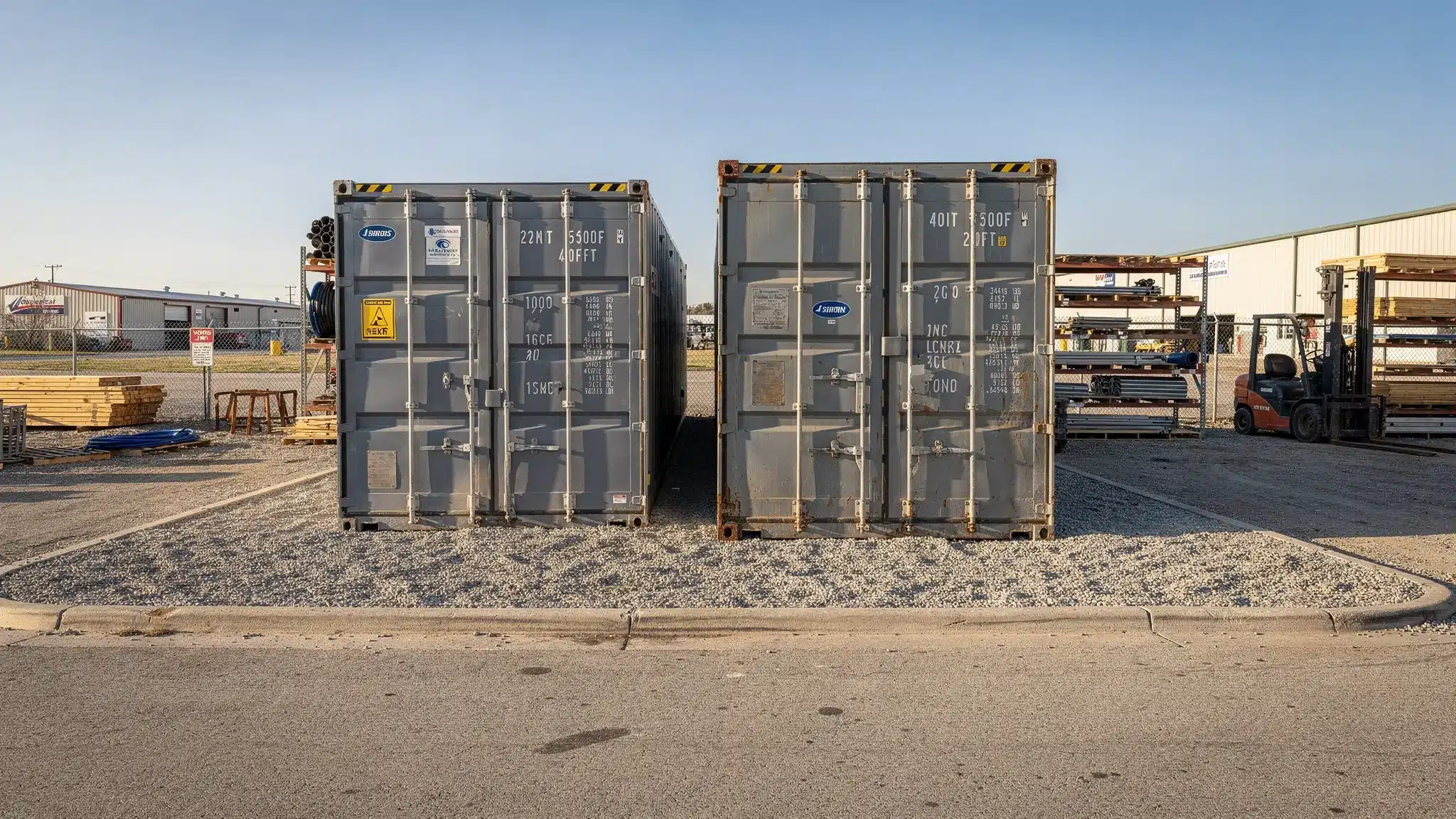
A 40ft container gives you about twice the length of a 20ft unit and is often a better value per square foot when you have enough site space. Contractors, logistics companies, retailers, farms, and real estate developers often choose 40ft units for bulk storage or large equipment.
If you need maximum storage capacity, compare 40ft shipping containers and ask whether a standard or high cube model is the better fit. High cube containers add extra height, which can be valuable for racking, taller equipment, or conversion projects.
| Size | Best for | What to compare |
|---|---|---|
| 10ft | Tight spaces, small tools, residential storage | Availability and delivery access |
| 20ft | Job sites, homes, farms, small businesses | Best balance of capacity and placement |
| 40ft | Bulk storage, commercial inventory, large equipment | Site length, turning space, and delivery method |
| 40ft high cube | Tall cargo, racking, conversions | Extra height, price premium, clearance needs |
Compare Container Condition Carefully
Condition is one of the biggest reasons prices vary. Two storage containers of the same size can differ by thousands of dollars depending on age, rust, door quality, floor condition, and whether the unit is new or used.
New and One-Trip Containers
New and one-trip containers are typically the best choice when appearance, long-term use, and clean interiors matter. They usually have fewer dents, less rust, newer flooring, and better paint. They are popular for residential properties, retail storage, custom projects, and businesses that want a more professional appearance.
Expect to pay more for new or one-trip units, but the added cost can be worth it if you need a cleaner, more predictable container.
Used Wind and Watertight Containers
Used wind and watertight containers are common for storage. They may show cosmetic wear, surface rust, dents, and previous repairs, but they should keep rain and wind out when properly inspected. For most construction, farm, and equipment storage needs, this condition can deliver strong value.
Cargo-Worthy Containers
Cargo-worthy containers are structurally sound and suitable for cargo use, subject to the needed documentation and inspection status. They are often chosen when buyers need stronger assurance about the container frame, floors, doors, and structural integrity.
Global Containers Line provides containers that are cargo-worthy, wind and watertight, and thoroughly inspected before dispatch, helping buyers avoid the uncertainty that can come with vague local listings.
As-Is Containers
As-is containers are usually the lowest-cost option, but they carry the most risk. They may have roof leaks, damaged floors, hard-to-open doors, or structural problems. For secure storage, as-is units are usually not the best choice unless you inspect the container in person and are prepared for repairs.
Compare Pricing Based on Delivered Cost
Pricing for storage containers varies by size, condition, city, inventory levels, fuel costs, and delivery distance. A low advertised price may not include delivery, offload, taxes, or access-related charges.
For general 2026 budgeting in the U.S., buyers often see market ranges like these:
| Container type | Common use | Typical U.S. market range before special modifications |
|---|---|---|
| Used 20ft storage container | Job sites, farms, residential storage | About $1,800 to $3,200 |
| New or one-trip 20ft container | Clean storage, business use, custom projects | About $3,000 to $5,000 |
| Used 40ft storage container | Bulk storage, commercial inventory, equipment | About $2,400 to $5,000 |
| New or one-trip 40ft container | Long-term storage, retail, conversion projects | About $4,500 to $7,000 or more |
| 40ft high cube container | Tall cargo, racking, conversions | Often $300 to $800 more than standard 40ft |
These are general market estimates, not guaranteed pricing. Your actual quote depends on your delivery ZIP code, container condition, current inventory, and whether you need add-ons like a lockbox, vents, shelving, roll-up doors, or custom modifications.
When comparing quotes, ask for an itemized price that separates the container cost, delivery, offload method, taxes, and any optional upgrades. This makes it easier to compare suppliers fairly.
Compare Delivery Speed and Offload Requirements
Delivery is where many storage container purchases go wrong. A seller may have a good unit, but if the site is not ready or the truck cannot access the drop location, the delivery can be delayed or become more expensive.
Global Containers Line offers fast nationwide delivery across the United States. That matters for buyers who need containers delivered to job sites, farms, warehouses, retail lots, construction projects, or homes without coordinating trucking on their own.
Before you order, compare these delivery factors:
| Delivery factor | What to check | Why it affects your purchase |
|---|---|---|
| Truck access | Road width, turns, gates, driveways | Delivery trucks need room to enter and exit safely |
| Ground surface | Gravel, concrete, asphalt, compact soil | Soft or uneven ground can make placement difficult |
| Overhead clearance | Trees, wires, rooflines, signs | Tilt-bed delivery requires vertical clearance |
| Door orientation | Doors facing street, building, or work area | Wrong orientation can reduce usability |
| Local restrictions | HOA rules, zoning, permits, setbacks | Some properties require approval before placement |
If your site is in a dense city like Los Angeles, Miami, or Atlanta, delivery planning may involve traffic, tight streets, overhead utilities, and limited staging space. If your site is rural, the biggest concerns may be road conditions, long driveways, and turnaround space.
Compare Security Features for Storage Use
Most buyers looking for storage containers for sale near me care about security. A steel container is naturally strong, but the details matter.
Check that the doors close properly, the locking bars turn smoothly, and the gaskets are in good condition. For job sites and business storage, a lockbox or puck lock can improve protection against bolt cutters. If you are storing higher-value tools, equipment, inventory, or farm supplies, do not treat the lock as an afterthought.
A secure storage container should have:
- Solid cargo doors with working locking bars
- Good door seals and no major gaps
- A sound roof with no active leaks
- A strong floor without soft spots or major holes
- Lock protection for the level of risk at your site
Compare Supplier Reputation and Payment Safety
The container market has many legitimate suppliers, but it also attracts low-quality listings and scams. Be careful with sellers who advertise prices far below the market, refuse to provide condition details, or push unsafe payment methods.
A trustworthy supplier should provide clear pricing, condition descriptions, secure payment options, realistic delivery timelines, and responsive customer support. They should also understand the needs of contractors, logistics businesses, farms, homeowners, and commercial buyers across different states.
Global Containers Line is positioned for U.S. buyers who want inspected containers, transparent pricing, secure checkout, and reliable nationwide delivery. Customers can choose from multiple sizes and configurations, including 10ft, 20ft, 40ft, and high cube containers, depending on current availability.
Compare Based on Your Use Case
The best storage container depends on what you plan to store and how long you plan to use it.
| Buyer type | Recommended comparison focus | Common choice |
|---|---|---|
| Construction company | Security, fast delivery, rugged condition | Used 20ft or 40ft wind and watertight |
| Small business | Clean interior, access, inventory capacity | 20ft or 40ft container |
| Farm owner | Weather resistance, equipment storage, location access | Used 20ft, 40ft, or high cube |
| Homeowner | Appearance, placement, size, local rules | 10ft or 20ft container |
| Real estate developer | Multiple units, delivery scheduling, site logistics | 40ft or high cube containers |
| Logistics business | Cargo-worthy condition, documentation, capacity | 20ft or 40ft cargo-worthy units |
If you are unsure, think about access first. A 40ft container may offer better value per square foot, but a 20ft container may be the smarter choice if the site is tight, temporary, or residential.
Red Flags When Comparing Storage Containers Near You
Some low-priced listings look attractive until you ask the right questions. Watch for red flags before sending payment or scheduling delivery.
Be cautious if the seller cannot explain the container grade, does not provide an itemized delivered quote, avoids questions about roof leaks or floor condition, or has no secure checkout process. Also be careful with listings that use generic photos only, claim every used unit is like new, or pressure you to pay immediately before confirming delivery details.
A good supplier will help you understand the tradeoffs between price, condition, size, and delivery instead of pushing the cheapest unit.
Simple Checklist for Comparing Storage Containers for Sale Near You
Use this checklist before you buy:
- Confirm the size: 10ft, 20ft, 40ft, or high cube
- Confirm the condition: new, used, cargo-worthy, or wind and watertight
- Ask whether the quoted price includes delivery to your ZIP code
- Check if the doors, seals, roof, and floor are inspected
- Confirm the delivery method and truck access requirements
- Ask about payment security and checkout options
- Review local zoning, HOA, or permit requirements before placement
- Choose a supplier that can support delivery in your city or state
For a deeper overview of container buying basics, you can also review the Ultimate Shipping Container Buying Guide.
Frequently Asked Questions
How much do storage containers for sale near me cost? Storage container prices vary by size, condition, location, and delivery distance. Used 20ft containers commonly fall around $1,800 to $3,200, while used 40ft units often range from about $2,400 to $5,000. New or one-trip units cost more. Always request a delivered quote for your ZIP code.
Is a used storage container good enough for long-term storage? Yes, a used wind and watertight or cargo-worthy container is often a strong choice for long-term storage. The key is to confirm that the roof, doors, seals, floor, and frame have been inspected and that the unit is suitable for your use.
Should I buy a 20ft or 40ft storage container? Choose a 20ft container if you need easier placement, driveway access, or moderate storage capacity. Choose a 40ft container if you have enough space and need better cost per square foot for bulk storage, equipment, or commercial inventory.
How fast can a storage container be delivered? Delivery timing depends on inventory, distance, truck availability, and site readiness. Global Containers Line offers fast nationwide delivery across the United States and can help buyers plan delivery based on location and access.
Do I need a permit for a storage container? Permit rules depend on your city, county, HOA, zoning, use case, and how long the container will stay on site. Residential and commercial properties may have different rules. Check local requirements before ordering.
What condition should I avoid for secure storage? Avoid as-is containers unless you inspect them carefully and are comfortable with possible repairs. For secure storage, a wind and watertight or cargo-worthy unit is usually the better choice.
Ready to Compare Storage Containers Near You?
If you are comparing storage containers for sale near you, Global Containers Line can help you choose the right size, condition, and delivery option for your location. We supply new and used shipping containers for storage, construction, commercial, residential, farm, and custom projects, with transparent pricing, secure online ordering, and fast nationwide delivery across the United States.
Browse available containers at Global Containers Line or request a delivered quote for your ZIP code today. Whether you need a compact 20ft unit or a high-capacity 40ft container, our team can help you compare the options and buy with confidence.