
Buying freight containers for sale sounds simple until you start comparing listings and realize that “new,” “used,” “cargo-worthy,” and “wind and watertight” can mean very different things depending on the seller.
This guide breaks down the real tradeoffs between new vs used freight containers, the questions that protect your budget, and what to confirm about pricing, delivery, and condition before you pay. It’s written for U.S. buyers who need a container that shows up on time and performs the way it should, whether you’re in Houston, Dallas, Atlanta, Phoenix, Miami, Los Angeles, or a smaller town in between.
Freight containers for sale: what “new” and “used” usually mean
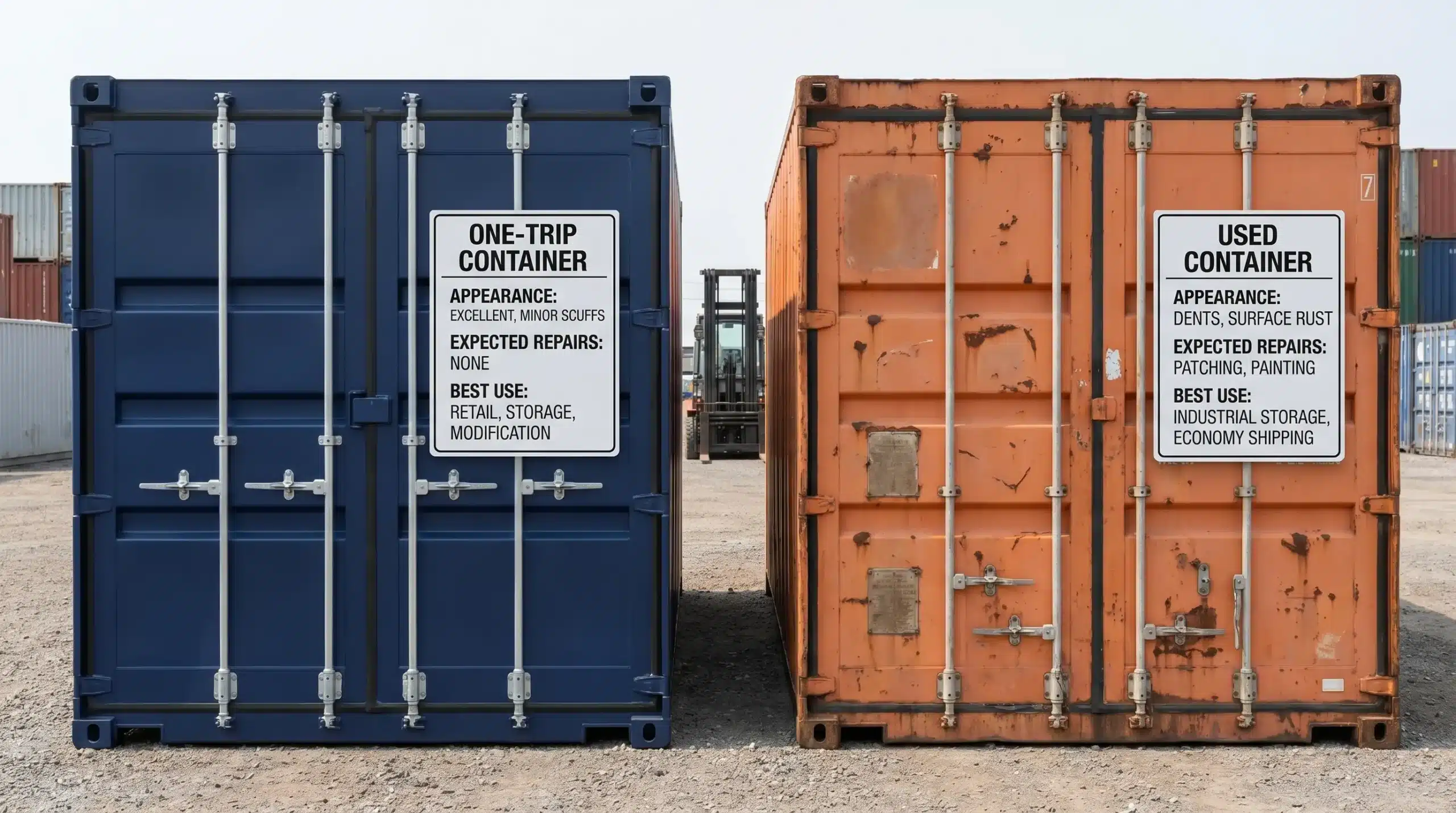
New (often called “one-trip”) freight containers
A “new” container in the U.S. resale market is typically a one-trip unit, meaning it made a single loaded ocean voyage and was then sold. Buyers choose these when appearance matters or when they want the most predictable starting condition for a long-term project.
Common reasons to buy new:
- You want the cleanest, straightest unit for a conversion or customer-facing business.
- You want fewer repairs and less door/seal troubleshooting.
- You plan to keep the container for years and want the best baseline condition.
Used freight containers
Used containers are the value option, but “used” spans a wide range. A used unit could be a solid storage container with cosmetic dents and surface rust, or it could be heavily worn.
Used is a smart buy when:
- You need secure storage and you can accept cosmetic wear.
- You want the best cost per square foot.
- You need multiple units for a job site, farm, or yard.
The key is to buy based on condition standard, not just the word “used.”
The condition grades that matter (and what to match them to)
Different sellers use different labels, so always ask for the exact condition standard being sold. Here are the most common grades U.S. buyers will see.
| Grade/label | What it’s best for | What you should expect | What to watch out for |
|---|---|---|---|
| One-trip (new) | Conversions, retail, long-term storage | Very minimal wear, easier doors, cleaner interior | Higher upfront cost, availability varies by region |
| Wind & watertight (WWT) | Storage, tools, equipment, farm use | No active roof leaks, doors close and seal | Cosmetic dents/rust, prior repairs, verify seals |
| Cargo-worthy (CW) | Shipping use cases and rugged storage | Structurally fit, typically suitable for freight service (as defined by seller) | “CW” does not always mean export-ready today, ask about documentation |
| As-is | Lowest-budget storage where appearance and repairs are acceptable | May need repairs, may have leaks or door issues | Not recommended for most buyers unless you can inspect in person |
If you want deeper definitions, Global Containers Line also explains grades and what they include in its buying resources, including guidance on avoiding surprise fees.
New vs used freight containers: the real tradeoffs
1) Price vs total cost
Used containers usually cost less upfront, but “cheaper” can flip fast if the unit arrives with door problems, floor damage, or water intrusion that forces repairs.
A smarter comparison is:
- Delivered price (container + trucking + offload)
- Expected repairs (doors, gaskets, patches, flooring)
- Downtime risk (especially for construction and logistics)
2) Appearance vs function
If the container will sit at a customer-facing location (retail, event, hospitality, or branded job site), many buyers choose one-trip because it’s easier to paint, present, and modify.
If it’s behind a fence for tools or inventory, a used WWT or cargo-worthy unit is often the best value.
3) Lead time and availability in your area
Availability can vary by market. Port-adjacent areas (like Los Angeles, Houston, Jacksonville, and Miami) often have more turnover, while inland markets can have more delivery variability depending on trucking.
Global Containers Line coordinates fast nationwide delivery across the United States, including major metros and many rural locations, so buyers can get a delivered quote instead of guessing.
What to ask before you buy freight containers for sale (copy/paste checklist)
These questions are designed to help you compare sellers “apples to apples,” prevent hidden costs, and confirm the container will actually work for your use.
Questions about container condition (new or used)
- What grade is it exactly (one-trip, WWT, cargo-worthy, refurbished, as-is)? Ask the seller to define the grade in writing.
- Is it guaranteed wind and watertight at delivery? If storage is your goal, this matters more than cosmetics.
- Are the doors easy to open and close? Stiff doors can indicate frame twist, hinge wear, or hard ground storage.
- What is the floor condition? Ask about soft spots, delamination, heavy stains, and prior chemical exposure.
- Any roof patches or welded repairs? Repairs are common, you just want to know what you’re buying.
- Can you provide recent photos of the exact unit or units? If you are buying online, photos reduce surprises.
Questions about pricing (so you can compare quotes correctly)
- Is this price delivered to my ZIP code, or pickup? Many “great deals” are pickup-only.
- What exactly is included in the delivered price? Confirm container, trucking, and any standard fees.
- What would trigger extra charges? Common triggers include difficult access, re-delivery, or special offload needs.
- Is sales tax included or added at checkout? Clarify upfront.
If you want a dedicated breakdown of what can change the final number, see this internal guide: Shipping Containers for Sale: How to Avoid Hidden Fees.
Questions about delivery and site access (where most surprises happen)
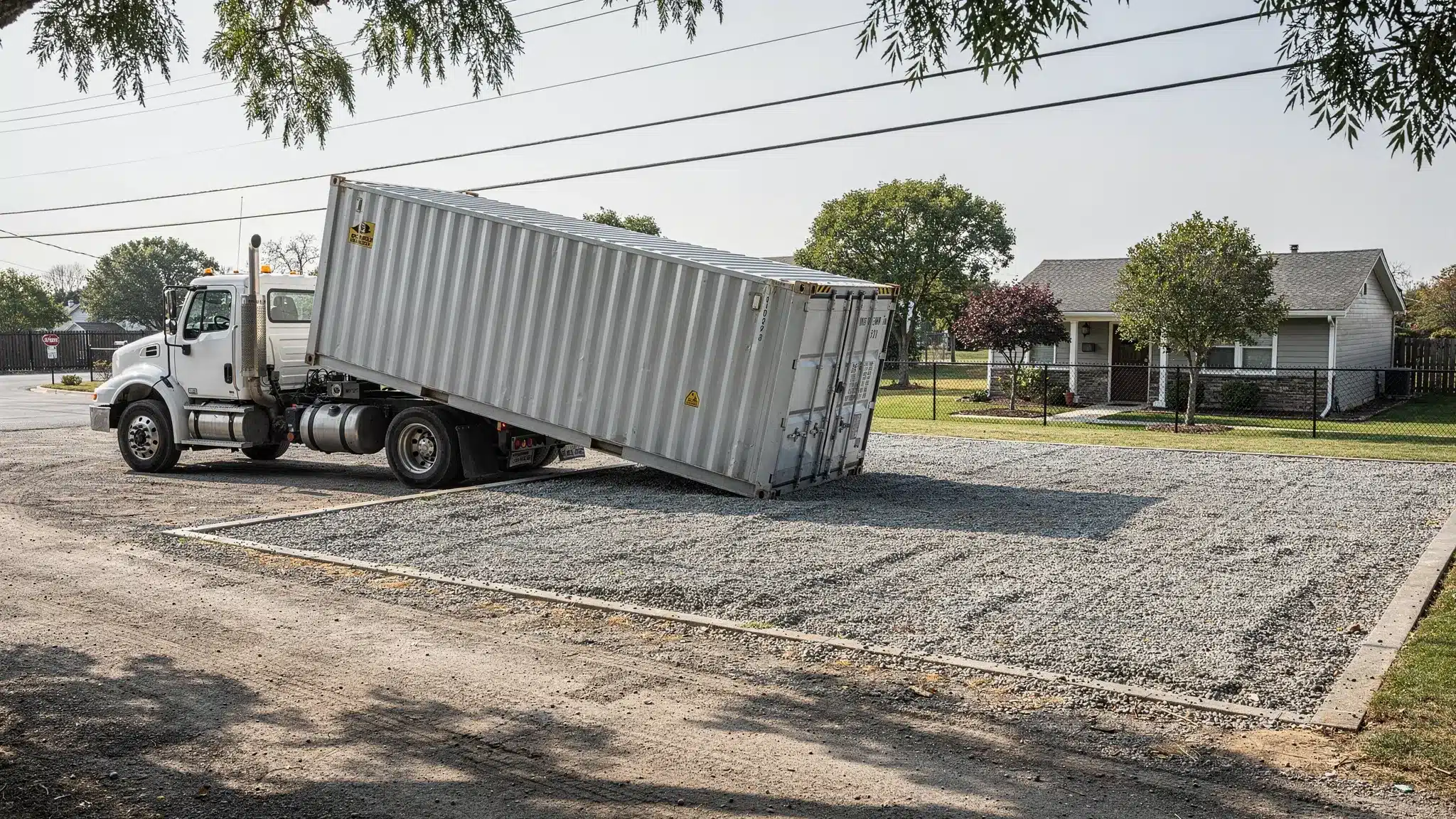
- What delivery method will be used (tilt-bed, flatbed, chassis)? The method impacts space requirements and offload.
- Do I need to provide equipment to unload? Some deliveries include offload, others require a forklift or crane.
- How much clearance do you need? Confirm driveway width, turning radius, and overhead obstacles.
- Can I choose door orientation on drop-off? This is an easy detail to miss.
- What is the estimated delivery window once I order? Ask for realistic scheduling guidance.
For a deeper delivery overview, this resource is helpful: Transporting a Shipping Container: Permits, Costs, Timelines.
Pricing expectations: what freight containers often cost in the U.S.
Prices change by region, steel markets, inventory, and delivery distance, so the only reliable number is a delivered quote to your ZIP code.
That said, many U.S. buyers commonly see ranges similar to the following for standard containers, depending on condition and location:
| Container type | Typical use | Common pricing range you may see (delivered, varies by market) |
|---|---|---|
| 20ft used (WWT or cargo-worthy) | Storage, job sites, farms | Often around the low-to-mid thousands |
| 20ft one-trip (new) | Conversions, long-term clean storage | Often higher than used by a meaningful margin |
| 40ft used (WWT or cargo-worthy) | Bulk storage, equipment, inventory | Often around the mid-thousands |
| 40ft one-trip (new) | Conversions, commercial projects | Often higher than used, plus delivery considerations |
If you want city-specific examples, Global Containers Line publishes local pricing guides for markets like Los Angeles, Dallas, Orlando, Houston, Phoenix, and Miami.
Choosing between 20ft and 40ft (quick decision rules)
If you’re stuck between sizes, use the decision that prevents the most common regret: buying too small.
When a 20ft container is usually the best fit
A 20ft is popular because it’s easier to place and works well for:
- Construction tool storage
- Home renovation storage
- Farm feed and equipment
- Small business inventory overflow
Browse options here: 20ft shipping containers.
When a 40ft container is usually the best value
A 40ft often wins on cost per square foot and is common for:
- Large job sites
- Business storage and warehousing overflow
- Equipment storage with room to walk and organize
- Conversion projects where space matters
Browse options here: 40ft shipping containers.
If you also need help choosing height (standard vs high cube), you can reference the site’s sizing guides, but the biggest first decision is usually 20ft vs 40ft.
Red flags when shopping freight containers for sale
If you see any of the following, slow down and verify details before paying:
- The seller won’t provide recent photos or avoids condition questions.
- The offer is priced far below market, but the quote is not delivered.
- Payment is pushy, unusual, or not secure.
- The grade is described vaguely (“good condition”) without defining wind/watertight, cargo-worthy, or one-trip.
- Delivery details are unclear (no offload method, no access questions, no timeline).
A container is a steel box, but the transaction should be professional.
Why U.S. buyers choose Global Containers Line
When you buy freight containers for sale online, you want two things: the container you expected and a delivery process that does not create extra problems.
Global Containers Line is a USA-based supplier offering:
- New and used shipping containers (10ft, 20ft, 40ft, and high cube)
- Units that are cargo-worthy, wind and watertight, and thoroughly inspected before dispatch
- Transparent pricing with no hidden fees
- Secure online ordering
- Fast nationwide delivery across the United States, including major markets like Houston, Dallas, Atlanta, Phoenix, and Miami
Frequently Asked Questions
Are used freight containers worth buying? Yes, if the container’s grade matches your use. For storage, many buyers choose used wind-and-watertight units because they offer strong value when delivery and condition are clearly defined.
What should I ask before buying a used container? Confirm the grade definition, ask for recent photos, verify door function and floor condition, and get an itemized delivered quote to your ZIP code including delivery method and any possible access fees.
How fast can a freight container be delivered in the USA? Delivery timing depends on inventory and trucking schedules in your region. Global Containers Line offers fast nationwide delivery across the United States and can provide delivery expectations with your quote.
What does “wind and watertight” actually guarantee? It generally means the container is sealed against wind and rain for storage use. Cosmetic dents and surface rust are common on used units, so ask what the seller’s WWT standard includes.
Is a cargo-worthy container automatically ready for international shipping? Not always. “Cargo-worthy” typically indicates structural fitness for freight service, but export requirements can involve documentation and inspection standards. If you plan to ship overseas, ask about CSC documentation and current compliance.
Get a delivered quote on freight containers for sale
Ready to buy with confidence? Browse available inventory or request a delivered quote based on your ZIP code and site access.
- Shop 20ft shipping containers
- Shop 40ft shipping containers
- Visit Global Containers Line to browse containers for sale and request pricing with fast nationwide U.S. delivery