
Buying seaworthy containers for sale can feel simple until you hit industry labels like cargo-worthy, wind and watertight, and as-is. Those terms are not marketing fluff, they tell you what a container was inspected for and what you can reasonably expect when it shows up at your site.
If you are purchasing for export, intermodal moves (truck, rail, port), or you simply want a tougher used unit for long-term storage, “cargo-worthy” is one of the most important condition grades to understand.
Below is a plain-English guide to what cargo-worthy really means, how to verify it, and how pricing and nationwide delivery typically work across the United States.
What does “cargo-worthy” mean on a shipping container?
A cargo-worthy (CW) shipping container is a used container that has been inspected and judged structurally sound for transporting cargo (commonly by sea, rail, and truck).
Different sellers may use slightly different checklists, but the practical intent is consistent: a cargo-worthy unit should be fit to move freight again because its structure, doors, and shell integrity meet the expectations of transport use.
What you should expect from a cargo-worthy container
In real buyer terms, a cargo-worthy container should generally have:
- Sound structure: no major frame damage, severe twist, or compromised corner castings.
- Working doors: handles, locking bars, hinges, and door gaskets should allow the doors to close and seal.
- A secure shell: no large holes or cutouts that defeat security or weather resistance.
- Weather resistance: many cargo-worthy containers are also described as wind and watertight, but you should confirm this explicitly.
At Global Containers Line, containers are thoroughly inspected before dispatch, and we supply units that are cargo-worthy and wind and watertight, with fast nationwide delivery across the United States.
What “cargo-worthy” does not mean
This is where buyers often get surprised:
- It does not mean “like new.” Used cargo-worthy containers usually have dents, scrapes, and surface rust.
- It does not guarantee a “current” international certification date (more on the CSC plate below).
- It does not mean every used container is identical. Two cargo-worthy units can vary a lot cosmetically and even in minor repairs.
“Seaworthy” vs “cargo-worthy” vs other grades (quick comparison)
In everyday conversation, people often say “seaworthy” when they mean “good enough to ship.” In the container world, cargo-worthy is usually the clearer, inspection-based term.
Here is a buyer-friendly way to compare common grades:
| Condition label | Best for | What it usually implies | What to confirm before you buy |
|---|---|---|---|
| One-trip (new) | Clean storage, conversions, resale value | Minimal wear, doors operate smoothly, best cosmetics | Door type, exact dimensions, delivery access |
| Cargo-worthy (CW) | Freight use, rugged storage, job sites | Structurally sound, secure, doors functional, commonly weather resistant | Ask what was inspected, request door and gasket confirmation |
| Wind & watertight (WWT) | On-site storage | No active leaks, secure shell, cosmetic wear acceptable | Any patches, roof condition, door gasket condition |
| As-is | Lowest-cost projects, repairs, parts | May leak, door issues possible, dents/holes possible | Photos, known defects list, your repair plan |
If your goal is truly “seaworthy” for moving cargo, ask for cargo-worthy and then verify whether any carrier or route requirements apply to your shipment.

The CSC plate: what it is and why it matters for “seaworthy” use
If you plan to ship internationally (or your freight forwarder requires it), you will hear about the CSC plate.
CSC refers to the International Convention for Safe Containers, a global safety framework for containers used in international transport. The plate is typically mounted on the container door end and lists key manufacturing and safety information.
What buyers should know:
- A CSC plate shows the container’s approval data and other safety details.
- For active international service, carriers may require the container to have a valid re-examination date or be covered under an approved continuous examination program.
- A container can be solid and weather resistant for storage while still not meeting a specific carrier’s “current plate” requirement.
If your purchase is for export, confirm requirements with your carrier or forwarder and ask your supplier for a clear photo of the CSC plate. For background, the International Maritime Organization provides information on the convention and its purpose: IMO (International Maritime Organization).
Cargo-worthy vs wind and watertight: which one do you actually need?
A lot of U.S. buyers searching for cargo-worthy containers are not exporting at all, they want durable, secure on-site storage.
A simple decision rule:
- Choose wind and watertight if your priority is keeping weather out for tools, furniture, inventory, or equipment.
- Choose cargo-worthy if you want a used container that is more transport-ready (and often a safer bet structurally for hard use on job sites), or if you may move it multiple times.
For construction yards, farms, and industrial sites, cargo-worthy is often selected because the extra structural confidence reduces headaches when the container gets relocated or stacked.
How to verify a container is truly cargo-worthy (even when buying online)
When you buy online, you cannot rely on a single label. The best approach is to ask for proof points that map to how containers fail in real life: doors that will not seal, roofs that leak, floors that are soft, or frames that are out of square.
Ask for these photos (or a short walkthrough video)
If you cannot inspect in person, request recent, well-lit photos of:
- All four sides and both ends
- Roof (or a statement confirming roof condition if the yard cannot safely photograph it)
- Door seals and gasket areas
- Interior corners and floor
- CSC plate area (if international shipping is relevant)
A quick video of the doors being opened and closed is one of the best “real-world” checks you can get.
A practical cargo-worthy inspection checklist (what matters most)
Use this checklist as your “yes/no” filter.
Doors and locking gear
Door problems are the most common buyer complaint.
Look for:
- Locking bars that turn smoothly
- Hinges that are not bent
- Doors that close without needing excessive force
- Gaskets that are present and not severely torn
Roof and top rails
Small dents are normal on used units. Holes are not.
Confirm:
- No holes or pinholes that let daylight in
- No severe roof buckling that suggests structural damage
Floor integrity
Most standard containers use wood floors designed for cargo use.
Confirm:
- No soft spots
- No major delamination
- No persistent dampness (especially important for household storage)
Sidewalls, end walls, and frame
Cosmetic dents are common. Structural deformation is the red flag.
Confirm:
- No large cutouts from prior modifications (unless disclosed and acceptable)
- No obvious frame twist (often shows up as doors that will not align)
- Corner castings look intact
Odor and prior cargo (if it matters for your use)
If you are storing retail goods, paper products, textiles, or building a container office, ask directly whether there are strong lingering odors.
What affects the price of cargo-worthy (seaworthy) containers in the USA?
There is no single national price because container markets move with supply, steel cycles, and trucking availability. In 2026, delivered pricing is still most influenced by condition, size, and logistics to your ZIP code.
The biggest drivers of delivered cost
Here is what typically changes your quote the most:
| Cost driver | Why it changes your price | What to provide for an accurate quote |
|---|---|---|
| Container size (10ft, 20ft, 40ft, high cube) | More steel and higher transport complexity for larger units | Tell the seller the size you want and any height constraints |
| Condition grade | One-trip vs cargo-worthy vs WWT affects inspection, repairs, and availability | Specify the grade you will accept and your use case |
| Delivery distance and access | Tight streets, long drive times, rural routes, and special offload needs increase cost | Share your ZIP code, gate width, turning room, overhead obstacles |
| Regional demand | Busy markets can tighten inventory (Texas, Florida, Georgia, Arizona, California) | Tell your city and timeline so the seller can confirm stock |
If you are comparing quotes, make sure you are comparing the same scope. Some quotes are pickup only, some are delivered, and some exclude special offload needs.
How fast nationwide delivery works (and how to avoid delivery-day surprises)
Global Containers Line offers fast nationwide delivery across the United States, including major markets such as Houston and Dallas (TX), Atlanta (GA), Phoenix (AZ), Miami and Orlando (FL), and Los Angeles (CA), plus many other cities and rural areas.
Typical delivery process
Most container deliveries follow a simple sequence:
- Choose your size and condition.
- Provide delivery details (address, contact name, site notes).
- Delivery is scheduled based on inventory location and trucking.
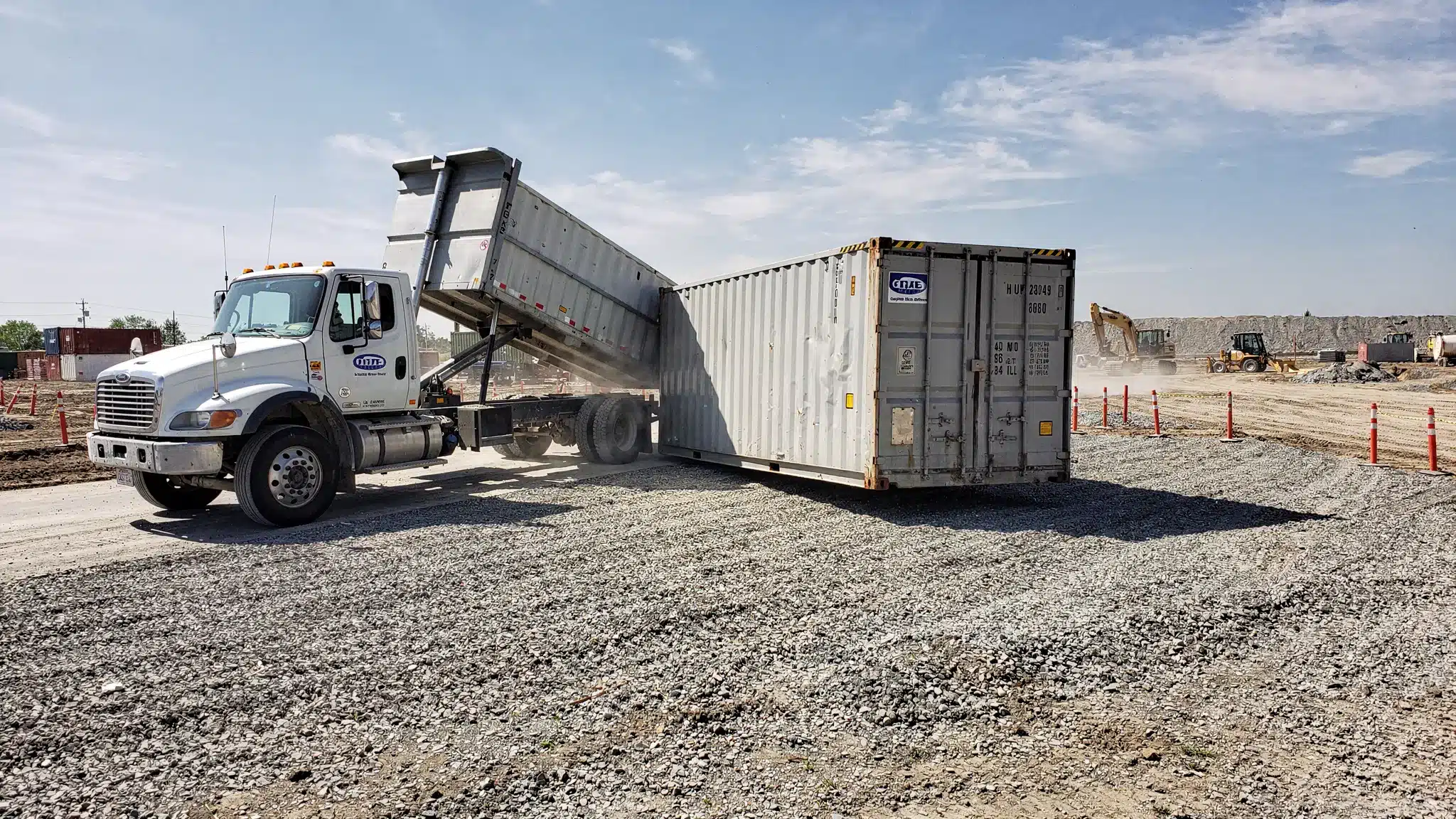
- The driver arrives and offloads (commonly via tilt-bed or side-loader, depending on access and availability).
Site prep that prevents most problems
A great container at a great price can still become a bad experience if the site is not ready.
Before delivery, confirm:
- Truck access and turning radius (especially in tight neighborhoods or job sites)
- Overhead clearance (trees, lines, carports)
- A level, stable placement area (concrete or compacted gravel is ideal)
- Door orientation (tell the dispatcher if doors must face a specific direction)
Choosing the right size for a cargo-worthy container
Most U.S. buyers end up choosing 20ft or 40ft because they are widely available and easy to plan around.
20ft cargo-worthy containers
A 20ft container is often the best fit when you need easier placement or you are working with limited space.
Common uses:
- Job site tools and equipment
- Small business inventory storage
- Farm and ranch storage near barns or fields
- Shorter driveways or sites with less maneuvering room
Browse current options here: 20ft shipping containers.
40ft cargo-worthy containers
A 40ft container typically delivers the best storage capacity per container, and it is popular for construction materials, larger inventory, and multi-department storage.
Common uses:
- Construction materials and staging
- Furniture and household storage during renovations
- Industrial parts and maintenance storage
- Multi-room organization (with shelving or partitions)
Browse current options here: 40ft shipping containers.
Why buyers choose Global Containers Line for cargo-worthy containers
When you are buying a used container, reliability comes from process.
Global Containers Line is a USA-based supplier offering:
- New and used shipping containers (including cargo-worthy options)
- Thorough inspection before dispatch
- Units that are cargo-worthy, wind and watertight
- Transparent pricing with secure online ordering
- Fast nationwide delivery across the USA
Get a delivered quote for a cargo-worthy container (the fastest way to buy with confidence)
If you are shopping for seaworthy containers for sale and want to avoid surprises, request a delivered quote with the details that matter:
- Delivery ZIP code and city
- Intended use (storage, freight, repeated relocation)
- Preferred size (20ft, 40ft, high cube)
- Any access constraints (narrow streets, slopes, overhead lines)
Ready to move forward? Browse available inventory or request pricing for your location, whether you are in Texas, Florida, Georgia, Arizona, California, or anywhere in between.
- Shop 20ft shipping containers
- Shop 40ft shipping containers
- Or visit Global Containers Line to request a quote and schedule fast nationwide delivery.
Hello i am kavin, its my first time to commenting anywhere, when i read this piece
of writing i thought i could also make comment due to this brilliant post.
Awesome blog! Do you have any helpful hints for aspiring writers?
I’m planning to start my own website soon but I’m a
little lost on everything. Would you propose starting with a free platform like WordPress
or go for a paid option? There are so many options out there that I’m totally
confused .. Any recommendations? Many thanks!