
Searching “conex boxes for sale near me” is usually the easy part. The harder part is making sure the container condition you’re paying for matches what you’re using it for, whether that’s jobsite storage in Texas, farm equipment protection in Florida, or a retail buildout in California.
Because “conex box” is commonly used to mean an ISO shipping container, sellers may describe the same used unit in very different ways. This guide breaks down the most common condition grades, what to look for, and how to compare quotes apples-to-apples, including delivery.
What “conex box condition” really means (quick definitions)
In the U.S. market, condition labels are shorthand. They’re useful, but only if you confirm what the seller means.
| Condition label (common) | Best for | What you should expect | What to confirm before buying |
|---|---|---|---|
| One-trip (new) | Clean storage, conversions, customer-facing uses | Minimal wear, best doors and seals, clean interior | Exact size (20ft vs 40ft, standard vs high cube), photos of doors, floor, roof |
| Wind and watertight (WWT) | On-site storage where appearance is not critical | Used container that keeps out wind and water, cosmetic dents and surface rust possible | Ask how WWT is verified (inspection notes), door gasket condition, roof integrity |
| Cargo-worthy (CW) | Shipping goods, export use, intermodal needs | Used container suitable for cargo transport (typically aligned with CSC requirements) | CSC plate presence/status, who certified it, door operation, structural soundness |
| As-is / damaged / “economy” | Low-cost projects, parts, non-critical storage after repairs | May leak, may have door issues, floor damage, heavy rust | Exactly what is wrong, whether returns are allowed, repair budget |
If you’re not sure which grade you need, start with your use case. Overbuying condition wastes money, underbuying can create leaks, rust-through, or expensive door repairs.
Step 1: Match the condition to the job (storage vs shipping vs conversion)
Before comparing listings “near you,” decide what failure would cost you.
If you need basic storage
For tools, inventory, farm feed, or equipment storage, most buyers aim for wind and watertight or a solid used unit that is inspected and confirmed to seal properly. Cosmetic dents are normal and don’t affect storage performance.
If you plan to ship cargo (or need export capability)
Look for cargo-worthy and verify the CSC plate and the seller’s inspection process. If a seller can’t explain what makes it cargo-worthy, treat the claim as marketing.
If you’re converting the container (office, ADU, kiosk)
A cleaner, straighter unit saves time and fabrication cost. Many builders choose one-trip to reduce surprises like hidden floor repairs, heavy corrosion near the bottom rails, or stubborn doors.
Step 2: Compare conditions using a simple inspection checklist
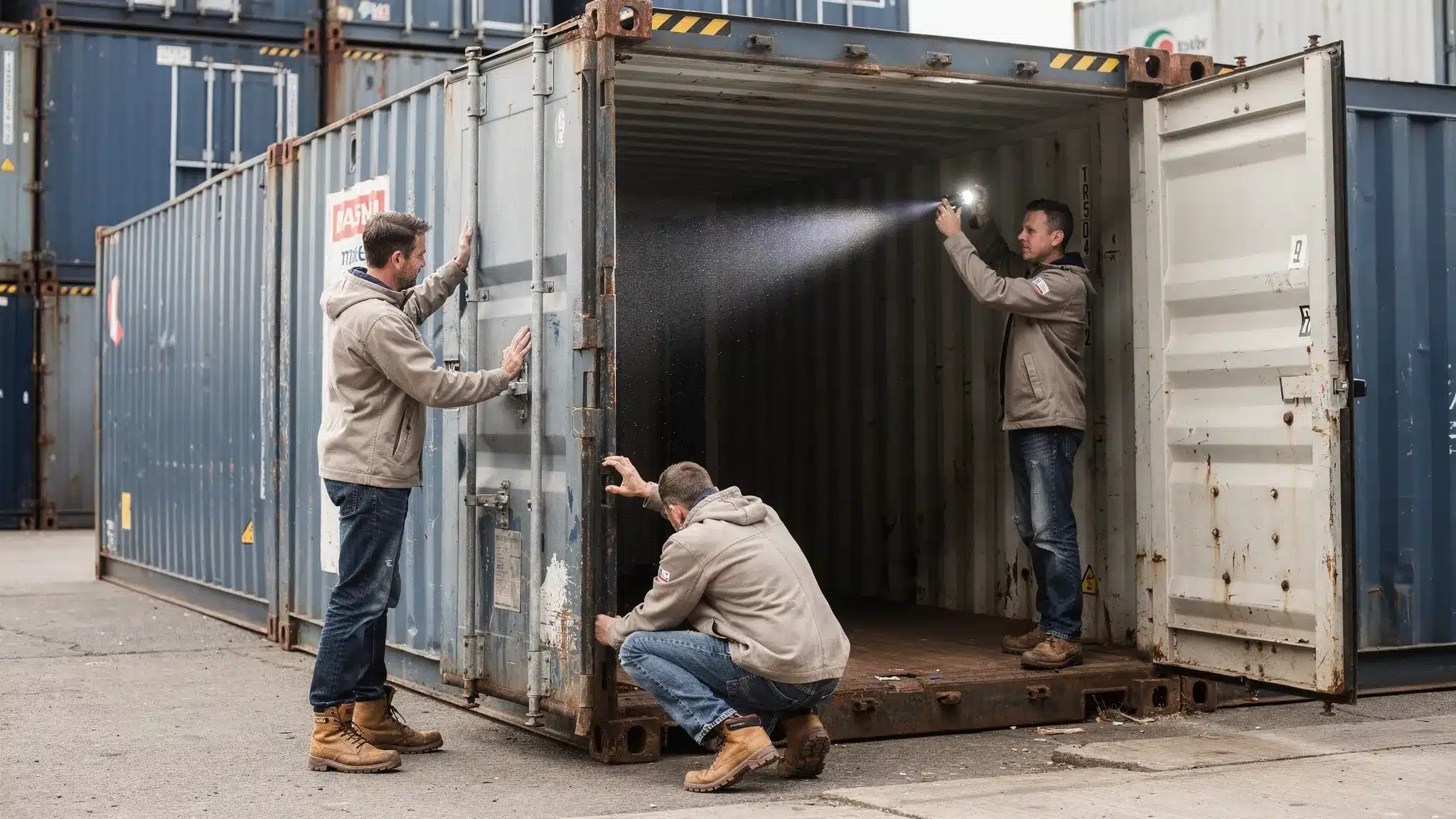
Even when buying online, you should request specific photos or videos. If you’re buying locally, use the same checklist in person.
Exterior checks that matter most
- Roof panel: Look for standing-water dents and patched holes. Roof issues are a top cause of leaks.
- Corner castings and posts: These should look straight, not crushed or heavily deformed.
- Bottom rails: Watch for heavy corrosion near the base, especially in coastal markets like Miami, Tampa, Los Angeles, and Houston.
Door operation and seal checks
Doors are the “make or break” item for day-to-day use.
- Open and close both door leaves. They should move without extreme force.
- Check cam rods and lock keepers for bends.
- Inspect rubber gaskets for tears, gaps, or missing sections.
Interior checks (don’t skip the nose and ceiling)
- Look for daylight through seams.
- Smell for persistent chemical odors or mildew.
- Check for floor soft spots and delamination.
If you’re storing temperature-sensitive materials, ask what the container previously carried. For compliance-heavy projects, confirm whether the floor is treated and what that means for your intended use.
Step 3: Ask the seller to describe condition in plain language
Condition labels vary. A strong seller can translate them into plain, verifiable statements.
Here are examples of what to ask for, and what a solid answer looks like:
“Is it wind and watertight, and how did you verify that?”
You want a response that mentions inspection of roof panels, door gaskets, and visible holes, not just “yes, it’s WWT.”
“Is it cargo-worthy, and does it have a valid CSC plate?”
Cargo-worthy should come with clarity on what standard is being referenced and what documentation is available.
“What cosmetic issues should I expect?”
A trustworthy seller will mention dents, surface rust, and paint condition upfront, so you don’t confuse appearance with performance.
Step 4: Compare “near me” pricing the right way (delivered, not just listed)
A local listing can still become expensive after trucking, offloading, and site constraints. When comparing conex boxes for sale near you, ask for a delivered quote to your ZIP code with offload included.
What usually moves the price up or down
Pricing varies by region and timing, but these drivers are consistent across most U.S. markets:
| Price factor | Why it matters | Example of what to clarify |
|---|---|---|
| Size | 40ft units cost more than 20ft due to steel and transport | Is it a standard 40ft or 40ft high cube? |
| Condition grade | One-trip and clean units command a premium | Is it one-trip, WWT, CW, or as-is? |
| Delivery distance and access | Transport and offload can be a major part of total cost | Tight driveway in Phoenix vs open yard in Dallas |
| Offload method | Tilt-bed, crane, or forklift changes cost | Who provides offload equipment? |
| Market availability | Inventory swings around ports and inland depots | Availability in Atlanta vs rural GA |
If you’re seeing a “too good to be true” price, it often excludes delivery, assumes depot pickup, or reflects an as-is container.
Step 5: Understand delivery options (and what you need to prep)
Delivery is where many first-time buyers get surprised. A good supplier will ask about access before dispatch.
Common delivery methods
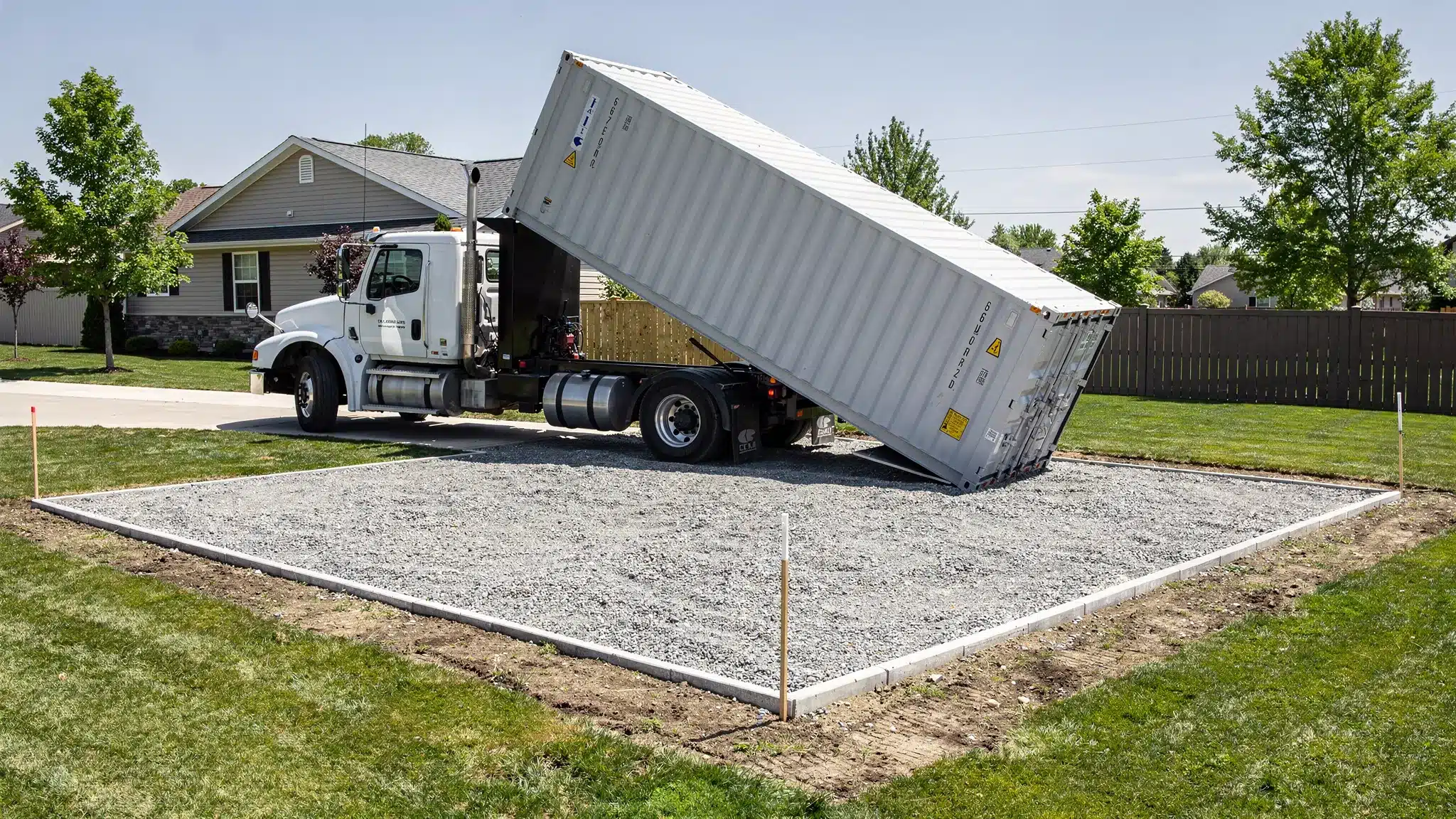
- Tilt-bed delivery: Common for placing containers at homes, farms, and small job sites.
- Flatbed or step-deck delivery: Often used when the site has equipment to offload.
Basic site requirements to confirm
- Clear path for a large truck and turning radius
- Overhead clearance (wires, branches, eaves)
- Firm, level ground where the container will sit
If you’re buying in major metros like Houston, Dallas, Atlanta, Phoenix, Miami, Orlando, or Los Angeles, access matters as much as mileage.
Global Containers Line offers fast nationwide delivery across the United States, so you’re not limited to whatever happens to be sitting in a small local yard that week.
Step 6: Watch for red flags when shopping “conex boxes near me”
Cheap containers exist, but scams and misrepresented grades are also common. Be cautious if a seller:
- Won’t provide recent photos of the exact container (or at least clear examples of the grade you’re buying)
- Avoids sharing a business address, invoice, or written quote
- Pushes cash-only payment with no paperwork
- Won’t explain what “cargo-worthy” or “wind and watertight” means in their listing
For commercial buyers, it can also be worth having contracts reviewed, especially for multi-unit orders, international placements, or cross-border projects. If your project includes Jamaica-based operations or legal considerations there, a firm like Henlin Gibson Henlin for contract and commercial guidance can be a helpful reference point.
Step 7: Choose the right size while you compare condition
Condition and size work together. Many buyers narrow down to 20ft vs 40ft first, then select the best condition for their use.
- A 20ft is easier to place on tight sites and is a popular choice for homeowners, contractors, and small businesses.
- A 40ft offers maximum storage footprint for the delivered cost, but requires more room for delivery and placement.
To browse current availability, start here:
- 20ft shipping containers
- 40ft shipping containers
Why Global Containers Line is a safe way to buy online (without guessing on condition)
When you’re comparing conex boxes for sale near you, the goal is predictable performance and a delivered price you can budget.
Global Containers Line is a USA-based supplier of new and used shipping containers with:
- Cargo-worthy, wind and watertight containers that are thoroughly inspected before dispatch
- Transparent pricing with no hidden fees
- Secure online ordering
- Fast nationwide delivery across the United States, including major markets like Houston, Dallas, Atlanta, Phoenix, and Miami
Ready to compare options and get a delivered quote?
Browse available inventory or request a quote with your ZIP code, preferred size, and intended use (storage, shipping, or conversion). We’ll help you choose the right condition and coordinate delivery to your site.
Explore: 20ft shipping containers and 40ft shipping containers, or request pricing for fast nationwide delivery today.