
When you search “shipping containers near me”, you’re usually trying to solve a practical problem quickly: you need a container, you want it delivered to your property or jobsite, and you don’t want to get stuck with a leaky unit, hidden fees, or a seller who disappears after payment.
Finding 'containers near me' is often the first step, but understanding the full process of how to buy shipping containers online ensures you don't fall for common marketplace scams.
Finding 'containers near me' is often the first step, but understanding the full process of how to buy shipping containers online ensures you don't fall for common marketplace scams.
The good news is you can vet container sellers fast if you know what to check (and what questions to ask). Below is a simple, buyer-focused process you can use whether you’re ordering in Texas (Houston, Dallas), Georgia (Atlanta), Arizona (Phoenix), Florida (Miami), Tennessee (Nashville), or anywhere else in the U.S.
What “shipping containers near me” really means in 2026
A lot of buyers assume “near me” means they must find a yard within driving distance. In reality, most reputable suppliers sell from a network of depots and arrange delivery to your site.
What matters most is:
The container’s condition and grade (and whether it matches your use case)
The seller’s delivery capability to your ZIP code
The quote’s total delivered price (not just the container price)
The seller’s paper trail (invoice, terms, inspection process)
At Global Containers Line, we’re a U.S.-based supplier offering new and used shipping containers with fast nationwide delivery across the United States, transparent pricing, secure checkout, and units that are inspected before dispatch.
Vet a shipping container seller fast (10-minute checklist)
If you only have a few minutes, use this checklist to filter out risky sellers.
Confirm the seller is real and reachable
Look for clear business identifiers and a way to reach a real person.
A legitimate company name (not just a Facebook page)
Phone and email that match the company domain
A physical service area (even if they deliver nationwide)
Real documentation (invoice/receipt, terms, and delivery confirmation)
Quick test: Call the number and ask two questions: “What grades do you sell?” and “What truck will deliver to my address?” A legit seller answers clearly without pressure.
Check for secure payment and clean paperwork
Avoid sellers who push irreversible payment methods or who won’t put details in writing.
Safer signals:
Secure online checkout or standard invoicing
Clear terms for container grade and delivery
A delivered quote that spells out what’s included
Common red flags:
“Wire only” or “Zelle only” with urgency
No invoice, or an invoice missing company details
Price that sounds dramatically below market with no explanation
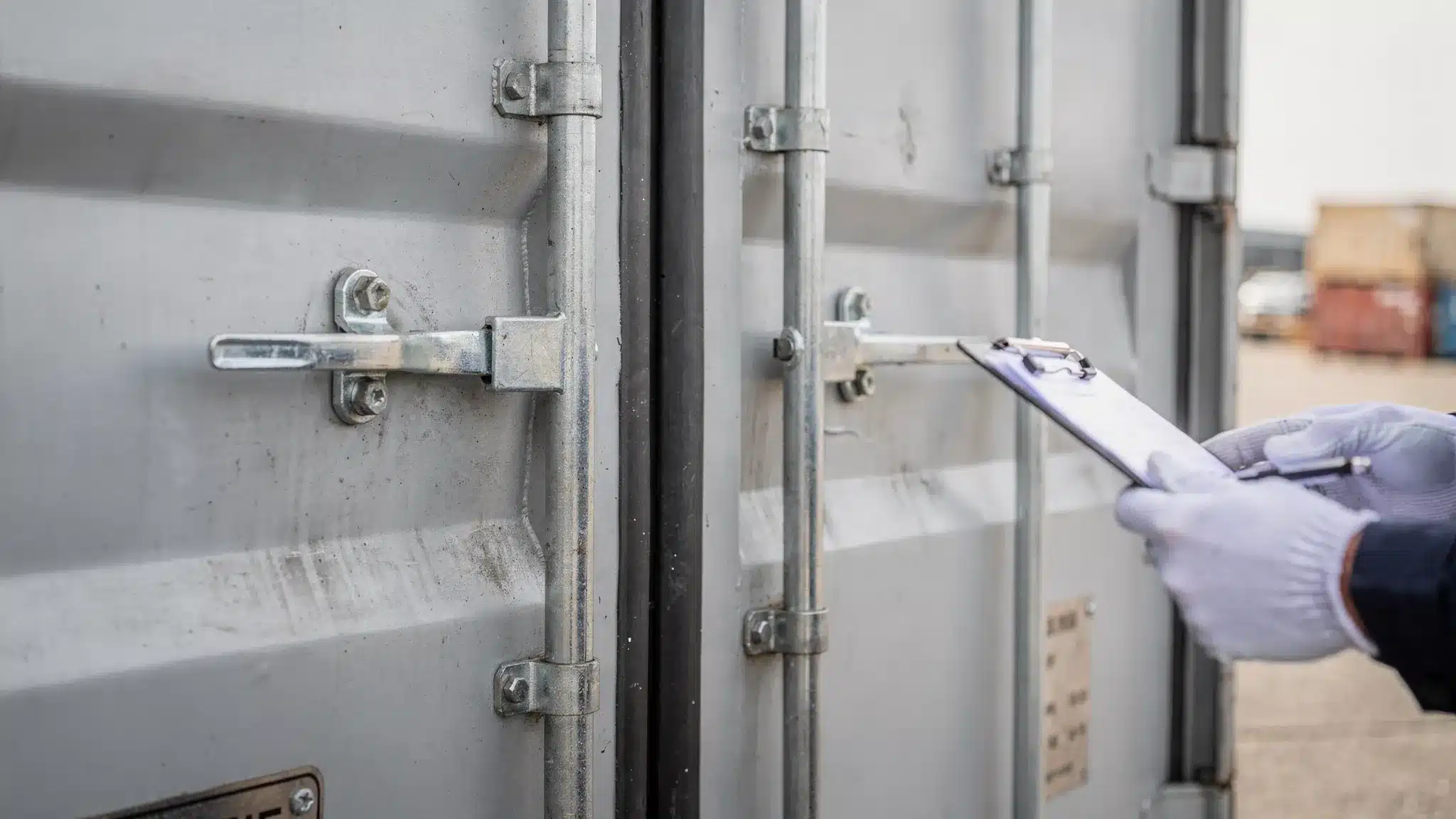
Ask for proof of condition (not just stock photos)
You’re buying a steel box that lives outdoors. Photos should prove the unit’s actual condition.
Ask for:
Photos of the doors closed (alignment matters)
Photos of door seals and locking rods
Roof and corner castings (dents and repairs show up here)
Interior floor condition (especially if you’ll store valuables)
If the seller can’t provide any real photos or a clear condition definition, move on.
While a local yard might have limited stock, nationwide suppliers utilize a depot network to offer a wider variety of 20ft containers and 40ft High Cube containers with consistent quality control.
Understand container grades (so you don’t overpay or underbuy)
Sellers use grade terms inconsistently. The key is to tie the grade to your intended use: storage, jobsite, transport, or a modification project.
Here’s a practical way to interpret common terms.
| Term you’ll see | What it should mean for buyers | Best for | What to verify before you pay |
|---|---|---|---|
| New (often called one-trip) | Minimal wear, typically clean interior, best appearance | Retail, residential, offices, conversions | Confirm it’s new/one-trip and ask for current photos |
| Used (cargo-worthy) | Suitable for transport with a valid condition standard; cosmetic dents OK | Shipping, rugged job sites, industrial storage | Ask what “cargo-worthy” means in writing and what inspection is performed |
| Wind & watertight | No active holes that allow wind/water intrusion; cosmetic wear is normal | Storage in most climates | Ask if doors seal properly and if the roof is free of holes |
Global Containers Line supplies new and used units that are cargo-worthy, wind and watertight, and thoroughly inspected before dispatch, which is exactly what most storage and project buyers need when searching locally.
Vetting a seller's inventory starts with knowing the industry grades. If you aren't sure which condition fits your project, consult our New vs Used Shipping Container Guide for a detailed breakdown of lifespan and structural standards.
Pricing: how to compare quotes without getting tricked
When buyers ask “How much is a shipping container near me?”, the honest answer is: pricing depends on size, condition, location, and delivery complexity.
To compare apples to apples, make sure every quote includes the same items.
What a complete delivered quote should include
Container size (10ft, 20ft, 40ft, 40ft high cube)
Condition/grade defined in writing (new vs used, cargo-worthy, wind and watertight)
Delivery method (tilt-bed, roll-off/landoll, etc.) and whether placement is included
Delivery location (ZIP code) and any access constraints assumptions
Taxes and fees (so there are no surprises)
Fast way to spot hidden-cost quotes
If a seller advertises a very low “starting at” price, ask one question:
“What is the total delivered price to my ZIP code, including all fees?”
A reputable seller can answer that directly or provide a written quote quickly.
The 'near me' advantage disappears if the seller adds high per-mile delivery surcharges. We maintain transparency by detailing our flat-rate fulfillment process in our Shipping Policy.
Delivery: what to ask so your container actually shows up (and fits)
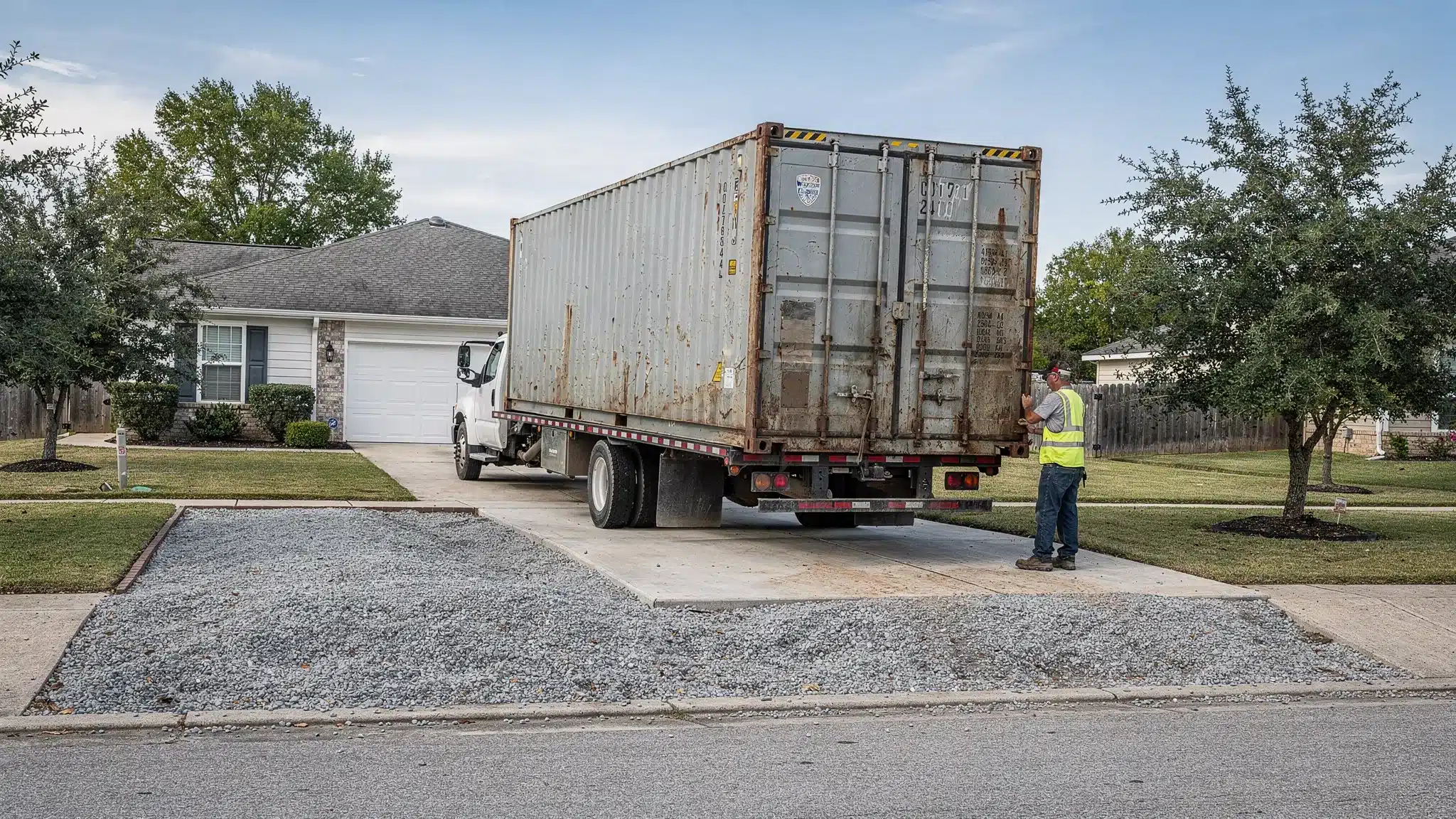
Delivery is where many “near me” purchases go wrong, especially for homeowners and tight job sites.
The three delivery questions that prevent most problems
What truck type will you use? Tilt-bed delivery is common for many residential drops, but site conditions vary.
What access do you need? Ask about driveway width, overhead clearance (trees and wires), turning radius, and ground conditions.
Where will the doors face when placed? Door orientation matters for daily use. Decide before the truck arrives.
Prepare your site like a pro
Even a wind and watertight container can get racked (twisted) if it’s dropped on uneven ground, which can make doors hard to open.
Choose a level area
Consider gravel, blocks, or other stable supports (based on your site conditions)
Keep the drop zone clear so the driver can place it safely
For construction sites, compliance and cleanliness matter too. If your container is part of a jobsite setup, coordinating debris control can help you avoid headaches with neighbors and inspectors. For example, in Middle Tennessee, some contractors pair container delivery with street sweeping services in Nashville to keep entrances and paved areas clean during active work.
Condition questions buyers should ask (and the answers you want)
To vet a seller fast, ask these questions and listen for specific, consistent answers.
“Is it wind and watertight, and how do you verify that?”
A credible seller will explain their inspection process (not just say “yes”). You want confidence that doors seal properly and there are no holes in the roof or walls.
“Is it cargo-worthy, and what does that mean in your listing?”
Cargo-worthy should be a defined standard, not a vague marketing term. If you need the container for transport, be extra strict here.
“Will I receive the exact container in the photos?”
Sometimes you’ll see “representative photos.” That’s not automatically bad, but you should understand what you’re actually buying.
If you’re buying for appearance (retail storefront, backyard office, high-visibility site), request current photos or confirm you’re purchasing new/one-trip.
Size selection: pick the right container fast
Many “shipping containers near me” buyers are deciding between a 20ft and 40ft. Here’s a practical way to decide:
Choose a 20ft container when
A 20ft is a common fit for driveways, smaller lots, and job sites where access is tight.
If that sounds like your situation, browse 20ft shipping containers and compare new vs used options based on your budget and how visible the container will be.
Choose a 40ft container when
A 40ft makes sense when you want maximum storage per delivered unit or you’re staging materials for a bigger project.
If you need the extra space, explore 40ft shipping containers (including high cube options when you need more interior height).
The fastest way to validate a “near me” seller: use this scorecard
If you’re comparing multiple sellers, this simple scorecard keeps you objective.
| Vetting factor | Good sign | Red flag |
|---|---|---|
| Quote clarity | Delivered price to your ZIP, fees included | Vague “starting at” pricing, no delivery details |
| Condition definition | Grade described in writing, inspection explained | “Great condition” with no definition |
| Photos | Real photos showing doors, roof, interior | Stock images only |
| Payment | Secure checkout or standard invoicing | Pressure to pay instantly via irreversible methods |
| Delivery planning | Truck type + access requirements discussed | “We’ll figure it out when we get there” |
Why buyers choose Global Containers Line for shipping containers in the USA
If you want to vet a seller quickly, look for the fundamentals done right. Global Containers Line is built around the basics U.S. buyers care about:
New and used shipping containers in multiple sizes and configurations
Containers that are cargo-worthy, wind and watertight, and inspected before dispatch
Fast nationwide delivery across the United States, including major markets like Houston, Dallas, Atlanta, Phoenix, and Miami
Transparent pricing with no hidden fees and a secure online ordering experience
Call to action: browse inventory or request a delivered quote
If you’re searching for shipping containers near me and want a straightforward buying experience, start by checking current availability and pricing for your location.
Prefer to confirm pricing and delivery to your exact ZIP code first? Visit Global Containers Line and request a quote. We’ll help you choose the right size and condition, then schedule fast nationwide delivery anywhere in the USA.
Stop searching and start building. Browse our current inventory for verified units or Contact Us to speak with a specialist about delivery to your specific site.
Fantastic beat ! I wish to apprentice while you amend your
web site, how can i subscribe for a blog website?
The account aided me a applicable deal. I were a little bit acquainted of this your broadcast provided brilliant clear concept https://cryptoboss990.top
I was suggested this website by my cousin. I am not sure whether this post is
written by him as no one else know such detailed about my trouble.
You are incredible! Thanks!