
Buying storage containers for sale in Los Angeles is usually the easy part. The hard part is getting a steel box delivered cleanly and safely to a tight site, with the right offload method, and no surprises on delivery day.
While this guide focuses on the specific requirements for Southern California, our logistics process remains consistent nationwide. If you're curious about our overall fulfillment model, see our How to Buy Shipping Containers Online guide.
This delivery checklist is written for LA-area buyers, from homeowners and small businesses to construction crews and real estate teams, who want a simple way to prepare their property, understand pricing variables, and confirm container condition before the truck shows up.
Why delivery planning matters in Los Angeles
Los Angeles is not a “wide open” delivery market. Many drop sites involve narrow driveways, alleys, street parking rules, overhead utility lines, soft soil, or active job sites. A little planning helps you avoid the most common issues:
The driver cannot access the drop spot (turn radius, slope, low branches, parked cars).
You need a different offload method than expected (tilt-bed vs crane).
The container lands out of level and doors won’t open smoothly.
The city, landlord, or HOA requires placement rules you did not account for.
At Global Containers Line, we help buyers across California and the U.S. plan deliveries the right way, with fast nationwide delivery across the United States, transparent pricing, and containers that are inspected prior to dispatch.
What impacts the delivered price in LA (and what to ask up front)
If you are comparing quotes for shipping or storage containers in Los Angeles, make sure you are comparing “apples to apples.” Delivered price usually changes based on a few practical variables.
| Price factor | Why it changes the total | What you can do to control it |
|---|---|---|
| Container size (10ft, 20ft, 40ft, High Cube) | Larger units can require more maneuvering room and different equipment | Confirm site space and access before choosing size |
| Condition (new vs used) | New typically costs more than used, used can vary by grade | Decide what you need (appearance vs function) |
| Delivery distance to your ZIP code | Longer miles and routing affect transport cost | Share exact ZIP and delivery constraints early |
| Offload method | Crane or forklift coordination can add cost vs tilt-bed | Choose the simplest method your site allows |
| Site access complexity | Tight turns, steep grades, or special timing can increase cost | Send photos and constraints to get an accurate quote |
Quick tip: Ask whether the quote includes delivery, offload, and any access surcharges (if applicable). Transparent, itemized quotes are the easiest to trust.
Pick the right container first: 20ft vs 40ft (common LA use cases)
Los Angeles buyers often choose between 20ft and 40ft containers depending on available space, storage volume, and how the container will be used (jobsite storage, equipment, retail inventory overflow, home renovation storage, or a conversion project).
20ft containers are a common fit for residential driveways, smaller job sites, and businesses that need secure storage without taking up a full parking area. Browse available options on our 20ft shipping containers page.
40ft containers are ideal when you need maximum storage capacity, ongoing site storage, or multi-room buildouts. Explore our 40ft shipping containers page.
Container condition basics (what “good” should mean)
When you see “storage container” listings, the condition language can be inconsistent across sellers. As a baseline, most buyers care about:
Cargo-worthy and structurally sound for safe handling.
Wind and watertight to keep contents dry.
Operational doors and locking bars that open and close properly.
Global Containers Line supplies new and used containers that are cargo-worthy, wind and watertight, and thoroughly inspected before dispatch, so you know what you are getting when it arrives.
Storage containers for sale Los Angeles: delivery checklist
Use this checklist before you place your order, or at least before you schedule your delivery appointment.
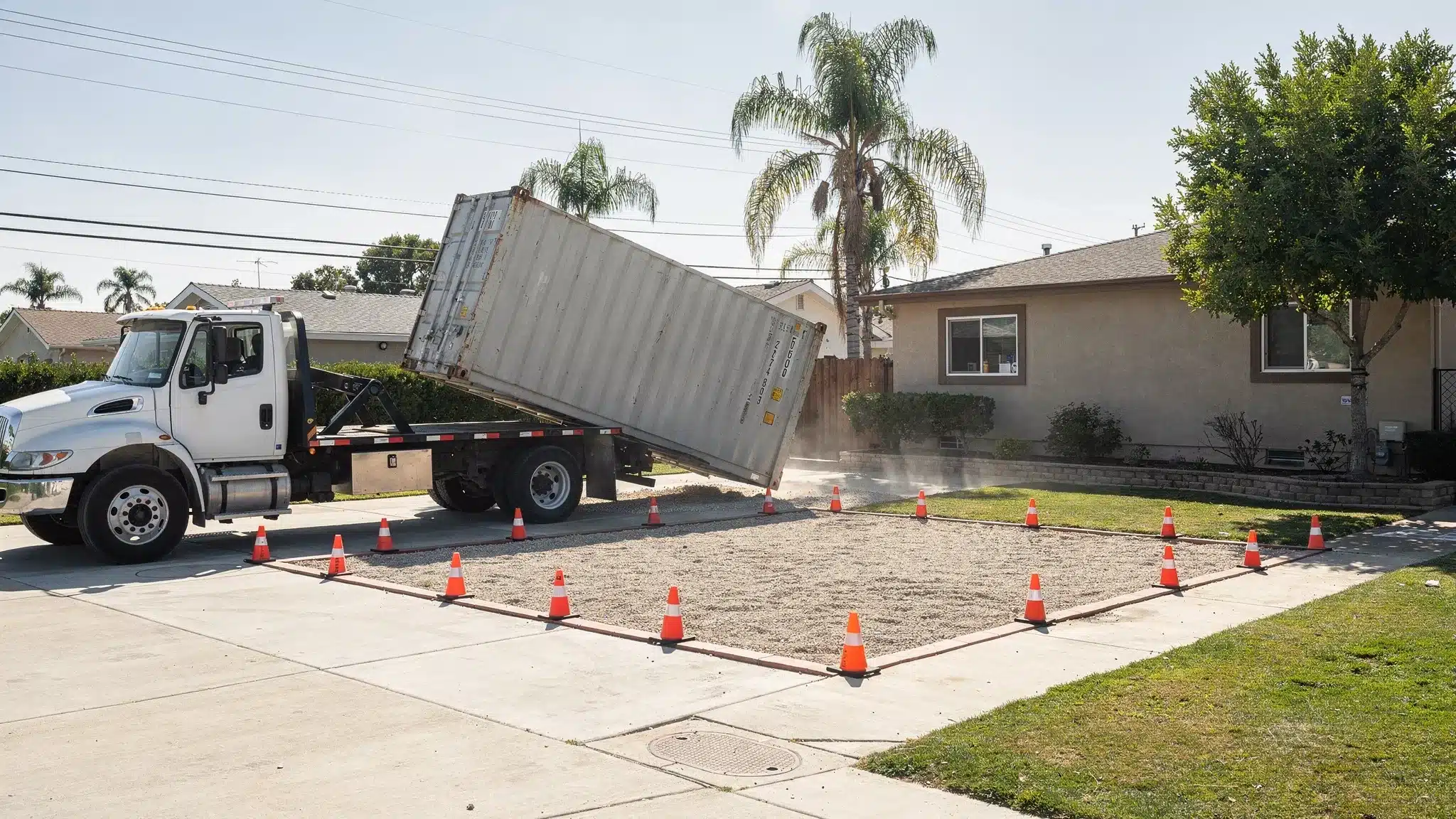
Confirm your drop location and clearances
Start with the container footprint and the space needed to place it safely.
Measure the exact drop zone (length, width).
Leave room for door swing (especially if doors will face a wall or fence).
Plan for working space around the container if you will add shelving, electrical, or ramps.
Consider drainage so rainwater does not pool under the container.
Check truck access in LA (the number one failure point)
Delivery trucks need room to approach, turn, and offload. In Los Angeles, the biggest issues are tight turns, parked cars, and narrow streets.
Measure driveway width and any pinch points (gates, pillars, alley entrances).
Confirm turning radius from the street to the drop spot.
Identify steep grades or soft shoulders.
Reserve curb space if needed (where allowed) so the truck can line up.
If you are in areas like Hollywood Hills, Echo Park, Silver Lake, or older neighborhoods with tighter access, photos of the approach path are especially helpful for delivery planning.
Make sure the ground is ready (level matters for doors)
A container can weigh several thousand pounds empty, and far more once loaded. A proper base helps keep it level and prevents long-term settling.
Common base options include:
Compacted gravel pad
Concrete pad
Railroad ties or concrete blocks at corner points (when appropriate)
A simple rule: If the container is not level, the doors can bind, which feels like “bad doors” but is often a foundation issue.
Standard 20ft containers require about 60 feet of straight-line clearance, whereas larger 40ft High Cube containers need at least 100 feet for the driver to safely tilt the bed and slide the unit off.
Verify overhead clearance (utilities, trees, carports)
Overhead clearance is a safety issue, and it affects whether a tilt-bed can offload cleanly.
Look for power lines, telecom lines, branches, balconies, and carports.
Confirm clearance along the entire approach path, not just the final spot.
If you think a crane might be required, overhead constraints become even more important.
Choosing the right foundation helps prevent moisture buildup under the floor. For more on maintaining the structural integrity of your unit, check out our New vs Used Shipping Container Guide.
Check permits, HOA rules, and property requirements
Los Angeles rules can vary by city, neighborhood, and property type. Before delivery:
Ask your city or county office what applies to your intended use (temporary storage vs permanent structure).
If you are in an HOA or managed commercial site, confirm placement rules, screening requirements, and delivery time windows.
For construction sites, align delivery with the GC’s site logistics plan.
This step helps prevent last-minute cancellations or forced re-positioning.
Choose your offload method: tilt-bed vs crane (what LA sites usually need)
Most residential and straightforward commercial drops can use a tilt-bed if access and clearance are adequate. Tight urban sites, obstructed locations, or over-fence placements may require a crane.
| Offload method | Best for | Site requirements | Common LA constraints |
|---|---|---|---|
| Tilt-bed delivery | Standard drops where the truck can align with the pad | Straight approach line, adequate overhead clearance | Narrow streets or parked cars can block alignment |
| Crane offload | Over obstacles, tight sites, precision placement | Crane access, overhead clearance, staging area | Permits and space for crane setup can be challenging |
If you are unsure, the safest approach is to share site photos and your ZIP code and ask for a delivery recommendation before finalizing.
Prepare for delivery day (avoid delays and re-delivery fees)
Have a plan for the day-of handoff:
Be on-site (or have an authorized contact present).
Provide gate codes, lockbox info, or entry instructions.
Move vehicles and reserve space for truck positioning.
Use cones or markings to show the exact drop location.
Assign a spotter to guide the driver if the area is tight.
LA traffic is real, so a flexible appointment window can help reduce missed connections.
We ensure transparency in our logistics by offering a flat-rate shipping fee across the contiguous United States. You can find full details on timelines and regional depot dispatch in our Shipping Policy.
Inspect the container at drop (condition checklist)
You should do a quick walkaround before the driver leaves. Focus on functional, high-value checks:
Check that container doors open, close, and latch correctly.
Look for visible holes, major dents affecting door seals, or obvious structural damage.
Confirm the roofline is not bowed and there are no signs of persistent leaks.
Look at the gasket/seals around doors for tears or gaps.
Smell inside briefly for strong chemical odors if you will store sensitive goods.
If you ordered a used unit, some cosmetic wear is normal. What matters most is wind and watertight integrity and working doors.
Delivery timing for Los Angeles (what to expect)
Delivery timelines vary based on inventory, dispatch schedules, and routing, but the process typically looks like this:
You select container size and condition, then confirm delivery ZIP and site notes.
Your order is processed and delivery is scheduled.
The container is dispatched after final checks and inspection.
Global Containers Line supports fast nationwide delivery across the United States, including California markets and major cities nationwide (Houston, Dallas, Atlanta, Phoenix, Miami, and more). If you have a specific date requirement in the LA area, ask early so scheduling can be coordinated.
How to get an accurate quote for Los Angeles delivery
The fastest way to avoid pricing surprises is to provide the details that change delivery complexity. When you request a quote, include:
Delivery ZIP code (Los Angeles area ZIPs vary widely in access)
Desired container size (10ft, 20ft, 40ft, High Cube)
New or used preference
Photos of the driveway, gate, and drop zone
Any constraints (narrow street, alley access, slope, overhead lines, limited delivery hours)
We aim for competitive prices with no hidden fees, and accurate site info helps keep the quote accurate.
Budgeting for the full project (container plus site readiness)
Many LA buyers budget for the container and delivery, but forget the “site readiness” line items that can add up:
Gravel, concrete, or leveling materials
Locks, lockboxes, or security upgrades
Electrical or ventilation additions for certain storage needs
Permits or HOA compliance costs (if applicable)
If you want a simple way to keep the project organized, a free budgeting tool like MoneyPatrol’s expense tracker and budgeting app can help you track delivery, site prep, and accessory costs in one place.
Ready to buy storage containers in Los Angeles?
If you are searching for storage containers for sale Los Angeles and want a smooth delivery, start by choosing the right size, then use the checklist above to confirm access, ground prep, and offload needs.
Browse available inventory:
Or, if you want the fastest path to accurate pricing and delivery options, request a quote with your LA-area ZIP code and a few site photos. Global Containers Line is a trusted U.S. supplier with fast nationwide delivery across the United States and inspected new and used containers ready to ship.
Ready to get a unit delivered to your Los Angeles site? Browse our current inventory to find your container or Contact Us today to speak with a delivery specialist.