
When you buy a container for storage or a build, the hard part is often not choosing the size, it is transporting a shipping container to your site legally, safely, and without surprise fees. Permits, delivery equipment, site access, and state-by-state rules all affect your final cost and timeline.
This guide breaks down what U.S. buyers need to know about permits, costs, and timelines for container delivery, plus practical steps to prepare your property. It is written for homeowners, contractors, farms, and businesses ordering containers across the United States.
How shipping containers are transported in the USA
Most container deliveries are handled one of three ways, and the method you need affects both pricing and whether special permits apply.
Tilt-bed (roll-off) delivery
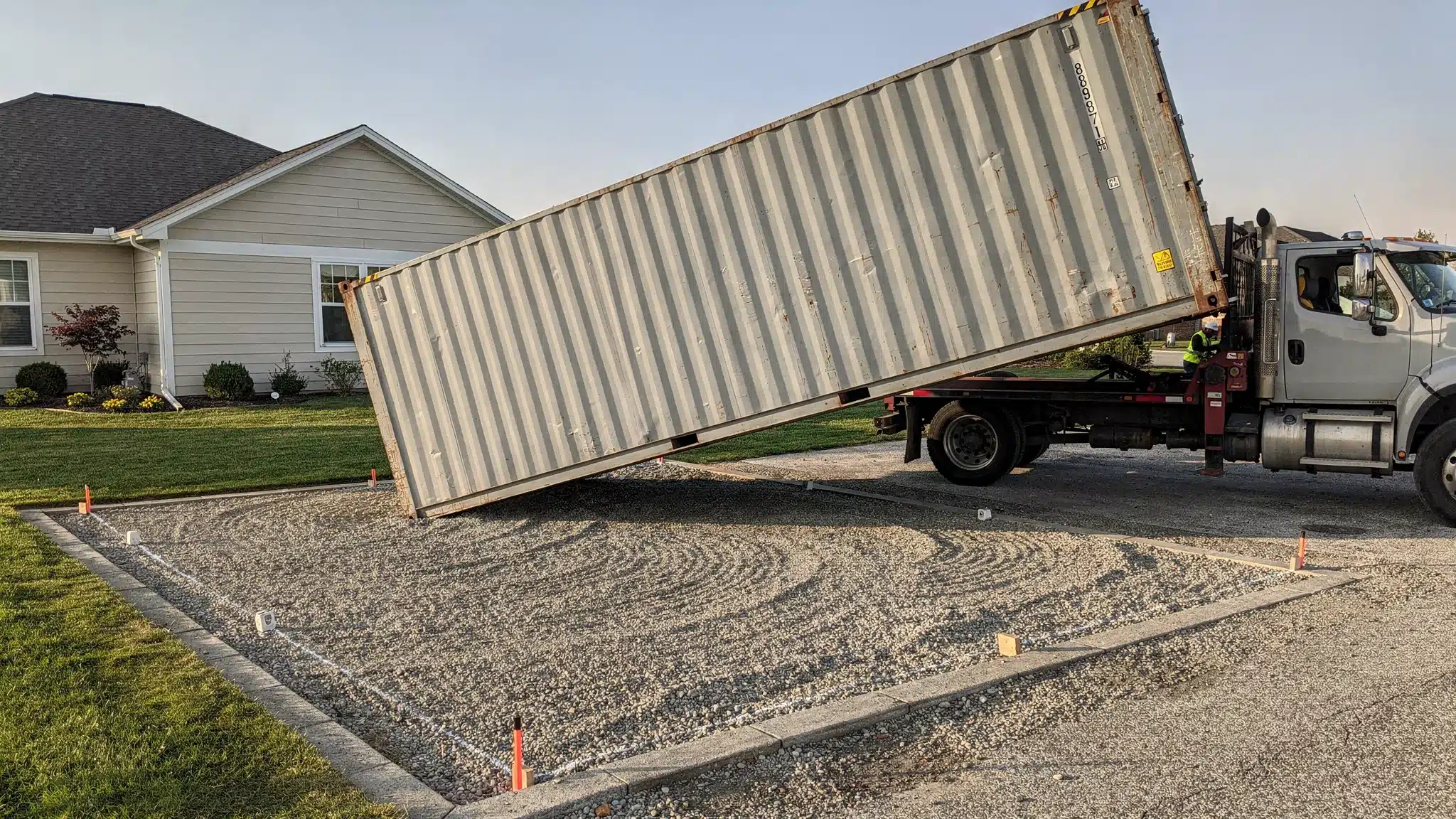
A tilt-bed truck slides the container off the back onto the ground.
- Best for: Residential driveways, job sites, and customers who want the container placed on the ground quickly.
- Watch-outs: Needs enough straight clearance for the truck to tilt and slide the unit.
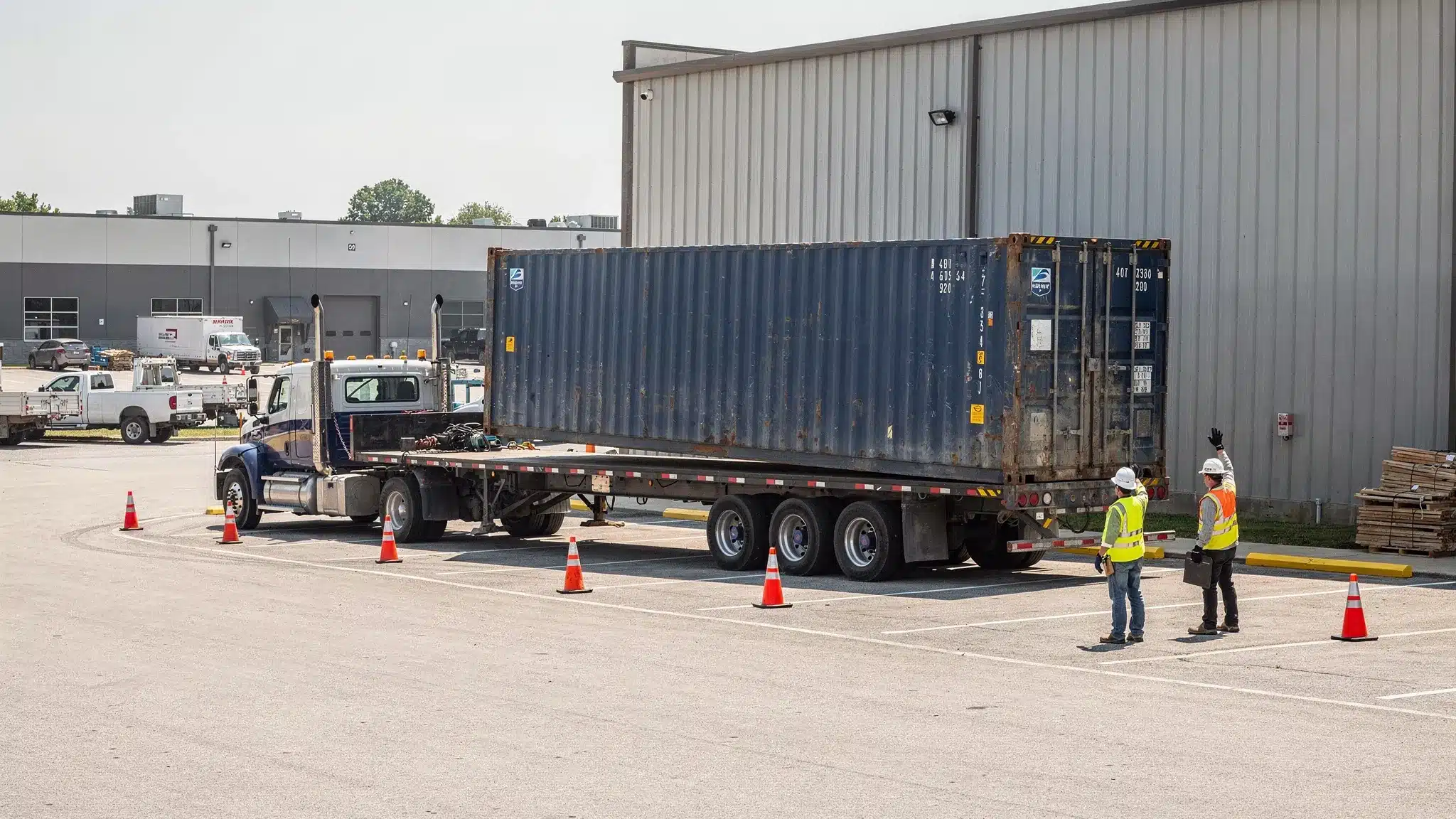
Flatbed or step-deck with unloading on-site
The container arrives on a trailer and must be offloaded by you (forklift, crane, reach stacker, etc.).
- Best for: Construction sites and industrial yards with equipment on hand.
- Watch-outs: You are responsible for safe unloading.
Chassis delivery (less common for storage placement)
More typical in port and freight contexts, where a container remains on a chassis.
- Best for: Certain logistics operations.
- Watch-outs: Not ideal when you need the container set on the ground.
Permits for transporting a shipping container (what triggers them)
Permit requirements depend on your total loaded dimensions (container plus trailer), your route, and state rules. Standard containers are typically 8 feet wide, which is within the common legal width limit of 8 feet 6 inches, but height is where things can get complicated.
Standard vs high cube: the permit difference is often height
A standard container is usually 8 feet 6 inches tall. A high cube container is usually 9 feet 6 inches tall. Once you add the trailer deck height, high cubes are more likely to exceed common legal height limits on many roads and bridges.
| Container type | Typical height (container only) | Permit risk when delivered on a standard trailer | What carriers may do to stay compliant |
|---|---|---|---|
| Standard (most 20ft, 40ft) | 8'6" | Often lower | Use standard trailer routes, confirm height clearances |
| High cube (often 40ft HC) | 9'6" | Higher | Use step-deck/lowboy, plan route, pull overheight permits |
Important: Permit rules are state-specific. What is routine in Texas may be treated differently in Florida, California, or New York, especially around metro areas with restricted routes.
When permits and escorts may be required
Depending on the state and route, you may see added requirements such as:
- Overheight permits (common trigger for high cube deliveries)
- Overweight permits (more relevant for loaded freight containers than empty storage delivery)
- Route restrictions (bridge and tunnel clearances, city delivery windows)
- Escort vehicles (less common for standard container deliveries, more likely with unusual dimensions or specific state thresholds)
Who handles permits: you or the delivery company?
For most retail container deliveries, the carrier typically arranges the transport details, and if permits are required for that load and route, they are usually handled as part of delivery planning and priced accordingly. You should still ask your supplier or dispatcher:
- Whether the quoted delivery price assumes any required permits
- Whether your address is in a restricted area (downtown corridors, tight residential streets)
- Whether a different trailer type is needed for a high cube unit
Global Containers Line sells new and used containers with fast nationwide delivery across the United States, and can help you understand what your specific delivery location requires before dispatch.
Cost to transport a shipping container (what you are really paying for)
Container delivery costs are not just mileage. The biggest drivers are equipment type, time on-site, and how difficult the drop is.
Key factors that affect delivery price
Here is what most carriers build into a delivery quote:
- Distance from the yard/depot to your site (local, regional, or long-haul)
- Delivery method (tilt-bed vs flatbed vs step-deck)
- Container size (a 40ft delivery generally needs more space to maneuver than a 20ft)
- High cube or special dimensions (possible overheight routing and permits)
- Site access and obstacles (soft ground, steep slopes, narrow gates, overhead wires, low tree limbs)
- Wait time (if the driver cannot access the drop area immediately)
- State and metro area constraints (tolls, restricted routes, delivery windows)
Typical delivery cost ranges (USA)
Prices vary by market and season, but the ranges below are common planning numbers for empty container delivery.
| Delivery distance (one-way) | Typical use case | Common market range (delivery only) |
|---|---|---|
| 0 to 50 miles | Local drop in the same metro area | $300 to $800 |
| 50 to 150 miles | Regional delivery | $700 to $1,500 |
| 150 to 500 miles | Longer regional or cross-state | $1,200 to $3,000 |
| 500+ miles | Long-haul | $2,500 to $6,000+ |
Use these as budgeting guidance, not a promise. The fastest way to get an accurate number is to request a quote with your ZIP code, container size, and site notes.
Hidden cost traps to avoid
Transporting a shipping container becomes expensive when avoidable issues show up on delivery day. Watch for:
- No turn-around space for a 40ft truck
- Soft or wet ground where a heavy truck can sink
- Overhead obstacles (power lines, branches, carports) that prevent a safe tilt-bed unload
- City restrictions that require re-routing or timed delivery
If you are unsure, take a few photos of your driveway and drop zone and share them before scheduling.
Timelines: how long it takes to deliver a shipping container
Most buyers care about two timelines: how soon the container can ship and how long delivery takes once it is dispatched.
What impacts delivery timeline
A realistic delivery timeline depends on:
- Container availability in your region (new vs used inventory)
- Scheduling windows (your site availability, driver schedules)
- Permit lead time (if an overheight/route permit is needed)
- Weather and road conditions
Typical planning timelines
While every order is different, these are reasonable expectations for many U.S. deliveries:
| Scenario | What to expect |
|---|---|
| Local metro deliveries (example: Houston, Dallas, Atlanta, Phoenix, Miami) | Often scheduled within days once inventory and dispatch are confirmed |
| Regional cross-state deliveries | Often about 1 to 2 weeks depending on carrier routing |
| Long-haul cross-country deliveries | Often about 1 to 3 weeks depending on lanes, permits, and demand |
If you have a firm jobsite deadline, tell your supplier up front so the dispatch team can plan around it.
Delivery prep checklist (to prevent failed drops)
A failed or rescheduled delivery is one of the most common reasons transporting a shipping container goes over budget. These steps help your driver place the unit safely the first time.
Confirm you have the right space for a 20ft vs 40ft
A 40ft container needs significantly more maneuvering room than a 20ft. If you are placing the container behind a building or next to fencing, measure the approach.
- For tighter residential drops, many buyers choose a 20ft for easier access.
- For large storage needs, a 40ft can be the better value per square foot, but only if your site can handle it.
You can browse inventory options here:
Prepare the drop zone
Drivers can place containers on gravel, asphalt, concrete, or compacted soil, but the ground should be stable and as level as possible.
Good prep usually includes:
- Clear the area of vehicles and debris
- Mark the corners of the intended placement
- Trim branches and check overhead lines
- Consider blocks or railroad ties if you want the container slightly raised for drainage
Make sure someone is on-site
Have a decision-maker present who can confirm the exact placement. Moving the container again after drop typically requires a second mobilization or specialized equipment.
Container condition questions buyers ask before delivery
Condition matters because it impacts how you plan placement, security, and long-term use.
Are used containers still weatherproof?
Many buyers choose used units for budget reasons, especially for storage on farms, job sites, and small businesses. Reputable suppliers commonly sell used containers that are cargo-worthy and wind and watertight, meaning doors seal properly and the structure is suitable for storage and transport service.
Global Containers Line provides new and used shipping containers that are thoroughly inspected before dispatch.
What should I check at delivery?
Do a quick walk-around before the driver leaves:
- Open and close the doors to confirm alignment and operation
- Look for obvious holes or daylight through the walls or roof
- Confirm the container matches the ordered size and type
For more buying and delivery expectations, see the company’s resources like the shipping container FAQs and the ultimate shipping container buying guide.
Pricing questions: what affects the total price beyond transport
Many buyers search “container price delivered” because the total cost is what matters. In practice, your total usually includes:
- The container price (new vs used, size, availability)
- Delivery (distance, equipment, permits if needed)
- Optional add-ons (lockboxes, vents, custom doors/windows if requested)
If you are comparing quotes, ask whether the price is delivered to your ZIP code and whether there are any likely access surcharges based on your site.
Examples by location: why state and city matter
Two deliveries of the same container can price and schedule differently because of where they are going.
Major metro deliveries
Deliveries into large metros like Houston, Dallas, Atlanta, Phoenix, and Miami often have predictable lanes, but there may be:
- Traffic constraints and narrower delivery windows
- Tight residential streets and HOA considerations
- More overhead obstacles (trees, lines, carports)
Rural and farm deliveries
Rural drops can be straightforward if the approach is open, but distance and soft ground can increase risk. If you have long dirt driveways or seasonal mud, plan delivery on a dry day and consider a gravel pad.
High cube deliveries in stricter corridors
High cube units may require special routing in areas with older infrastructure or strict enforcement. If you need high cube capacity, ask your supplier about trailer type and route planning before purchase.
Work with a trusted supplier to simplify container transport
Transporting a shipping container is easiest when the seller can coordinate container selection, dispatch, and delivery expectations in one place.
Global Containers Line is a U.S. supplier of new and used containers with:
- Fast nationwide delivery across the United States
- Cargo-worthy, wind and watertight containers
- Multiple sizes in stock for storage, construction, commercial, and residential use
- Transparent pricing and secure online ordering
Ready to schedule delivery? Browse containers or request a quote
If you want the smoothest possible delivery, start with the right size and confirm access before dispatch.
Browse available inventory for 20ft shipping containers and 40ft shipping containers, or visit Global Containers Line to request a quote for delivered pricing and lead time to your ZIP code.