
A container office can be a practical way to add workspace to a construction site, logistics yard, farm, commercial property, or residential project without building from the ground up. For many U.S. buyers, the appeal is simple: steel construction, flexible layouts, strong security, and faster deployment than many traditional building options.
But when you search for a container office for sale, the price on the unit is only one part of the decision. You also need to plan the container size, condition, office build-out, delivery access, permits, site preparation, and long-term comfort.
Global Containers Line supplies new and used shipping containers across the United States, including 10ft, 20ft, 40ft, and high cube units. Our containers are inspected before dispatch, cargo-worthy, wind and watertight, and available with fast nationwide delivery for buyers in cities such as Houston, Dallas, Atlanta, Phoenix, Miami, Los Angeles, Jacksonville, Tampa, San Antonio, and beyond.
Quick Answer: What Does a Container Office Cost?
In most U.S. markets, a container office can start with a standard 20ft or 40ft shipping container and then be modified for office use. A base container may cost a few thousand dollars, while a finished office setup can range much higher depending on insulation, electrical work, HVAC, windows, doors, flooring, plumbing, and code requirements.
As a broad 2026 planning range, many buyers should budget:
| Container office type | Typical use | Planning range |
|---|---|---|
| 20ft base container for office conversion | Small site office, guard office, farm office | $2,000-$5,500+ before modifications |
| 40ft base container for office conversion | Larger jobsite office, office plus storage | $3,000-$8,000+ before modifications |
| Basic modified container office | Insulated shell with door, windows, basic electrical, HVAC | $15,000-$40,000+ total in many cases |
| Finished commercial-style container office | Higher-end interior, restroom, plumbing, code upgrades | $40,000-$100,000+ depending on scope |
These are general market estimates, not fixed prices. Your final cost depends on the container condition, size, delivery distance, local labor rates, permit requirements, and the level of finish you need.
What Is a Container Office?
A container office is a workspace built from a steel shipping container or a modular container-style unit. Some buyers purchase a fully built office unit, while others buy a standard shipping container and have it converted by a contractor.
A shipping container office is commonly used for:
- Construction site management
- Equipment yard administration
- Farm and ranch operations
- Industrial security checkpoints
- Temporary real estate sales offices
- Warehouse overflow workspace
- Small business storage and office combinations
For buyers who want a durable base structure, a standard steel shipping container is often a strong starting point. It can be delivered to the site, placed on a prepared pad, and modified to fit the intended use.
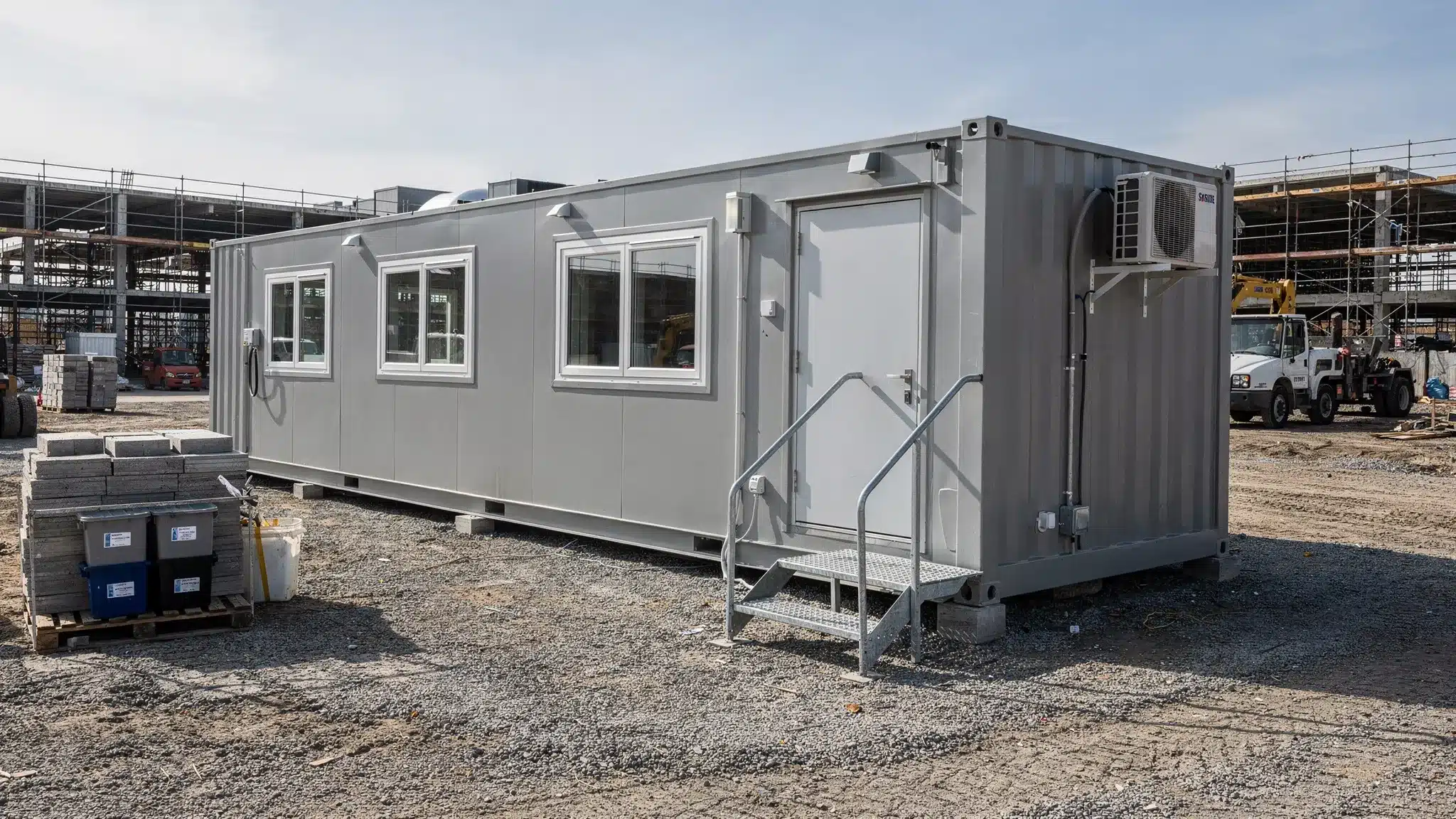
Container Office Setup: Key Decisions Before You Buy
The best container office setup starts before the container arrives. Size, condition, placement, utilities, and access all affect how well the office performs.
Choose the Right Container Size
The most common container office sizes are 20ft and 40ft. A 20ft unit is easier to place on tight sites and works well for one or two people. A 40ft unit gives you more room for desks, storage, a meeting area, or a split office and tool room layout.
| Size | Best for | What to consider |
|---|---|---|
| 10ft container | Guard booth, small admin office, limited-space sites | Compact but limited interior layout options |
| 20ft container | Small jobsite office, farm office, residential project office | Easier delivery and placement than larger units |
| 40ft container | Larger site office, office plus storage, multi-person workspace | More usable space but requires more delivery clearance |
| 40ft high cube container | Office with better ceiling height after insulation | Extra height may affect routing and placement requirements |
If you need a compact, flexible base unit, browse available 20ft shipping containers. If your project needs more floor space, compare options for 40ft shipping containers.
Decide Between New and Used Containers
For office projects, condition matters. A container office needs to be structurally sound, dry, and suitable for modification. Cosmetic dents may not matter if the container will be painted or finished, but roof leaks, damaged floors, and hard-to-open doors can create expensive problems.
New or one-trip containers are often preferred for customer-facing offices, long-term projects, and builds where appearance matters. Used cargo-worthy or wind and watertight containers can be a smart choice for construction, agriculture, and industrial offices when the unit has been properly inspected.
Avoid as-is containers for office conversions unless you are prepared for repairs. A low upfront price can disappear quickly if the roof, floor, frame, or door system needs significant work.
Global Containers Line offers new and used containers that are inspected before dispatch, cargo-worthy, and wind and watertight, helping buyers start with a reliable structure.
Plan the Foundation and Placement
A container office should sit on stable, level ground. Poor placement can cause doors to bind, water to pool underneath, and the structure to shift over time.
Common foundation options include compacted gravel pads, concrete piers, concrete blocks, railroad ties, and concrete slabs. For many temporary jobsite offices, a level gravel pad with proper drainage is enough. For permanent or code-regulated office use, you may need engineered footings, anchoring, or a slab.
Place the container where trucks can access it safely, water drains away from the unit, and employees can enter without creating trip hazards. If the office will have steps, ramps, awnings, exterior lights, or utility connections, include those in the site plan before delivery.
Think Through Insulation, HVAC, and Ventilation
A bare steel container can get hot in summer and cold in winter. If people will work inside for extended periods, insulation and climate control are not optional.
In warm markets like Phoenix, Dallas, Houston, Miami, and Tampa, insulation and air conditioning are especially important. In humid areas such as Florida and the Gulf Coast, moisture control and ventilation help reduce condensation. In colder states, heating and thermal breaks help improve comfort.
Typical comfort upgrades may include spray foam or panel insulation, interior framing, wall panels, ceiling finish, a mini-split HVAC system, ventilation, weather-sealed doors and windows, and moisture-resistant flooring.
Add Electrical, Lighting, and Data Carefully
Most office users need power for lights, outlets, computers, printers, security systems, and HVAC. Electrical work should be designed and installed by qualified professionals based on the intended use and local code.
A simple office may only need lights, outlets, and a small HVAC unit. A more advanced setup may require a panel, exterior disconnect, data wiring, security cameras, and dedicated circuits. If the office will be used daily, plan outlet locations around desks, workstations, and equipment rather than adding them after the build-out.
Confirm Security and Access Features
Shipping containers are naturally strong, but office modifications create new access points. Personnel doors, windows, wall-mounted HVAC units, and vents should be installed with security in mind.
For jobsite and commercial use, consider lockboxes, high-quality locks, security bars, reinforced personnel doors, exterior lighting, and camera placement. If the office is open to customers or the public, accessibility may also matter. The ADA.gov website is a helpful starting point for understanding federal accessibility requirements, but local rules and project type can affect what applies.
Cost Factors That Affect a Container Office for Sale
A container office quote can vary widely because buyers are not always comparing the same thing. One seller may quote only the base container, while another may quote a finished office with delivery included.
Base Container Cost
The base container price depends on size, height, condition, local availability, and delivery distance. A used 20ft container generally costs less than a new 40ft high cube container. A clean one-trip unit usually costs more than a used wind and watertight unit, but it may reduce cosmetic repairs and prep time.
Modification Cost
Office modifications are often the largest part of the budget. Cutting openings for doors and windows, reinforcing the structure, insulating the walls and ceiling, installing electrical systems, adding HVAC, and finishing the interior all add cost.
A basic site office may only need a personnel door, one or two windows, insulation, lights, outlets, and a mini-split. A more complete office may include multiple rooms, restrooms, plumbing, cabinetry, upgraded flooring, exterior siding, ramps, and code documentation.
Delivery and Offload Cost
Delivery cost depends on the ZIP code, distance from the container yard, truck type, fuel costs, road access, and whether special offloading equipment is required. A simple tilt-bed delivery to an accessible site usually costs less than a delivery requiring a crane, forklift, restricted access routing, or multiple trucks.
When comparing quotes, always ask whether delivery is included and what offload method is planned. A low container price can become expensive if delivery and placement are not clearly quoted.
Permits, Engineering, and Local Code
If the container office is temporary and used on a construction site, permitting may be different from a permanent commercial office. Rules vary by city, county, state, zoning district, and use case.
Many U.S. jurisdictions base building rules on codes published by the International Code Council, but local amendments can change requirements. Before buying, contact your local building department, zoning office, HOA, or project engineer to confirm what applies.
You may need to ask about zoning, setbacks, anchoring, foundation requirements, electrical permits, plumbing permits, occupancy rules, fire safety, accessibility, and how long a temporary office can remain on site.
Delivery: What U.S. Buyers Should Expect
Global Containers Line offers fast nationwide delivery across the United States. Whether your site is in a major metro area like Atlanta, Houston, Dallas, Miami, Phoenix, or Los Angeles, or in a rural area outside a major city, delivery planning is essential.
Common Delivery Methods
A tilt-bed truck is commonly used for many standard container deliveries. The truck backs into position, tilts the bed, and slides the container into place. This method requires enough straight-line clearance for the truck and container.
A flatbed or step-deck trailer may be used when the container will be unloaded by crane, forklift, or other lifting equipment. This may be necessary for tight urban sites, precise placement, stacked containers, or modified units that require special handling.
For oversized, high cube, or heavily modified units, routing and offload planning may require additional review.
Site Access Requirements
Before delivery, confirm that the truck can safely reach the drop location. Low tree limbs, overhead wires, narrow gates, soft ground, steep driveways, parked vehicles, and tight turns can all delay delivery or require a different truck.
A good delivery plan should confirm the drop location, door orientation, truck access path, overhead clearance, ground conditions, and who will be on site to approve placement.
Delivery Timing
Delivery timing depends on inventory, location, route availability, and site readiness. Buyers in large logistics markets may have more scheduling flexibility, while rural or restricted-access sites may require more coordination.
The best way to get a realistic timeline is to request a delivered quote with your ZIP code, container size, site details, and target delivery date.
Finished Container Office vs. Base Container for Conversion
When searching for a container office for sale near me, you will usually see two types of offers: finished office units and base containers suitable for conversion.
| Option | Best for | Main advantage | Main tradeoff |
|---|---|---|---|
| Finished container office | Buyers who need fast occupancy | Less build-out coordination | Higher upfront cost and fewer layout choices |
| Base shipping container | Buyers who want custom layout control | Flexible design and condition choices | Requires contractors and more planning |
| Flat pack container office | Tight-access sites or temporary workspace | Easier to move through restricted access areas | May not match steel ISO containers for long-term durability or resale |
If your site has tight access or you need a panelized office solution, you may also want to compare options in our flat pack container office buying guide.
For many contractors, property owners, and business buyers, starting with a strong steel 20ft or 40ft container offers the best balance of durability, availability, and customization potential.
Questions to Ask Before Buying a Container Office
Before committing to any container office purchase, ask the supplier or seller clear questions. The goal is to compare the total delivered value, not just the advertised price.
- Is the quote for a finished office or only the base container?
- What size and height is the container?
- Is the container new, one-trip, used cargo-worthy, or wind and watertight?
- Are recent photos available?
- Does the price include delivery and offload?
- What truck type will be used for delivery?
- What site access and clearance are required?
- Are modifications included in the price?
- Who is responsible for permits, utility connections, and inspections?
- What payment methods and checkout options are available?
Global Containers Line focuses on transparent pricing, secure online ordering, inspected inventory, and reliable delivery, helping U.S. buyers avoid common surprises.
Best Uses for a Container Office
Container offices work well when buyers need durable, practical space without the timeline of a traditional build. They are especially popular in industries where job locations change or secure workspace is needed near equipment and materials.
Construction companies often use container offices as field offices, plan rooms, foreman stations, or combined office and tool storage units. Logistics businesses use them for dispatch, yard management, and checkpoint offices. Farms and ranches use them for admin work, supply storage, and seasonal operations. Real estate developers may use them for project management or temporary sales offices.
Homeowners may use smaller container offices for backyard workspaces, renovation command centers, or hobby studios, but residential use often requires closer attention to zoning, HOA rules, permits, and neighborhood appearance standards.
How to Buy the Right Container for an Office Project
A simple buying process can prevent costly mistakes.
- Choose the size that fits your use, site, and delivery access.
- Decide whether you need a new, one-trip, or inspected used container.
- Confirm whether you are buying a finished office or a base container for conversion.
- Check local permit, zoning, and utility requirements before placing the order.
- Request a delivered quote with your ZIP code, access notes, and preferred delivery date.
- Prepare a level, accessible site before the delivery truck arrives.
- Inspect the container on arrival, including doors, seals, roof, floor, and placement.
If you are unsure whether a 20ft, 40ft, or high cube unit is best, ask for guidance before ordering. The right container size can save money on modifications, delivery, and site preparation.
Frequently Asked Questions
How much does a container office for sale cost? A basic container office project can start with a base 20ft or 40ft shipping container, often in the low thousands before modifications. Finished office units commonly cost much more, often from $15,000 to $100,000+ depending on size, insulation, HVAC, electrical work, plumbing, delivery, and code requirements.
Is a 20ft or 40ft container better for an office? A 20ft container is best for a small office, guard station, or tight site. A 40ft container is better when you need multiple desks, storage, meeting space, or a split office and equipment area.
Can I use a used shipping container as an office? Yes, a used container can work well if it is structurally sound, wind and watertight, and properly inspected. For office use, avoid units with roof leaks, soft floors, major rust, or damaged doors.
Do I need a permit for a container office? Permit requirements depend on your city, county, use case, placement duration, foundation, utilities, and whether people will occupy the unit. Always check local zoning and building rules before buying.
How is a container office delivered? Most standard containers are delivered by tilt-bed truck or flatbed trailer. The right method depends on container size, modifications, site access, and placement requirements.
Does Global Containers Line deliver container office base units nationwide? Yes. Global Containers Line offers fast nationwide delivery across the United States for new and used shipping containers suitable for storage, construction, commercial, residential, and custom container projects.
Ready to Build Your Container Office?
If you need a container office for a jobsite, business yard, farm, or custom project, start with a reliable base container from a trusted U.S. supplier. Global Containers Line offers inspected new and used containers, transparent pricing, secure online ordering, and fast nationwide delivery across the United States.
Browse available 20ft shipping containers for compact office projects or compare 40ft shipping containers for larger layouts. For current pricing, delivery options, and container availability in your area, visit Global Containers Line and request a quote today.