
If you are shopping for used storage containers, you have probably seen listings that look “too good to pass up.” A container priced hundreds less than everyone else can feel like a win, until it shows up with doors that won’t seal, a soft plywood floor, or a delivery surprise that doubles the real cost.
This guide explains when “cheap” used storage containers actually cost more, how to compare quotes the right way, and what to ask so you get a container that performs for storage, construction, or a conversion project. It is written for U.S. buyers, from contractors in Houston and Dallas to homeowners in Atlanta, Phoenix, Miami, Los Angeles, Orlando, Jacksonville, Tampa, and beyond.
Why “cheap” used storage containers can be the most expensive option
The sticker price is only one part of your total cost. A bargain container can become expensive fast when it triggers:
- Repair costs (doors, gaskets, roof patches, floor sections)
- Moisture damage to what you store (tools, inventory, furniture, feed)
- Security issues (easy pry points, damaged lock area)
- Re-delivery fees or equipment charges if the seller didn’t plan the drop correctly
- Downtime on a job site if crews are waiting on usable storage
A used container is not “bad” by default. Many used units are excellent for long-term storage. The problem is buying the wrong grade or condition because the listing is vague, the seller is unverified, or the quote is not truly delivered.
Common condition labels (and what they usually mean for storage)
Condition language is where many buyers get burned. Here are the most common labels you will see when shopping used storage containers.
“As-is” (often the cheapest)
An as-is container is typically sold with minimal guarantees. It may have leaks, damaged doors, floor issues, or heavy corrosion. Some as-is units work fine for short-term, low-risk storage, but they are a gamble for anything sensitive to moisture or theft.
“Wind and watertight”
A wind and watertight container is generally expected to keep out rain and wind when closed properly. For most storage buyers, this is the minimum practical standard, especially in wet or humid markets like Florida (Miami, Tampa, Jacksonville, Orlando) and along the Gulf Coast.
“Cargo-worthy”
A cargo-worthy container is typically structurally sound enough for transport use. Many buyers choose cargo-worthy units for storage because they usually come with a higher baseline of structural integrity, even if they still show cosmetic wear.
“One-trip” (newer, higher priced)
A one-trip container is newer and usually the cleanest option. It costs more up front, but can reduce headaches for visible placements, retail uses, and conversion projects where door alignment and corrosion matter.
Important: labels are not regulated the same way across every reseller. The safest approach is to buy from a supplier that clearly explains the grade and inspects units before dispatch.
The real math: total cost of ownership (TCO) for used storage containers
Instead of asking “What’s the cheapest container?” ask:
What is the lowest total cost to get a container delivered and usable for my purpose for the next 3 to 10 years?
Here is a practical TCO view of where “cheap” often becomes expensive:
| Cost area | What goes wrong with “too cheap” containers | Why it gets expensive fast |
|---|---|---|
| Water tightness | Leaks at roof seams, door gaskets, patched panels | Ruined inventory, mold cleanup, ongoing repairs |
| Doors and locking | Bent door rods, misalignment, seized hinges | You pay for repairs or you cannot secure the unit |
| Floor condition | Soft spots, delamination, chemical stains | Pallet loads become unsafe, replacement is labor-intensive |
| Delivery | Quote excludes trucking, offload method, or access limits | Added fees, failed delivery, re-delivery charges |
| Security | Weak lock area, door gaps, visible damage | Higher theft risk, extra spend on lockboxes and barriers |
| Project timeline | Container arrives unusable for storage or conversion | Delays cost more than the “savings” |
7 red flags that usually mean “cheap” will cost more
You do not need to be a container expert to avoid bad deals. Watch for these common warning signs.
1) The seller won’t define the condition in writing
If “used” is the only description, assume nothing. Ask for the grade (as-is, wind and watertight, cargo-worthy, one-trip) and what it includes.
2) No recent photos (or only stock photos)
For used storage containers, photos should show:
- Both door faces closed
- Door gaskets and lock area
- Roof and upper rails
- Interior floor condition
3) “Watertight” claims with no inspection process
If a seller cannot explain how the container was checked for leaks, treat “watertight” as marketing.
4) The price is far below local market norms
Prices vary by location, especially depending on how close you are to container depots and ports. But if a deal looks dramatically cheaper than other quotes in the same metro (for example Dallas-Fort Worth, Houston, Phoenix, Atlanta, South Florida, or Southern California), something is usually missing.
5) Delivery is not itemized
A common trap: the container is cheap, but delivery is not included, or the quote does not match your actual site constraints.
6) You are buying a conversion candidate that is “cheap for a reason”
Conversions (offices, workshops, homes) demand better starting condition. Door alignment, corner posts, and corrosion level matter more than most buyers expect.
7) Payment pressure or insecure checkout
If the seller pushes urgent payment, wire-only terms, or refuses standard buyer protections, walk away.
Pricing questions: what you should expect to pay (and why quotes vary)
There is no single national price for used storage containers because total cost depends on:
- Size (10ft, 20ft, 40ft, 40ft high cube)
- Condition grade (as-is vs wind and watertight vs cargo-worthy vs one-trip)
- Your delivery location (zip code, distance from depot, local trucking rates)
- Delivery setup (tilt-bed vs flatbed, site access, required equipment)
In general, “cheap” listings often look low because they exclude one or more of the items above.
If you want a fast way to compare value, start with the size you actually need, then choose the lowest grade that still protects what you are storing.
- For most contractors and businesses: a 20ft is the best balance of footprint and access.
- For farms, equipment storage, and bulk inventory: a 40ft often delivers the best cost per square foot.
You can browse available sizes here:
- 20ft shipping containers
- 40ft shipping containers
Delivery questions: how to avoid the most common surprise fees
Delivery is where many “cheap” used storage containers fall apart financially.
What a good delivered quote should include
A clear quote should spell out:
- Container size and condition grade
- Delivery to your zip code
- Offload method (for example tilt-bed delivery)
- Any access assumptions (gate width, turning radius, overhead clearance)
If you are unsure what to provide, use your phone to take a few quick site photos from the street to the drop area. That helps prevent failed deliveries.
Nationwide delivery (why it matters)
Working with a supplier that can deliver nationally is not just a convenience. It reduces the odds that you have to coordinate separate trucking, chase multiple vendors, or accept an unknown container just because it is “local.”
Global Containers Line offers fast nationwide delivery across the United States, including major markets like Houston, Dallas, Atlanta, Phoenix, Miami, Orlando, Jacksonville, Tampa, San Antonio, and Los Angeles.
Condition questions: what to inspect before you accept a used storage container
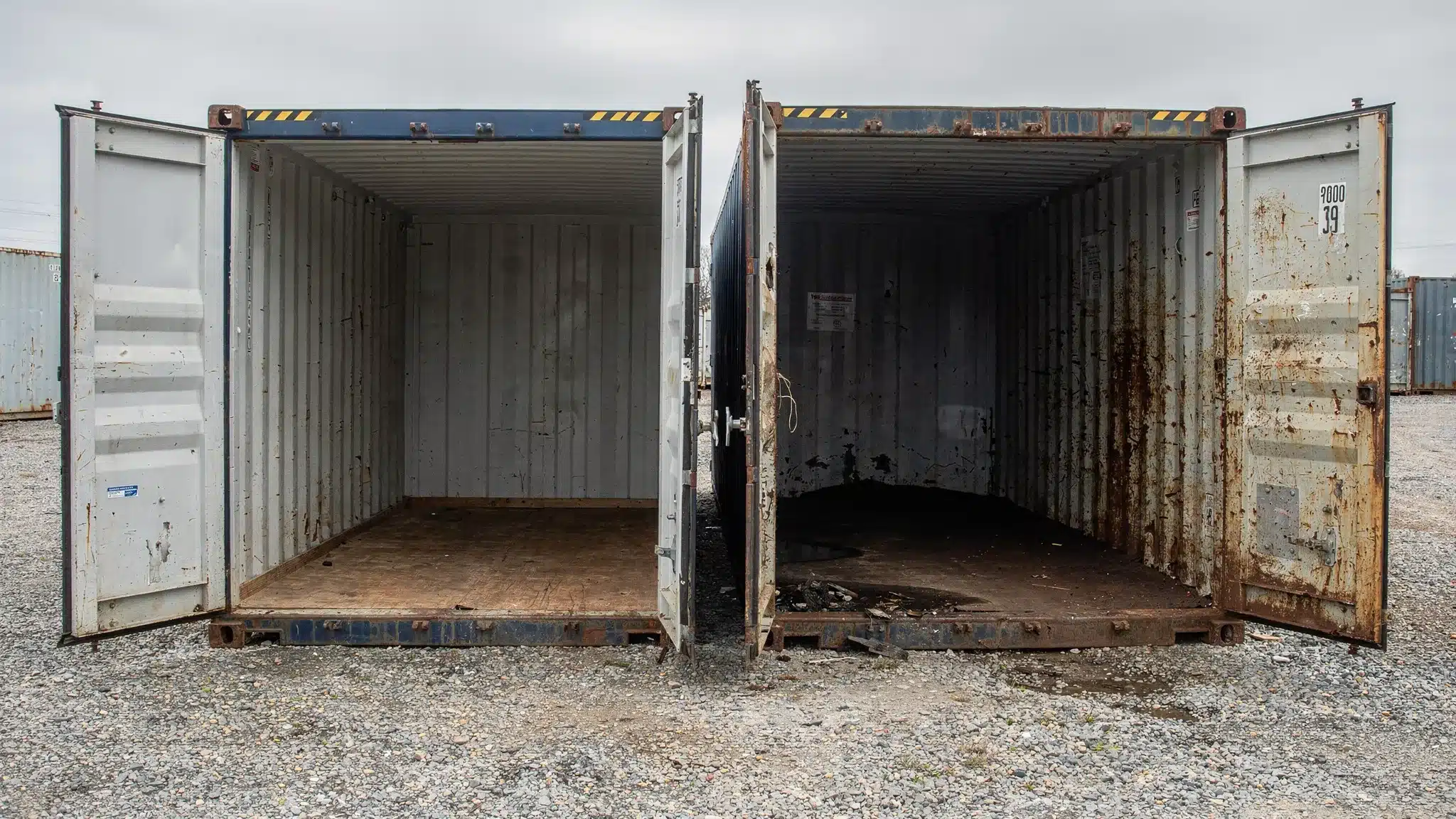
Used storage containers should be evaluated like any other piece of equipment. Before you buy (and again at delivery), focus on what affects function.
The 60-second exterior check
- Roofline and top rails: look for dents, patched areas, or obvious deformation
- Side panels: moderate dents are usually fine, deep creases can signal structural stress
- Corner castings and posts: should look straight and intact
Doors and seals (the biggest source of “cheap” regret)
- Doors should open and close without extreme force
- Locking bars should engage smoothly
- Gaskets should not be missing or torn through
Floor and interior
- Check for soft spots, delamination, or strong chemical odors
- Look for light coming through around doors or roof seams
- Confirm vents are present and not damaged (helps with condensation control)
When buying used storage containers is the smart move (not the risky one)
Used storage containers are often the best value when:
- You need secure, durable storage and cosmetic appearance is not critical
- You choose wind and watertight or cargo-worthy instead of unknown “used”
- Your supplier provides inspection, transparent condition details, and reliable delivery
For many U.S. buyers, a properly graded used container is the sweet spot: strong steel construction, long service life, and a price point that makes sense for job sites, farms, and business storage.
Why buyers choose Global Containers Line for used storage containers
Global Containers Line is a USA-based supplier of new and used shipping containers for storage, construction, commercial, and residential use.
What you should expect when you buy through Global Containers Line:
- Cargo-worthy, wind and watertight containers that are thoroughly inspected before dispatch
- Transparent pricing and secure online ordering
- Fast nationwide delivery across the United States, including major cities and surrounding areas
- Inventory in popular sizes including 10ft, 20ft, 40ft, and high cube units
If you are still deciding on size, start with the most common storage options:
- Shop 20ft shipping containers for sale
- Shop 40ft shipping containers for sale
Frequently Asked Questions
Are used storage containers worth it? Yes, if the container is correctly graded (for example wind and watertight or cargo-worthy), inspected, and delivered with a clear quote. The best deals are rarely the lowest sticker price, they are the lowest total cost to get a usable unit onsite.
What is the biggest hidden cost when buying a cheap container? Delivery and usability. A “cheap” container can become expensive if trucking is excluded, access requirements are missed, or the unit needs door, floor, or leak repairs before it can protect your items.
How fast can you deliver a used storage container in the USA? Delivery time depends on inventory availability and your location, but Global Containers Line offers fast nationwide delivery across the United States, including major metros like Houston, Dallas, Atlanta, Phoenix, Miami, and Los Angeles.
Should I buy a 20ft or 40ft used storage container? Choose 20ft if you need easier placement and access in tight spaces (driveways, small job sites). Choose 40ft if you want maximum storage capacity and better value per square foot, and you have enough room for delivery and placement.
What condition should I buy for storage? For most storage uses, wind and watertight is the baseline. If you need higher structural assurance or may later move or ship the container, cargo-worthy is often a better fit. For high-visibility placements or conversion projects, consider one-trip.
Get a delivered quote you can trust
If you are comparing used storage containers and want to avoid expensive surprises, browse inspected inventory or request a delivered quote based on your zip code and site access.
Browse available units now:
- 20ft shipping containers
- 40ft shipping containers
Or visit Global Containers Line to check current availability and get fast nationwide delivery across the USA.