
When you search “cargo container for sale near me”, the results can look similar at first, a few photos, a price, and a phone number. The difference shows up later, when delivery gets scheduled, when the container arrives in a different condition than expected, or when surprise fees appear.
This guide breaks down how to compare container sellers the right way, so you can buy with confidence whether you’re in Houston, Dallas, Atlanta, Phoenix, Miami, Los Angeles, or a rural ZIP code in between.
What “near me” really means in the container market
In many U.S. cities, the container you buy is not sitting 5 minutes away, even if the seller is local. Inventory moves between depots, ports, and yards, and “near me” often means one of these situations:
- The seller has a local yard, but limited sizes and conditions available.
- The seller is a broker listing containers from multiple yards.
- The seller can deliver regionally or nationwide from the closest available depot.
Why it matters: delivery and offload logistics can be a major part of your total cost and your timeline. Two quotes can look $300 cheaper on the unit price but end up more expensive after trucking, offload equipment, or redelivery fees.
Global Containers Line is built for this reality, we supply new and used containers and offer fast nationwide delivery across the United States, so you can shop based on the right container and the true delivered total, not just who has a yard closest to your search location.
Compare seller types (and what each one is best for)
Different sellers can be legitimate, but they do not provide the same consistency, documentation, or delivery support.
| Seller type | Best for | Typical strengths | Common risks to watch |
|---|---|---|---|
| Direct supplier (national or regional) | Buyers who want transparent condition and delivered pricing | More consistent grading, inspection process, delivery coordination | Some sellers still quote unit price only unless you ask |
| Local yard | Same-day selection if inventory is on-site | You may be able to view containers in person | Limited inventory, delivery may be outsourced, pricing can vary widely |
| Broker | Hard-to-find units or quick sourcing across multiple depots | Can locate inventory fast | Condition can be “as reported,” fees can stack, accountability is unclear |
| Online marketplace listings | Comparing many offers quickly | Lots of options | Scams, unclear grades, “too good to be true” pricing, weak delivery support |
| Auctions / surplus sales | Experienced buyers who can inspect and transport | Potentially low purchase price | As-is condition, limited recourse, transport coordination is on you |
Simple rule: if you need a container for secure storage, a job site, or a conversion project, prioritize sellers who can provide clear condition standards, recent photos, and an itemized delivered quote.
The 3 essentials to compare sellers accurately
1) Compare the same size and configuration
Start by confirming you are comparing the same container type:
- 20ft vs 40ft (and standard height vs high cube)
- Standard doors vs specialty options (double doors, open top, refrigerated)
If you are deciding between common sizes, start here:
- Browse 20ft shipping containers
- Browse 40ft shipping containers
If you are not sure what fits, the fastest way to avoid overbuying is to use a size-first approach, then match condition to your use case. (This is also covered in the site’s broader resources like the Ultimate Shipping Container Buying Guide.)
2) Compare the same condition grade (not just marketing labels)
“Used” can mean very different things depending on the seller. Ask the seller to specify the grade clearly, and what it includes.
Common terms you will see:
- One-trip (new-ish): typically the cleanest option with minimal wear.
- Wind and watertight (WWT): designed for storage, keeps out wind and water, but can have dents, surface rust, and repairs.
- Cargo-worthy (CW): structurally sound for transport standards, but not cosmetically perfect.
- As-is: lowest cost tier, higher risk, usually not recommended unless you can inspect and accept repairs.
If you want a quick reference for what “cargo-worthy” does and does not mean, see: What Cargo Worthy Really Means.
3) Compare the delivered total, with delivery method included
A real quote should be based on your ZIP code and site access, not just “delivery available.” Your offload method matters because it changes equipment needs.
What a good quote should include (copy and paste this checklist)
The easiest way to compare sellers is to request an itemized delivered quote. Here is what to ask for so your comparisons are apples to apples:
| Quote item | What to confirm | Why it matters |
|---|---|---|
| Container size and height | 20ft or 40ft, standard or high cube | Prevents accidental mismatches |
| Condition grade definition | One-trip, WWT, cargo-worthy, as-is (define it) | “Used” alone is not enough |
| Unit price | Price of the container itself | Lets you compare pricing fairness |
| Delivery to your ZIP | Itemized delivery or all-in delivered total | Delivery is a major cost driver |
| Offload method | Tilt-bed, flatbed with customer forklift, crane, or other | Impacts cost and site requirements |
| Taxes and checkout fees | Sales tax (if applicable), processing fees | Prevents surprise add-ons |
| Redelivery or accessorial fees | Charges if the truck cannot complete delivery | Protects you from avoidable costs |
| Photos and inspection notes | Recent photos of the actual unit (or equivalent unit) | Reduces condition surprises |
For a deeper breakdown of what “near me” pricing usually includes, see: Container for Sale Near Me Prices: What Quotes Include.
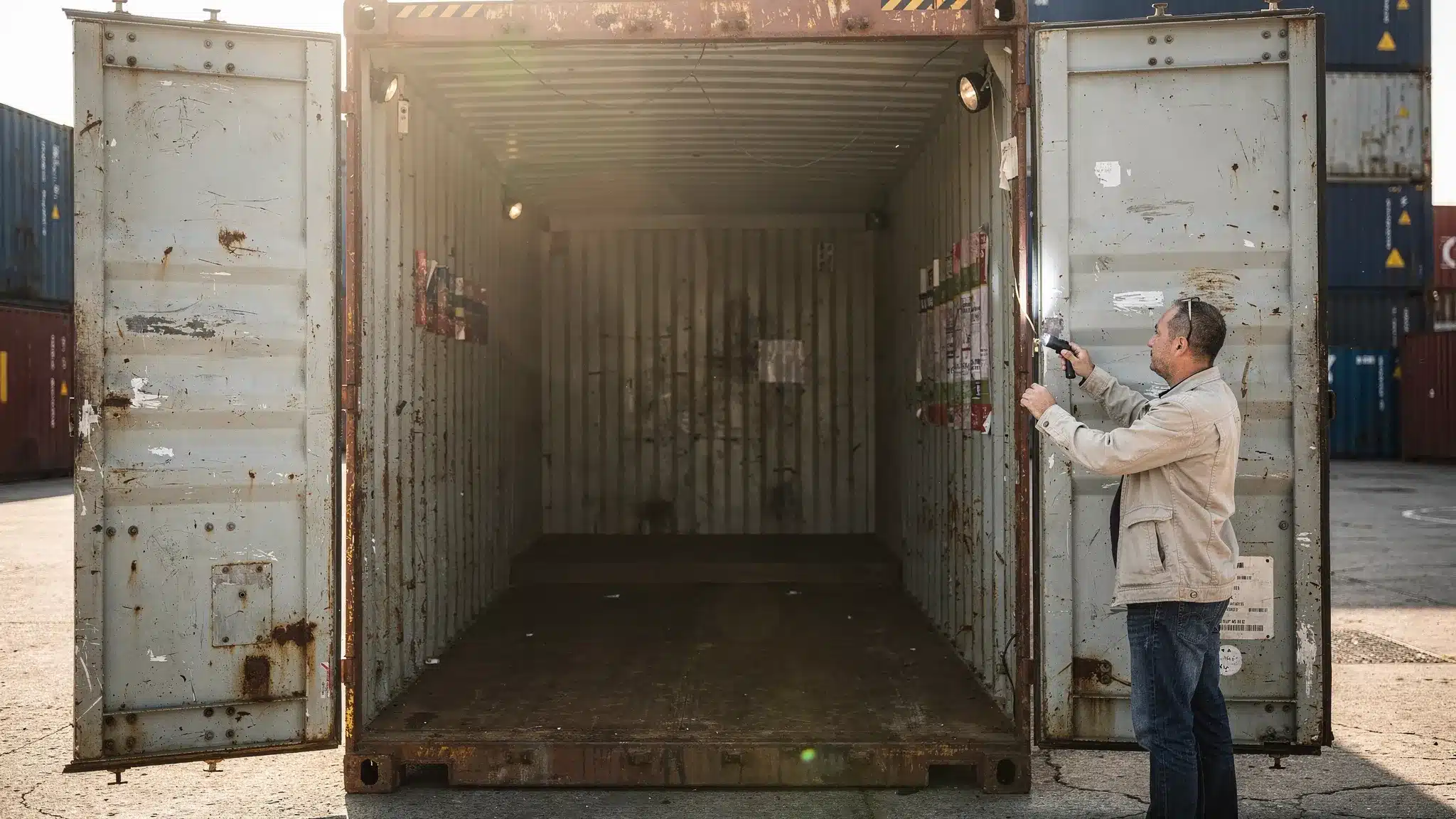
How to verify container condition quickly (without wasting a day)
You do not need to be a container expert to spot the difference between normal wear and a problem that affects performance.
Ask for recent photos, and request these angles
A reputable seller should be able to provide photos that clearly show:
- Both door faces and door seals
- Interior corners and ceiling (to check for daylight leaks)
- Floor close-ups (especially by the doors)
- Roof line (major dents can lead to pooling)
- Corner castings and frame
Focus on function first
For most storage and job-site buyers, prioritize:
- Doors that open and close smoothly (a common pain point on heavily used units)
- No active leaks (especially around roof seams and door gaskets)
- Solid floors (no soft spots, delamination, or strong chemical odors)
Cosmetic dents and surface rust are common in used containers. The key is whether the container is still structurally sound and weather-resistant for your intended use.
Delivery questions that separate good sellers from risky ones
Delivery is where many “cargo container for sale near me” purchases go sideways. Before you pay, get clear answers to these points.
What delivery method will be used?
Most deliveries are handled using one of these approaches:
- Tilt-bed delivery: common for residential and many job sites, the container slides off the truck.
- Flatbed delivery (customer offloads): you need equipment on-site to unload.
- Crane delivery: used when placement requires lifting or tight positioning.
If you want a full logistics overview, reference: Transporting a Shipping Container: Permits, Costs, Timelines.
What site details should you provide for an accurate quote?
To get a reliable delivered quote in places like Texas, Florida, Georgia, Arizona, California, and beyond, share:
- Delivery ZIP code
- Placement surface (dirt, gravel, concrete)
- Any access constraints (tight turns, gates, steep grades)
- Overhead obstacles (trees, wires)
- Preferred door direction (which way you want the doors facing)
These details help the seller avoid preventable redelivery fees and schedule the right truck.
Pricing: what to expect, and why two “similar” containers cost different amounts
Buyers usually want a quick price answer. The honest answer is that container pricing is local and logistics-driven, even when buying online.
Your total cost typically changes based on:
- Condition grade: one-trip costs more than cargo-worthy or WWT.
- Size: 40ft units cost more than 20ft units, and can cost more to deliver.
- Location and trucking distance: delivery into dense metros (Los Angeles, Miami) or remote areas can shift totals.
- Access and offload complexity: tight access can require different equipment.
To stay grounded, use city guides as benchmarks when budgeting. For example, Global Containers Line’s recent city pricing guides commonly show cargo-worthy delivered ranges (market dependent) around:
| Container type (cargo-worthy) | Common delivered budgeting range in many U.S. markets | Notes |
|---|---|---|
| 20ft cargo-worthy | Around $1,800 to $2,800 | Delivery and access can move totals |
| 40ft cargo-worthy | Around $2,500 to $4,500 | High cube typically adds a premium |
If you need location-specific benchmarks, use the guides for major markets such as Houston, Dallas, Atlanta, Phoenix, Orlando, Miami, Jacksonville, Tampa, and Los Angeles across the site’s pricing library.
Red flags when comparing container sellers
If any of these show up, slow down and verify before paying:
- The seller will not provide an itemized delivered quote to your ZIP.
- You cannot get recent photos, or photos look copied from other listings.
- The condition description is vague (only “good used” with no grade definition).
- The payment method feels unsafe (pressure to wire money, unusual payment instructions).
- The business address or company identity is unclear.
- The price is far below market and the seller will not explain why.
If you want a framework for spotting “cheap” traps, this guide is helpful: Cheap 20ft Shipping Container for Sale: Red Flags to Know.
A simple scorecard to choose the best seller
When you are comparing 2 to 5 sellers, use this scorecard to pick the best overall value, not just the lowest headline price.
| Comparison factor | What “good” looks like | Why it protects you |
|---|---|---|
| Delivered quote clarity | Total delivered price, itemized, tied to your ZIP | Prevents hidden delivery costs |
| Condition transparency | Defined grade plus photos | Reduces surprises at delivery |
| Payment and checkout | Secure payment options, clear invoice | Lowers scam risk |
| Delivery planning | Seller asks about access and offload | Reduces failed deliveries |
| Reputation and support | Responsive communication, clear process | Faster resolution if issues arise |
Why U.S. buyers choose Global Containers Line
If you want to avoid the common pitfalls of “near me” shopping, the safest approach is to buy from a supplier that combines inventory, inspection standards, and logistics coordination.
Global Containers Line is a USA-based supplier of new and used shipping containers for storage, construction, commercial, and residential use. Containers are thoroughly inspected before dispatch, and customers can buy online with transparent pricing, secure checkout, and fast nationwide delivery across the United States, including major markets like Houston, Dallas, Atlanta, Phoenix, Miami, and more.
Next step: browse inventory or request a delivered quote
If you are actively comparing sellers right now, the fastest way to get an apples-to-apples comparison is to request a delivered quote with your ZIP code and a few site details.
- Browse available 20ft shipping containers
- Browse available 40ft shipping containers
- Or visit Global Containers Line to browse inventory and request pricing for your location