
If you have ever compared “storage container prices” online, you have probably noticed something frustrating: the sticker price can look great, but the delivered quote ends up higher than expected. In the U.S. container market, the real price is almost always the delivered price, meaning the unit plus trucking plus the details of how it will be placed on your site.
This guide breaks down what impacts your delivered quote (and what you can do about it), whether you are buying for a job site in Houston or Dallas, farm storage outside Phoenix, a business expansion near Atlanta, or storm-ready storage in Miami and South Florida.
Quick answer: what impacts storage container prices the most?
For most buyers, these are the biggest drivers of the delivered quote:
- Container size and type (10ft vs 20ft vs 40ft, standard vs high cube)
- Condition/grade (new one-trip vs used wind and watertight vs cargo-worthy)
- Delivery distance to your ZIP code (and the trucking route)
- Offload method and site access (tilt-bed friendly driveway vs crane required)
- Timing and local availability (inventory swings near major metros and ports)
If you want the fastest path to an accurate number, start by requesting an itemized quote that separates container price from delivery and offload.
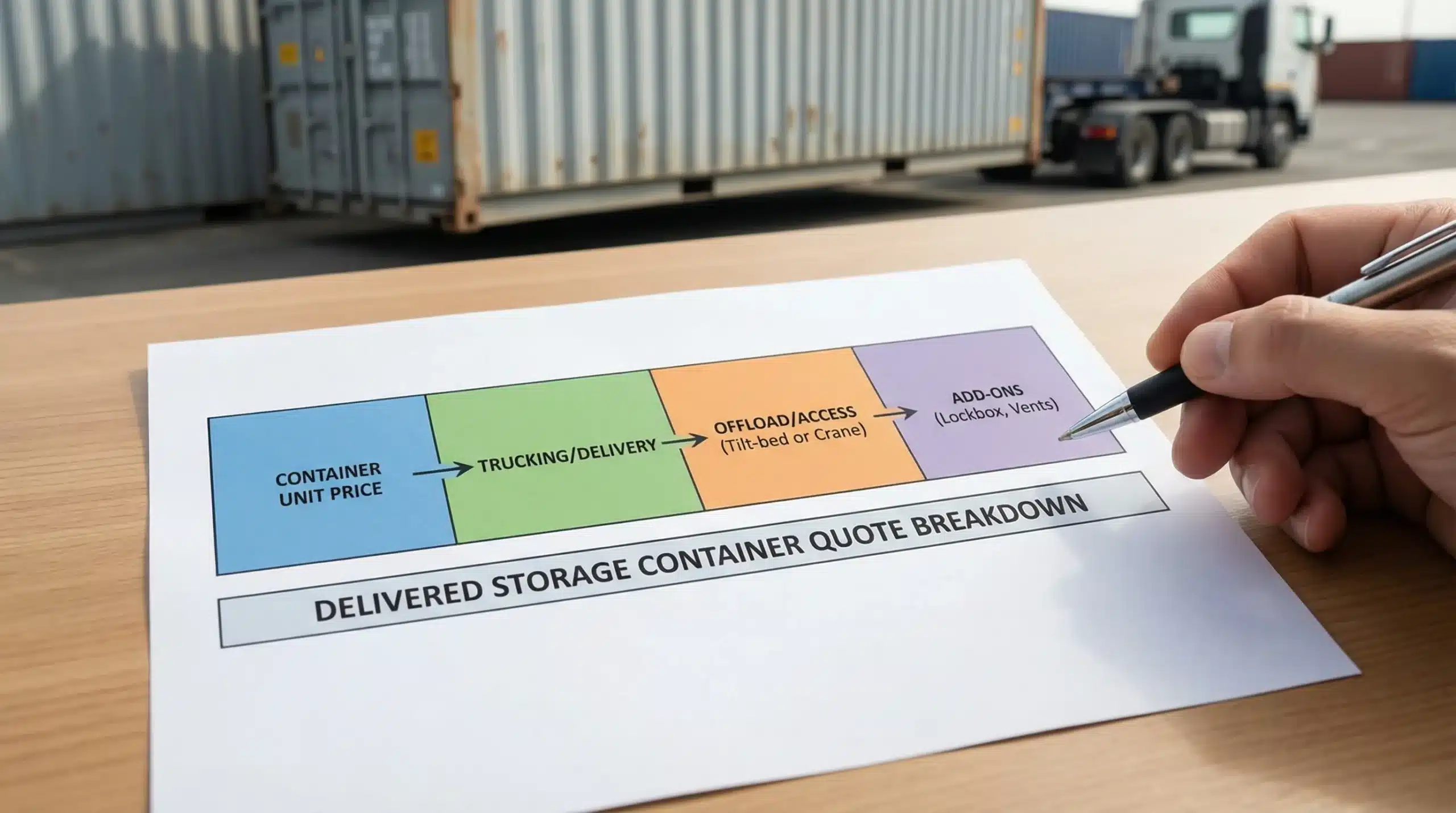
What “storage container prices” usually include (and what they do not)
The phrase “storage container prices” is used loosely online. Some sellers advertise just the yard price of the container, while others show a delivered price to a specific area. To compare apples to apples, ask what is included.
Here is the most common breakdown for a delivered quote in the United States.
| Quote line item | What it covers | Why it changes the total |
|---|---|---|
| Container unit price | The container itself (size, type, condition) | Big swings based on grade, age, and local inventory |
| Delivery/trucking | Transport from depot/yard to your site | Distance, fuel, routing, metro congestion |
| Offload/placement | How it is unloaded (tilt-bed, roll-off, crane) | Tight access or soft ground can require equipment |
| Accessorials | Redelivery attempts, special scheduling, escorts/permits (when needed) | Usually avoidable with good site prep |
| Taxes/processing | Depends on location and seller | Varies by state/city and transaction method |
| Add-ons | Lockbox, vents, shelving, paint, doors, modifications | Optional, but can be worth it for security and usability |
A transparent seller should be able to tell you whether their price is delivered, delivered and offloaded, or picked up at the yard.
Typical price bands (unit price vs delivered price)
Because inventory and trucking costs change, there is no single national number that fits every ZIP code. Still, most U.S. buyers will see pricing fall into predictable bands based on size + condition.
As a general rule:
- Used containers cost less upfront but vary more in appearance.
- New (one-trip) containers cost more but are usually the safest choice for customer-facing use, long-term ownership, or clean conversion projects.
- Delivered pricing can shift dramatically based on your distance from available inventory and how hard your site is to access.
If you want a deeper sizing overview before you price-shop, the company’s ultimate shipping container buying guide is a helpful starting point.
The 7 biggest factors that change your delivered quote
1) Size: 20ft vs 40ft (and why “bigger” is not always cheaper)
Size is the first lever in storage container prices.
- 20ft containers are often easier to place on residential driveways, tighter lots, and small job sites.
- 40ft containers offer more cubic storage, but delivery and placement can be more challenging (longer turning radius, more clearance needed).
Depending on local trucking and inventory, a 40ft can sometimes be a better value per square foot, but only if your site can take it without special handling.
If you are ready to shop by size, start here:
- Browse 20ft shipping containers
- Browse 40ft shipping containers
2) Condition/grade: what you are really paying for
Condition is the most misunderstood part of pricing.
In plain terms:
- New / one-trip: Minimal wear, typically best doors and paint, usually preferred for retail, hospitality, and clean conversions.
- Wind and watertight (WWT): Great for storage, expect cosmetic dents, surface rust, and repairs, but it should keep water out.
- Cargo-worthy (CW): Structurally sound for shipping use cases, may include a CSC plate depending on the unit and requirements, but cosmetic condition varies.
For many homeowners and contractors, a used WWT or CW container is the sweet spot if the priority is secure storage, not looks.
3) Location and availability (why Phoenix can price differently than Miami)
Your delivered quote depends heavily on where available inventory sits relative to you.
Examples of what can move storage container prices:
- Port and depot proximity: Markets closer to major container flows (for example, Southern California or the Gulf Coast near Houston) can see different availability than inland locations.
- Regional demand: Construction cycles in Texas metros (Dallas, Houston, San Antonio) and development around Atlanta can tighten supply during peak seasons.
- Weather-driven surges: Storm preparation in Florida can increase demand for secure storage around Miami, Tampa, and Orlando.
Even within the same state, a quote can change when the closest available unit is 30 miles away versus 230 miles away.
4) Delivery distance and trucking economics
Trucking is often the largest “surprise” cost for buyers focused only on the container’s base price.
Two notes that matter:
- Fuel costs affect local freight pricing. The U.S. Energy Information Administration tracks national and regional diesel price trends, which helps explain why delivery pricing can shift over time (see the EIA diesel fuel update).
- Metro congestion and routing can change real delivery time and cost, especially in large markets like Los Angeles, Atlanta, Dallas-Fort Worth, and Houston.
5) Offload method: tilt-bed vs crane (and why access changes everything)
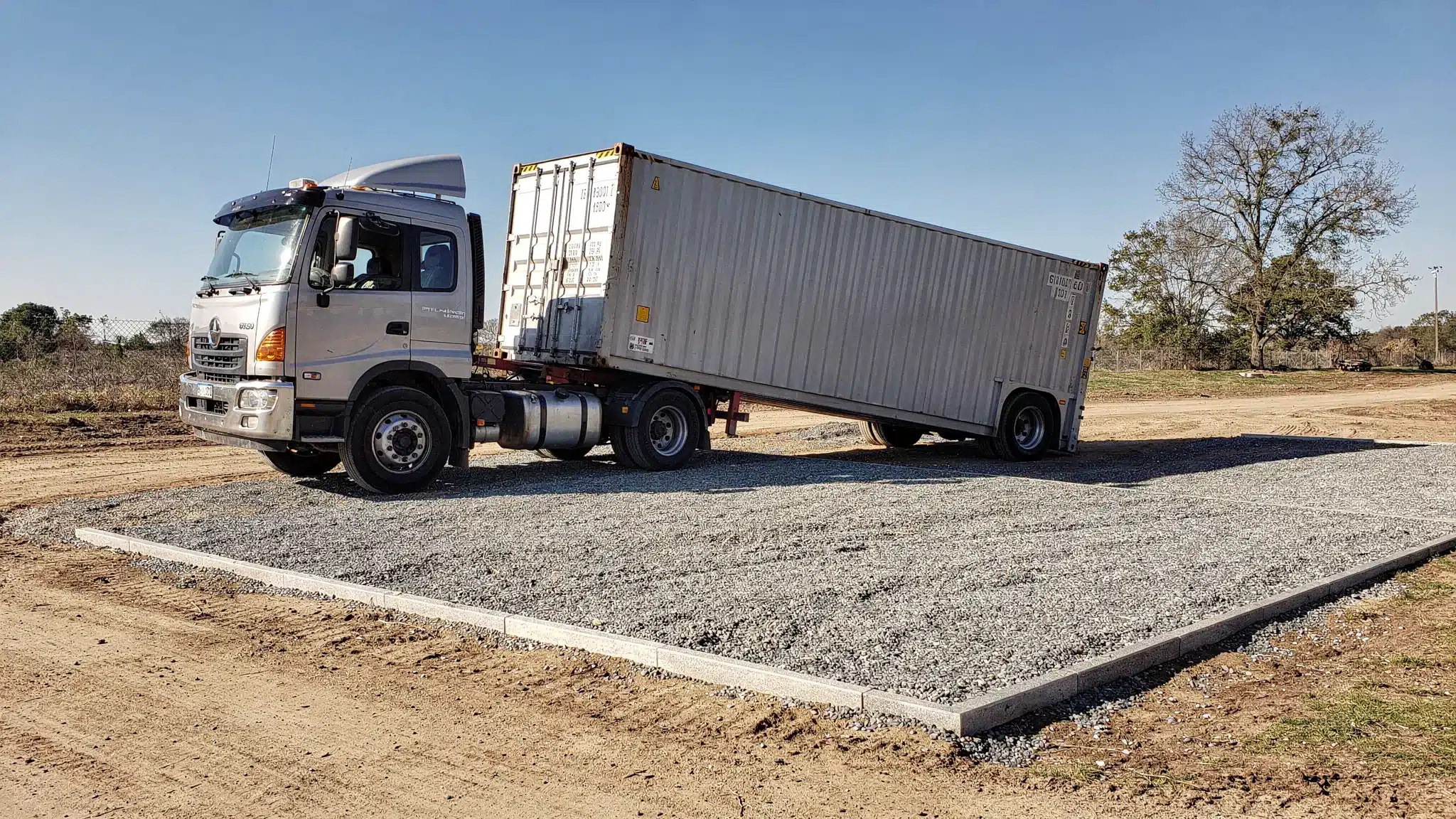
Many deliveries are done by tilt-bed or roll-off style trucks, which is efficient when access is straightforward.
Your delivered quote may increase if:
- You have tight turns, narrow gates, or limited staging room.
- There are low branches or overhead lines.
- The ground is soft or sloped, requiring careful placement or equipment.
- You need the container set behind a building where a tilt-bed cannot safely slide it.
In those cases, a crane, forklift, or specialized setup may be required, and that changes the delivered quote fast.
6) Site readiness (this is where buyers trigger avoidable fees)
Even when the base delivery price is reasonable, “accessorial” charges can appear when the site is not ready.
Common avoidable issues include:
- Delivery truck cannot enter or turn around, resulting in a redelivery.
- The placement area is not level or firm enough, causing a failed offload.
- The buyer has not confirmed local placement rules (HOA, setbacks, temporary structure rules).
A good supplier will ask site questions upfront to prevent this, because redeliveries waste everyone’s time and budget.
7) Add-ons and modifications
Add-ons are not “hidden fees,” but they do change storage container prices and should be quoted clearly.
The most common add-ons that affect the delivered total:
- Lockbox (lock protector) for better theft resistance
- Extra vents for moisture control in humid areas
- Shelving for parts storage and organization
- Paint or refurbishment for appearance and branding
For conversion projects (offices, cabins, retail), modifications can easily exceed the container cost itself, so it is smart to separate the budget into: container, delivery, and buildout.
Real-world delivered quote examples (why two “same size” containers price differently)
Here are a few common scenarios that explain pricing swings without relying on one city-specific number.
Example A: Contractor in Dallas buying a 40ft for a job site
- Chooses a used 40ft because the container is for tool and material storage.
- Delivery is to a commercial site with wide access.
- Tilt-bed offload works.
Result: the quote is primarily driven by container grade and delivery distance, not equipment.
Example B: Homeowner outside Phoenix buying a 20ft for household storage
- Chooses a 20ft because access is tight.
- Driveway slope and limited staging means the driver needs more room to offload.
Result: the quote can rise due to placement complexity, even if the container price is similar.
Example C: Business near Miami buying a cleaner-looking unit
- Chooses a one-trip container for a customer-facing location.
- Adds a lockbox and wants specific door orientation.
Result: the quote increases mostly from condition (one-trip premium) and add-ons, not from delivery.
How to get an accurate delivered quote (fast)
If you want accurate storage container prices for your ZIP code, give the seller enough info to quote delivery and placement correctly the first time.
Provide:
- Delivery ZIP code (or full address if available)
- Container size and preference (20ft, 40ft, standard vs high cube)
- Intended use (storage, construction site, shipping, conversion)
- Preferred condition (new one-trip, used WWT, cargo-worthy)
- Placement surface (gravel, concrete, dirt) and whether it is level
- Access notes: gate width, tight turns, slope, mud risk
- Overhead obstacles (trees, power lines)
- Desired delivery window and any job site restrictions
This is exactly why working with a nationwide supplier can simplify things: you are not just buying steel, you are buying a coordinated delivered outcome.
How to keep storage container prices under control (without sacrificing quality)
Lowering your delivered cost usually comes down to planning, not haggling.
Match the condition to the job
If it is pure storage, you can often save by accepting cosmetic wear. If it is customer-facing or a long-term conversion, the premium for a cleaner one-trip unit may reduce future headaches.
Make delivery easy
A simple, level pad and clear access can be the difference between a straightforward drop and a complex placement requiring extra equipment.
Ask for “delivered and offloaded” pricing
Some quotes sound cheaper because they exclude offload. Always confirm whether the price includes:
- Delivery to site
- Offload and final placement
- Any fees for rural routes or restricted access
Avoid the cheapest “as-is” deals unless you know what you are doing
Ultra-low prices are often tied to containers that may need door work, patching, or floor remediation. If you need reliable wind and watertight storage, paying for an inspected container is usually cheaper than repairing a bad one.
Why buyers choose Global Containers Line for delivered pricing in the USA
Global Containers Line is a U.S.-based supplier of new and used shipping containers, serving customers across major markets like Houston, Dallas, Atlanta, Phoenix, and Miami, with fast nationwide delivery across the United States.
What matters for your quote is that the containers are:
- Cargo-worthy, wind and watertight, and thoroughly inspected before dispatch
- Sold with transparent pricing and secure online ordering
- Delivered reliably to your location, with logistics planned around real site conditions
Next step: browse available containers or request a delivered quote
If you are ready to price a unit for your property, job site, or business location, the fastest move is to shop by size and request an itemized delivered quote.
Browse inventory:
- Shop 20ft shipping containers
- Shop 40ft shipping containers
If you want the most accurate delivered number, request a quote with your ZIP code and access details through Global Containers Line, and the team can help you choose the right size, condition, and delivery approach for your site.