
Shopping for a shipping container online can feel like comparing apples to oranges. Two listings can both say “20ft container for sale,” yet the final price, the condition you receive, and even what’s included can be very different.
This guide explains container shop price the practical way, what you actually get at each price point, what’s usually missing from the “sticker price,” and how to compare delivered quotes confidently anywhere in the U.S., from Houston and Dallas to Atlanta, Phoenix, and Miami.
What “container shop price” usually includes (and what it doesn’t)
When buyers talk about container shop price, they often mean the advertised price on a website or listing. But in the real world, your total cost is typically a mix of the container itself plus delivery logistics and any upgrades.
Commonly included in the listed price
In most cases, the listed price mainly covers:
- The container unit (size and type, such as 20ft standard, 40ft standard, or 40ft High Cube)
- A condition tier (new/one-trip, cargo-worthy, wind and watertight, or budget used)
- Basic doors and locking bars as originally manufactured
At Global Containers Line, we focus on clear expectations and inspected units, and we offer fast nationwide delivery across the United States.
Often not included unless clearly stated
These items are the most common “surprise costs” for container buyers:
- Delivery to your ZIP code (or delivery may vary by distance and access)
- Offload method (tilt-bed delivery vs. needing a crane/forklift on site)
- Site prep (leveling, gravel, blocks, railroad ties)
- Local permits, zoning, HOA restrictions (varies widely by city and county)
- Modifications and accessories (lock box, vents, man door, roll-up door, windows, electrical)
- Taxes (varies by state and transaction type)
If you want the most accurate comparison between sellers, the goal is simple: compare delivered price, not just listing price.
Why two “identical” containers can have very different prices
Even within the same size category, pricing can swing based on a few major drivers.
| Price driver | What it changes | Why it matters to buyers |
|---|---|---|
| Condition tier | Longevity, weather resistance, appearance | Condition is usually the biggest quality separator |
| Size and type | Storage volume, delivery complexity | 40ft units cost more to move and place than 20ft |
| Delivery distance | Total delivered cost | Mileage from the nearest depot can outweigh small listing differences |
| Site access | Equipment needed and time on site | Tight turns, soft ground, or overhead lines can change delivery method |
| Regional availability | Market price and lead time | Inventory flow differs in Texas, Florida, Georgia, Arizona, and beyond |
A quick note on “cargo-worthy” and compliance
If you’re buying for storage, you usually care most about dry, secure space.
If you’re buying for transport, you may care about compliance standards and documentation. For international transport, containers may be governed by the CSC (Convention for Safe Containers) framework. You can learn more through the IMO overview of the CSC Convention.
Not every project needs CSC documentation, but knowing whether you need “transport-ready” condition can prevent expensive mistakes.
Container shop price points: what you get at each level
Exact pricing varies by market and timing, so think of these as tiers of expectations, not a guaranteed price list.
Price point 1: Budget used (lowest listing price)
This tier is attractive when the priority is the lowest upfront cost.
Best for
Basic storage where looks are not important, and you can tolerate wear.
What you typically get
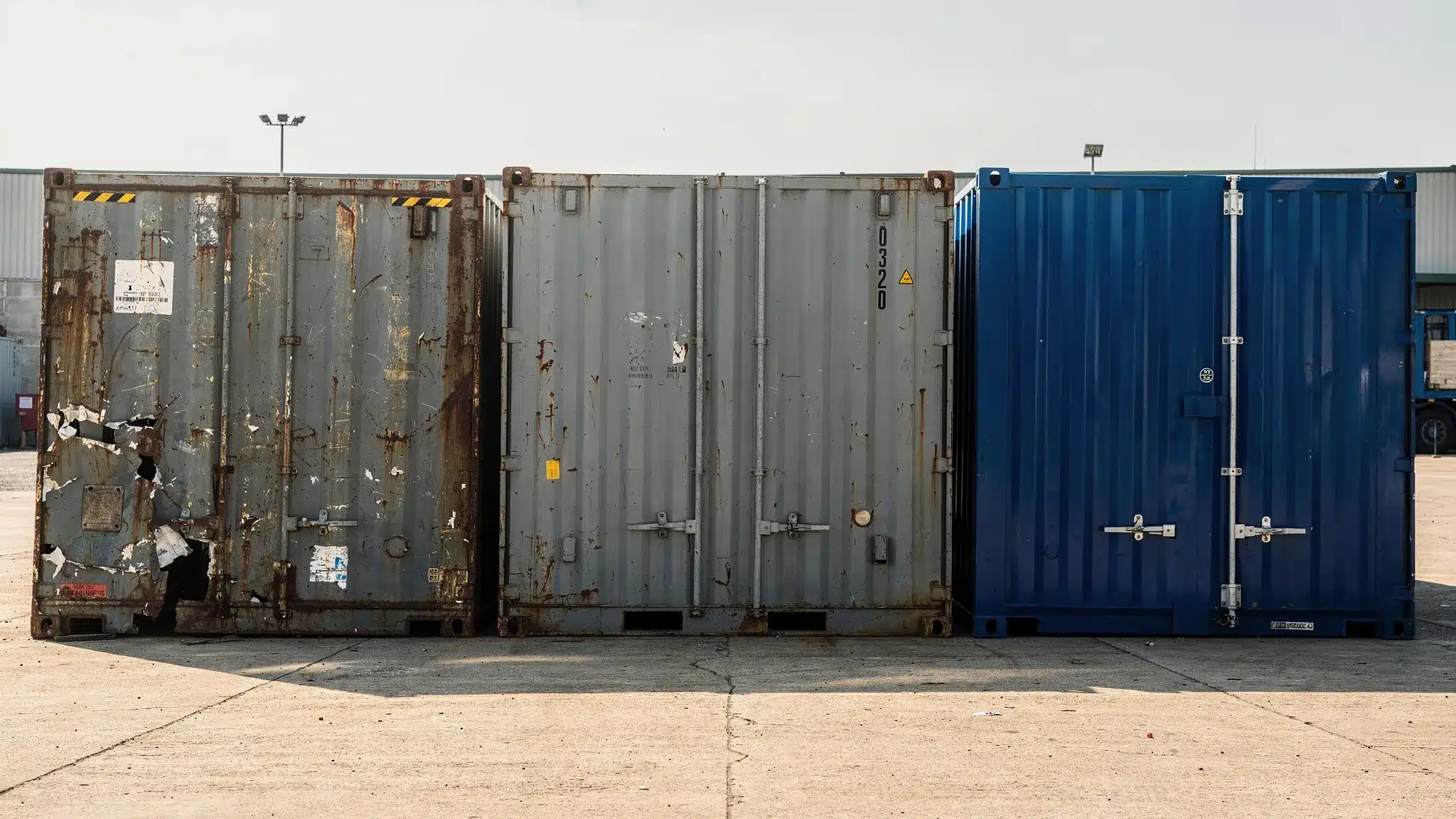
A used container with more visible age, which can include dents, surface rust, patches, and worn paint.
What to verify before you buy
Because budget inventory can vary a lot, confirm these items:
- Is it explicitly wind and watertight (or not)?
- Do the doors open smoothly and seal tightly?
- Is the floor solid with no soft spots?
- Any holes in the roof or advanced corrosion on the bottom rails?
This tier can work well for farms, equipment overflow, or short-term storage, but it’s also where vague listings and unclear condition wording are most common.
Price point 2: Value used (wind and watertight)
For many U.S. buyers, this is the “best value” tier because it focuses on performance, not cosmetics.
Best for
On-site storage that must stay dry through weather swings, including heavy rain and humidity.
What you typically get
A container that seals properly, keeps out wind and water, and is suitable for storing tools, materials, boxed inventory, and equipment.
Who it fits well
Construction crews needing dry jobsite storage in Texas, Georgia, or Florida, small businesses expanding inventory space, and homeowners who want secure storage without paying new-container pricing.
Price point 3: Cargo-worthy (transport-ready expectations)
Cargo-worthy typically signals a higher standard for structural integrity than basic used grades.
Best for
Buyers who want stronger assurance of structural soundness, or who have shipping-related requirements.
What you typically get
A used container that is generally in better structural condition than a budget used unit, but still may show cosmetic wear.
Smart question to ask
“What criteria are you using for cargo-worthy, and is the unit inspected before dispatch?”
Those two details tell you far more than a label.
Price point 4: Premium (new or one-trip)
This is the tier for buyers who want the cleanest appearance and the least wear.
Best for
Projects where appearance matters or where prep work time is expensive, such as container offices, retail storage, and residential conversion starting points.
What you typically get
Cleaner surfaces, fewer dents, smoother door operation, and a more uniform look. This can reduce the amount of sanding, patching, and repainting needed for customer-facing or build-out projects.
The simplest way to compare: focus on the delivered price
A listing price is only useful if you know what assumptions are baked into it.
When you request quotes, ask for an “all-in delivered quote” to your ZIP code. That makes it much easier to compare sellers fairly.
What a clear quote should include
A strong quote should clearly state:
- Container size and type (10ft, 20ft, 40ft, High Cube, double door, etc.)
- Condition tier (wind and watertight, cargo-worthy, new/one-trip)
- Delivery cost to your ZIP code
- Offload method (tilt-bed delivery, or customer-provided equipment)
- Any additional fees and whether taxes are included or separate
If any part is vague, you are not comparing the same product and service.
Offload basics buyers miss
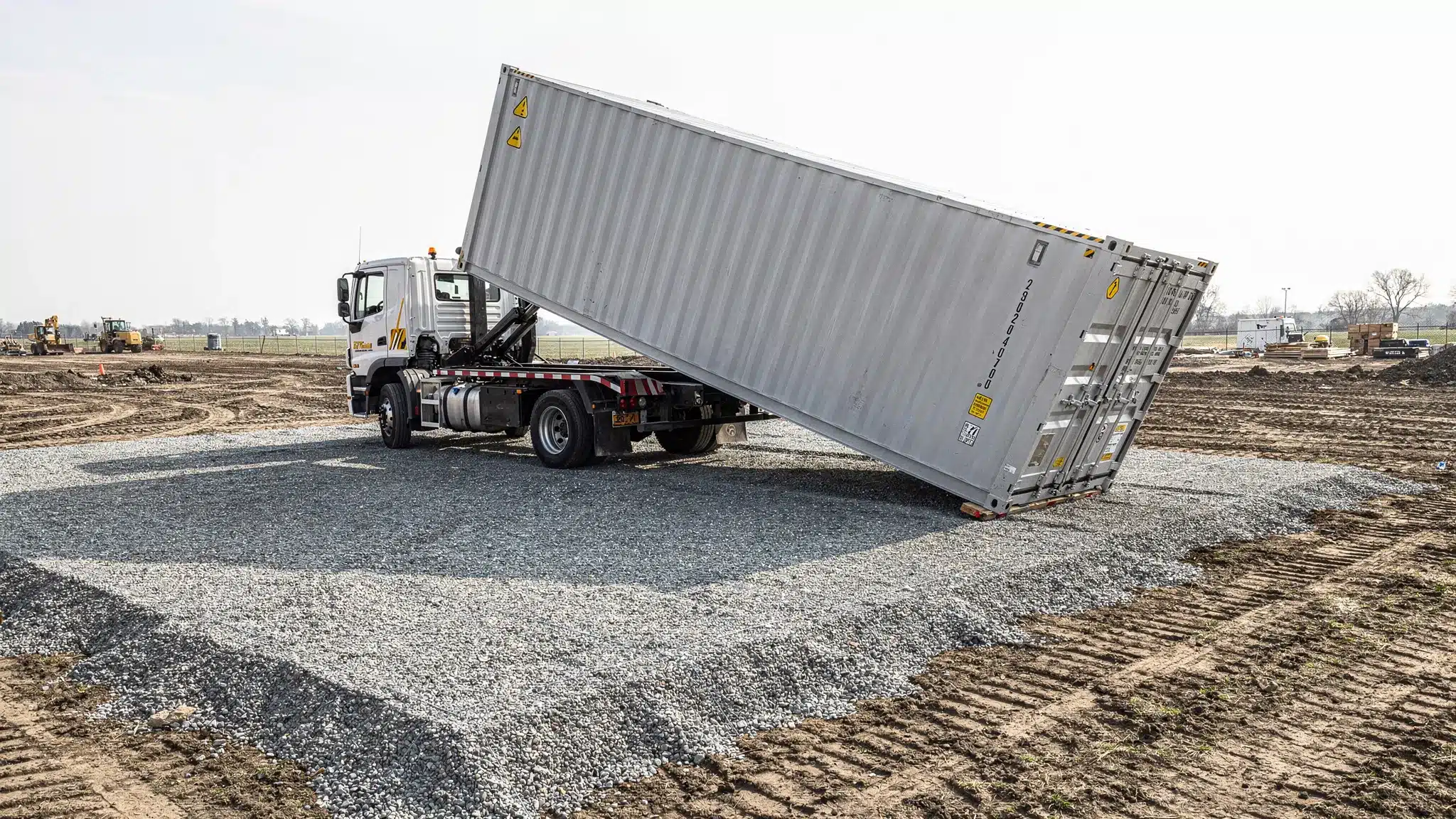
Many container deliveries in the U.S. use a tilt-bed for straightforward placements. If you have a tight site, soft ground, or obstacles like overhead lines, delivery may require more planning.
If you want a deeper logistics overview, see our guide on transporting a shipping container.
Location matters: why pricing changes by city and state
Container pricing can shift based on regional inventory flow and delivery complexity. That’s why a “great deal” you see online might not be a great deal once it’s delivered to your address.
Here’s how it commonly plays out:
Texas (Houston, Dallas)
Texas markets often have strong container movement, but local demand (construction, oil and gas, industrial storage) can tighten availability at times. Delivered pricing still depends heavily on how far you are from inventory and how accessible your site is.
Southeast (Atlanta, Miami)
In humid and storm-prone areas, buyers often prioritize wind and watertight quality. Dense neighborhoods and tight commercial loading areas can also make site access a bigger factor in your delivered total.
Southwest (Phoenix and surrounding areas)
Scheduling and site access can be key, especially for commercial properties with strict delivery windows. Heat and sun exposure also make roof integrity and door seals especially important for long-term storage.
Bottom line: always compare delivered price to your ZIP code, not just the base listing.
Matching your project to the right price tier
The “best” container shop price depends on what you’re using the container for.
Construction and jobsite storage
Most job sites prioritize function and speed.
A wind and watertight or cargo-worthy unit is often the practical choice, depending on how long you expect to use it and what you’re storing.
Key things to prioritize are dry interior, solid floor, doors that operate reliably, and delivery timing.
Small business storage and inventory overflow
If you store boxed goods, equipment, or supplies you can’t risk getting wet, wind and watertight is usually the right baseline.
If the container is customer-facing or supports a branded environment, a new or one-trip unit can reduce prep work and present better.
Farms and rural properties
For farms, ranches, and landowners, value often comes down to durability and practicality.
Budget used can work for certain equipment storage, but if you’re storing feed, tools, or anything sensitive to moisture, it usually pays to step up to wind and watertight.
Container offices and container home starting points
Conversions are where cheap containers can become expensive.
Cutting openings, insulating, finishing, and weatherproofing costs real money, so starting with a straighter, cleaner unit often reduces labor and rework.
If you’re exploring conversion concepts, the International Code Council (ICC) is a helpful reference point for understanding how building codes are administered in the U.S. (final requirements still depend on your local jurisdiction).
How to avoid “cheap container” mistakes that cost more later
Some low prices are real deals. Others are warning signs.
Red flags to watch for
- The seller will not clearly state the condition tier (especially wind and watertight)
- Delivery is vague or full of add-ons after checkout
- No mention of inspection practices
- The listing is far below your local market and details are minimal
A fast checklist that protects your budget
Before you buy, confirm these essentials:
| What to confirm | Why it matters |
|---|---|
| Condition tier in writing | Prevents “grade swapping” and unclear expectations |
| Doors and seals | A container that does not seal can ruin stored goods |
| Floor integrity | Floor repairs can be expensive and time-consuming |
| Delivery method and access needs | Prevents failed deliveries or rescheduling fees |
| Delivered price to your ZIP | Makes quotes comparable across sellers |
Browse the most common sizes (20ft vs 40ft)
If you’re deciding between sizes, start with the two most popular options:
- A 20ft container is often the easiest to place on residential and tighter commercial sites.
- A 40ft container can offer better cost per square foot, but requires more delivery clearance and placement room.
You can browse inventory here:
- 20ft shipping containers
- 40ft shipping containers
Frequently Asked Questions
What does container shop price mean? Container shop price usually refers to the advertised price online, which may only include the container unit. The delivered total can also include delivery, offload method, taxes, and any upgrades.
Are used shipping containers a good deal? Used shipping containers can be an excellent value if the condition tier matches your needs. For most buyers, wind and watertight used containers offer the best balance of cost and real-world storage performance.
What’s the difference between wind and watertight and cargo-worthy? Wind and watertight focuses on staying dry and secure for storage. Cargo-worthy typically indicates stronger structural suitability for shipping-related use cases, but you should ask the seller what criteria they use.
How do I compare container prices fairly between sellers? Compare the delivered price to your ZIP code with the same size, same condition tier, and the same offload method. If one quote excludes delivery or offload, it is not an apples-to-apples comparison.
Do you offer nationwide delivery in the United States? Yes. Global Containers Line offers fast nationwide delivery across the United States, including major markets like Houston, Dallas, Atlanta, Phoenix, Miami, and many more cities and states.
Get a delivered quote you can trust
If you want a container shop price that actually matches what shows up on site, start with a delivered quote based on your ZIP code, site access, and the condition tier you need.
Browse available inventory or request pricing and delivery help from Global Containers Line:
- Shop 20ft shipping containers
- Shop 40ft shipping containers
- Visit Global Containers Line to request a quote and schedule delivery