
Used 10ft container prices can look straightforward at first, until you start comparing quotes and realize the delivered total can vary a lot. The good news is that most price differences come from a few predictable factors: container condition, local availability, delivery distance, and how the unit will be offloaded at your site.
Before comparing quotes, it helps to understand what size shipping container fits your job so you know whether a 10ft unit is truly the best fit or whether a 20ft or 40ft container offers better value.
This guide breaks down what impacts the total cost of a used 10ft shipping container in the U.S., what to ask sellers so you can compare quotes fairly, and when it may make more sense to step up to a 20ft or 40ft.
Used 10ft container prices: the biggest factors (quick breakdown)
If you want the fastest way to understand pricing, focus on these cost drivers:
Condition and grade (cargo-worthy vs wind and watertight vs “as-is”)
Local supply and demand (10ft units can be harder to source in some markets)
Delivery distance to your ZIP code (and fuel, tolls, routing)
Offload method (tilt-bed set down vs crane/forklift requirements)
Access constraints (tight turns, soft ground, overhead wires, slopes)
Extras and compliance (lockbox, permits, site prep, taxes where applicable)
Global Containers Line helps buyers avoid surprises by offering transparent pricing, secure online checkout, and fast nationwide delivery across the United States on inspected containers.
What “used” really means for a 10ft container (and why it changes price)
In the container market, “used” is not one single condition. Sellers may use the word used for everything from a work-ready unit to a container that needs repairs. That’s why two quotes can be far apart even if both say “used 10ft.”
If you want to compare condition levels more clearly, read our guide on new vs used shipping containers before deciding which grade gives you the best long-term value.
Common condition tiers you will see
Cargo-worthy (CW): Typically suitable for transport and secure storage, with functional doors and structural integrity.
Wind and watertight (WWT): Generally intended for storage, with no active leaks through the roof or walls.
As-is / refurbished / economy: Can vary widely, may have dents, patches, surface rust, or door issues.
At Global Containers Line, containers are thoroughly inspected before dispatch, and inventory is positioned for real-world storage and project use (construction sites, farms, small businesses, and homeowners).
For storage buyers, understanding cargo-worthy vs wind and watertight containers is essential because the condition grade can affect both purchase price and future repair costs.
Age, prior use, and repairs
Even within the same grade, total cost can change based on:
Age and history (how many years in service, typical wear)
Roof and floor condition (roof dents can matter, floors should be solid and safe)
Door performance (easy to open, seals intact, locking bars working)
Professional repairs (quality patches and welds vs quick fixes)
If you are planning to convert the container (office, workshop, kiosk), the “cheapest used unit” is not always the lowest-cost decision once you add repairs and prep work.
Why used 10ft containers can cost more than you expect
A 10ft container is small, but it is not always cheap.
10ft availability is more limited in many U.S. markets
Many 10ft containers are cut-down conversions from larger units, and supply can be tighter than standard 20ft and 40ft containers. In practical terms, that can raise used 10ft container prices in certain regions, especially if you need quick delivery.
Cost per square foot can be higher than a 20ft
Because production, handling, and delivery still require equipment and trucking, a 10ft can be more expensive per square foot than a larger container, even if the total invoice is lower than a 20ft.
Delivery is often the biggest variable in the total cost
To avoid surprises, review our shipping container delivery and site preparation guide before requesting a delivered quote.
When buyers search “used 10ft container prices near me,” they’re often seeing yard pricing, not delivered pricing. Delivery is where quotes can diverge quickly.
Distance to your location (and local routing realities)
Delivered cost depends on how far the container must travel from the nearest available depot or yard, plus route constraints.
Examples where delivery pricing can vary widely by access and distance:
Texas: Houston vs rural areas outside Dallas-Fort Worth
Georgia: Metro Atlanta vs smaller towns with longer runs
Arizona: Phoenix metro vs remote desert deliveries
Florida: Miami vs inland routes with different access constraints
California: Los Angeles area deliveries often require extra planning for tight streets and overhead clearance
Global Containers Line supports fast nationwide delivery across the USA, including major cities and surrounding areas.
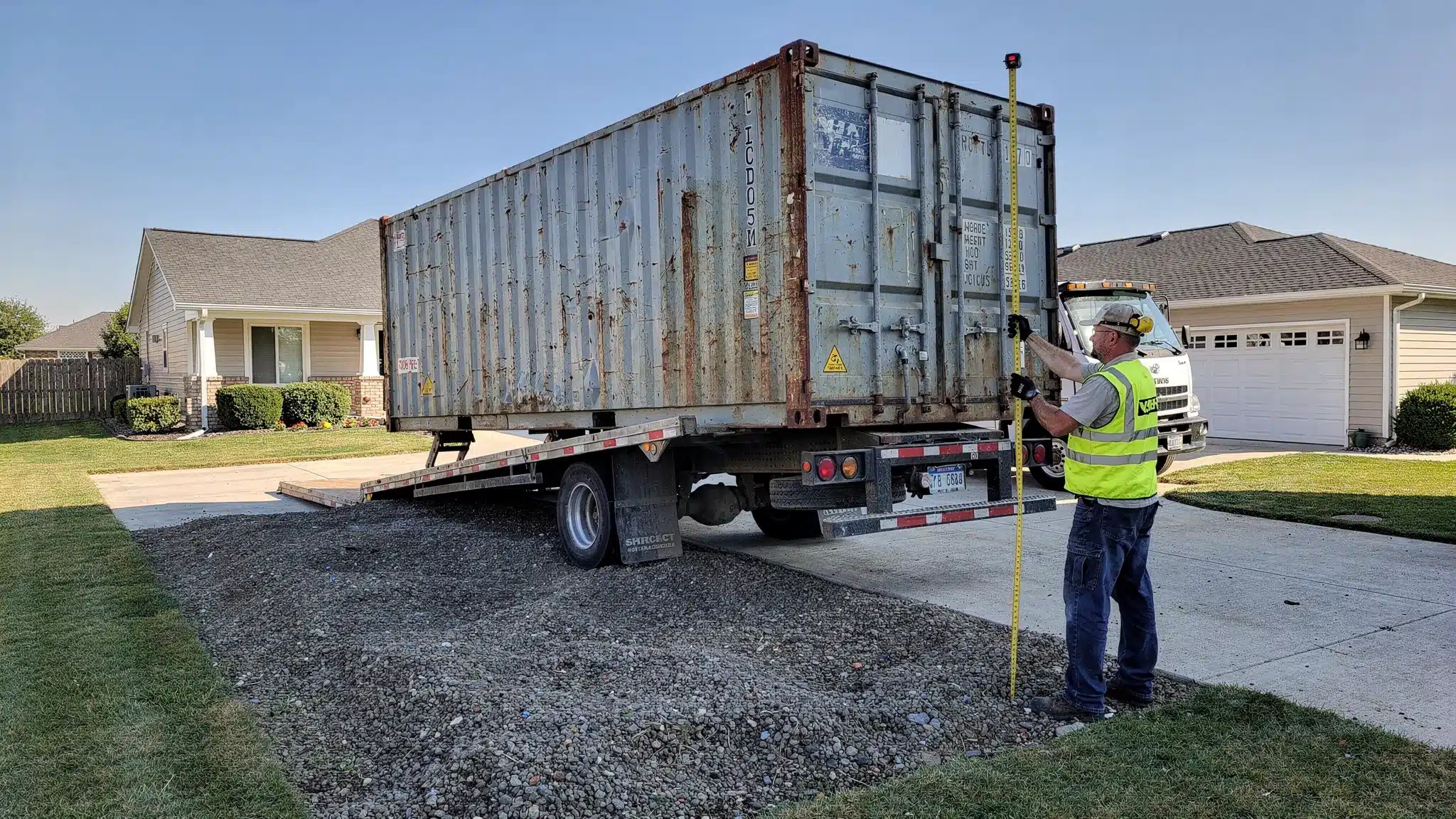
Offload method: tilt-bed vs crane vs forklift
Ask exactly how the container will be set down.
Tilt-bed (common for 10ft, 20ft, 40ft): The truck slides the container off the bed. This can be cost-effective, but it requires enough straight-line space.
Crane delivery: Helpful when you must place the container over obstacles, but typically adds cost.
Forklift offload: Less common for shipping containers unless the site already has equipment rated for the load.
If you are planning placement at a job site, yard, or restricted property, our guide to shipping container delivery methods and access requirements can help you choose the most practical offload option.
If your site is tight or the placement spot is behind a fence, up a slope, or near landscaping you want to protect, the offload plan matters as much as the container itself.
Site access and “small details” that affect price
These issues frequently change the delivered quote:
Narrow streets or steep driveways
Soft ground (mud, sand) that can cause the truck to sink
Low-hanging branches or power lines
Limited turning radius for delivery trucks
Placement surface not level
A reputable seller will ask about these conditions up front. It protects your delivery timeline and prevents rescheduling fees.
Other costs to include when budgeting (so your total is accurate)
A used 10ft shipping container can be a great value, but buyers often forget the “around the container” costs. Here are the most common add-ons to consider.
| Cost item | What impacts it | How to control it |
|---|---|---|
| Delivery | Distance, route, offload method, access issues | Share photos of your site, confirm offload, plan placement |
| Base/foundation | Gravel pad, blocks, concrete, drainage | Build a level base before delivery |
| Permits/HOA rules | City or county rules, neighborhood restrictions | Check local requirements early |
| Security | Lockbox, high-security lock, lighting | Add a lockbox, place doors facing visible areas |
| Accessories | Shelving, vents, ramps, tie-downs | Buy only what matches your use case |
| Taxes/fees | Varies by location and transaction | Request an itemized invoice |
If you are outfitting a jobsite or a long-term project, it can also be smart to budget beyond equipment. Some business owners pair operational upgrades with wellness programs for crews, for example using biomarker testing and longevity programs to support long-term health and performance.
How to compare quotes for used 10ft container prices (ask these questions)
To compare sellers fairly, make sure every quote answers the same basics. Here’s a simple checklist you can copy into an email.
Is the price delivered to my ZIP code, or pickup only?
What condition grade is it (cargo-worthy, wind and watertight, or other)?
Is the container inspected before dispatch, and can you confirm door operation?
Are there any active leaks, major roof dents, or floor soft spots?
What is included in delivery (tilt-bed set down, placement limits, reschedule policy)?
Do I need a crane or special offload equipment?
Are there any additional fees (fuel, chassis, tolls, yard handling)?
How fast can you deliver to my city or town?
Before you commit to a seller, use our shipping container inspection checklist to verify the actual condition matches what is listed in the quote.
Global Containers Line is built for straightforward purchasing: competitive pricing with no hidden fees, secure online ordering, and reliable delivery.
When a 20ft or 40ft can be the better value
In many cases, buyers find that 20ft shipping containers provide a better balance of storage space, availability, and delivered value than a used 10ft unit.
If you are buying a 10ft mainly for storage, it’s worth checking pricing on larger sizes. In many U.S. markets, 20ft and 40ft units are more available, which can improve overall value depending on your needs.
Choose 20ft if you want flexibility without a large footprint
A 20ft is often the “sweet spot” for homeowners, farms, and small businesses because it provides meaningful capacity without the space requirements of a 40ft.
Browse options here: 20ft shipping containers.
Choose 40ft if you are storing equipment, inventory, or materials long-term
If you need more storage capacity per delivery, browse 40ft shipping containers and compare the full delivered cost against smaller units before making a final decision.
A 40ft can make sense for construction companies, logistics operations, and growing businesses that need maximum storage per delivery.
Browse options here: 40ft shipping containers.
If you are on the fence, request quotes for both sizes delivered to the same address. The delivered price comparison is what matters.
Frequently Asked Questions
Are used 10ft container prices cheaper than 20ft containers? Used 10ft containers can be cheaper in total dollars, but they are not always cheaper per square foot. Availability, condition, and delivery often decide which is the better value.
What condition should I buy for storage at home or on a jobsite? For most storage uses, wind and watertight is a common target. If you need a unit suitable for transport or want the strongest assurance on structural condition, ask about cargo-worthy options.
Does delivery cost more in big cities like Los Angeles, Miami, or Houston? Sometimes. Urban deliveries can involve tighter access, permitting, scheduling limits, and routing constraints. Share site details early so the delivered quote matches reality.
How fast can a used 10ft container be delivered in the USA? Delivery speed depends on inventory near your location and scheduling. Global Containers Line offers fast nationwide delivery across the United States, and timing is confirmed when you request a delivered quote.
What should I inspect when the container arrives? Check door operation, seals, roof condition, walls for holes, and floors for soft spots. If your quote specifies a grade (CW or WWT), confirm it matches what was delivered.
Get a delivered quote on a used 10ft container (nationwide)
If you are comparing used 10ft container prices and want a clear, delivered total with no surprises, Global Containers Line can help. Browse available inventory, or request a quote based on your ZIP code, site access, and preferred delivery method.
Browse containers online at Global Containers Line
Need help choosing size or condition? Request a fast delivered quote and we will guide you to the right unit for your project
I am not sure where you are getting your info, but great topic.
I needs to spend some time learning much more or understanding more.
Thanks for wonderful information I was looking for this information for my mission.